How Steve Orchestrates Work Across Departments
Feb 20, 2026

Unified Memory For Cross-Team Context: A shared memory prevents repetitive hand-offs by preserving decisions and stakeholder context for all agents to reference.
Conversational Integration With Existing Tools: Steve Chat links calendars, Drive, GitHub, and more so one assistant can discover documents, check schedules, and coordinate across teams without context switching.
AI Inbox That Keeps Conversations Productive: AI Email summarizes threads, tags priorities, and drafts context-aware replies so email becomes a source of action rather than noise.
AI-Driven Task Management And Delivery: Task Management converts meeting outcomes and email summaries into prioritized tickets and proposed sprints, closing the loop from agreement to execution.
Workflow Benefit: Combined, these capabilities shorten feedback loops, reduce coordination overhead, and create an auditable path from cross-functional conversation to delivery.
Introduction
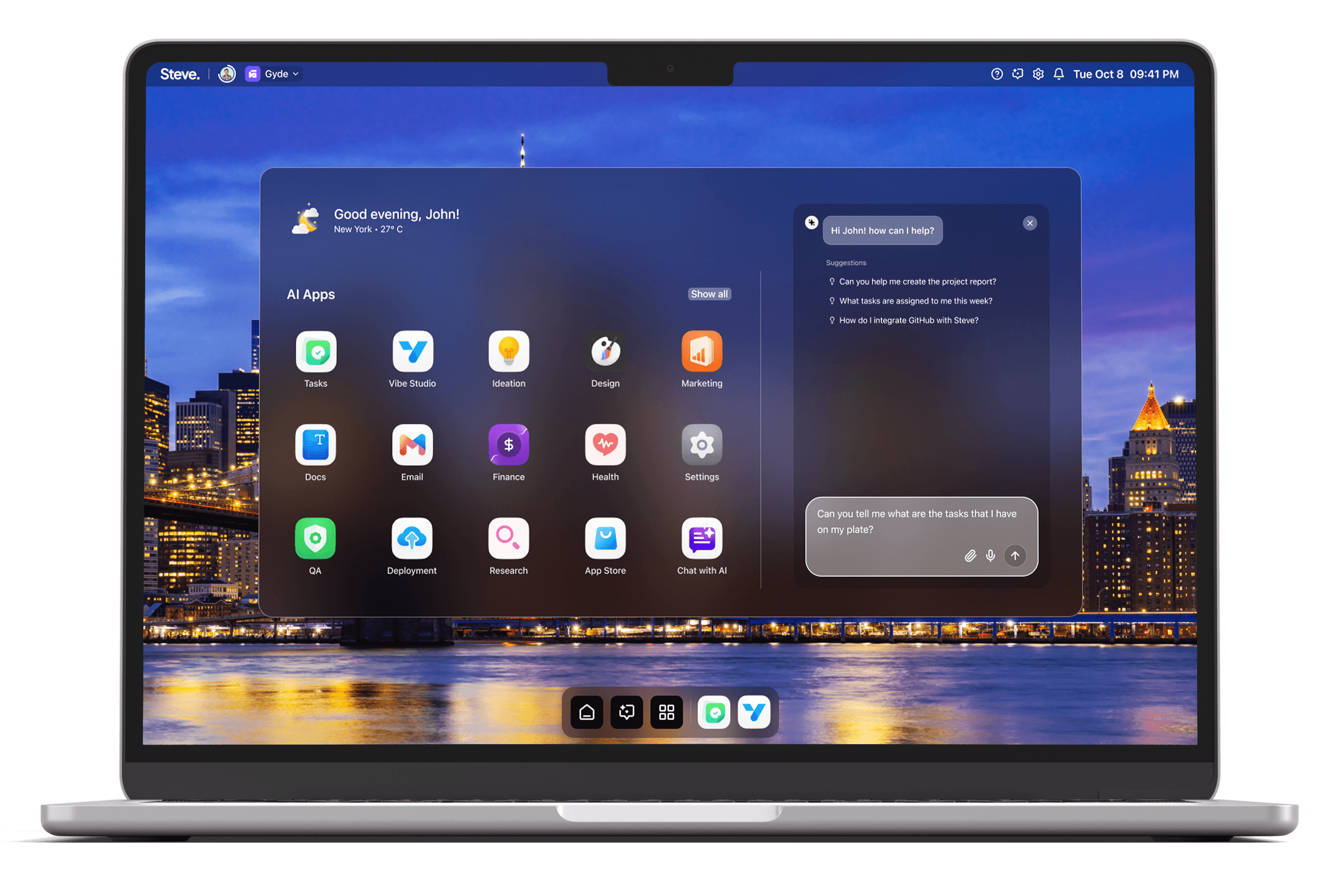
Coordinating work across departments is a constant source of friction: misaligned priorities, siloed context, and scattered decisions slow execution. Steve changes that by acting as an AI Operating System that binds communication, context, and execution into a single conversational surface. This article shows how Steve orchestrates cross-department work using a shared memory for agents, deep conversational integrations, an AI-native inbox, and AI-driven task management—so teams move from discussion to delivery with clarity and speed.
Unified Memory For Cross-Team Context
Steve’s shared memory lets AI agents retain and surface the context that departments usually lose in email chains and meetings. Rather than re-explaining requirements, agents reference a single, evolving memory of decisions, stakeholder preferences, and document summaries. In practice, when product, design, and engineering discuss a release, Steve preserves the agreed success metrics and constraints; later, a support agent can retrieve that memory to align customer messaging without asking the product team for clarifications. This reduces repetitive hand-offs and preserves institutional knowledge across long-running initiatives.
Conversational Integration With Existing Tools
Steve Chat connects conversationally to calendars, Gmail, Drive, Sheets, Notion, GitHub, and other services so teams coordinate without context switching. A program manager can ask Steve to “find the latest spec in Drive, check the engineering sprint on GitHub, and propose three times when all leads are free,” and Steve assembles the answers and proposes a schedule. For cross-department workflows—such as aligning marketing campaigns with engineering release windows—this integration means one authoritative assistant performs discovery, schedules checkpoints, and surfaces relevant documents in the same thread. Departments keep their native tools while Steve creates a conversational glue that reduces manual orchestration.
AI Inbox That Keeps Conversations Productive
Steve’s AI Email provides a synchronized smart inbox that tags, summarizes, and suggests context-aware replies so cross-functional conversations stay actionable. Long multi-recipient threads become readable: Steve creates concise summaries of decisions, highlights outstanding action items, and drafts reply options aligned to the project’s context. For example, when customer success escalates a client request that affects product scope and legal review, Steve tags the message, summarizes the thread for the engineering lead, and proposes a reply that clarifies requirements and next steps. That reduces delay, prevents miscommunication, and ensures email threads convert into tracked work.
AI-Driven Task Management And Delivery
Steve centralizes planning and execution through AI-powered product management boards that propose sprints, import or create tasks, and track progress across teams. Integrations with task systems allow Steve to convert conversational outcomes into structured work—creating tickets from meeting summaries, assigning owners, and suggesting timelines that respect existing sprint cadences. In a launch scenario, Steve can synthesize requirements from meetings and emails, create a release backlog with prioritized tasks, and propose a sprint plan that balances engineering capacity and marketing deadlines. This closes the loop from conversation to commitments and provides an auditable trail of who agreed to what and when.
Steve
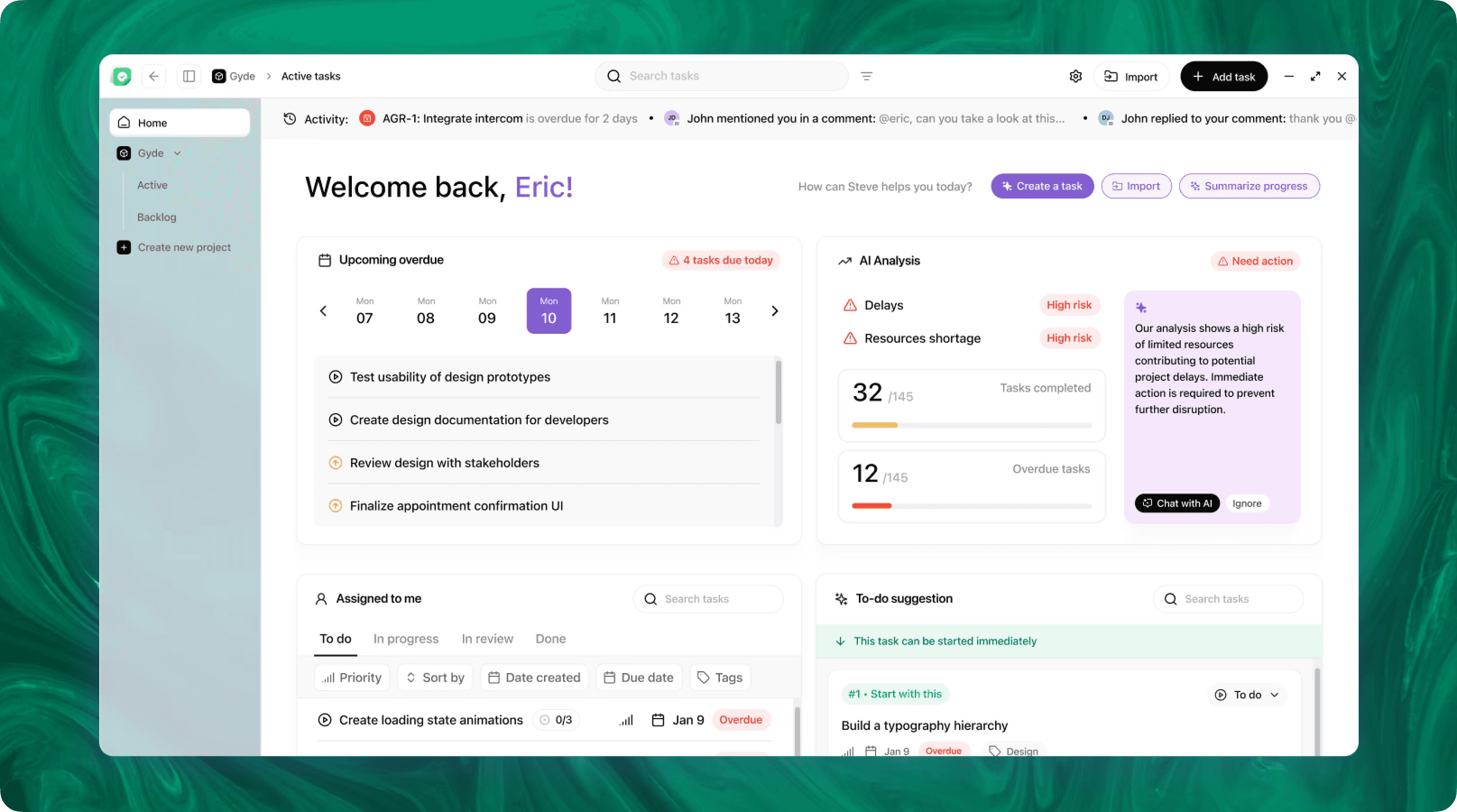
Steve is an AI-native operating system designed to streamline business operations through intelligent automation. Leveraging advanced AI agents, Steve enables users to manage tasks, generate content, and optimize workflows using natural language commands. Its proactive approach anticipates user needs, facilitating seamless collaboration across various domains, including app development, content creation, and social media management.
Conclusion
By combining a shared memory for context, conversational integrations to toolchains, an AI-native inbox to make comms actionable, and AI-driven task management to convert decisions into tracked work, Steve orchestrates cross-department operations with minimal overhead. As an AI OS, Steve reduces manual coordination, preserves institutional context, and accelerates alignment—turning fragmented discussions into coordinated delivery.