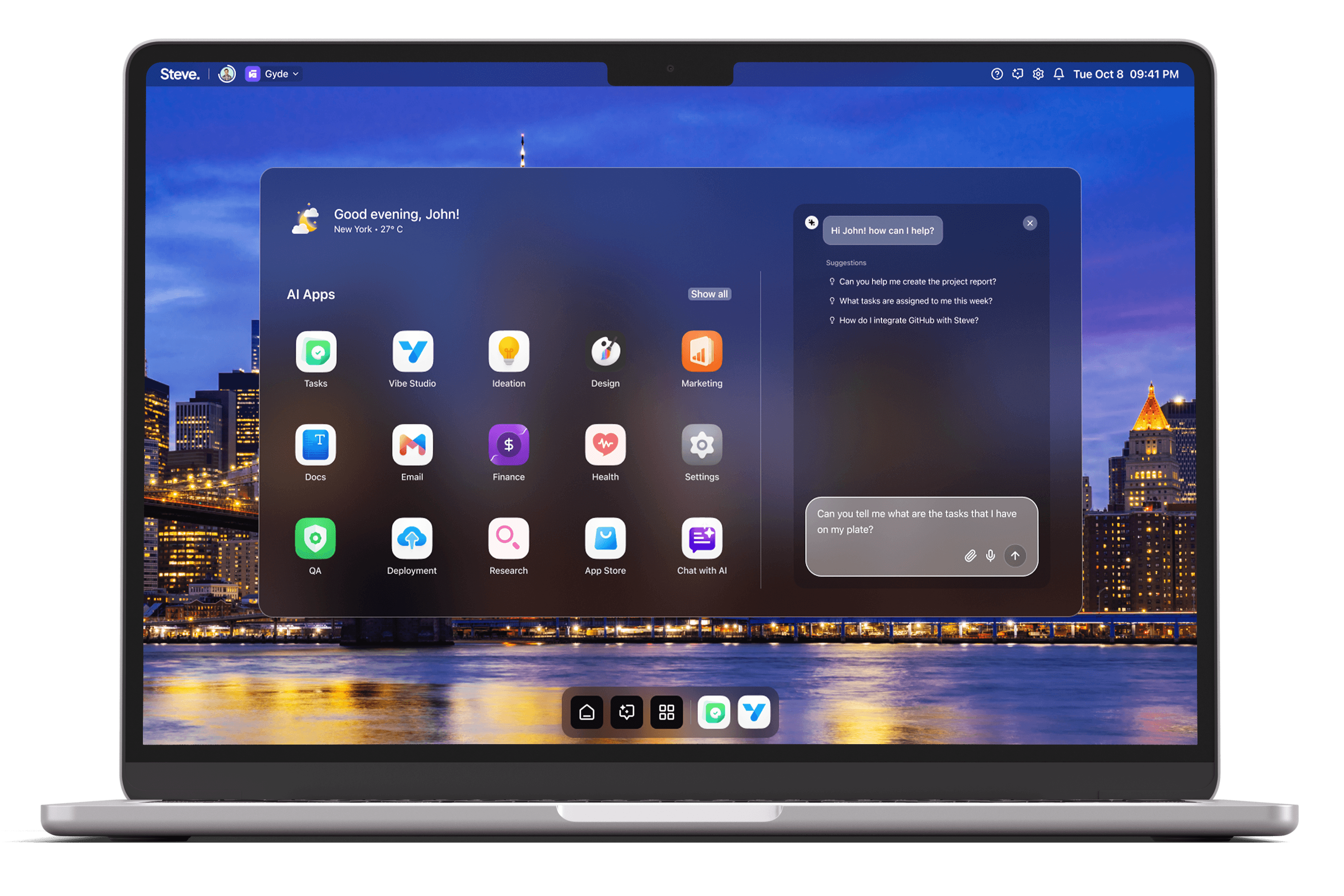
How Steve Makes Recurring Processes Self-Documenting
Nov 17, 2026

Centralized Shared Memory Captures Process State: Shared memory records parameters, outputs, and anomalies for every run so past executions are fully reproducible and queryable.
Conversational Workflows Turn Repetition Into Documentation: Steve Chat executes recurring steps, links artifacts, and produces human-readable run summaries while preserving decision trails with detailed logs.
Embedded Task Boards Make Steps Executable And Traceable: AI-powered boards template recurring workflows into task instances that store owners, outcomes, and attachments for audit and retrospectives.
Inbox Intelligence Summarizes And Archives Routine Communication: AI Email converts long threads into concise decisions, action items, and links to process artifacts to prevent knowledge loss in mail.
Continuous Auditing And Improvement From Structured Run Histories: Combining memory, conversational logs, task instances, and email summaries creates a feedback loop for measurable process improvement.
Introduction
Recurring operational processes—monthly closes, release checklists, client reports—become fragile when the how and why live in people’s heads. Making those processes self-documenting turns every execution into a living record: decisions, data sources, results, and exceptions are captured automatically so teams can audit, onboard, and improve without interrupting flow. As an AI Operating System, Steve surfaces context, captures artifacts, and turns conversational inputs into persistent process knowledge so routine work documents itself.
Centralized Shared Memory Captures Process State
Steve’s shared memory system lets AI agents read and write structured context for recurring runs, turning ephemeral steps into queryable records. Each automated run can push timestamps, parameter values, intermediate outputs, and anomaly flags into shared memory so later queries return the exact state that produced a result. In practice, a recurring financial close triggered in Steve will record data sources, transformation notes, reconciliation exceptions, and links to the spreadsheets and reports used—so auditors and new team members see a complete history without asking for a separate write-up. That persistent memory maintains continuity across agents and over time, making every repetition an accurate source of truth.
Conversational Workflows Turn Repetition Into Documentation
Steve Chat provides a conversational surface that both executes recurring steps and explains them in plain language, using memory and integrations to bind actions to documentation. Teams can invoke a process with natural commands—"Run the weekly deployment checklist"—and Steve will perform the steps, log outcomes into shared memory, and produce a human-readable run summary. Because Steve Chat is file-aware and integrated with calendars, drive files, and GitHub, its summaries link to the exact artifacts used during the run. Detailed chat logging (for analytics and optimization) preserves the decision trail, so you can replay why a configuration changed or which exception required manual intervention. The result: conversational automation that doubles as a running operations manual.
Embedded Task Boards Make Steps Executable And Traceable
Steve’s AI-powered task management boards convert recurring processes into templated, executable workflows with built-in traceability. Instead of a checklist living in a document, each recurring instance becomes a task group with assigned owners, due dates, and attached run outputs pulled from shared memory. The system proposes schedules, tracks progress, and imports or links issues from Linear so each occurrence preserves who did what and when. For example, a recurring QA sweep becomes a board that auto-creates tasks, pre-populates validation steps, and stores test artifacts and notes on that instance—so retrospectives and audits inspect tasks rather than reconstructing events from memory.
Inbox Intelligence Summarizes And Archives Routine Communication
Many recurring processes begin in email. Steve’s AI Email turns thread activity into structured knowledge by tagging, summarizing, and converting conversation into process artifacts. Long threads are condensed into decision summaries and action lists; critical updates are AI-tagged and linked to the corresponding task board or shared memory entry. You can chat with the inbox to extract a weekly status into a repeatable template or to surface the approval chain for a recurring client deliverable. This keeps communications from being the sole source of truth and ensures that every negotiation and instruction is preserved and accessible for the next run.
Steve
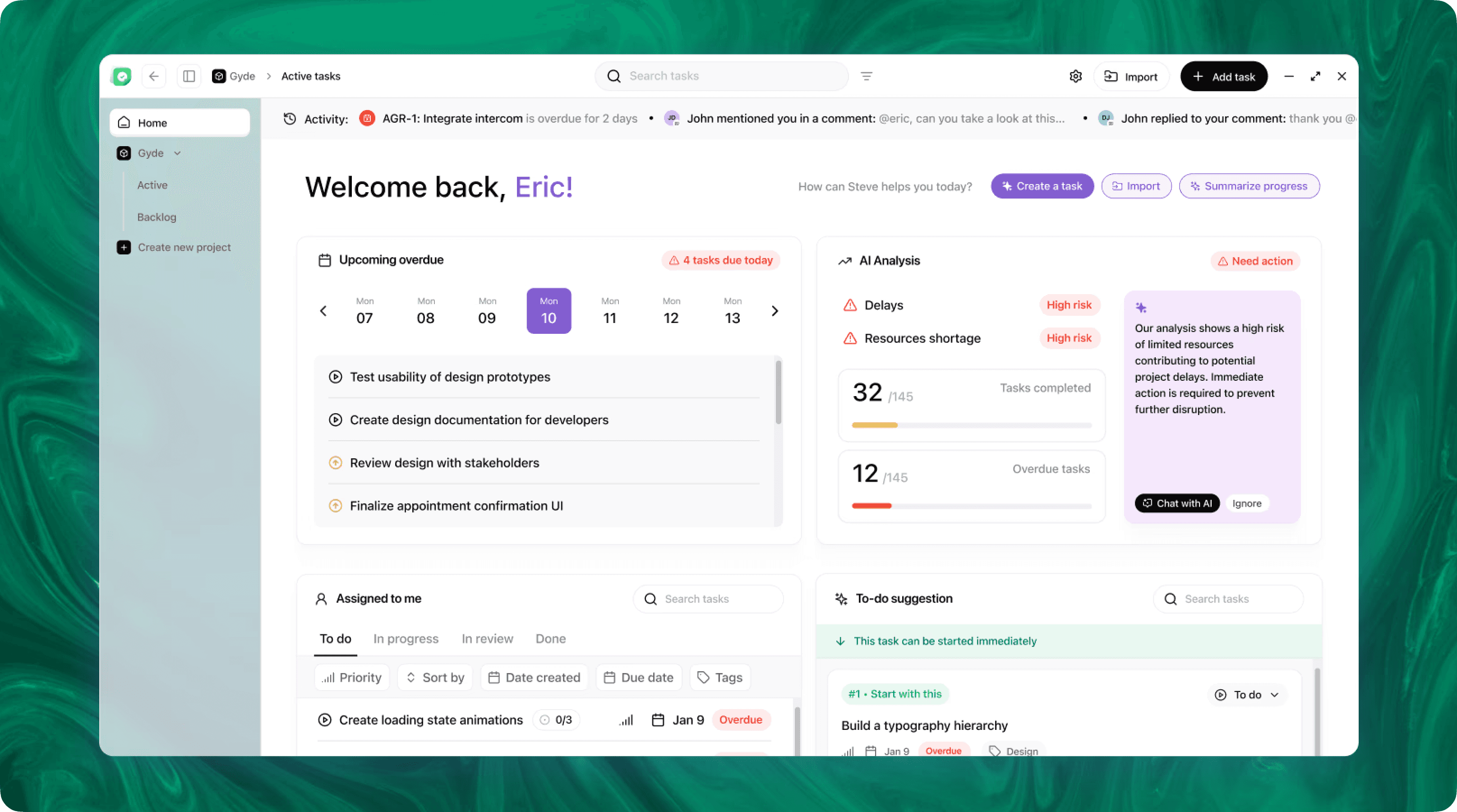
Steve is an AI-native operating system designed to streamline business operations through intelligent automation. Leveraging advanced AI agents, Steve enables users to manage tasks, generate content, and optimize workflows using natural language commands. Its proactive approach anticipates user needs, facilitating seamless collaboration across various domains, including app development, content creation, and social media management.
Conclusion
Making recurring processes self-documenting removes guesswork, accelerates onboarding, and shortens post-mortem cycles. By combining a persistent shared memory, conversational execution and logging via Steve Chat, AI-driven task boards, and an intelligent inbox, Steve turns routine executions into complete, queryable records. As an AI OS, Steve not only automates tasks but also preserves their context and rationale, so each repetition becomes a reliable piece of organizational knowledge—searchable, auditable, and ready to improve.