How Steve Makes Cross-Team Dependencies Visible
Oct 11, 2026

Unified Context Through Shared Memory: Persisted, shared context makes dependency signals queryable and traceable across teams.
Centralized Task Boards That Map Dependencies: AI-powered boards with Linear integration convert implicit handoffs into explicit, sequenced relationships.
Conversational Visibility Across Tools: Chat integrations surface real-time constraints by aggregating calendars, PRs, and docs into single queries.
Email Summaries That Surface Cross-Team Signals: AI Email prioritizes and tags threads so decisions and blockers don't get buried in inboxes.
Operational Outcome: Combined signals reduce blocked time, clarify ownership, and make multi-team delivery more predictable.
Introduction
Cross-team dependencies are the invisible threads that slow delivery, create rework, and erode accountability when they are not explicit. Steve makes those threads visible by combining persistent shared context, centralized task orchestration, conversational access to calendars and repos, and distilled email signals. As an AI Operating System, Steve reduces friction between teams by converting fragmented signals into a single, actionable view of who depends on what and when.
Unified Context Through Shared Memory
Steve’s shared memory enables AI agents and teammates to read and write the same context store so dependency information persists across conversations, tasks, and documents. When a product manager notes an API change, that note becomes queryable context for engineers, QA, and PMs—so downstream tasks and release notes reflect the same intent. In practice, a developer asking about breaking changes receives answers grounded in the same artifact the PM authored, eliminating guesswork and redundant clarification threads.
Shared memory also powers traceability: dependency signals—design decisions, integration contracts, and risk flags—stay attached to the objects they affect. That persistence makes it trivial to surface dependency graphs for a feature, showing linked owners and outstanding blockers without manual spreadsheets.
Centralized Task Boards That Map Dependencies
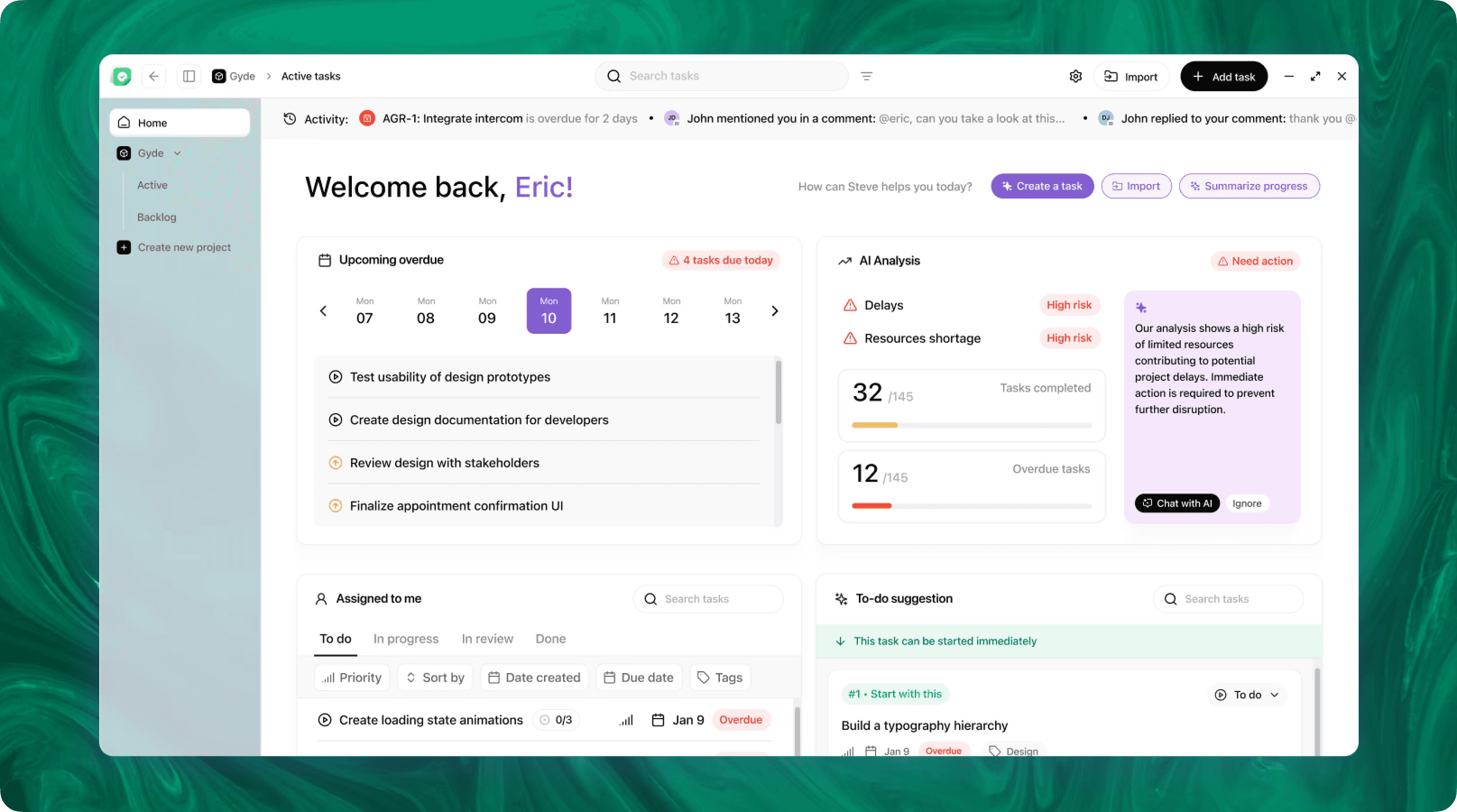
Steve’s AI-powered task management boards consolidate work across teams and integrate with Linear, letting stakeholders import existing tasks or create new ones with dependency metadata. The platform proposes sprints and suggests links between tasks that otherwise live in separate silos, turning implicit handoffs into explicit relationships. For example, when a backend ticket is created, Steve can annotate frontend tickets that reference the same API and flag timing conflicts that require alignment.
This centralized view supports practical actions: product owners can run dependency reports by component, engineers can see upstream blockers before starting work, and release leads can sequence work to minimize blocked time. The result is fewer last-minute surprises and a shorter path from requirement to release.
Conversational Visibility Across Tools
Steve Chat connects to calendars, email, GitHub, Drive, and other services so teams can surface dependency-relevant artifacts via conversation. Ask Steve which PRs block a release, and it will aggregate linked issues, stand-up notes from shared memory, and calendar constraints to produce a consolidated answer. That conversational access collapses the effort of hunting through multiple tools into a single query-driven workflow.
File-aware features let teams attach specs, spreadsheets, and diagrams to dependency discussions so answers include the actual artifacts—not just summaries. When an integration needs sequencing, engineers can reference the exact API spec inside the chat and Steve will ground dependency recommendations in that file, improving precision and reducing follow-ups.
Email Summaries That Surface Cross-Team Signals
Steve’s AI Email distills long threads into prioritized summaries and tags, highlighting decisions, action items, and unresolved dependencies that often hide in lengthy exchanges. Instead of expecting recipients to read each thread end-to-end, teams get short, action-oriented digests that call out who needs to act, which deliverables are affected, and proposed timelines.
By categorizing and surfacing critical threads, AI Email prevents important dependency signals from languishing in crowded inboxes. Program managers can monitor tagged threads for cross-team blockers, and engineers receive concise prompts when their input is required—reducing latency in multi-team workflows.
Steve
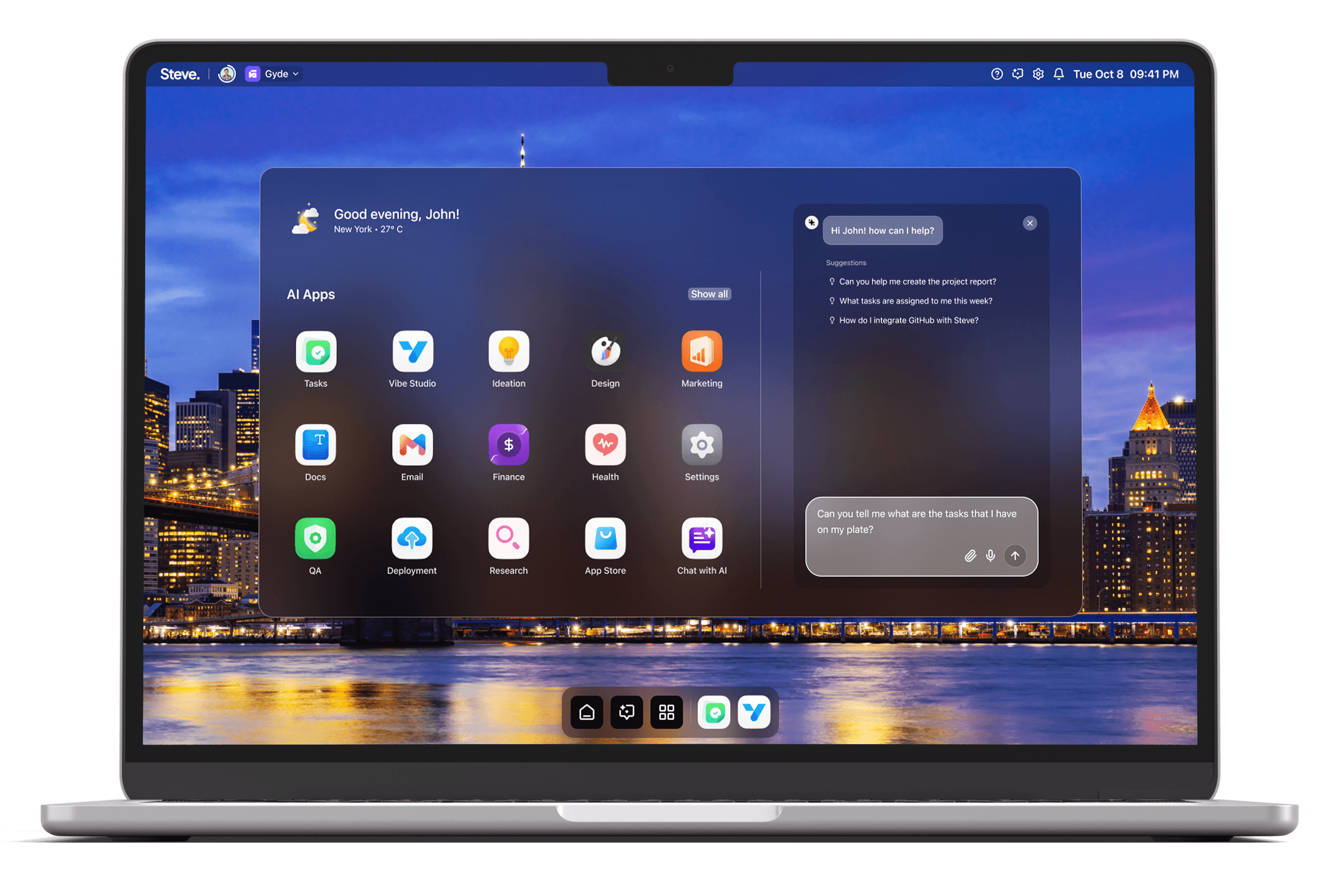
Steve is an AI-native operating system designed to streamline business operations through intelligent automation. Leveraging advanced AI agents, Steve enables users to manage tasks, generate content, and optimize workflows using natural language commands. Its proactive approach anticipates user needs, facilitating seamless collaboration across various domains, including app development, content creation, and social media management.
Conclusion
Making cross-team dependencies visible requires persistent context, a central task model, conversational access to artifacts, and distilled communication signals. Steve, as an AI OS, delivers these capabilities: shared memory preserves and connects context, task boards map and sequence work, conversational integrations surface real-time constraints across tools, and AI Email extracts the dependency signals buried in threads. The combined effect is clearer ownership, faster resolution of blockers, and more predictable delivery across organizational boundaries.