How Steve Makes Business Processes Self-Improving
Oct 7, 2026

Continuous Context Through Shared Memory: Durable, queryable memory lets agents reuse past decisions to reduce repeated mistakes and speed approvals.
Conversational Orchestration With Steve Chat: A file-aware conversational layer executes and documents actions, turning chat interactions into persistent process improvements.
Task Management That Learns: AI-driven boards analyze execution data to recommend sprint sizes, automate recurring tasks, and tune workflows based on historical performance.
Inbox Intelligence With AI Email: Automated tagging, summarization, and context-aware routing convert email signals into tracked actions and repeatable rules.
Operational Outcome: Closed-loop feedback—capture, act, log, and adapt—enables processes to improve automatically with each cycle.
Introduction
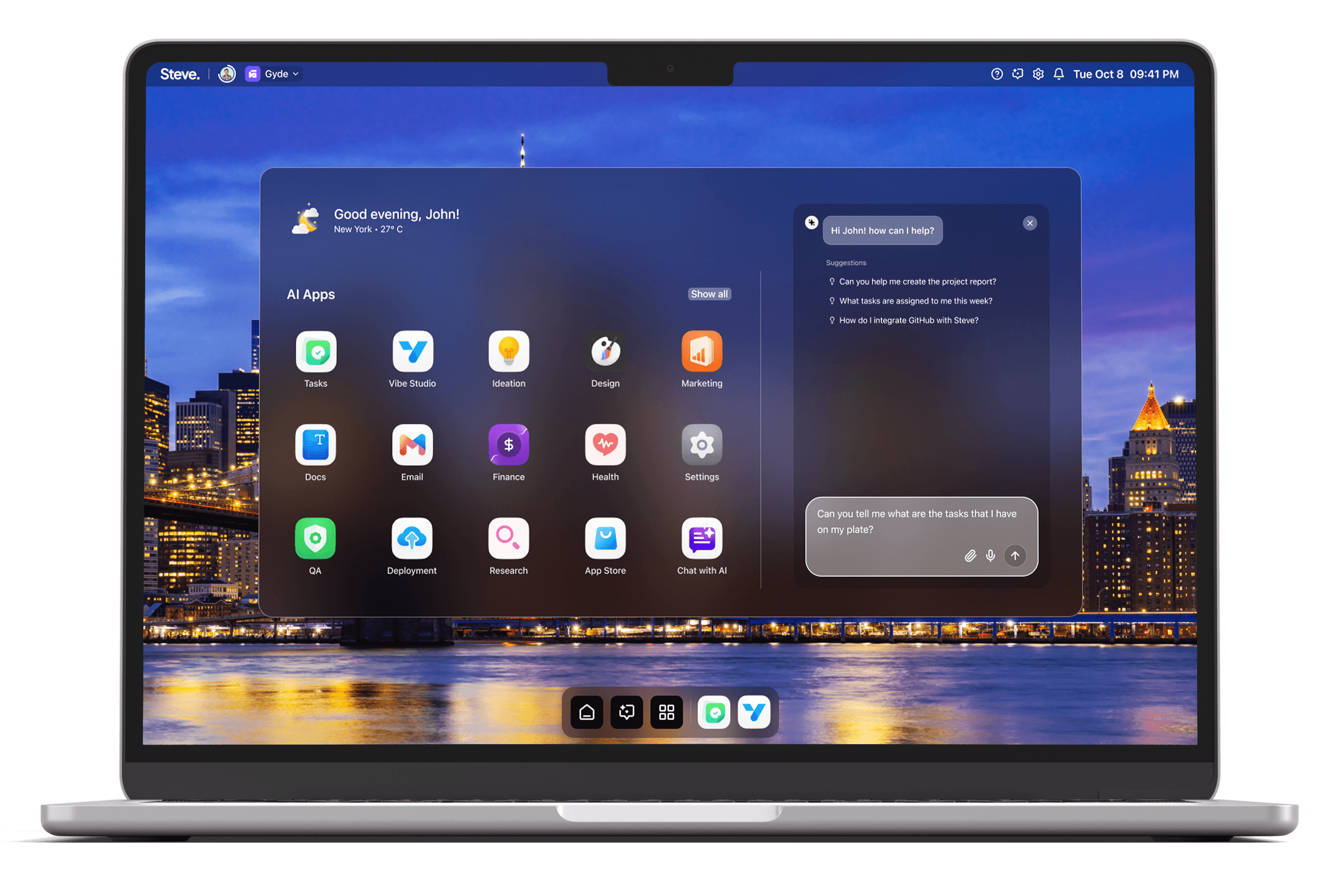
Business processes become self-improving when systems observe outcomes, surface insights, and close the loop on decisions automatically. Steve, an AI Operating System, combines continuous context, conversational orchestration, automated task management, and an intelligent inbox to make that loop practical. By embedding memory across agents, enabling contextual conversation, proposing and tracking work, and surfacing prioritized signals from email, Steve turns recurring operations into measurable, iterating workflows that learn from each cycle.
Continuous Context Through Shared Memory
Self-improvement requires durable context: the ability to recall past decisions, exceptions, and rationale so future runs avoid repeated mistakes. Steve’s shared memory system stores structured context across AI agents and sessions, letting downstream automations reference prior outcomes and annotations. In a procurement workflow, for example, agents record vendor negotiations, approval thresholds, and contract exceptions; when a new purchase request arrives, the system pulls that history to recommend approvers, flag unusual terms, or reuse negotiated rates. The result is fewer escalations, faster approvals, and a growing body of institutional knowledge that reduces manual rework over time.
Conversational Orchestration With Steve Chat
Steve Chat operates as a centralized conversational layer that coordinates people, data, and automations while retaining conversational memory. Teams interact with processes in natural language, and the chat agent references shared memory and connected services to execute, explain, or refine actions. Consider a customer-onboarding play: a product manager asks Steve Chat to summarize outstanding onboarding tasks, attach the latest onboarding checklist from Drive, and schedule catch-ups; the agent synthesizes context, proposes next steps, and logs decisions back into memory. Because conversations are file-aware and integrate with calendars and repositories, each interaction both resolves immediate needs and seeds future process improvements.
Task Management That Learns
Steve’s AI-driven task boards combine intelligent organization with adaptive recommendations, turning execution data into process refinements. The system imports tasks, suggests sprint scopes, and tracks progress while learning which task types consistently slip or require extra review. Over multiple cycles, Steve proposes adjusted sprint sizes, recommends workflow rule changes, or automates repetitive task creation for recurring work. In operations teams, this means recurring audits or compliance checks can be auto-generated with tuned timelines and owner assignments informed by historical completion rates—reducing firefighting and increasing predictability.
Inbox Intelligence With AI Email
Email remains a primary signal for approvals, exceptions, and stakeholder intent; Steve’s AI Email captures that signal and converts it into process actions. It tags and categorizes messages, summarizes lengthy threads, and offers context-aware reply drafts that align with ongoing projects. When an invoice thread arrives, the inbox agent extracts due dates, matches them to purchase orders referenced in shared memory, and surfaces a suggested routing for approval. Each handling of email updates memory and task boards, so the system learns which kinds of emails correspond to delays, which reply templates speed resolution, and which stakeholders should be looped in—accelerating resolution while reducing manual triage.
Steve
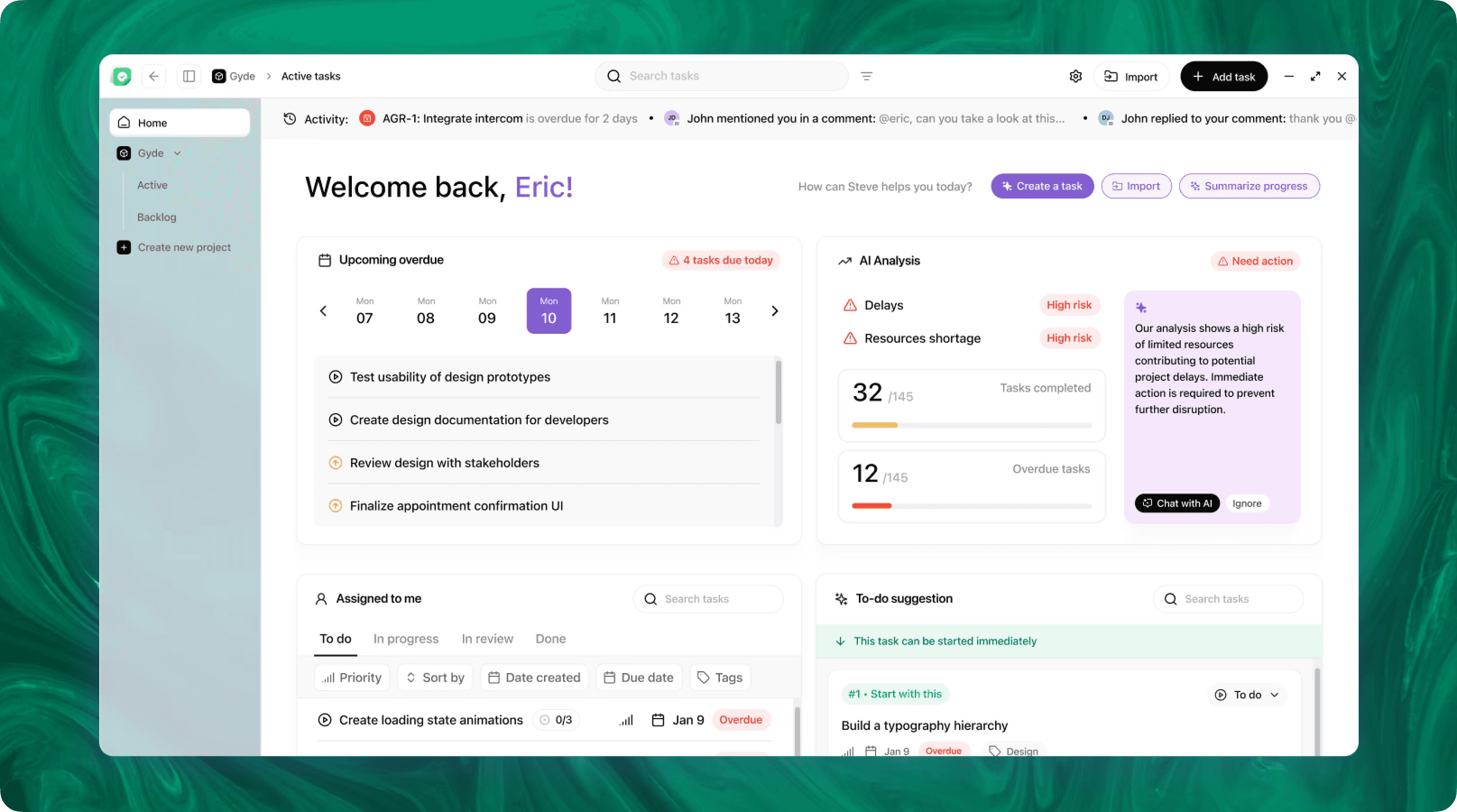
Steve is an AI-native operating system designed to streamline business operations through intelligent automation. Leveraging advanced AI agents, Steve enables users to manage tasks, generate content, and optimize workflows using natural language commands. Its proactive approach anticipates user needs, facilitating seamless collaboration across various domains, including app development, content creation, and social media management.
Conclusion
Steve makes business processes self-improving by closing the loop between context capture, conversational execution, task orchestration, and signal extraction from email. As an AI OS, Steve continuously collects decision context, applies learned patterns to propose smarter actions, and embeds those outcomes back into workflows. The cumulative effect is fewer repetitive errors, faster execution, and processes that adapt automatically as teams and conditions change.