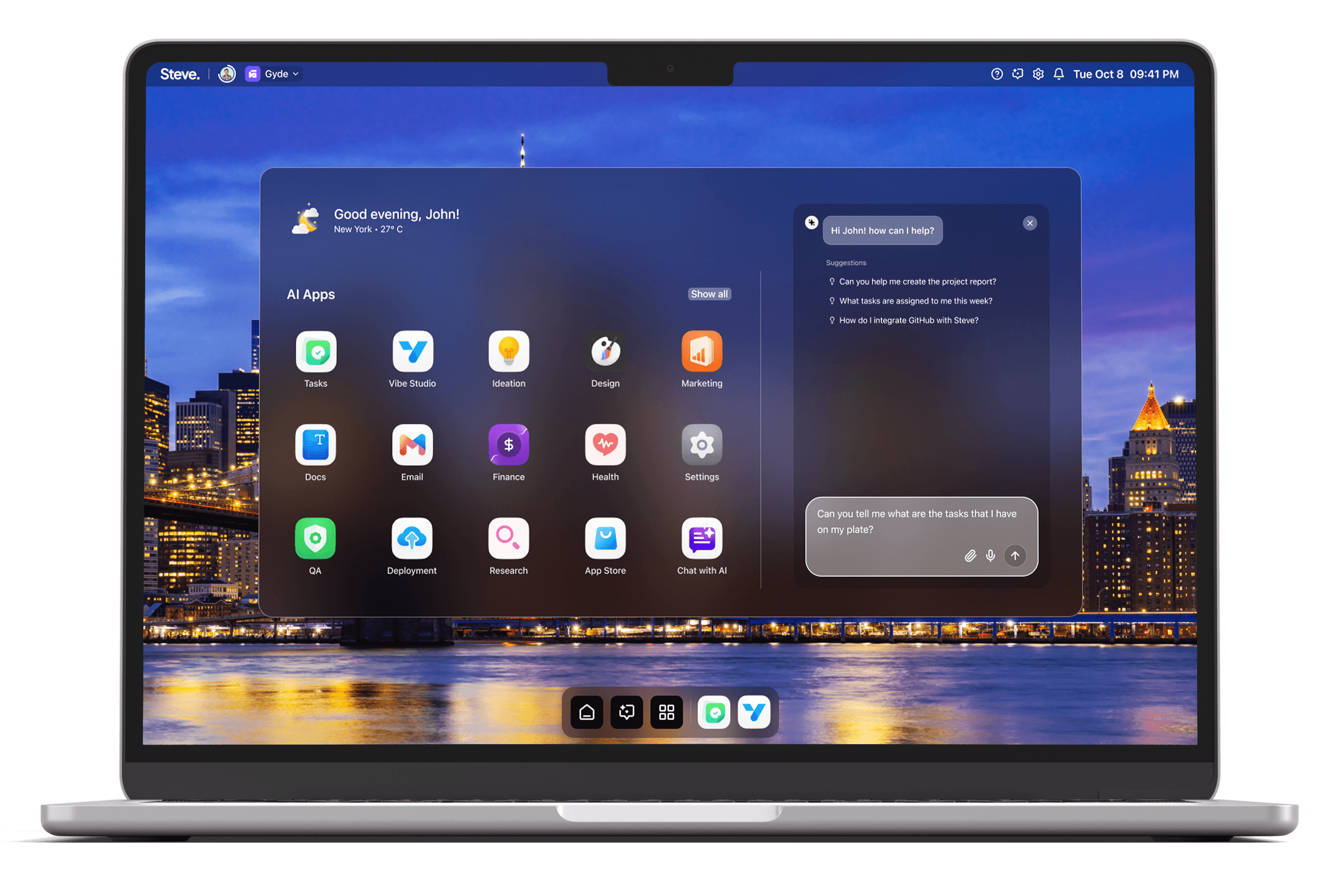
How Steve Maintains Long-Term Memory Across Projects
Jan 29, 2026

Shared Memory For Cross-Agent Continuity: A central memory store lets specialized agents reuse verified facts, preventing fragmented context and redundant work.
Conversational Memory In Steve Chat: Chat-level memory plus integrations reconstruct past decisions and link them to documents and calendar items for seamless follow-up.
Persistent Projects For Ongoing Context: Projects that remain active preserve intermediate artifacts and rationale, shortening onboarding and avoiding lost decisions.
Chat Logging And LangFuse For Auditability And Optimization: Detailed conversational logs provide traceability and data for improving memory coverage and prompt design.
Operational Benefit: Together these capabilities reduce repetition, improve handoffs, and speed execution across multi-phase initiatives.
Introduction
Maintaining long-term memory across concurrent initiatives is a practical requirement for modern teams. Steve, as an AI Operating System, preserves institutional context so workstreams don’t restart every time a new collaborator, tool, or phase appears. This article shows how Steve’s shared memory, conversational memory, persistent projects, and chat logging create durable context that reduces rework and accelerates delivery.
Shared Memory For Cross-Agent Continuity
Steve’s shared memory system lets multiple AI agents read from and write to a common context store, so decisions, constraints, and artifacts accumulate where agents can reuse them. In practice, an agent that summarizes customer requirements can persist those requirements so another agent — responsible for scheduling or drafting copy — operates against the same brief rather than recreating it. That shared layer prevents fragmentation across specialized agents and keeps project facts authoritative as work shifts between discovery, execution, and review.
A common scenario: a product spec produced in one conversation is annotated with stakeholder priorities and saved to shared memory; later, the QA agent references those priorities to generate test cases aligned with original acceptance criteria. The result is coherent, cross-functional behavior without manual handoffs.
Conversational Memory In Steve Chat
Steve Chat includes sophisticated conversational memory and direct integrations with calendars, email, drives, and developer tools so context persists naturally within dialogue. When you revisit a chat thread, Steve can recall earlier decisions, file locations, and outstanding action items, enabling follow-up without re-explaining the background. Integrations let that memory link to concrete artifacts — calendar events, documents, or issue trackers — turning ephemeral chat into actionable institutional knowledge.
For example, a project lead can ask Steve to resume a planning conversation from last quarter; Steve Chat reconstructs the timeline, surfaces the related documents, and proposes next steps based on prior commitments. That continuity keeps meetings productive and reduces wasted setup time.
Persistent Projects For Ongoing Context
Persistent projects keep active state available even when a workspace is minimized, so project memory remains live across long timelines. Rather than pausing and losing incremental context, teams can leave a project open and return with its last state intact: recent drafts, annotations, and agent outputs remain accessible. This avoids the common problem where transient sessions erase intermediate decisions and forces repetition.
Consider a product that evolves over months: requirements, prototypes, and stakeholder feedback accumulate within a persistent project. As new contributors arrive, Steve’s persistent state provides the latest status and rationale, shortening onboarding and preserving the evolution of decisions.
Chat Logging And LangFuse For Auditability And Optimization
Steve’s LangFuse-integrated chat logging captures detailed conversational records for optimization, analytics, and audit. These logs let teams trace when decisions were made, who asked which question, and which agent produced a given output. That visibility supports both compliance needs and continuous improvement: you can analyze past interactions to identify gaps in memory coverage or to refine prompt templates that consistently produce reliable results.
A practical use: after a release, product managers review chat logs to reconstruct requirements changes and correlate them with issue triage. The logs surface missed constraints and suggest where shared memory entries should be strengthened to prevent future drift.
Steve
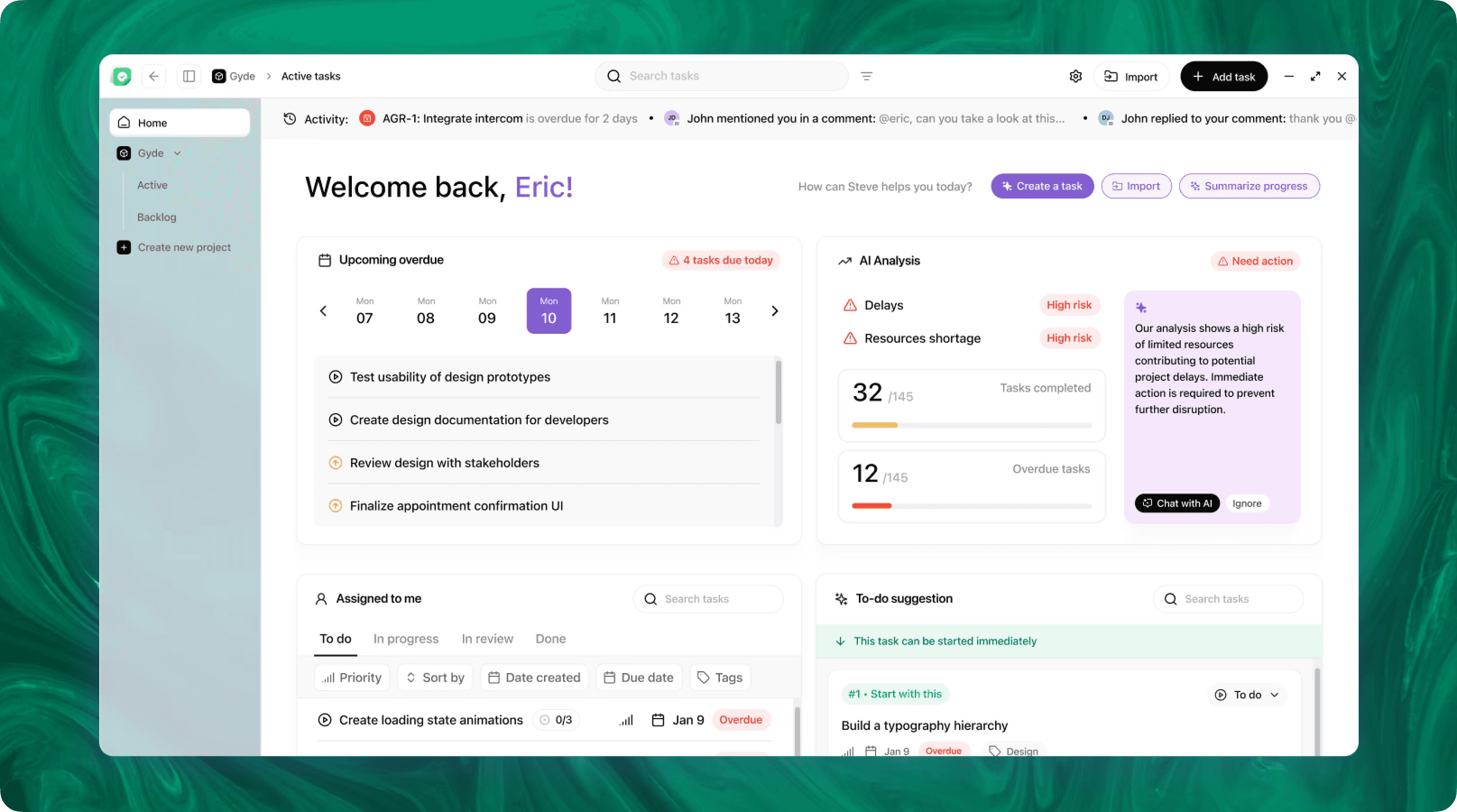
Steve is an AI-native operating system designed to streamline business operations through intelligent automation. Leveraging advanced AI agents, Steve enables users to manage tasks, generate content, and optimize workflows using natural language commands. Its proactive approach anticipates user needs, facilitating seamless collaboration across various domains, including app development, content creation, and social media management.
Conclusion
Steve combines a shared memory system, conversational memory in Steve Chat, persistent projects, and LangFuse-powered logging to maintain long-term, project-spanning context. As an AI OS, Steve turns episodic conversations into durable organizational knowledge: agents reuse verified facts, chat preserves decision history, projects retain live state, and logs enable audit and improvement. The net effect is less repetition, faster handoffs, and more reliable progress across complex, multi-phase work.