How Steve Keeps Strategy Alive Between Planning Cycles
Oct 11, 2026

Maintain Strategic Context With Shared Memory: A persistent memory preserves decisions and rationale so teams can re-align without rehashing prior debates.
Turn Conversations Into Action With Steve Chat: Conversational workflows connect plans to calendars, documents, and issue trackers, producing immediate, traceable next steps.
Keep Priorities Visible Through AI Email: Smart inbox tagging and summaries turn passive threads into prioritized, actionable strategic signals.
Close The Loop With AI-Powered Task Management: Integrated boards and sprint proposals ensure execution reports back into shared strategy and surface deviations early.
Operational Benefit: Combined, these capabilities reduce strategic drift, accelerate decision velocity, and maintain a living record of intent and outcomes.
Introduction
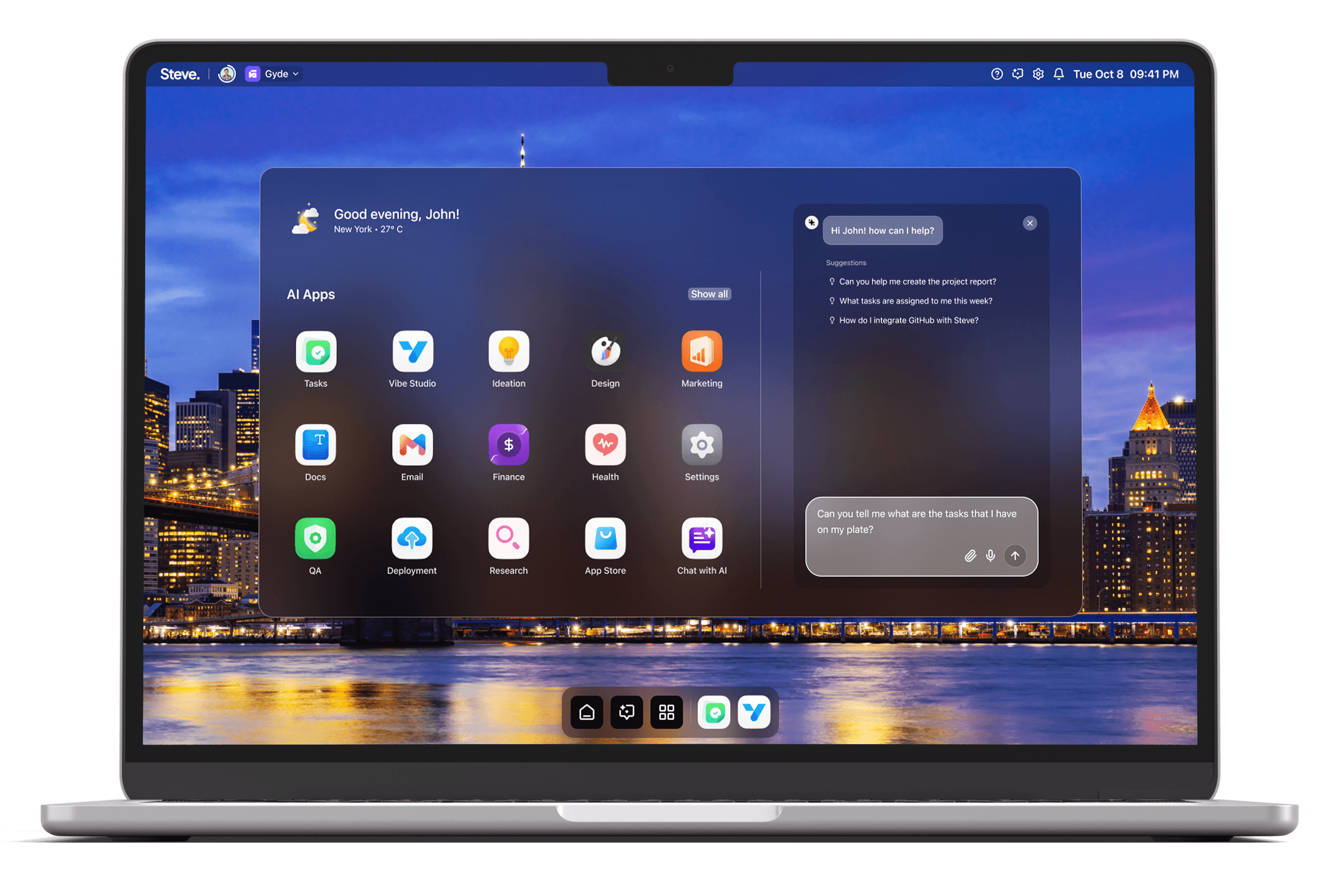
Strategy rarely dies at review meetings; it erodes between them. Maintaining momentum requires continuous context, timely decisions, and frictionless handoffs—things human workflows struggle to sustain. Steve, an AI Operating System, keeps strategy alive between planning cycles by preserving organizational memory, turning conversations into executable actions, surfacing strategic signals in day-to-day communication, and closing the loop on execution. This article explains how those capabilities work in practice and why they matter.
Maintain Strategic Context With Shared Memory
Plans are only as good as the context that survives after meetings. Steve's shared memory system stores decisions, assumptions, and rationale so every AI agent and team member can access the same strategic thread. Rather than re-explaining priorities each sprint, teams query that memory to verify why a roadmap item exists, what trade-offs were accepted, and which metrics matter. In a practical scenario, a product lead references the shared memory to resolve a design dispute: the team retrieves the original hypothesis and the expected KPIs, re-aligns on scope, and prevents a week of rework.
Preserving this thread reduces dependency on tribal knowledge and keeps strategy visible when teams rotate, scale, or work asynchronously—exactly the conditions where strategic drift usually starts.
Turn Conversations Into Action With Steve Chat
Conversation is where strategy gets operationalized; without a bridge to execution, ideas stall. Steve Chat links conversational intent to tools and artifacts—calendars, documents, GitHub, and more—so planning moments create immediate, traceable outcomes. The chat interface remembers prior interactions, understands uploaded files, and can schedule follow-ups, draft briefs, or create issues directly from a conversation.
For example, after a quarterly planning call, a manager can ask Steve in chat to “create the follow-up tasks and schedule stakeholder check-ins,” and Steve will generate tasks, propose dates based on calendar availability, and attach the summary and decision log. That reduces handoff friction and ensures plans translate into concrete next steps rather than languishing in inboxes.
Keep Priorities Visible Through AI Email
Email is still the defacto carrier for many strategic conversations, but long threads and buried decisions make retrieval hard. Steve’s AI Email integrates a smart inbox with tagging, thread summaries, and context-aware reply suggestions, turning passive correspondence into an active strategic channel. It tags priority conversations, summarizes long threads into decision points, and suggests replies that maintain alignment with ongoing plans.
A product executive reviewing feature requests can use AI Email to surface threads tagged as high impact, read concise summaries of stakeholder positions, and send alignment notes that reference shared memory. This keeps strategic priorities salient in everyday communications and reduces the risk that urgent-but-unseen items derail long-range goals.
Close The Loop With AI-Powered Task Management
Strategy survives only when execution reports back into planning. Steve’s AI-powered task boards integrate with tools like Linear, propose sprint plans, and track execution with contextual automation so progress and blockers remain visible between cycles. The system can recommend sprint scopes grounded in current priorities and surface deviations that need leadership attention.
Consider a product team halfway through a quarter: Steve detects slippage on a key deliverable, summarizes blockers from linked issues and emails, and proposes mitigations—reassigning work, adjusting scope, or escalating risks—then logs the decision back into shared memory. That continuous feedback loop preserves strategic intent and ensures planning cycles reflect what actually happened, not just what was assumed.
Steve
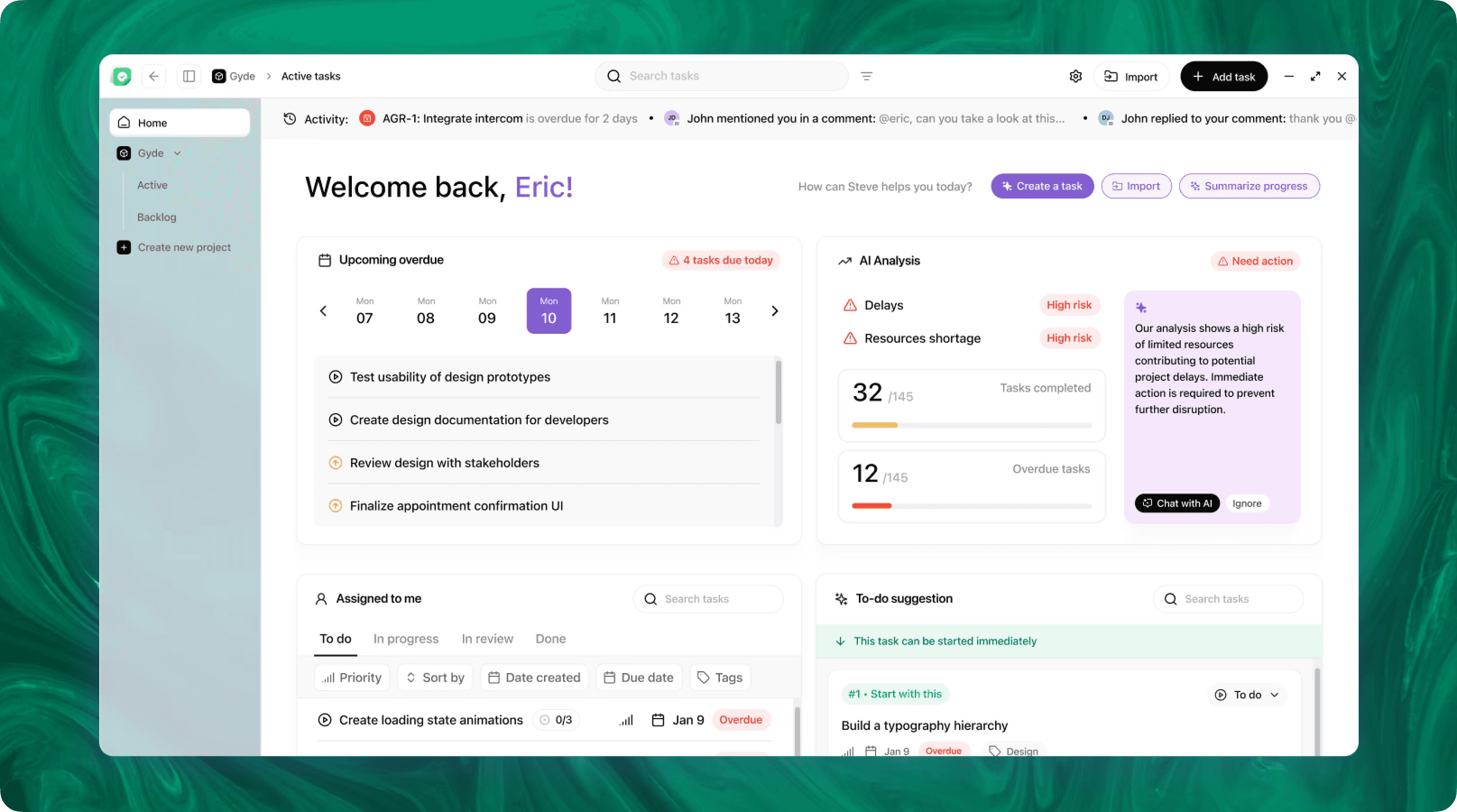
Steve is an AI-native operating system designed to streamline business operations through intelligent automation. Leveraging advanced AI agents, Steve enables users to manage tasks, generate content, and optimize workflows using natural language commands. Its proactive approach anticipates user needs, facilitating seamless collaboration across various domains, including app development, content creation, and social media management.
Conclusion
Keeping strategy alive between planning cycles demands persistent context, fast conversion of conversation into action, proactive surfacing of priority signals, and closed-loop execution tracking. As an AI OS, Steve combines shared memory, a conversational interface with deep integrations, an intelligent inbox, and AI-driven task management to create those capabilities. The result is less drift, faster decisions, and a living strategic record that keeps teams aligned when the calendar is silent.