How Steve Helps Small Teams Operate Like Much Larger Organizations
Oct 7, 2026

Shared Memory For Persistent Context: Persistent memory lets AI agents share institutional knowledge so decisions remain consistent and traceable across conversations and tools.
Conversational Core And Deep Integrations: A single chat interface tied to calendars, Drive, Sheets, Notion, and GitHub lets teams execute cross-tool workflows without switching apps.
AI Email For Faster Decision Cycles: Real-time sync, AI tagging, and thread summaries compress email triage and drafting, keeping teams focused on action instead of administration.
AI-Powered Task Management To Drive Execution: Automated sprints, task creation from chat, and Linear integration turn intent into tracked work and maintain alignment without a large PM org.
Operational Benefit: Combined, these capabilities reduce coordination overhead and preserve context, enabling small teams to move with the scale and consistency of larger organizations.
Introduction
Small teams win by moving faster than larger competitors, but speed alone doesn't replace the coordination, memory, and role specialization of bigger organizations. Steve, an AI Operating System, closes that gap by layering persistent context, integrated conversational tools, intelligent email handling, and AI-driven task management into a single workspace. The result: a small group that operates with the coordination, institutional knowledge, and execution velocity of a much larger organization.
Shared Memory For Persistent Context
Steve’s shared memory system lets AI agents retain and surface team context across conversations and tools, so knowledge doesn’t live only in individual heads or scattered files. That persistent memory means a customer detail captured in a support chat can inform product planning conversations, design decisions, and automated follow-ups without manual handoffs. Practically, a two-person product team can archive meeting notes, sprint retros, and customer feedback in Steve’s memory; the next time someone asks the chat for roadmap recommendations, agents draw on that same history to produce aligned, context-rich proposals. The net effect is institutional continuity: decisions remain traceable and reproducible, not dependent on who remembers what.
Conversational Core And Deep Integrations
Steve’s conversational interface connects the team to calendars, email, Drive, Sheets, Notion, and GitHub, letting members take multi-step operational actions from a single chat. Instead of toggling between tools, a founder can ask Steve to schedule a stakeholder demo, pull the latest retention chart from Sheets, and attach the related spec from Drive, all within one conversation. File-aware capabilities let the AI interpret uploads—PDFs, spreadsheets, images—so conversations reference the same artifacts engineers or designers would otherwise fetch manually. For small teams that lack specialized ops staff, the chat becomes a virtual operations manager that executes cross-tool workflows and reduces coordination overhead to plain language.
AI Email For Faster Decision Cycles
Email often throttles small-team momentum: long threads, buried action items, and context gaps slow execution. Steve’s AI Email addresses that by syncing in real time, tagging and categorizing messages, and generating instant thread summaries. A product lead can triage a vendor negotiation in minutes because Steve highlights the ask, summarizes concessions, and drafts context-aware replies that reflect project status. The inbox’s AI suggestions align responses with ongoing work stored in Steve’s memory, so emails reinforce the same priorities the team discusses in chat and task boards. By compressing reading, drafting, and categorization into seconds, AI Email preserves focus and frees the team to execute rather than administrate.
AI-Powered Task Management To Drive Execution
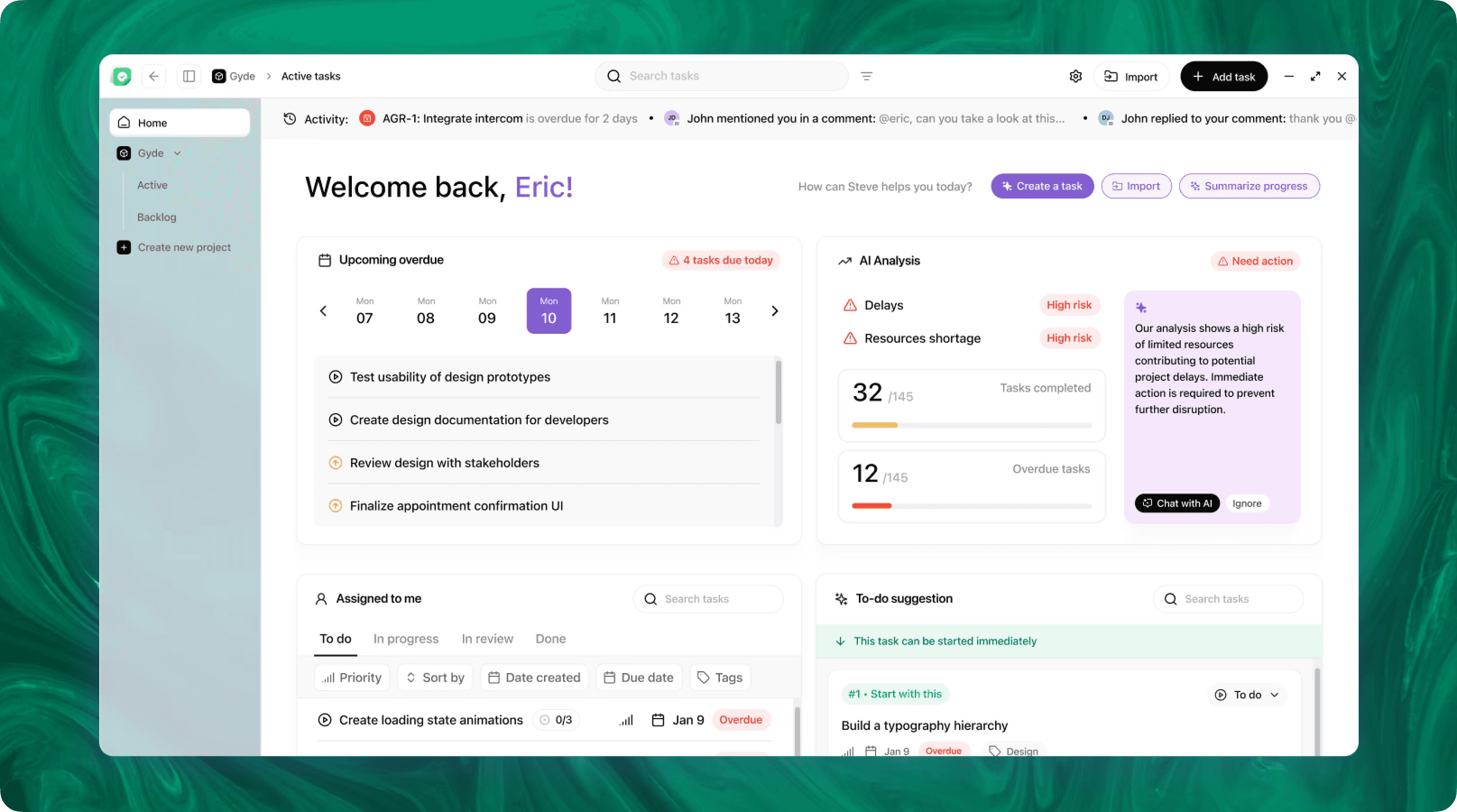
Steve’s task management boards turn intent into tracked work with automation and integrations that emulate a larger PM organization. AI-generated sprints, automated task creation from chat commands, and Linear integration let a small team plan, assign, and monitor work without a dedicated product manager. For example, after a customer call summarized in Steve Chat, the AI can propose follow-up tickets, estimate priorities, and populate a sprint board aligned with release goals. Progress updates and contextual links remain attached to tasks, so engineers see the same memory-backed background that informed their priorities. That continuous alignment reduces rework and keeps velocity high even as the backlog grows.
Steve
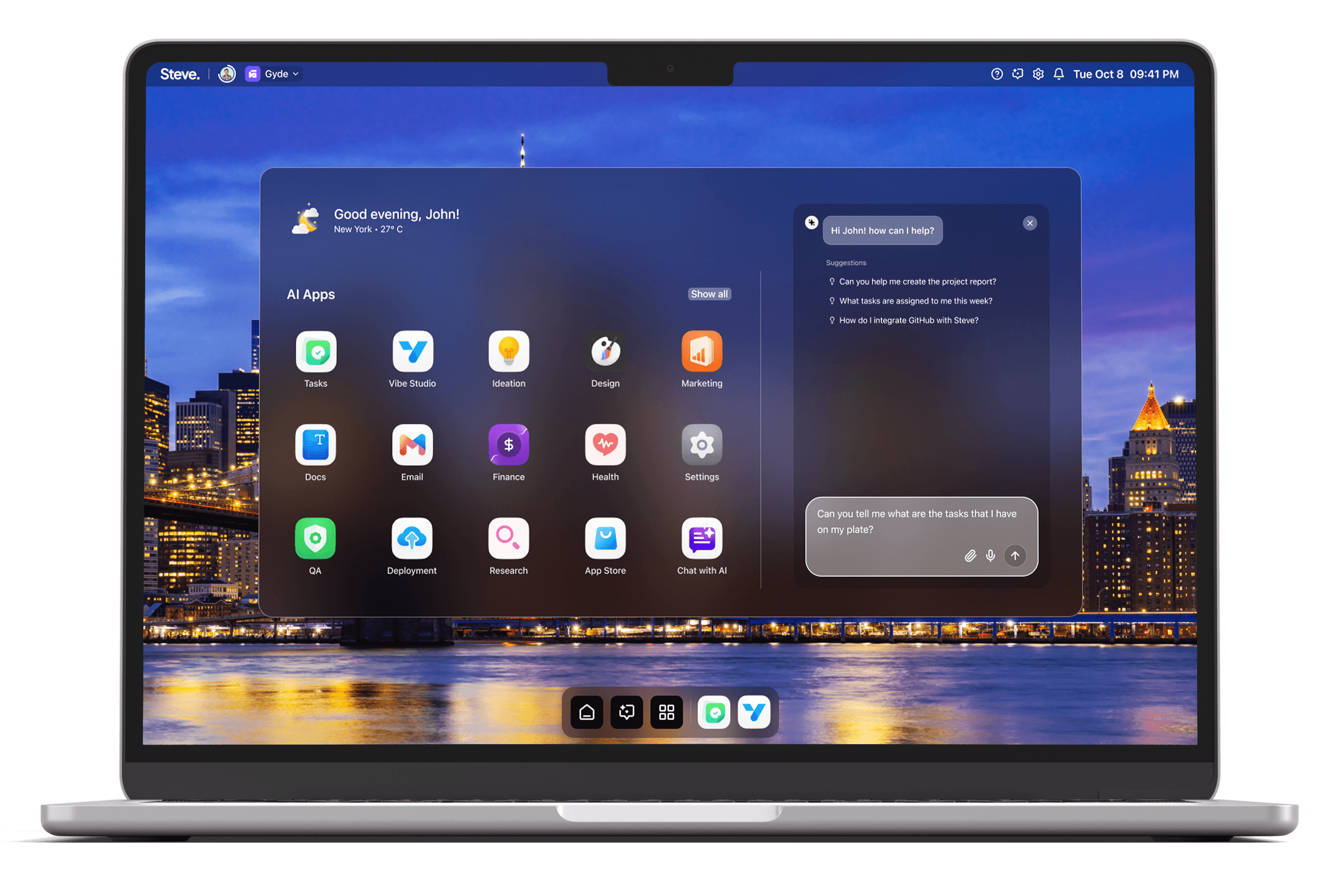
Steve is an AI-native operating system designed to streamline business operations through intelligent automation. Leveraging advanced AI agents, Steve enables users to manage tasks, generate content, and optimize workflows using natural language commands. Its proactive approach anticipates user needs, facilitating seamless collaboration across various domains, including app development, content creation, and social media management.
Conclusion
Steve combines shared memory, a conversational hub with deep integrations, AI Email, and AI-driven task management to give small teams the coordination, continuity, and execution scaffolding of much larger organizations. By turning conversational intent into synchronized actions and by preserving context across tools, Steve—an AI OS—reduces administrative drag, prevents knowledge loss, and accelerates decision-making. The outcome: teams of three to ten people can plan, act, and iterate with the consistency and scale typically expected from far larger teams.