How Steve Helps Remote Teams Stay In Sync
Nov 12, 2026

Shared Memory Keeps Context Centralized: A persistent memory stores decisions and artifacts so every agent and team member references the same context.
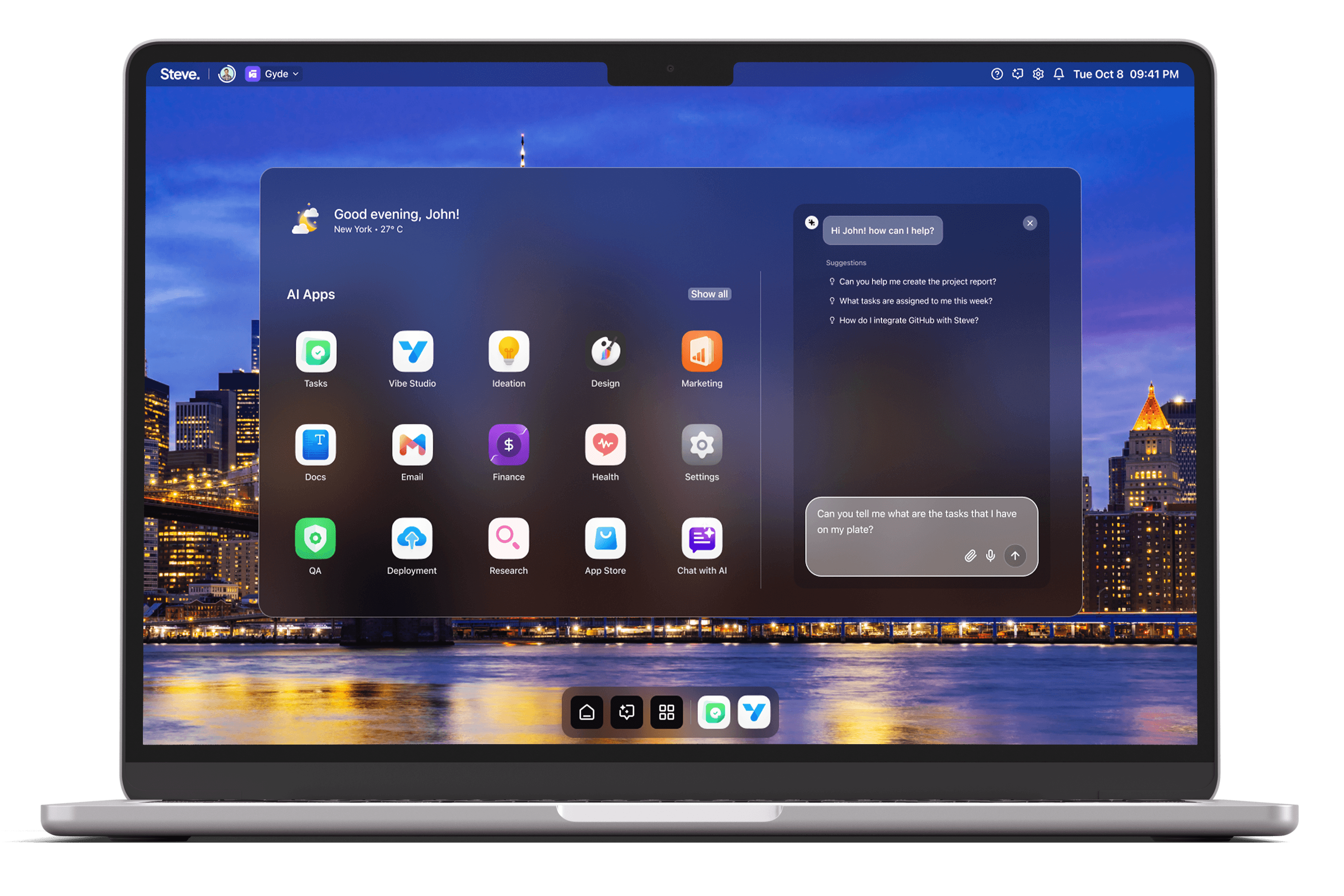
Conversational Workspace With Steve Chat: Natural-language chat connects calendars, files, and code to turn requests into scheduled actions and document lookups.
Smart Inbox and Email Summaries: Integrated AI Email compresses long threads into decision-focused briefs and suggested replies to speed asynchronous responses.
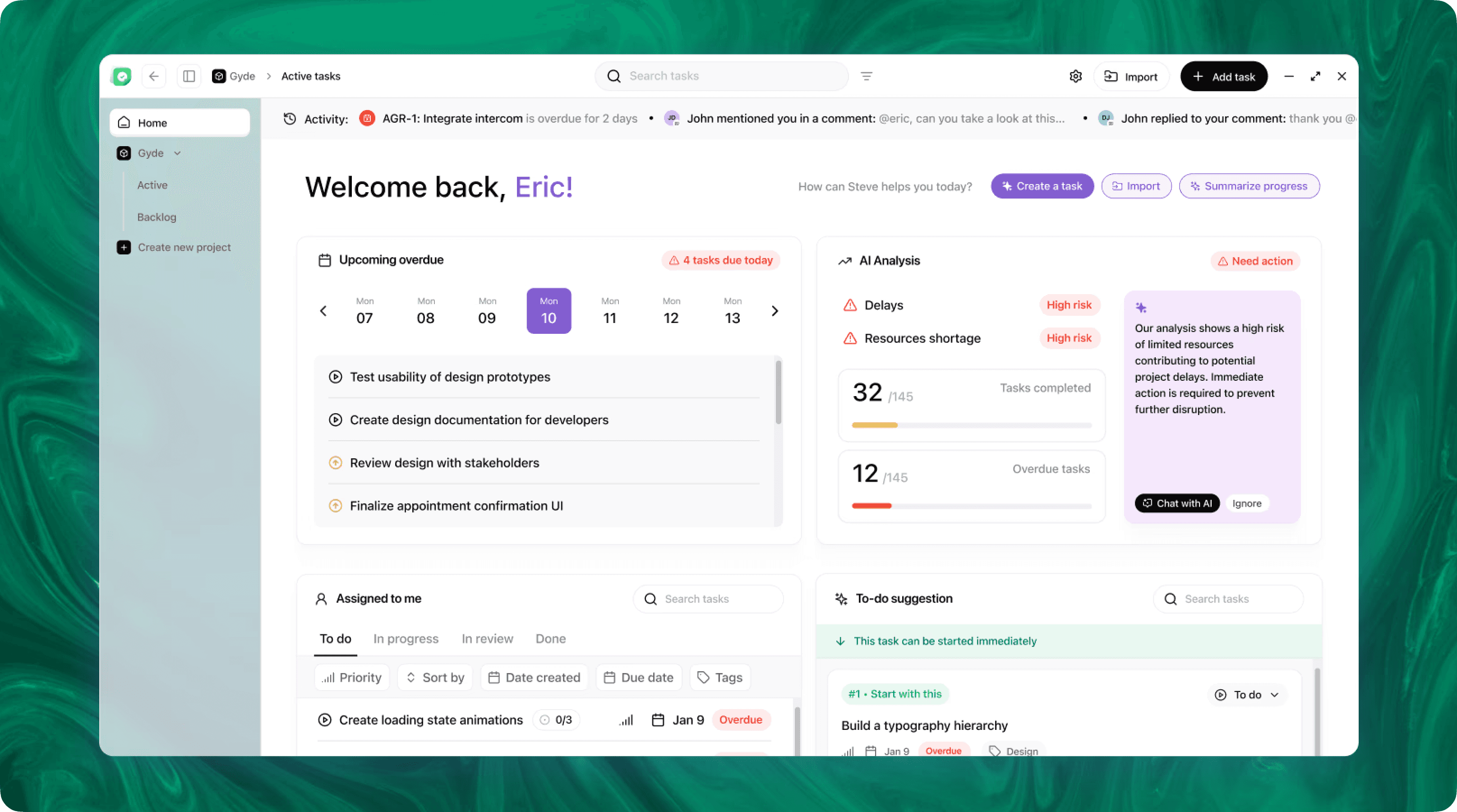
AI-Driven Task Management: Product management boards and integrations automate task creation, sprint proposals, and status updates from actual project context.
Execution Benefit: Converting conversations into tracked tasks and shared memory entries reduces handoffs and aligns distributed teams on a single roadmap.
Introduction
Keeping distributed teams aligned requires more than meetings and file links; it demands continuous, context-aware coordination. Steve, an AI Operating System, reduces sync gaps by centralizing context, automating routine updates, and enabling natural conversations that map directly to work artifacts. This article shows how Steve uses a shared memory, conversational workspace, an integrated AI Email, and AI-driven task management to keep remote teams in sync.
Shared Memory Keeps Context Centralized
Remote teams lose time when context fragments across threads, docs, and tools. Steve’s shared memory system anchors conversations and agent outputs in a single, persistent context so every AI interaction references the same facts, decisions, and artifacts. In practice, when a product decision is made in chat, the shared memory preserves rationale, constraints, and linked files so subsequent agent responses and automations reflect that history.
Scenario: A product lead finalizes an API behavior during a cross-functional discussion. Instead of emailing notes, the team updates the shared memory entry; engineers, designers, and the AI agents immediately see the updated spec. When someone asks Steve for an implementation checklist, the reply draws on the exact decision, reducing rework and contradictory interpretations.
Conversational Workspace With Steve Chat
Steve Chat gives teams a conversational interface that connects to calendars, drives, code repos, and more, turning natural language into actionable outcomes. As an AI OS chat layer, it schedules meetings, surfaces relevant documents, and answers questions with live file context and web-aware searches. The chat’s memory personalizes follow-ups so repeated project queries become faster and more precise.
Scenario: A distributed marketing team needs collateral before a product launch. A manager messages Steve Chat to “assemble the latest launch deck and confirm asset owners.” Steve locates the deck in Drive, lists outstanding images from the shared memory, and schedules a short sync with owners based on calendar availability. Everyone receives the same set of facts and next steps without a dozen back-and-forths.
Smart Inbox and Email Summaries for Asynchronous Clarity
Steve’s AI Email integrates a smart inbox and auto-summaries that compress long threads into decision-focused briefs and suggested replies. For remote teams operating across time zones, concise summaries and context-aware reply drafts minimize delays and errors by surfacing action items directly in the inbox. Thread categorization and AI tags prioritize what needs human attention now versus what can wait.
Scenario: A client sends a long technical request late in a regional workday. Instead of waking the product lead with a full thread, Steve generates a short summary highlighting required changes, deadlines, and proposed owners, and drafts a reply aligned with the project’s shared memory. The on-call engineer can accept the draft, adjust minor details, and send a consistent response within minutes.
AI-Driven Task Management That Keeps Plans Aligned
Steve centralizes planning with AI-powered product management boards that import tasks, propose sprints, and automate status updates. By integrating with tools like Linear, Steve converts decisions from chat and email into tracked tasks, ensuring execution reflects the latest context. The system proposes sprint scopes and tracks execution so remote teams share a single, up-to-date roadmap.
Scenario: During a weekly async planning session, Steve aggregates outstanding action items from shared memory, open threads in AI Email, and issues in GitHub. It suggests a sprint grouping and assigns tentative owners based on availability, then publishes the sprint plan to the team. Stakeholders see the same priorities and can accept or adjust assignments without disparate backchannels.
Steve
Steve is an AI-native operating system designed to streamline business operations through intelligent automation. Leveraging advanced AI agents, Steve enables users to manage tasks, generate content, and optimize workflows using natural language commands. Its proactive approach anticipates user needs, facilitating seamless collaboration across various domains, including app development, content creation, and social media management.
Conclusion
Steve, as an AI OS, reduces friction in distributed work by keeping context centralized, enabling natural conversational workflows, compressing asynchronous communication into clear summaries, and converting decisions into tracked tasks. Each capability cuts handoffs and ambiguity, so remote teams spend less time reconciling information and more time executing. For distributed teams, Steve provides a practical, context-first way to stay in sync across time zones and tools.