How Steve Helps New Hires Become Productive Faster
Nov 4, 2026

Interactive Onboarding With Steve Chat: Conversational access to documents, scheduling, and personalized follow-ups compresses discovery into a few targeted interactions.
Faster Communication With AI Email: Automated tagging, concise thread summaries, and context-aware reply drafts remove email ambiguity and speed stakeholder alignment.
Clear Priorities With AI-Powered Task Management: AI-generated onboarding checklists and sprint proposals turn scattered tasks into an executable plan tied to execution tracking.
Preserving Context With Shared Memory For Continuous Ramp: Persistent memory keeps onboarding state across tools so progress and decisions carry forward without repeated explanations.
Workflow Benefit: Combined, these capabilities convert scattered onboarding tasks into a coordinated, measurable ramp that accelerates meaningful contribution.
Introduction
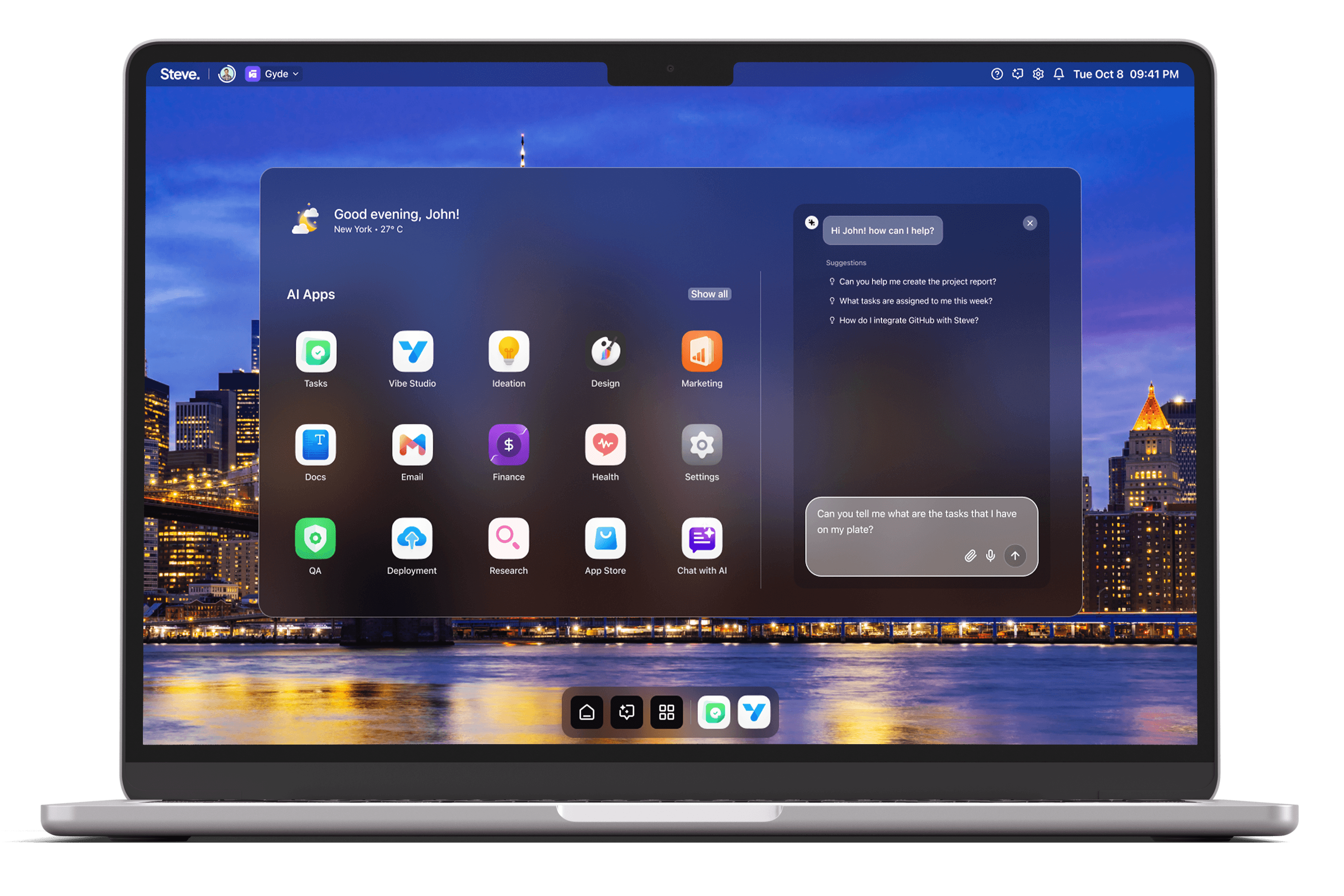
Onboarding determines how quickly new hires contribute. Steve reduces common ramp-up bottlenecks by combining conversational assistance, smart inbox triage, persistent context, and AI-driven task management. As an AI Operating System, Steve centralizes the signals new employees need—documents, schedules, priorities, and conversations—so they spend less time searching and more time doing.
Interactive Onboarding With Steve Chat
Steve Chat provides a conversational entry point that answers questions, locates resources, and performs actions across integrated services. New hires can ask natural-language questions—"Where is the API spec?" or "Block 30 minutes with my mentor next week"—and receive direct results or scheduled events without switching apps. Because Steve maintains sophisticated memory and supports file-aware uploads, it personalizes follow-up answers and supplies relevant documents (design specs, runbooks, PRs) in context. Practical scenario: a developer in week one asks Steve Chat to summarize the codebase and open recent architecture decisions; Steve returns a concise brief, links to key repos, and schedules a walkthrough with the right engineer, compressing days of discovery into a few interactions.
Faster Communication With AI Email
Email is a frequent source of ambiguity for new hires; Steve’s AI Email reduces that friction with smart triage and summaries. The inbox applies AI tags to prioritize critical threads and generates instant summaries of long message chains so newcomers grasp status and outstanding asks quickly. Context-aware suggestions draft replies that align with ongoing work, which saves time for those still learning team tone and process. In practice, a product analyst flagged on multiple threads can rely on Steve to surface the two highest-priority messages, provide a one-paragraph thread summary, and draft an action-oriented reply that the analyst can edit and send in minutes.
Clear Priorities With AI-Powered Task Management
Task Management in Steve turns scattered to-dos into an organized plan new employees can follow. The AI boards ingest tasks, propose sprints, and integrate with Linear so incoming issues or tickets become actionable items on a shared board. Steve suggests a prioritized onboarding checklist—account setup, access requests, introductory meetings, first small deliverable—and tracks execution so managers see progress without micromanaging. For example, a marketing hire receives an AI-proposed 30/60/90 plan that converts required tasks into a sequence of checkable items, with reminders and links to training materials, enabling faster independent contribution.
Preserving Context With Shared Memory For Continuous Ramp
Steve’s shared memory enables agents and tools to retain and surface onboarding context across sessions. This persistent context means information gathered during an initial chat or email summary remains available to other Steve modules—Task Management, Steve Chat, and AI Email—so knowledge does not reset between interactions. Concretely, when a new hire marks a training module complete, shared memory updates their profile; subsequent queries reflect that progress and produce more advanced suggestions. Mentors benefit too: shared memory preserves prior discussions and decisions so handoffs are clean and follow-up coaching targets gaps rather than repeating basics.
Steve
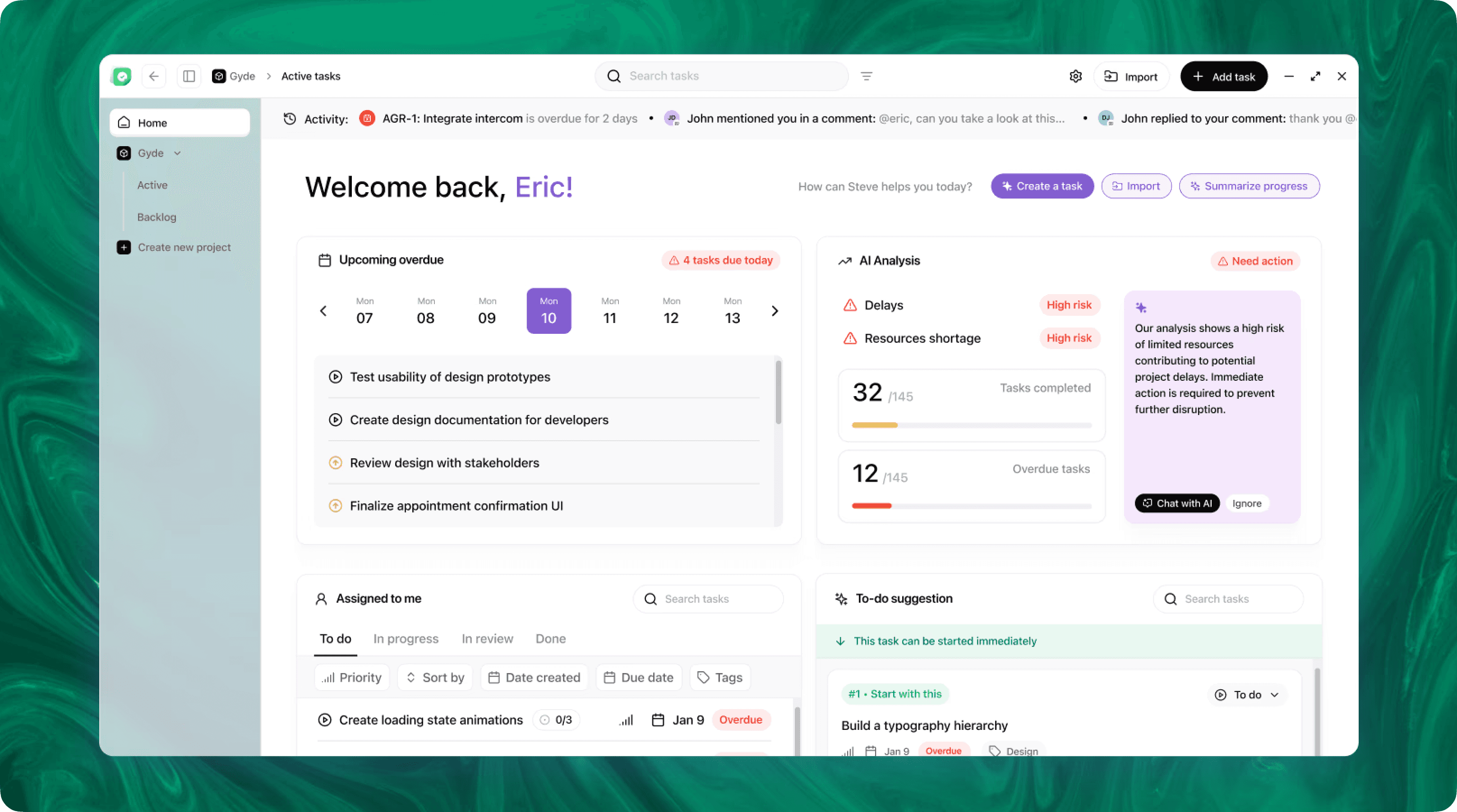
Steve is an AI-native operating system designed to streamline business operations through intelligent automation. Leveraging advanced AI agents, Steve enables users to manage tasks, generate content, and optimize workflows using natural language commands. Its proactive approach anticipates user needs, facilitating seamless collaboration across various domains, including app development, content creation, and social media management.
Conclusion
Steve shortens the path from hire to productive contributor by delivering immediate answers, distilled communications, prioritized work, and continuous context. As an AI OS, Steve reduces onboarding guesswork: newcomers find documents, schedule learning, respond to stakeholders, and execute prioritized tasks faster. The result is a repeatable, low-friction ramp that scales with team growth and leaves managers with clearer visibility into early-stage impact.