How Steve Helps Managers Spend Less Time Chasing Updates
Nov 17, 2026

AI Email: Automatic tagging and thread summaries convert long email exchanges into actionable, time-saving outputs.
Steve Chat: Direct integrations let managers query and aggregate status across calendars, docs, and issue trackers in one conversation.
Shared Memory System: Persistent project context prevents repeated explanations and ensures consistent updates across agents and tools.
Task Management: AI-generated task boards and Linear integration turn conversational updates into tracked work and proposed sprints.
Workflow Benefit: Combining summaries, conversational aggregation, shared memory, and task automation minimizes follow-ups and accelerates decisions.
Introduction
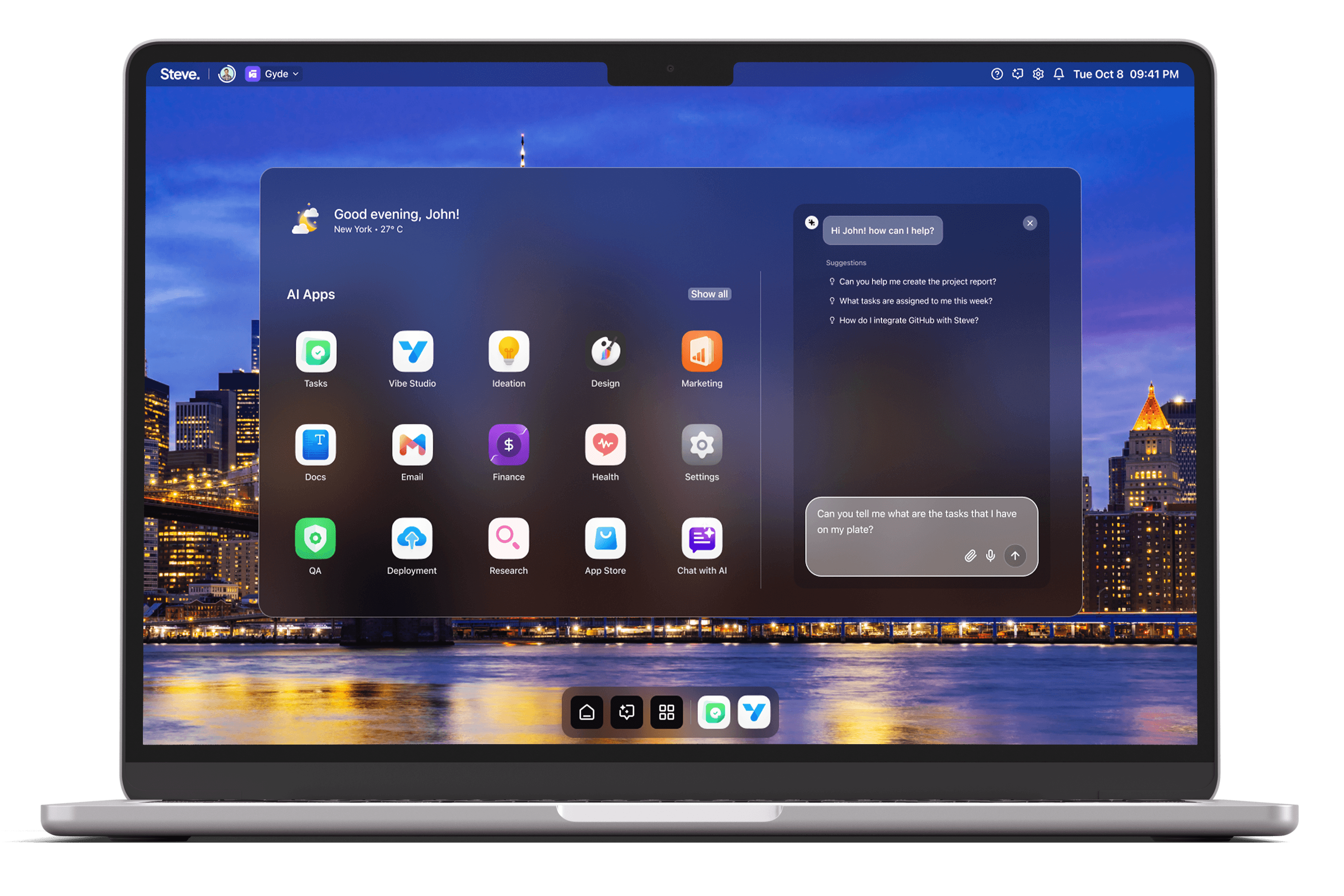
Managers spend disproportionate time chasing status updates: clarifying progress, reconciling disparate reports, and nudging owners for answers. That overhead slows decisions and increases context-switching. Steve, an AI Operating System, reduces that drag by unifying communication, documentation, and task state into conversational workflows. As an AI OS, Steve surfaces concise updates, automates routine follow-ups, and preserves project context so managers spend less time asking and more time deciding.
AI Email: Turn Long Threads Into Actionable Summaries
Email remains a primary place updates live, but threads often bury the signal in noise. Steve’s AI Email automatically tags and prioritizes messages, generates instant summaries of long threads, and provides context-aware reply suggestions. In practice, a manager opening a 20-message thread gets a two-paragraph summary highlighting decisions, blocked items, and owners, plus a suggested reply that confirms next steps and deadlines. Instead of composing clarifying emails or pinging teammates, the manager can send the suggested reply or refine it in-chat inside the inbox. That single interaction collapses several round-trips and prevents status updates from stalling in unread or ambiguous messages.
Steve Chat: Aggregate State Across Tools Through Conversation
When work spans calendars, documents, issue trackers, and notes, chasing updates becomes a tool-hopping exercise. Steve Chat integrates directly with Google Calendar, Gmail, Drive, Sheets, Notion, GitHub, and dozens more, letting managers ask natural-language questions like “What’s the status of the Q4 pricing rollout?” and receive a consolidated answer built from meetings, docs, and issues. Because Steve is file-aware, it can pull specific spreadsheets, summarize the latest commits, and surface relevant meeting notes in one reply. Managers can then ask follow-ups—schedule a sync, assign an owner, or attach the summary to a shared doc—without leaving the conversation. This conversational aggregation eliminates manual cross-checking and reduces the need for repeated status requests.
Shared Memory System: Preserve Project Context Across Interactions
Repeatedly re-explaining context to different teammates or tools wastes time and creates inconsistent updates. Steve’s shared memory system lets AI agents retain and share project context so outputs remain aligned across conversations and tools. For example, when a product thread references an agreed scope and deadline, that context persists in Steve’s memory: future summaries, email drafts, and task proposals automatically reflect the previously established scope. If a new stakeholder asks for an update, Steve can produce a consistent summary that references the same baseline, avoiding the “I didn’t know that” replies that force managers back into chasing mode. Shared memory reduces redundant clarifications and preserves institutional context across communications.
Task Management: Convert Conversations Into Tracked Work
Even when updates surface, they must translate into tracked tasks to prevent slippage. Steve’s AI-powered task boards integrate with Linear and other trackers, propose sprints, and create or update tasks from prompts. A manager who learns in a standup that a feature is blocked can tell Steve to “create a blocker task, tag engineering, and propose a 3-day mitigation sprint.” Steve will create the task in the board, import or link related documents, suggest a sprint schedule, and notify assignees. Because planning, execution, and status live in one workspace with context-aware automation, managers avoid follow-up loops chasing owners for confirmations or trying to reconcile separate to-do lists.
Steve
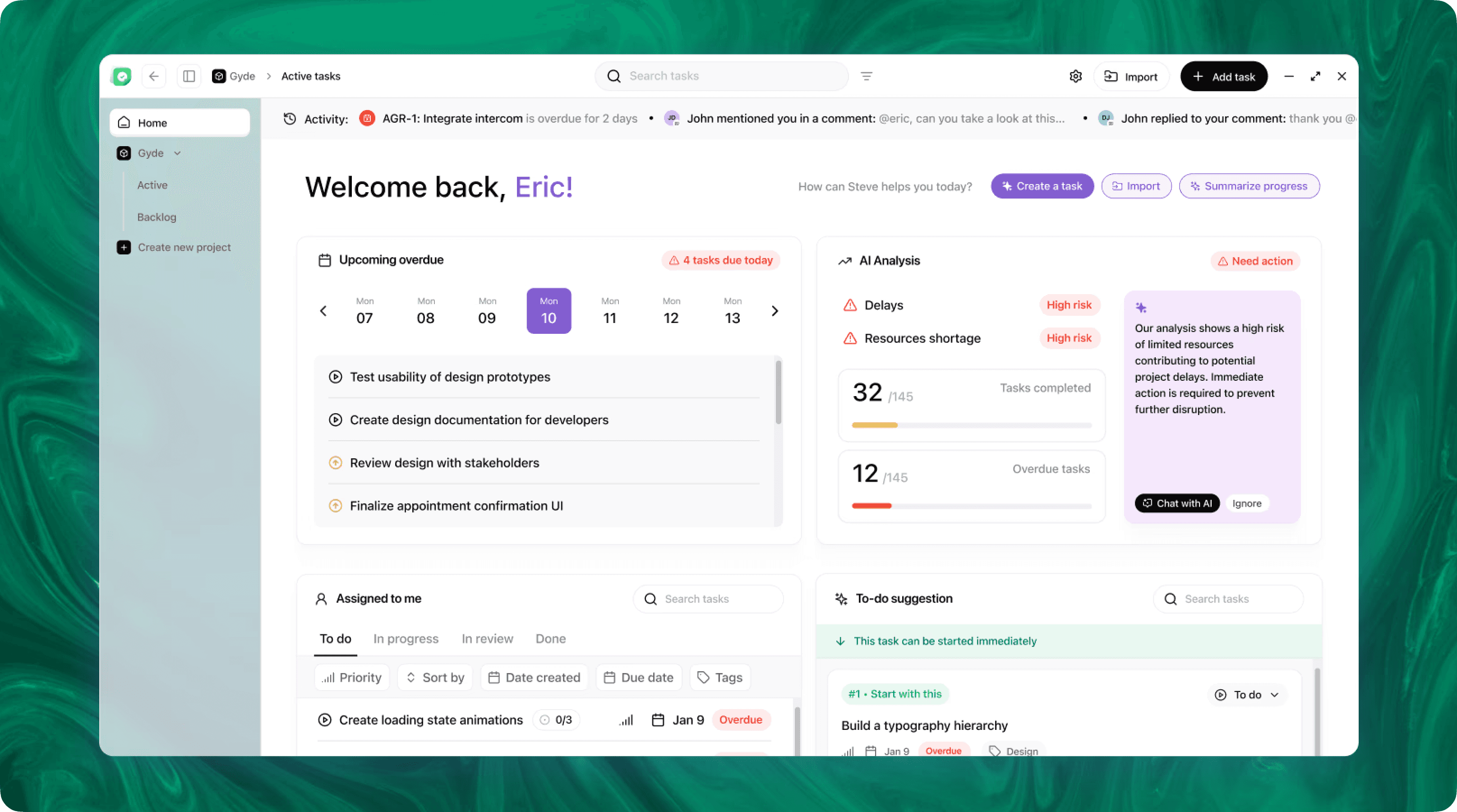
Steve is an AI-native operating system designed to streamline business operations through intelligent automation. Leveraging advanced AI agents, Steve enables users to manage tasks, generate content, and optimize workflows using natural language commands. Its proactive approach anticipates user needs, facilitating seamless collaboration across various domains, including app development, content creation, and social media management.
Conclusion
Chasing updates is not just inefficient; it scales poorly as teams grow. Steve, as an AI Operating System, reduces that overhead by converting noisy signals into concise summaries (AI Email), aggregating cross-tool state via conversation (Steve Chat), preserving project context (shared memory system), and turning conversations into tracked work (Task Management). The result: fewer interruptions, faster decisions, and a consistent, auditable flow of updates so managers can focus on outcomes rather than status collection.