How Steve Helps Leaders Spot Risks Earlier
Nov 4, 2026

Signal Reduction Through AI Email: Automated tagging and thread summaries surface priority issues so leaders can act before problems escalate.
Cross-System Context With Steve Chat: Persistent memory and integrations let Steve correlate conversations, files, and calendars into a unified risk view.
Shared Memory for Agent Collaboration: Agents write and synthesize cross-domain signals into concise briefs that reduce blind spots.
Task-Aware Monitoring And Proactive Suggestions: Integrated task tracking highlights blocked mitigations and recommends escalation paths tied to owners and dependencies.
Workflow Benefit: Combining inbox triage, conversational correlation, shared synthesis, and task monitoring shortens detection-to-decision timelines.
Introduction
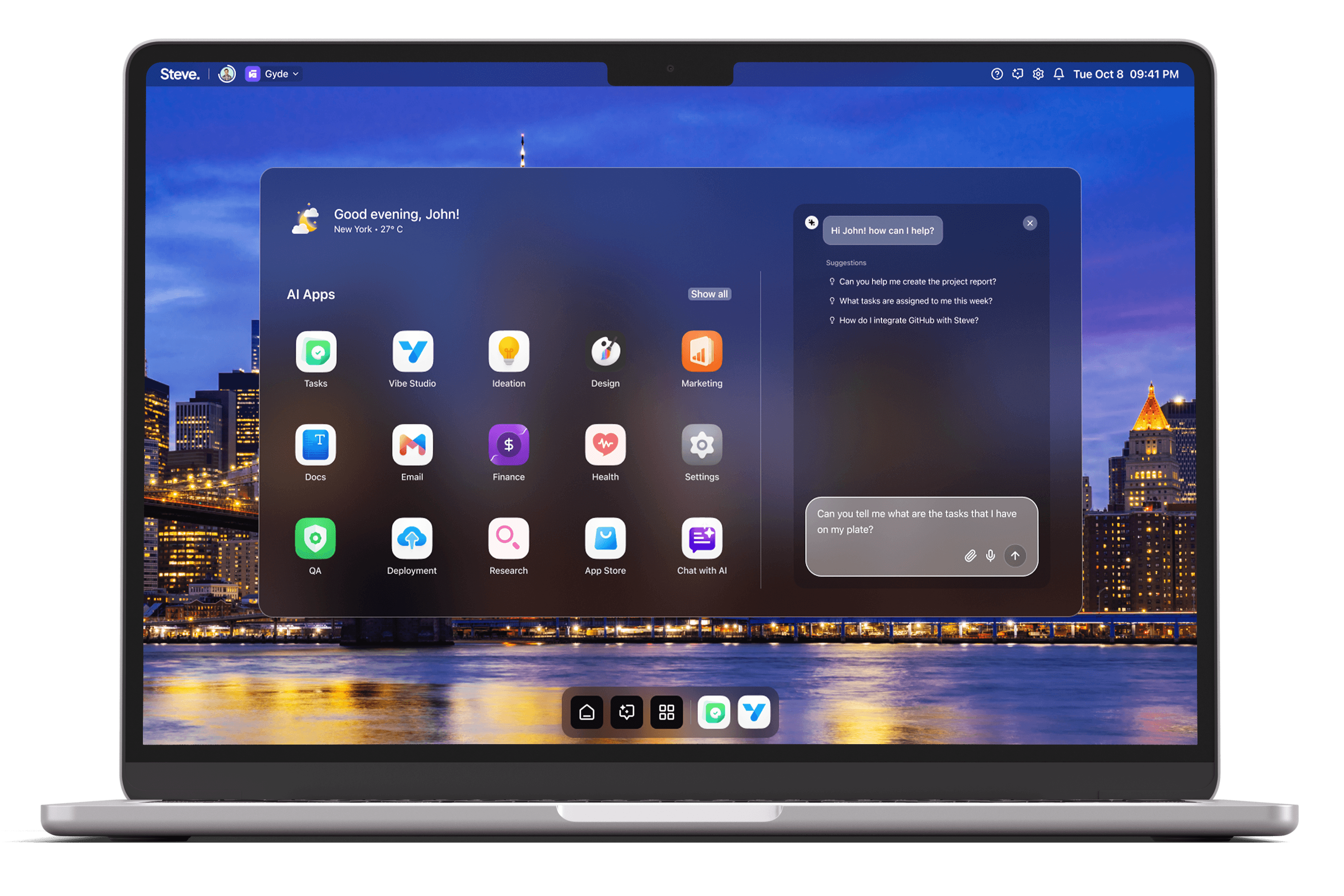
Leaders must detect operational, financial, and reputational risks before they escalate. Steve helps them spot those risks earlier by consolidating signals, summarizing complexity, and enabling targeted follow-up—all inside a unified AI Operating System. By combining an intelligent inbox, a conversational workspace with persistent memory and integrations, a shared agent memory for cross-context reasoning, and task-aware product management, Steve shortens the time between signal and action so leaders can intervene decisively.
Signal Reduction Through AI Email
Email remains a primary source of early warning—customer complaints, supplier notices, and internal escalations often appear in threads before issues surface publicly. Steve’s AI Email tags and categorizes messages, surfaces priority conversations, and produces concise summaries of long threads so leaders don’t miss critical developments buried in volume. In practice, a VP receives a flagged thread where several customers report an intermittent outage; Steve’s summary highlights frequency, affected regions, and stated impact, allowing the leader to convene the right stakeholders within minutes rather than hours.
Beyond triage, Steve’s context-aware suggestions help craft immediate responses that de-escalate risk: when an important vendor reports a compliance lapse, Steve drafts a focused reply that requests remediation timelines and proposes interim mitigations, keeping communications clear while the leader verifies facts.
Cross-System Context With Steve Chat
Risk rarely lives in a single app. Steve Chat links conversations to calendar events, documents, issue trackers, and files so leaders see a holistic view without toggling tools. Its persistent memory remembers prior interactions and preferences, letting the AI surface relevant historical context—previous incidents, outstanding approvals, or recurring patterns—when new signals appear.
For example, a product leader notices a sudden spike in bug reports. In a single Steve Chat session they upload error logs and reference a recent sprint plan; the assistant correlates the logs with tasks imported from the task board and recent deployment notes, then suggests likely root causes and next steps. Real-time web search capability fills gaps with external reports or advisories, ensuring assessments include public intelligence when needed.
Shared Memory for Agent Collaboration
Steve’s shared memory system enables multiple AI agents to exchange context and produce consolidated insights, reducing blind spots that arise when signals stay siloed. Agents monitoring email, calendar anomalies, and issue trackers can write findings into shared memory; another agent then synthesizes those entries into a risk brief tailored for leaders.
In a practical scenario, procurement flags delayed shipments in email, operations logs show inventory depletion, and finance notes cashflow sensitivity—all recorded to shared memory. A synthesis agent compiles a one-page risk summary that quantifies exposure, lists affected SKUs, and recommends immediate actions (e.g., expedite orders, reassign stock). That aggregated, cross-domain view accelerates decision making and prevents leaders from chasing individual alerts instead of the underlying problem.
Task-Aware Monitoring And Proactive Suggestions
Steve’s task management integrates with issue trackers and can import tasks to build an actionable picture of execution risk. The AI proposes sprints, highlights overdue or dependency-bound items, and monitors progress against remediation steps. When a suggested mitigation stalls, Steve surfaces that friction directly to leaders with context—who owns the task, what dependencies block it, and how delay changes exposure.
A Chief Operating Officer using Steve sees that a mitigation sprint for a security vulnerability has two blocked tasks tied to external vendor approvals. Steve flags the vendor dependency, summarizes correspondence, and recommends escalating contact or alternative mitigations. That level of task-aware visibility turns passive status updates into proactive risk control.
Steve
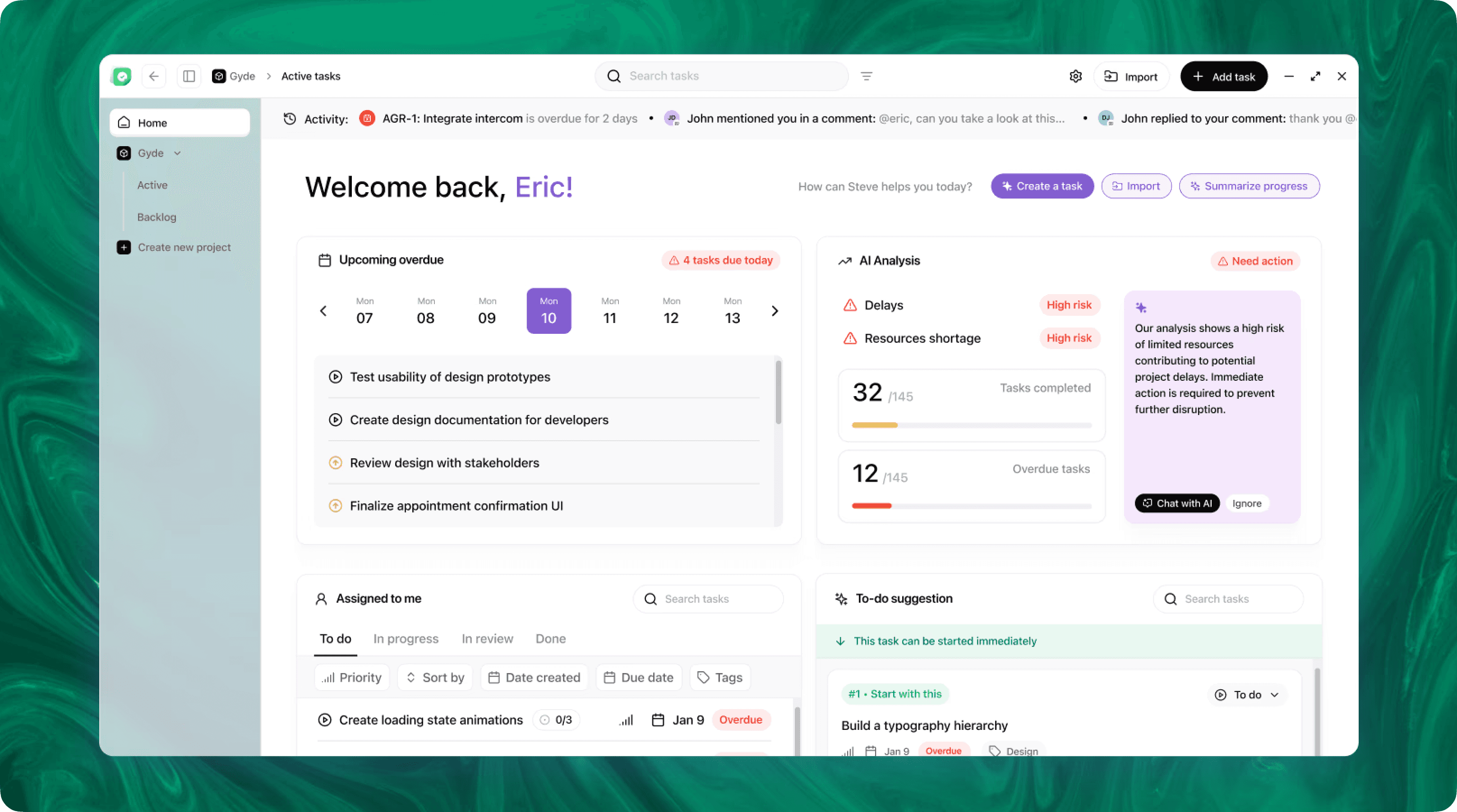
Steve is an AI-native operating system designed to streamline business operations through intelligent automation. Leveraging advanced AI agents, Steve enables users to manage tasks, generate content, and optimize workflows using natural language commands. Its proactive approach anticipates user needs, facilitating seamless collaboration across various domains, including app development, content creation, and social media management.
Conclusion
Spotting risk earlier requires fast signal collection, clear synthesis, and prioritized action. As an AI Operating System, Steve combines an intelligent inbox, a context-rich conversational assistant, a shared agent memory, and task-aware monitoring to compress that loop. Leaders who use Steve gain earlier visibility, clearer trade-offs, and faster routes to containment—reducing the likelihood that manageable issues become crises. In short: Steve turns dispersed signals into decisive, timely leadership action.