How Steve Helps Leaders See Around Corners
Oct 11, 2026

Persistent Context: Shared Memory That Preserves Signal: A shared memory links scattered mentions and decisions so recurring risks surface as coherent trends.
Signal Extraction From Communication: AI Email That Prioritizes What Matters: Automated tagging and summaries turn noisy threads into concise, actionable alerts for leaders.
Conversational Forecasting: Steve Chat As A Real-Time Strategy Assistant: Integrated chat synthesizes files, calendars, and web signals to model trade-offs and validate scenarios quickly.
Execution-Aware Planning: Task Management That Converts Insight Into Action: Proposed sprints and task boards close the loop from insight to measurable remediation.
Leadership Benefit: Combining context, signal extraction, conversational modeling, and execution tooling shortens the time from detection to decisive action.
Introduction
Seeing around corners—anticipating risks, opportunities, and friction before they materialize—is a core leadership skill made scalable by an AI Operating System. Steve combines persistent context, conversational intelligence, and execution-aware planning so leaders surface weak signals, validate scenarios, and act earlier. This article shows how Steve turns scattered signals into forward-looking insight that leaders can use to make faster, safer decisions.
Persistent Context: Shared Memory That Preserves Signal
Steve’s shared memory lets AI agents retain and weave organizational context across conversations, documents, and workflows. Instead of isolated replies, the system accumulates project history, stakeholder preferences, and prior decisions so agents can surface trends and recurring issues—an early warning system for leaders. In practice, when multiple teams flag vendor latency across different channels, Steve’s shared memory links those mentions, quantifies frequency, and highlights the problem’s trajectory. Leaders then see a consolidated view of a brewing operational risk rather than disparate tickets or emails, enabling proactive escalation or contingency planning.
Signal Extraction From Communication: AI Email That Prioritizes What Matters
Leaders drown in inbound noise; Steve’s AI Email reduces that friction by tagging, summarizing, and contextualizing long threads. Automated summaries and contextual suggestions reveal the essence of stakeholder conversations and expose deviations from plan—delayed approvals, budget shifts, or emergent dependencies—so leaders can intervene selectively and early. For example, a contract negotiation thread summarized by Steve surfaces newly added terms that increase delivery risk; the leader receives a concise digest and suggested responses to neutralize exposure. This preserves executive attention for strategic choices instead of inbox triage.
Conversational Forecasting: Steve Chat As A Real-Time Strategy Assistant
Steve Chat functions as an interactive strategist: it combines file-aware context, calendar and document integrations, and real-time web search to test hypotheses and generate options. Leaders can ask natural questions—"If we delay feature X by two sprints, what customer segments are most affected?"—and Steve synthesizes historical data, roadmap items, and external signals to produce actionable trade-offs. Because responses incorporate the shared memory and attached files, recommendations reflect corporate context rather than generic advice. That makes scenario planning faster and grounded, letting leaders model outcomes and commit to decisions with confidence.
Execution-Aware Planning: Task Management That Converts Insight Into Action
Seeing around corners requires follow-through. Steve’s Task Management connects foresight to execution by proposing sprints, creating tasks from prompts, and tracking outcomes across teams. When Steve detects a pattern—security alerts, churn upticks, or missed milestones—it can recommend a remediation sprint, populate the board with prioritized tasks, and measure progress. Leaders gain a closed loop: identification, recommendation, and observable execution. This reduces the lag between spotting a trend and mobilizing resources, which is often where unnoticed risks grow.
Steve
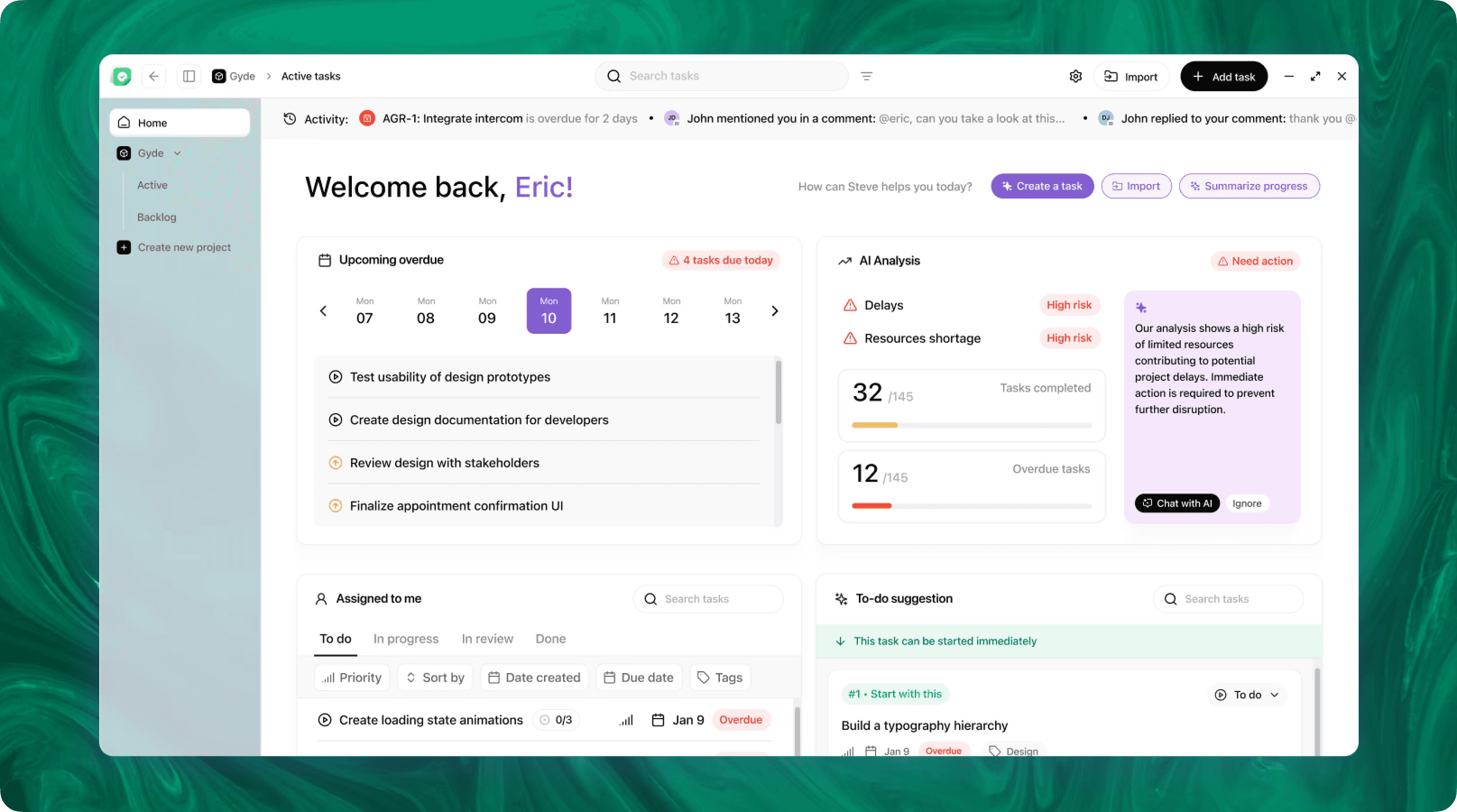
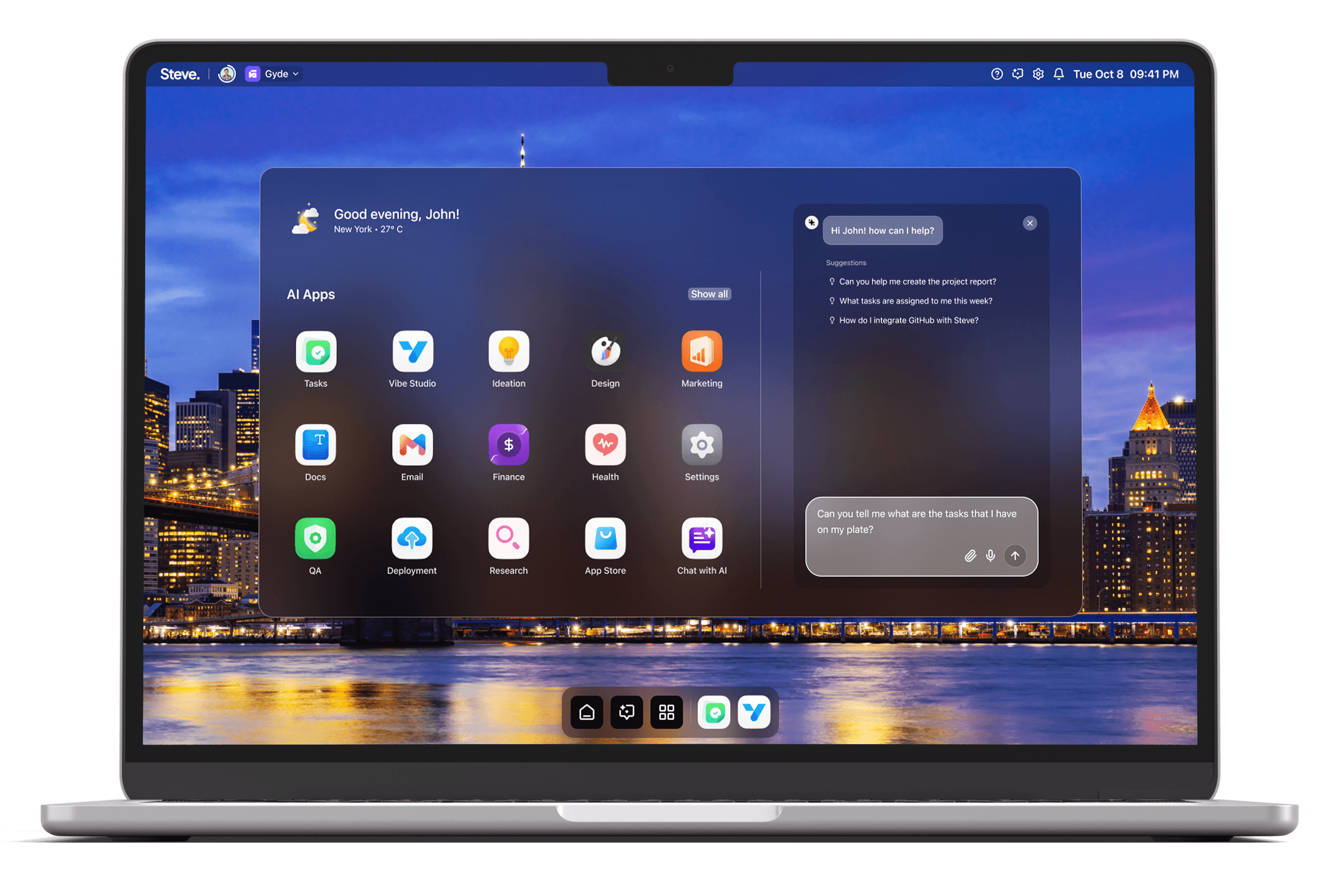
Steve is an AI-native operating system designed to streamline business operations through intelligent automation. Leveraging advanced AI agents, Steve enables users to manage tasks, generate content, and optimize workflows using natural language commands. Its proactive approach anticipates user needs, facilitating seamless collaboration across various domains, including app development, content creation, and social media management.
Conclusion
Steve, as an AI OS, gives leaders the three capabilities that make forward-looking leadership repeatable: persistent organizational memory that links signals, communication intelligence that surfaces priority, and execution tooling that turns insight into measurable action. By collapsing discovery, recommendation, and delivery into a single conversationally driven workflow, Steve shortens the time from suspicion to response. Leaders who adopt Steve shift from reacting to managing risk and opportunity intentionally—seeing farther, deciding sooner, and executing with clarity.