How Steve Enables Cross-Functional Collaboration
Feb 20, 2026

Shared Memory Creates A Single Source Of Context: Persistent memory ensures decisions and constraints remain available across conversations, reducing rework.
Conversational Integration Across Tools: Steve Chat’s direct integrations let teams retrieve files, schedule meetings, and surface logs without switching apps.
Smart Email That Keeps Teams Aligned: AI Email summarizes threads, tags priorities, and drafts context-aware replies so stakeholders share a clear narrative.
AI-Powered Task Management For Cross-Functional Execution: Task boards import from Linear, propose sprints, and automate updates to maintain alignment across roles.
Workflow Benefit: Combining shared memory, integrated chat, smart email, and task automation shortens feedback loops and accelerates coordinated delivery.
Introduction
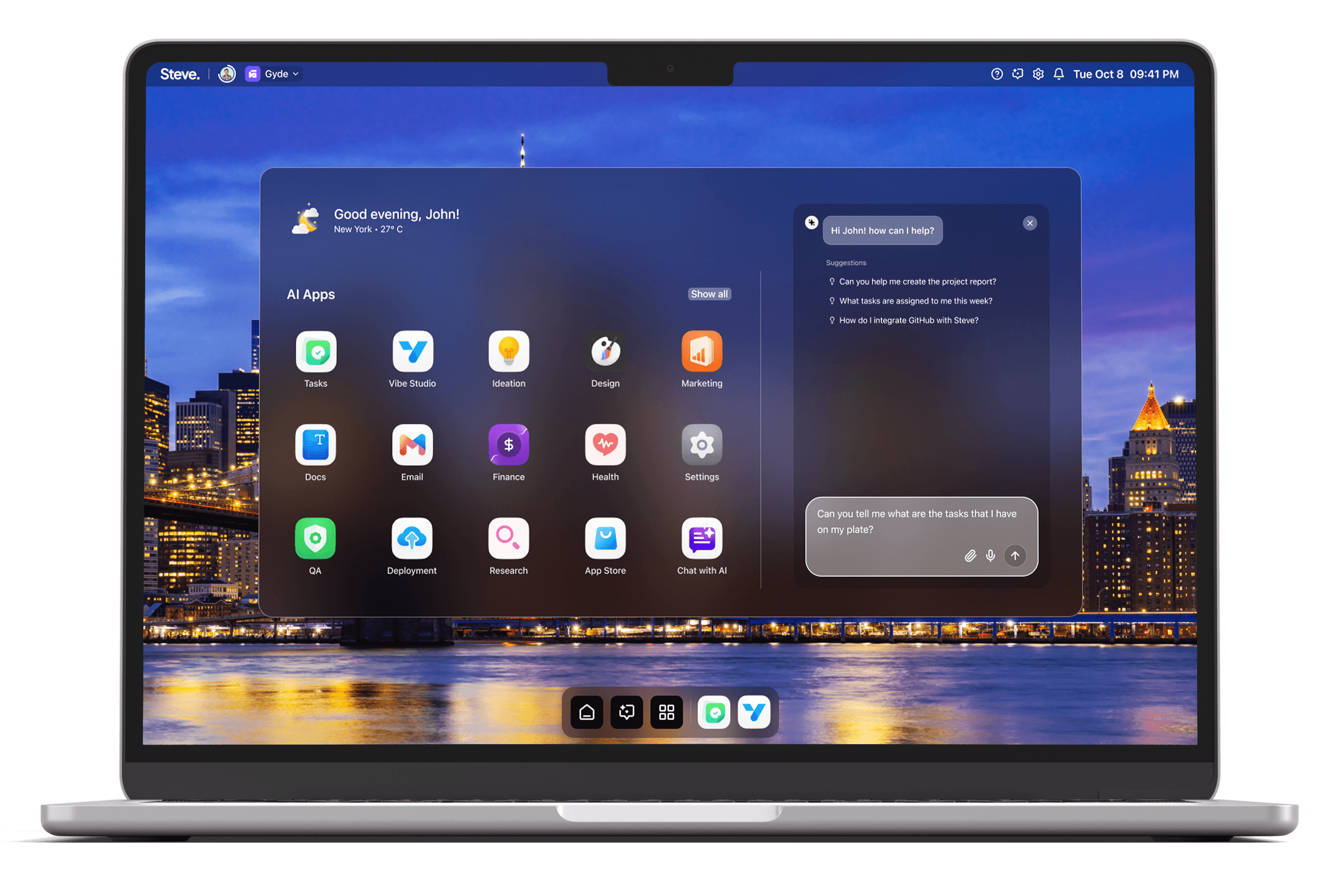
Cross-functional collaboration depends on shared context, timely communication, and clear execution. As an AI Operating System, Steve centralizes those needs by combining persistent memory, conversational integrations, AI-assisted email, and task orchestration so multidisciplinary teams move from discussion to delivery with fewer handoffs and less ambiguity.
Shared Memory Creates A Single Source Of Context
Steve’s shared memory system lets AI agents retain and surface project context across conversations and tools, eliminating repeated briefings. When a product decision, design constraint, or customer note is recorded, agents reference that same context in subsequent interactions so designers, engineers, and marketers see consistent answers. In practice, a PM can note a risk in one chat and rely on Steve to surface it when an engineer asks about implementation trade-offs or when the marketing lead drafts launch messaging. That persistent context reduces rework and preserves rationale across the product lifecycle.
Conversational Integration Across Tools
Steve Chat connects directly to calendars, email, Drive, Sheets, Notion, GitHub, and 40+ services so cross-functional work happens in one conversational surface. Teams can ask Steve to find the latest spec in Drive, sync a demo on Google Calendar, fetch a failing CI log from GitHub, or pull analytics from a spreadsheet without switching apps. File-aware chat accepts PDFs, spreadsheets, and images, which means a single prompt can yield a summarized brief, action items, and linked references for stakeholders. This reduces context fragmentation: instead of relaying attachments and links across channels, teams query Steve and receive a consolidated, actionable response they can share instantly.
Smart Email That Keeps Teams Aligned
Steve’s AI Email folds intelligent triage and summarization into the inbox so long threads stop becoming time sinks for cross-functional stakeholders. The smart inbox synchronizes in real time, tags and prioritizes critical conversations, and generates concise summaries of lengthy exchanges so each discipline understands decisions and outstanding asks at a glance. Context-aware reply suggestions propose draft responses aligned with ongoing work, which speeds consensus when legal, product, and sales must sign off on the same message. Team members can also chat with Steve inside the inbox to refine language or extract action items, preserving a clear audit trail and reducing misaligned follow-ups.
AI-Powered Task Management For Cross-Functional Execution
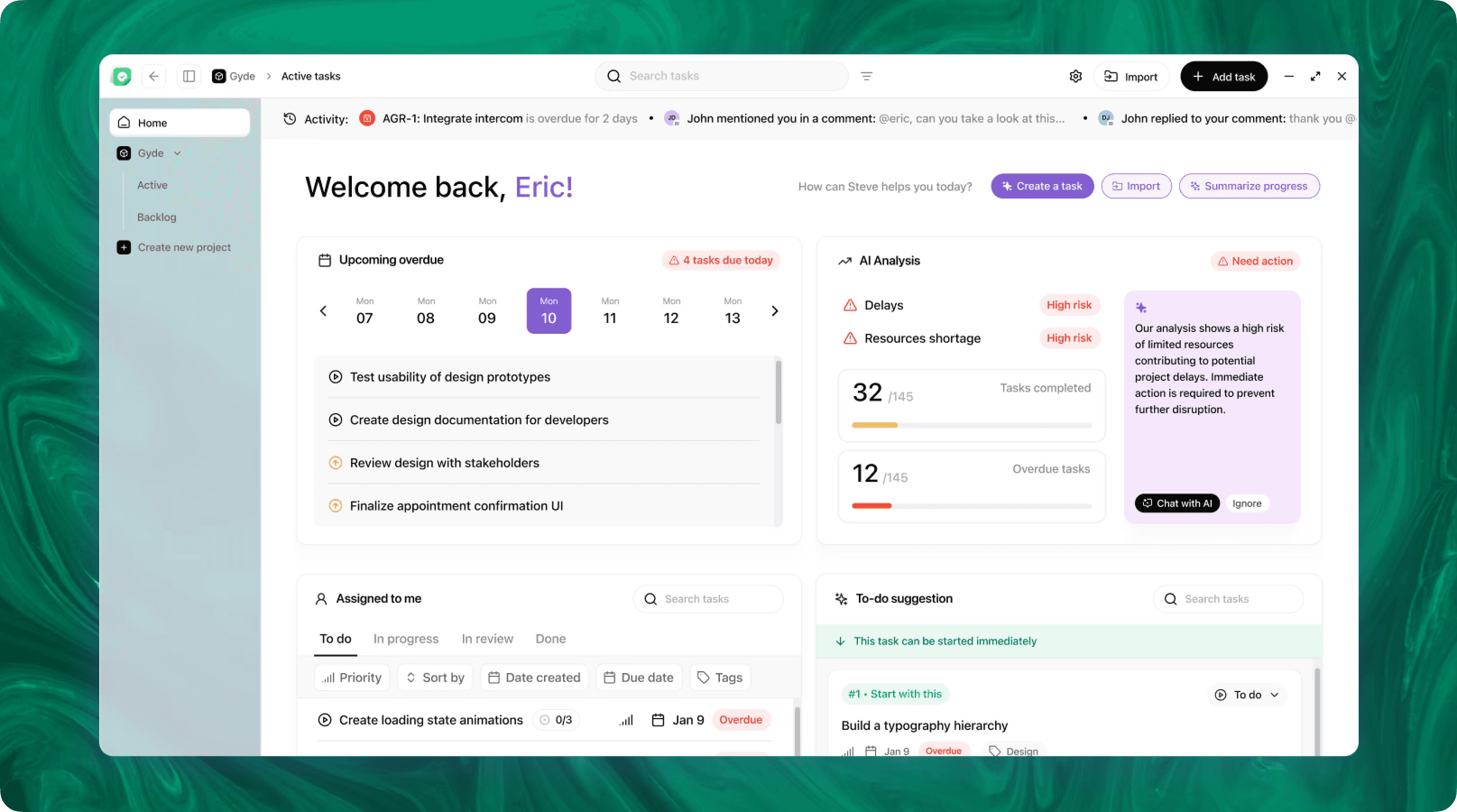
Steve’s task management boards bring planning, execution, and updates into a single workspace with AI automation that respects team roles. The system imports tasks from Linear or creates new items from natural prompts, and it proposes sprint structures and execution plans based on project context. For example, after a discovery meeting, Steve can consolidate notes into prioritized tasks, assign owners, and suggest a sprint cadence that balances design, engineering, and QA effort. Context-aware automation updates stakeholders when dependencies change, ensuring that a design delay automatically flags affected engineering stories and notifies the product owner. This tight loop between planning and status reduces manual coordination and keeps cross-functional teams aligned on goals and timelines.
Practical Workflow Example
Consider a product launch involving product, engineering, design, and marketing. The PM uploads the spec and key customer research into Steve Chat; shared memory tags the spec as the canonical source. Steve generates a concise email summary and proposed rollout tasks; the AI Email drafts the announcement and prioritizes stakeholder replies. The PM asks Steve to import tasks into the board and propose a two-week sprint; Steve suggests task owners, flags dependencies, and creates a Linear sync so engineers receive tickets in their workflow. Throughout, team members query Steve for the latest context—no single person needs to re-explain decisions, and updates propagate automatically.
Steve
Steve is an AI-native operating system designed to streamline business operations through intelligent automation. Leveraging advanced AI agents, Steve enables users to manage tasks, generate content, and optimize workflows using natural language commands. Its proactive approach anticipates user needs, facilitating seamless collaboration across various domains, including app development, content creation, and social media management.
Conclusion
Steve functions as an AI OS that reduces coordination overhead by preserving context, enabling conversational access to tools, summarizing communications, and automating task planning. For cross-functional teams, that means fewer status meetings, fewer lost assumptions, and a faster path from aligned intent to executed work. Steve turns fragmented collaboration into a cohesive, accountable workflow driven by shared memory and intelligent automation.