How Steve Enables Context-Aware Automation Across Teams
Jan 29, 2026

Shared Memory: A Single Source of Context: Persistent memory lets distributed agents and teams reference the same project state, reducing context loss in handoffs.
Conversational Automation With Steve Chat: Natural-language commands execute multi-step workflows across calendar, drive, and issue systems while preserving intent.
AI Email: Context-Aware Communication and Triage: Smart tagging, summaries, and draft replies convert long threads into actionable items tied to shared context.
Task Management: From Conversation To Execution: AI-generated boards and integrations turn meeting notes and chat decisions into trackable tasks and sprints.
Practical Impact: Combining memory, chat, email, and task automation shortens feedback loops, lowers coordination cost, and keeps teams aligned.
Introduction
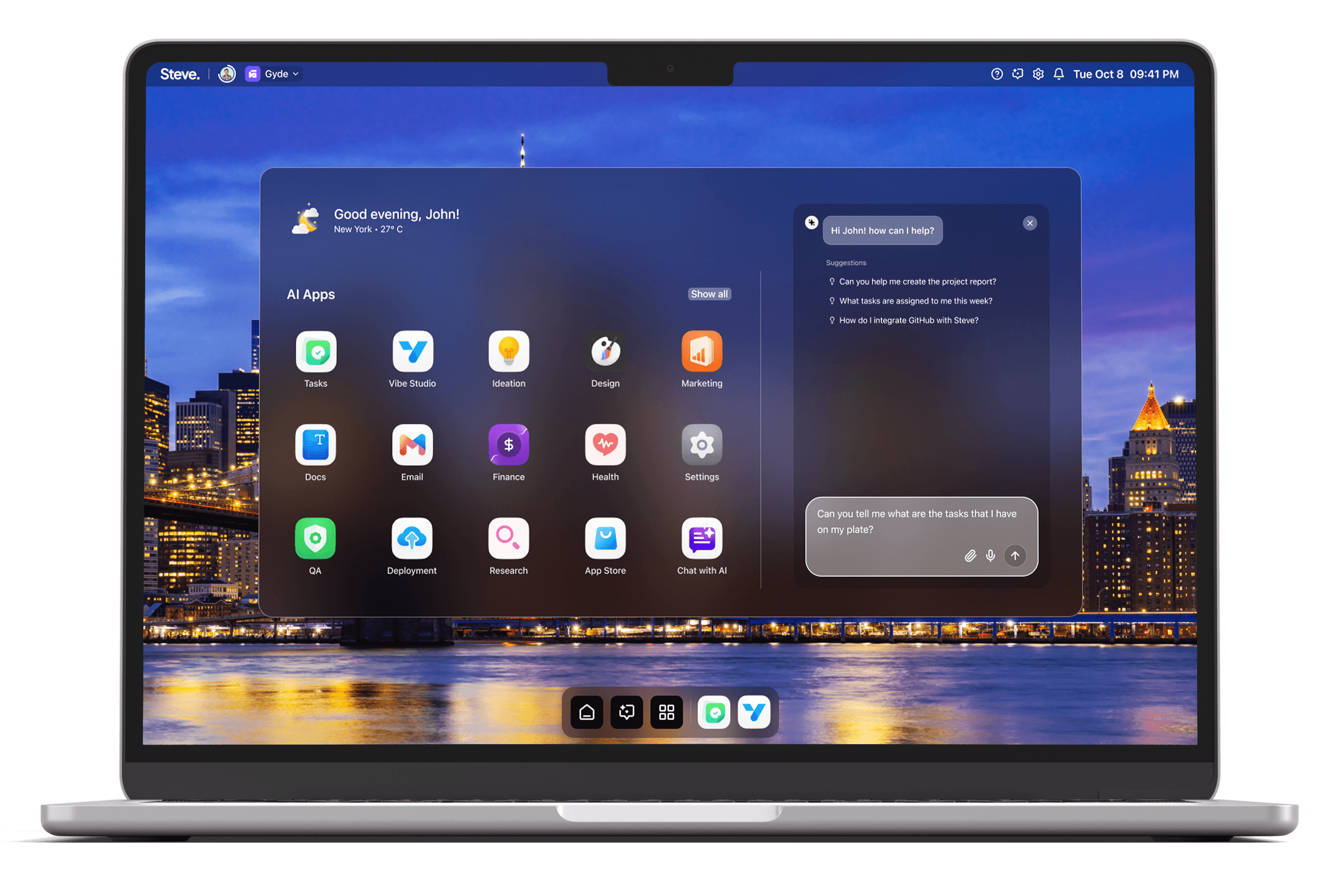
Coordinating work across teams requires tools that understand context, preserve state, and act without constant manual direction. Steve, an AI Operating System, enables context-aware automation across teams by combining a shared memory for AI agents, a conversational interface with deep integrations, an AI-native inbox, and task-focused automation. As an AI OS, Steve reduces repetitive coordination, surfaces relevant information, and executes routine workflows so teams stay aligned and move faster.
Shared Memory: A Single Source of Context
Steve’s shared memory system lets AI agents read and write persistent context so automated actions reflect the same team state. Instead of isolated automations that lose prior decisions, agents reference a common memory of decisions, files, and project context, ensuring subsequent recommendations and actions build on what came before. In practice, a product lead’s requirement note stored in shared memory is available to a support agent drafting release announcements and to a planning agent proposing sprint tasks, eliminating repeated briefings and reducing context loss during handoffs.
Conversational Automation With Steve Chat
Steve Chat provides a conversational interface backed by advanced AI agents and integrations with calendars, drives, and issue trackers, turning dialog into cross-team automation. Teams can instruct Steve in natural language—schedule a stakeholder review, attach the latest spec, and notify reviewers—and the chat agent executes across connected systems while preserving conversational context. For example, a program manager can ask Steve to “Prepare a release sync next week, invite the engineering and QA leads, and add the current risk register,” and Steve will schedule the meeting, attach files from Drive, and record the intent in shared memory so collaborators and downstream automations reference the same plan.
AI Email: Context-Aware Communication and Triage
Steve’s AI Email embeds automation directly into the inbox, using AI tags, summaries, and context-aware reply suggestions to streamline cross-team communication. The inbox synchronizes in real time and surfaces the messages that matter, while instant summaries and suggested responses save time and preserve tone across stakeholders. A customer-facing engineer, for instance, can open a long thread and ask Steve to “Summarize the open action items and create tasks for engineering,” and the system will parse the thread, create task cards tied to the project context in shared memory, and propose a draft reply reflecting the current roadmap.
Task Management: From Conversation To Execution
Steve’s AI-powered product management boards translate conversational intent and email threads into organized, trackable work. Integrated with tools like Linear, the task system proposes sprints, creates issues from prompts, and updates progress automatically based on activity and agent observations. A design-review outcome logged in chat or email becomes an actionable ticket without manual entry: Steve generates the task, assigns owners based on availability and context, and keeps status synchronized so every team sees a single source of truth. This closes the loop between intent, assignment, and execution.
Practical Scenario: Cross-Functional Release Orchestration
Consider a cross-functional release that requires engineering, QA, support, and product. Using Steve, the product manager records release goals in shared memory, instructs Steve Chat to schedule a release plan meeting and attach the latest test plan, and asks AI Email to notify external stakeholders with an executive summary. Steve automatically converts decisions from the meeting into task cards, proposes a sprint schedule, and updates relevant stakeholders as tasks progress. Throughout, agents reference the same memory and preserved context, reducing duplication, accelerating handoffs, and keeping accountability visible across teams.
Steve
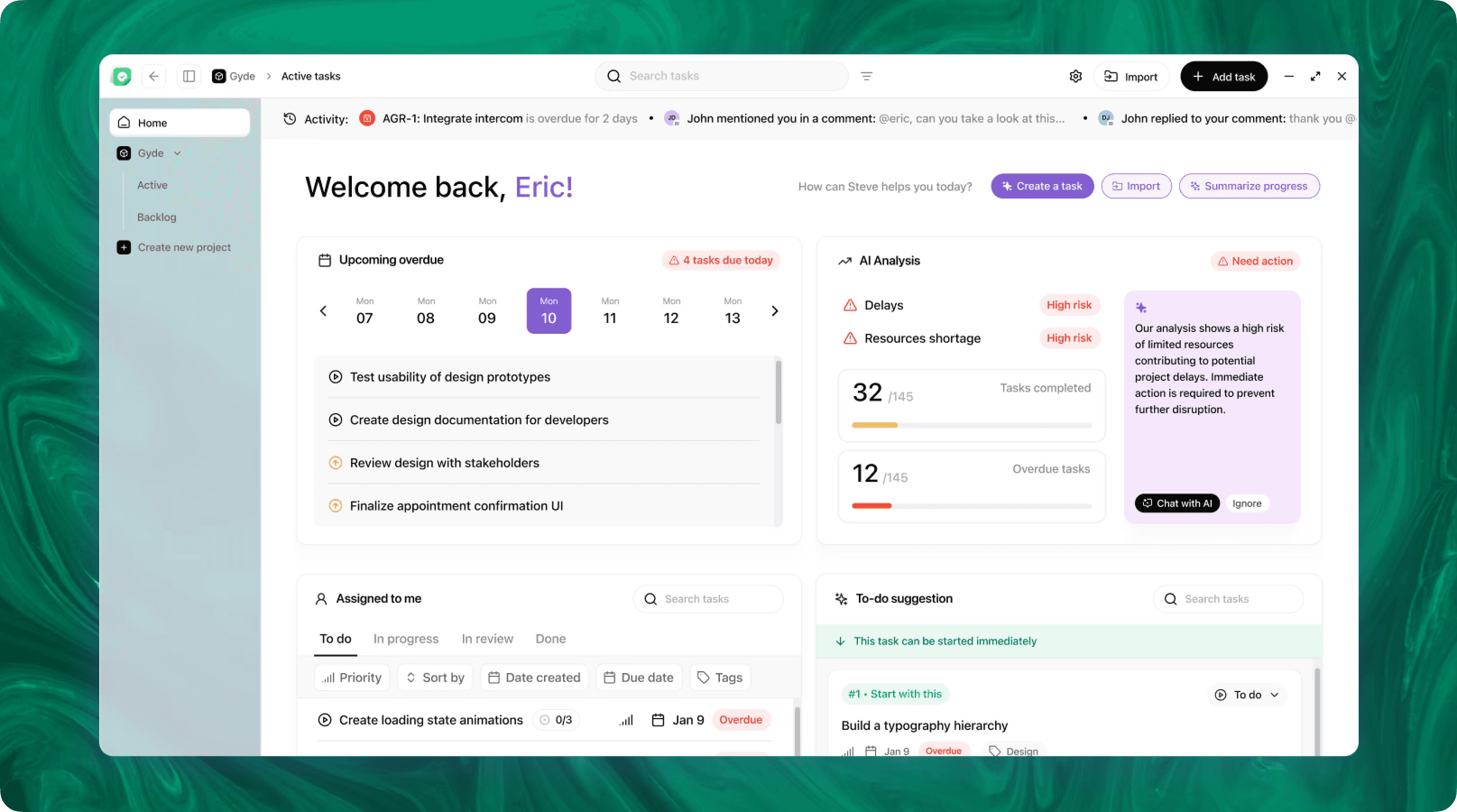
Steve is an AI-native operating system designed to streamline business operations through intelligent automation. Leveraging advanced AI agents, Steve enables users to manage tasks, generate content, and optimize workflows using natural language commands. Its proactive approach anticipates user needs, facilitating seamless collaboration across various domains, including app development, content creation, and social media management.
Conclusion
Steve, as an AI OS, combines shared memory, conversational automation, an AI-native inbox, and task-focused boards to enable context-aware automation across teams. By centralizing context and turning conversation into coordinated action, Steve reduces friction in handoffs, preserves institutional memory, and automates routine orchestration so teams focus on judgment and delivery rather than manual coordination.