How Steve Connects Strategy To Daily Execution
Nov 4, 2026

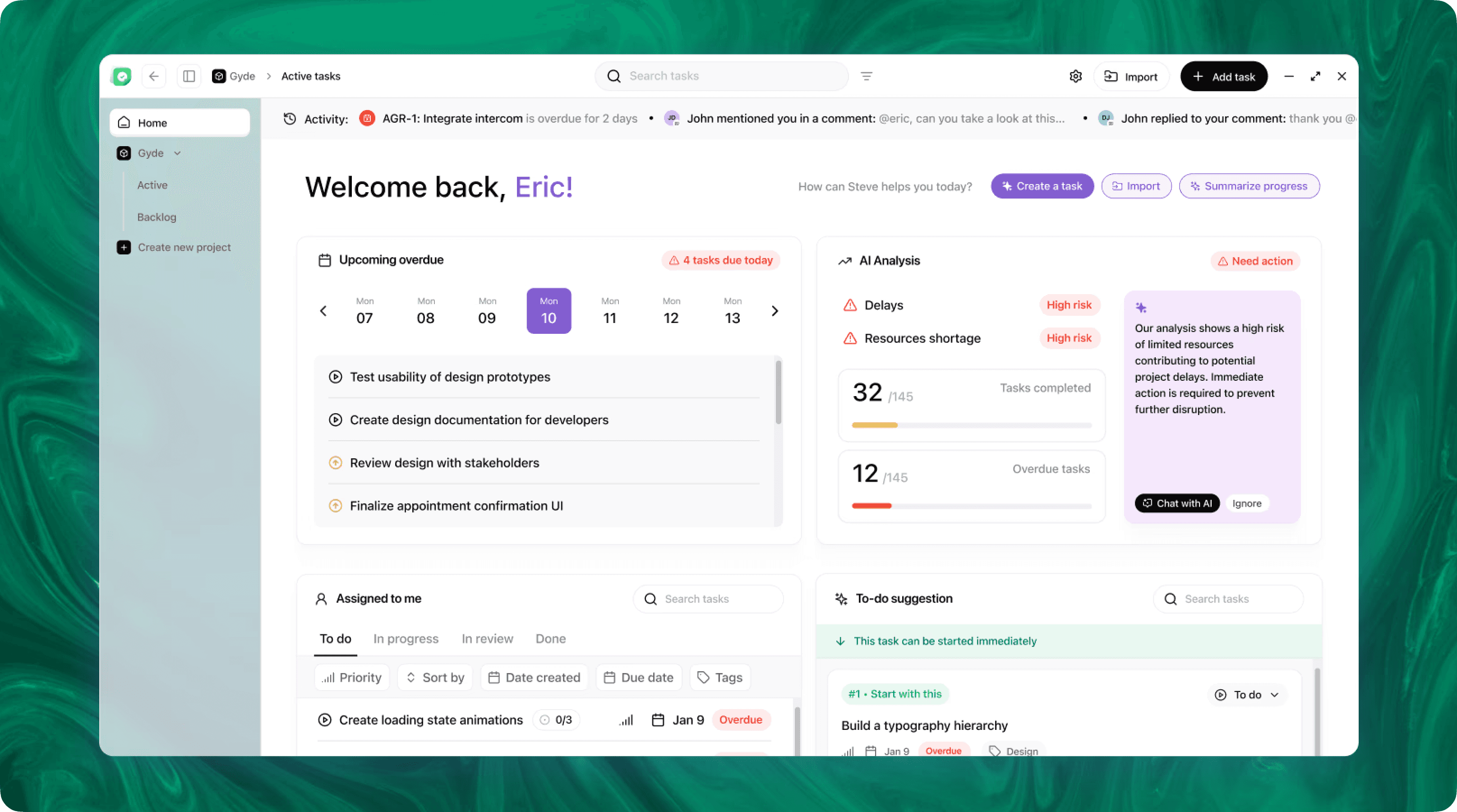
From Strategy To Prioritized Work: AI-powered task boards convert strategic goals into sequenced, owner-assigned tasks and sprint proposals.
Contextual Continuity Across Teams: A shared memory system preserves decisions and requirements so daily actions reflect current strategy.
Tightening Communication And Decision Loops: AI Email plus conversational agents summarize threads, draft replies, and create tasks to move decisions into execution.
Continuous Visibility And Automated Progress: Integrated status summaries and automated alerts keep execution aligned and surface deviations early.
Operational Benefit: Combining prioritized work, persistent context, and automated communication reduces translation loss between planning and delivery.
Introduction
Connecting high-level strategy to daily execution is the gap most organizations struggle to close. Steve, an AI Operating System, acts as an operational hinge: it translates strategic goals into prioritized work, preserves context across conversations and systems, and automates routine coordination so teams act with clarity and speed. This article shows how Steve’s Task Management, shared memory and conversational agents, and AI Email features wire strategy into day-to-day execution.
From Strategy To Prioritized Work
Strategy becomes actionable when objectives map to discrete, sequenced tasks. Steve’s Task Management provides AI-powered product boards that convert strategic intents into organized backlogs and proposed sprints. In practice a leader can state a quarterly objective in natural language; Steve proposes epics, breaks them into tasks, estimates scope, and suggests a sprint cadence aligned to capacity.
Practical scenario: a head of product outlines a priority to reduce churn. Steve creates a linked set of tasks—research, experiment design, implementation, and metrics tracking—assigns owners, and proposes a two-week sprint plan. That structure reduces ambiguity: development teams receive clear, prioritized work tied to the original strategy rather than vague directives.
Contextual Continuity Across Teams
Execution fails when context is lost between meetings, messages, and tools. Steve’s shared memory and conversational interface ensure agents and teammates retain the same context across interactions. The system records decisions, requirements, and relevant artifacts so future queries and automations reflect the current strategy state.
Practical scenario: after a roadmap review, product requirements evolve. Steve stores the update in shared memory; when an engineer asks about acceptance criteria in Steve Chat, the agent returns the latest requirements, related documents, and prior trade-offs. That continuity prevents rework and keeps daily execution faithful to strategic intent.
Tightening Communication And Decision Loops
Fast, aligned decisions depend on concise information and frictionless actions. Steve’s AI Email integrates a smart inbox with real-time sync, thread summarization, and context-aware reply drafting; Steve Chat links those email summaries to scheduling, notes, and task creation. The result: decisions that originate in email are converted into actionable items without manual copying or lost context.
Practical scenario: a stakeholder emails a product change request. Steve summarizes the thread, drafts a reply that reflects current priorities, creates a task in the product board, and proposes calendar times for a follow-up—then presents all options in chat for final approval. Daily work moves from triage to action in minutes, not hours.
Continuous Visibility And Automated Progress
Visibility ties execution back to strategy by tracking outcomes and surfacing deviations. Steve combines Task Management with its conversational agents to produce regular status summaries, surface blocked items, and recommend corrective steps. Because Steve integrates with calendars, document stores, and issue trackers via its chat interface, those summaries are evidence-based and synchronized with the team’s tools.
Practical scenario: mid-sprint, Steve detects a rising count of blocked tasks tied to a specific dependency. It notifies the owner, suggests alternatives, and adds an agenda item for the next standup—ensuring that strategic timelines are actively managed at the daily level.
Steve
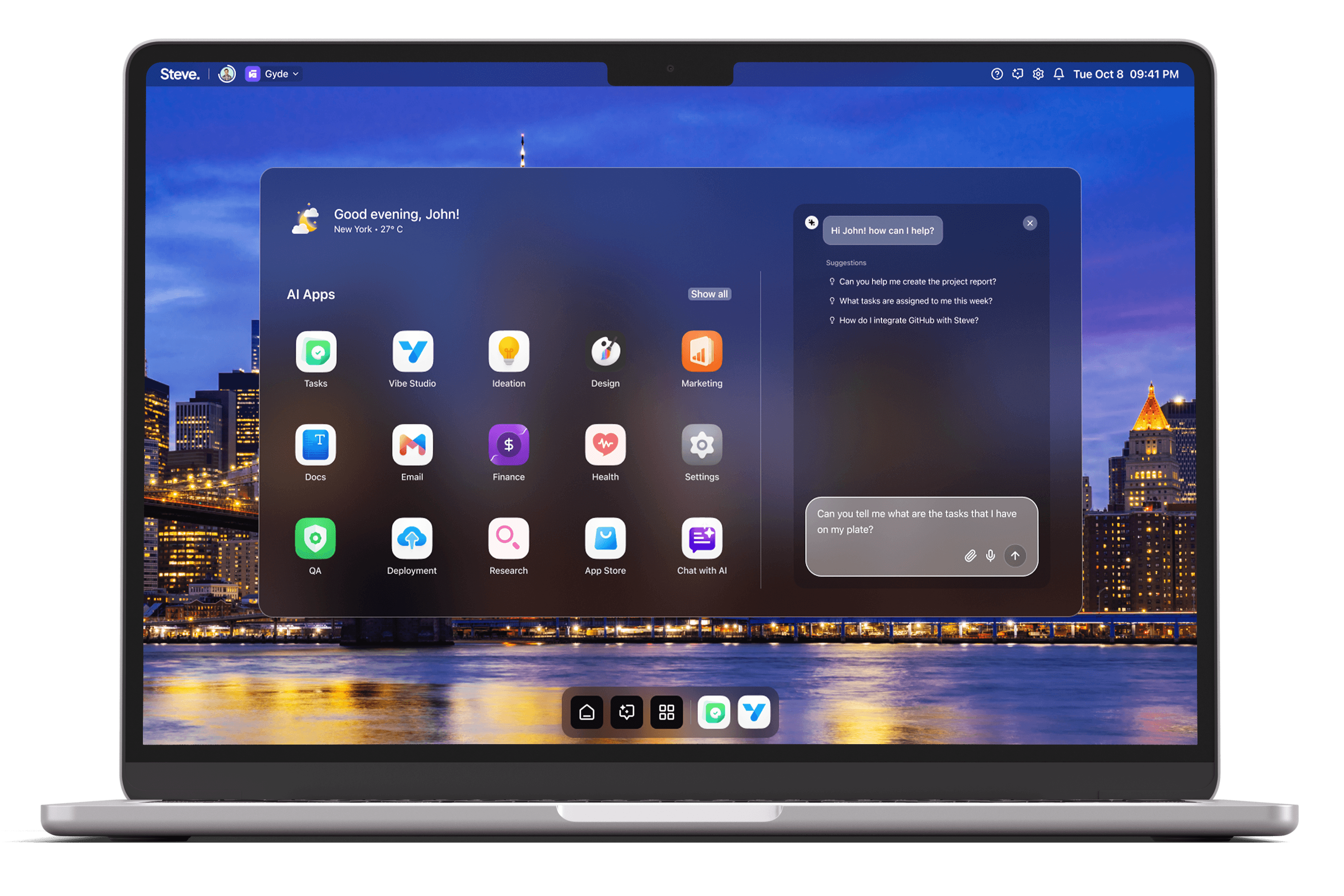
Steve is an AI-native operating system designed to streamline business operations through intelligent automation. Leveraging advanced AI agents, Steve enables users to manage tasks, generate content, and optimize workflows using natural language commands. Its proactive approach anticipates user needs, facilitating seamless collaboration across various domains, including app development, content creation, and social media management.
Conclusion
Steve, as an AI OS, closes the loop from strategy to daily execution by turning strategic intent into prioritized work, preserving context across people and systems, automating communication-to-action flows, and maintaining continuous visibility on progress. Teams that adopt Steve reduce translation loss between planning and delivery, accelerate decision cycles, and keep daily activities explicitly aligned to strategic outcomes.