How Steve Connects Disparate Data Sources for Real-Time Insights
Jan 19, 2026

Unified Context With Shared Memory: Persistent memory lets agents link facts across sources so insights reflect aggregated context rather than isolated lookups.
Live Integrations That Pull Data Where It Lives: Direct connectors to Google Workspace, Notion, GitHub, and others ensure insights use current, authoritative records.
Conversational Orchestration With AI Agents and LLMs: Natural-language queries trigger multi-step investigations, reconciliation of conflicts, and explanatory reasoning.
Inbox and Documents as First-Class Sources: Real-time email sync and file parsing make threads and attachments queryable inputs for prioritized, relevant findings.
From Insight To Action: Synthesized reports, suggested replies, tasks, and calendar updates automate coordination and shorten time-to-resolution.
Introduction
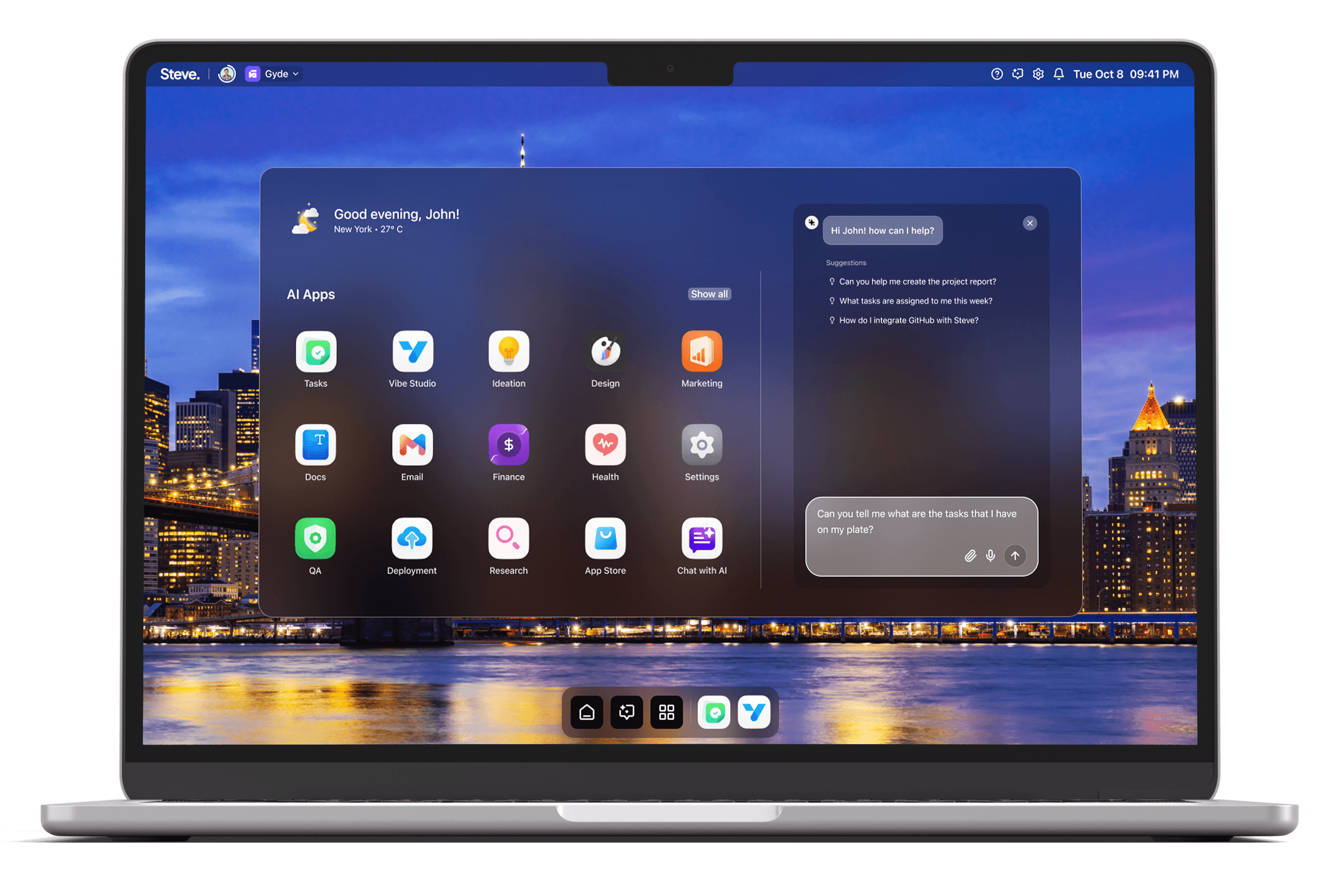
Connecting scattered data feeds into a single stream of actionable, real-time insight is a strategic imperative for modern teams. Steve, an AI Operating System, glues together emails, calendars, docs, spreadsheets, and external services so decision-makers see the signal instead of the noise. As an AI OS, Steve combines persistent context, live integrations, and conversational orchestration to surface timely answers and trigger automated actions without manual aggregation.
Unified Context With Shared Memory
Steve’s shared memory system gives AI agents a persistent, evolving context that links disparate sources into coherent narratives. Rather than querying each source in isolation, agents write and read from a shared memory that preserves user intent, previous findings, and derived facts. In practice, this means a sales director’s conversation about quota changes, a finance spreadsheet with updated forecasts, and a customer support thread all contribute to the same contextual view—so recommendations reflect the latest state across systems. The shared memory reduces repeated lookups and keeps follow-up queries precise: agents can reference earlier synthesis instead of reprocessing raw inputs.
Live Integrations That Pull Data Where It Lives
Steve Chat’s direct integrations with Google Calendar, Gmail, Drive, Sheets, Notion, GitHub, and 40+ services let agents access authoritative records in real time. When an analyst asks for daily KPI deviations, Steve queries live spreadsheets, recent commit activity, and calendar events to produce a single snapshot. Because integrations read source-of-truth data, insights avoid stale summaries and reflect updates as they occur. A practical scenario: during a weekday standup, product and operations leads ask Steve for rollout readiness; Steve aggregates the latest Build status, support tickets, and release calendar to produce an up-to-date readiness report and recommended next steps.
Conversational Orchestration With AI Agents and LLMs
Steve’s conversational interface, powered by advanced AI agents and LLMs, turns multi-source queries into guided investigations. Instead of hand-crafting SQL joins or switching apps, a user asks Steve conversational questions—then Steve sequences targeted queries, reconciles conflicting data, and explains its reasoning. For example, a supply chain manager can ask: “Why did deliveries drop in Zone B this week?” Steve will retrieve delivery logs, recent emails flagged by the AI Email module, and calendar notes from regional teams, then synthesize a causal summary and propose remediation. This orchestrated approach accelerates insight discovery while preserving auditability through step-by-step reasoning and memory traces.
Inbox and Documents as First-Class Sources
Steve treats email, PDFs, and spreadsheets as queryable inputs rather than siloed artifacts. The AI Email module syncs in real time and generates summarized threads, while Steve Chat accepts uploaded documents and parses them for facts and figures. That capability matters because critical signals often live in long email threads or buried attachments. In a merger scenario, executives can ask Steve to extract contractual obligations across 200 email threads and contract PDFs; Steve surfaces key deadlines and risk items, prioritized by relevance and urgency. Real-time sync ensures newly arrived messages immediately influence the synthesis.
From Insight To Action: Real-Time Synthesis And Automation
Once Steve assembles a consolidated view, it can produce actionable outputs: concise executive summaries, suggested replies, calendar updates, or task creation on integrated boards. Because Steve maintains shared memory and lives on top of real data feeds, those outputs reflect the current state and remain traceable. For instance, after identifying a critical bug tied to a recent deployment, Steve can draft an incident email, create a high-priority task in the product board, and add an incident review to the calendar—shortening time-to-resolution by automating coordination across teams.
Steve
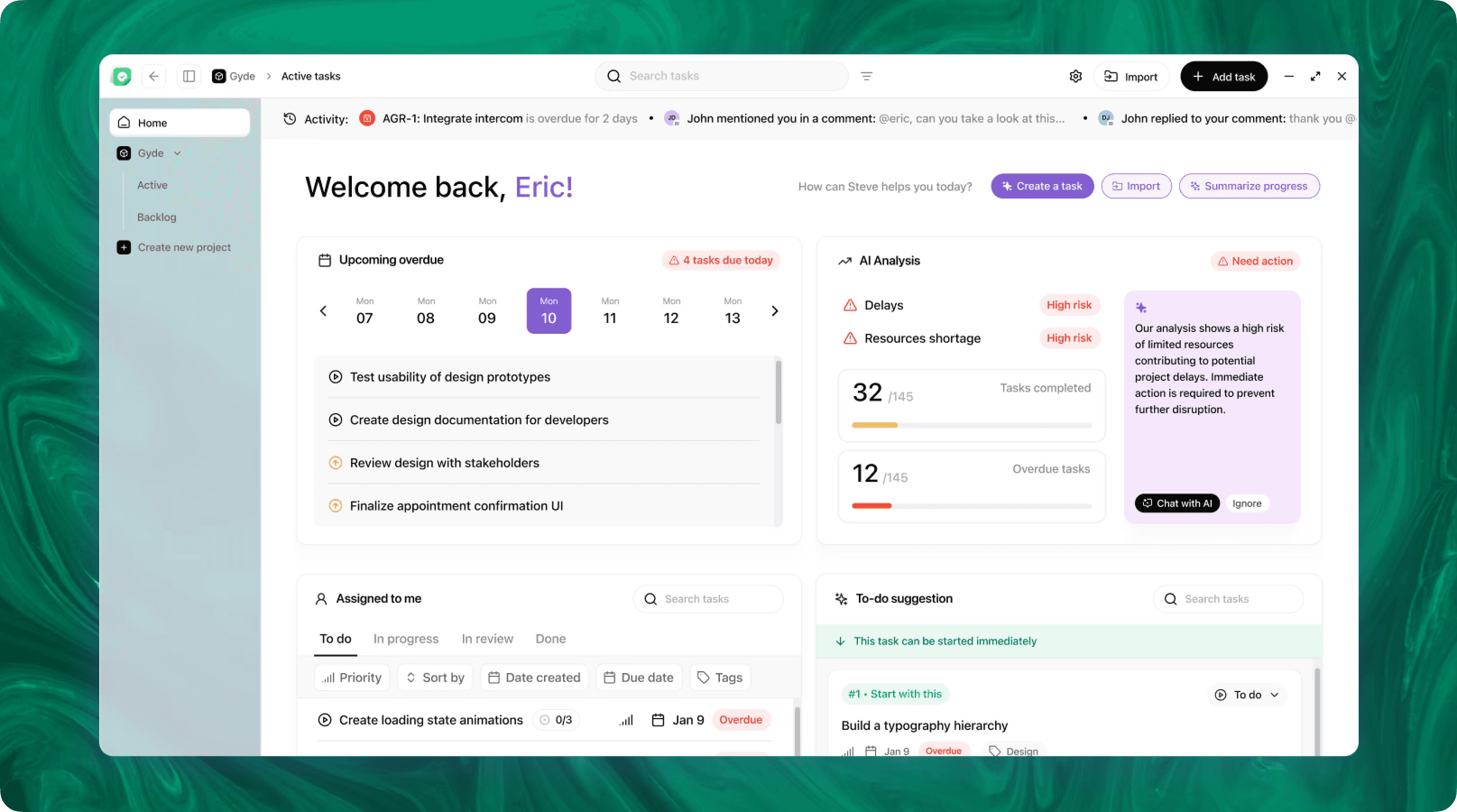
Steve is an AI-native operating system designed to streamline business operations through intelligent automation. Leveraging advanced AI agents, Steve enables users to manage tasks, generate content, and optimize workflows using natural language commands. Its proactive approach anticipates user needs, facilitating seamless collaboration across various domains, including app development, content creation, and social media management.
Conclusion
Centralizing disparate sources for real-time insights requires persistent context, live connectors, and a conversational orchestration layer. Steve delivers this stack as an AI OS: shared memory preserves cross-source context, Steve Chat integrations fetch authoritative data, AI agents and LLMs synthesize and explain, and the AI Email plus document handling turn communication into analyzable inputs. The result is faster, more accurate decision-making—teams spend less time assembling data and more time acting on insight.