How Steve Bridges Project Planning And Delivery
Nov 26, 2025

Centralized Context With Shared Memory: Persistent memory ensures decisions and requirements remain accessible to planning and delivery agents, reducing rework caused by lost context.
Plan And Track Work With AI-Powered Task Boards: AI-assisted boards propose sprints, break down goals into tasks, and integrate with Linear to keep planning and execution synchronized.
Coordinate Teams Through Conversational Interfaces: Steve Chat executes coordination—scheduling, attaching documents, and creating issues—so conversations produce concrete delivery artifacts.
Reduce Communication Friction With AI Email: Smart inbox summaries, tags, and context-aware replies convert long threads into prioritized actions and tracked tasks.
Workflow Benefit: Combining shared memory, task automation, conversational orchestration, and smart email shortens the path from intent to shipped work and improves predictability.
Introduction
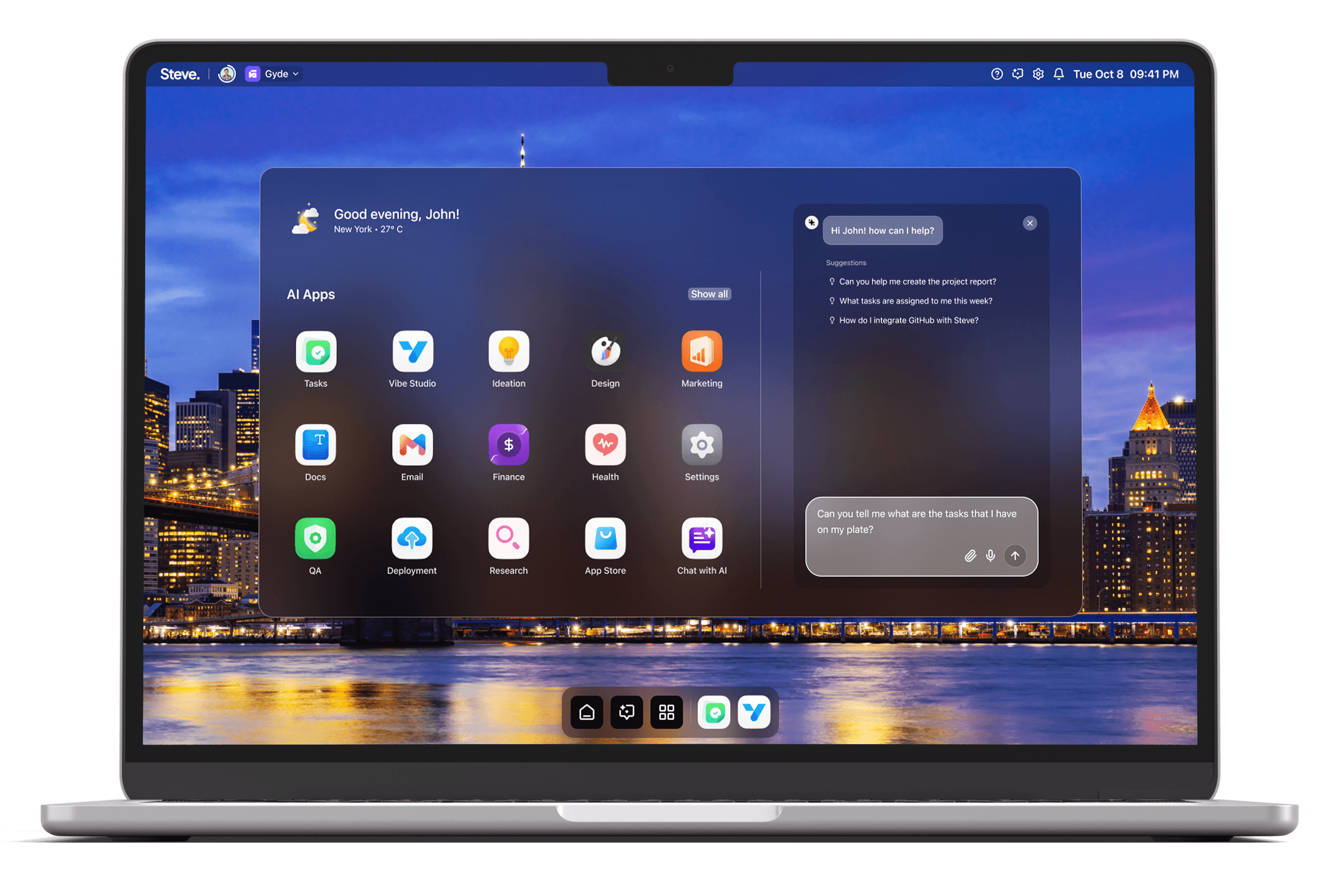
Bridging planning and delivery is the perennial gap in product organizations: plans live in documents, decisions scatter across tools, and delivery stalls on lost context. Steve, an AI Operating System, closes that gap by unifying context, execution, and communication so teams move from intent to outcome with less handoff and fewer blind spots. This article shows how Steve uses shared memory, AI-powered task boards, conversational orchestration, and a smart inbox to streamline project planning and accelerate delivery.
Centralized Context With Shared Memory
A single source of truth is the foundation of predictable delivery. Steve’s shared memory lets AI agents capture decisions, requirements, and status updates so context follows work instead of getting left behind. In practice, a product decision recorded by one agent — for example, an API change or acceptance criteria — becomes available to planning agents that generate sprint proposals and to chat assistants that draft release notes.
Scenario: mid-sprint scope changes arrive via a client email. Rather than chasing scattered messages, a project lead asks Steve to reconcile impact: the shared memory surfaces the original spec, related tasks, and prior tradeoffs, enabling the AI to quantify affected tickets and surface a clear remediation plan. That continuity reduces miscommunication and prevents rework driven by forgotten constraints.
Plan And Track Work With AI-Powered Task Boards
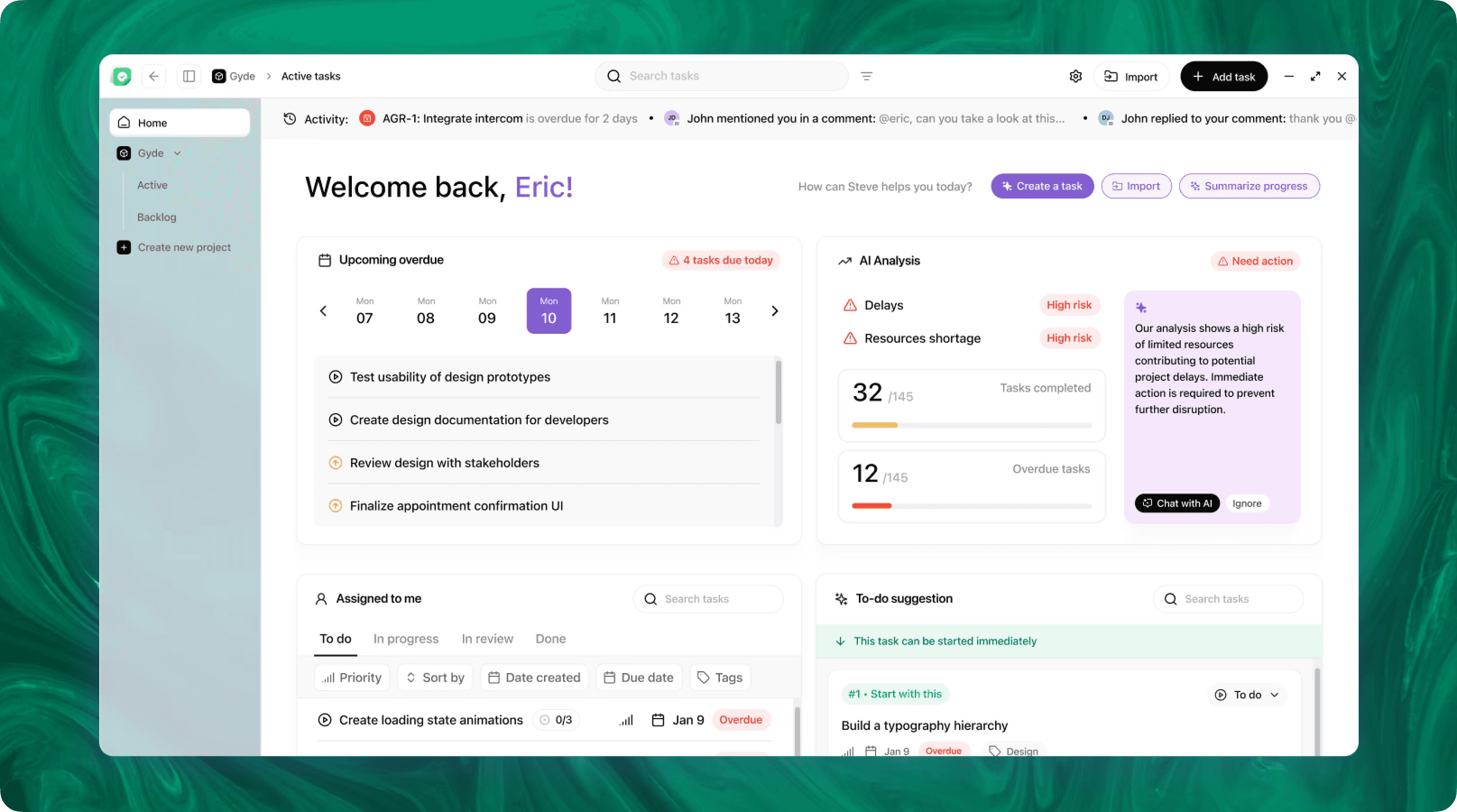
Steve’s Task Management boards combine AI assistance with familiar boards so planning stays tactical and executable. The AI suggests task breakdowns, prioritization, and sprint compositions; it can import existing issues from Linear or create new ones from prompts to keep planning and tracking aligned.
Scenario: preparing a two-week sprint for a feature launch, a product manager asks Steve to propose a sprint plan from a high-level goal. Steve analyzes related documentation in shared memory, imports outstanding issues from Linear, groups work into deliverable slices, and recommends assignees and estimated capacity. The board reflects those recommendations as editable tasks, so the team reviews, adjusts, and commits without copying content across tools. This reduces planning friction and shortens the time from goal to committed backlog.
Coordinate Teams Through Conversational Interfaces
Conversations drive most day-to-day delivery; Steve Chat turns those conversations into coordinating actions. Steve integrates with calendars, email, Drive, Notion, and GitHub so a single chat query can schedule meetings, attach the right documents, create issues, and sync notes—keeping planning and delivery tightly coupled.
Scenario: a release manager needs to schedule QA, link the test matrix, and create follow-up tickets. In Steve Chat they request: “Schedule QA next Wednesday, attach the latest test matrix, and create tickets for any failed tests.” Steve confirms availability, creates the calendar event with the matrix attached from Drive, and provisions templated tickets linked back to the event and shared memory. Because Steve is file-aware and connected to the team’s tools, the conversational flow produces concrete artifacts instead of just messages.
Reduce Communication Friction With AI Email
Email remains central to many stakeholder workflows; Steve’s AI Email reduces overhead by surfacing priorities, summarizing threads, and generating context-aware replies that align with project plans. Smart tags and thread summaries let leaders triage action items without reading full chains, and in-inbox chat helps convert email decisions into tasks or calendar events.
Scenario: a long vendor thread contains approvals and two unresolved questions. Steve’s smart inbox summarizes the thread, tags the actionable items, and drafts a reply that acknowledges approvals while proposing dates for the open items. The user edits the draft, sends it, and instructs Steve to convert the agreed approval into a tracked task on the project board—linking decisions to execution without manual transcription.
Steve
Steve is an AI-native operating system designed to streamline business operations through intelligent automation. Leveraging advanced AI agents, Steve enables users to manage tasks, generate content, and optimize workflows using natural language commands. Its proactive approach anticipates user needs, facilitating seamless collaboration across various domains, including app development, content creation, and social media management.
Conclusion
Steve, as an AI OS, closes the loop between planning and delivery by keeping context persistent, turning plans into tracked work, orchestrating actions through conversation, and reducing email overhead. Teams using Steve move faster because decisions travel with the work, prioritization is data-informed, and coordination becomes an executable stream rather than a manual handoff. When planning and delivery operate inside the same intelligent system, outcomes become more predictable and delivery cycles shorter.