How Steve Aligns Teams Without Micromanagement
Oct 7, 2026

Building Shared Context With Memory: A persistent shared memory replaces repeated status queries with a single authoritative context source.
Streamlining Workflows With AI-Powered Task Management: AI boards propose sprints and surface risks so teams execute autonomously under visible guardrails.
Reducing Status Overhead With Conversational Coordination: Steve Chat integrates docs, calendars, and trackers into short, context-rich exchanges that cut meetings and back-and-forths.
Closing The Loop Through Smart Email Summaries: AI Email extracts decisions and action items from threads to convert passive updates into actionable tasks.
Governance Benefit: By surfacing exceptions instead of micromanaging, Steve lets managers focus on strategy while teams maintain momentum.
Introduction
Aligning teams without resorting to micromanagement comes down to shared context, clear priorities, and lightweight signals that replace constant check-ins. Steve, an AI Operating System built to streamline business operations through intelligent automation, reduces managerial overhead by creating persistent context, automating routine coordination, and surfacing exceptions that truly need human attention. This article shows how four capabilities in Steve enable alignment that trusts teams while keeping outcomes visible.
Building Shared Context With Memory
Steve’s shared memory system becomes the single source of truth teams consult instead of asking status updates. That memory records decisions, task states, document links, and agent conversations so any teammate or connected tool can retrieve the current context on demand. In practice, a product lead no longer needs to ping engineers for the latest API decision; they ask Steve, which returns the relevant meeting note, the agreed contract version, and the responsible owner. The result: fewer interrupt-driven check-ins, clearer handoffs, and less managerial triage.
A practical scenario: during a release, Steve’s memory stores feature scopes, rollback criteria, and test results as agents and people update them. When QA flags a regression, Steve can present the last known deployment notes and the engineer owning the change, enabling rapid resolution without a manager orchestrating every step.
Streamlining Workflows With AI-Powered Task Management
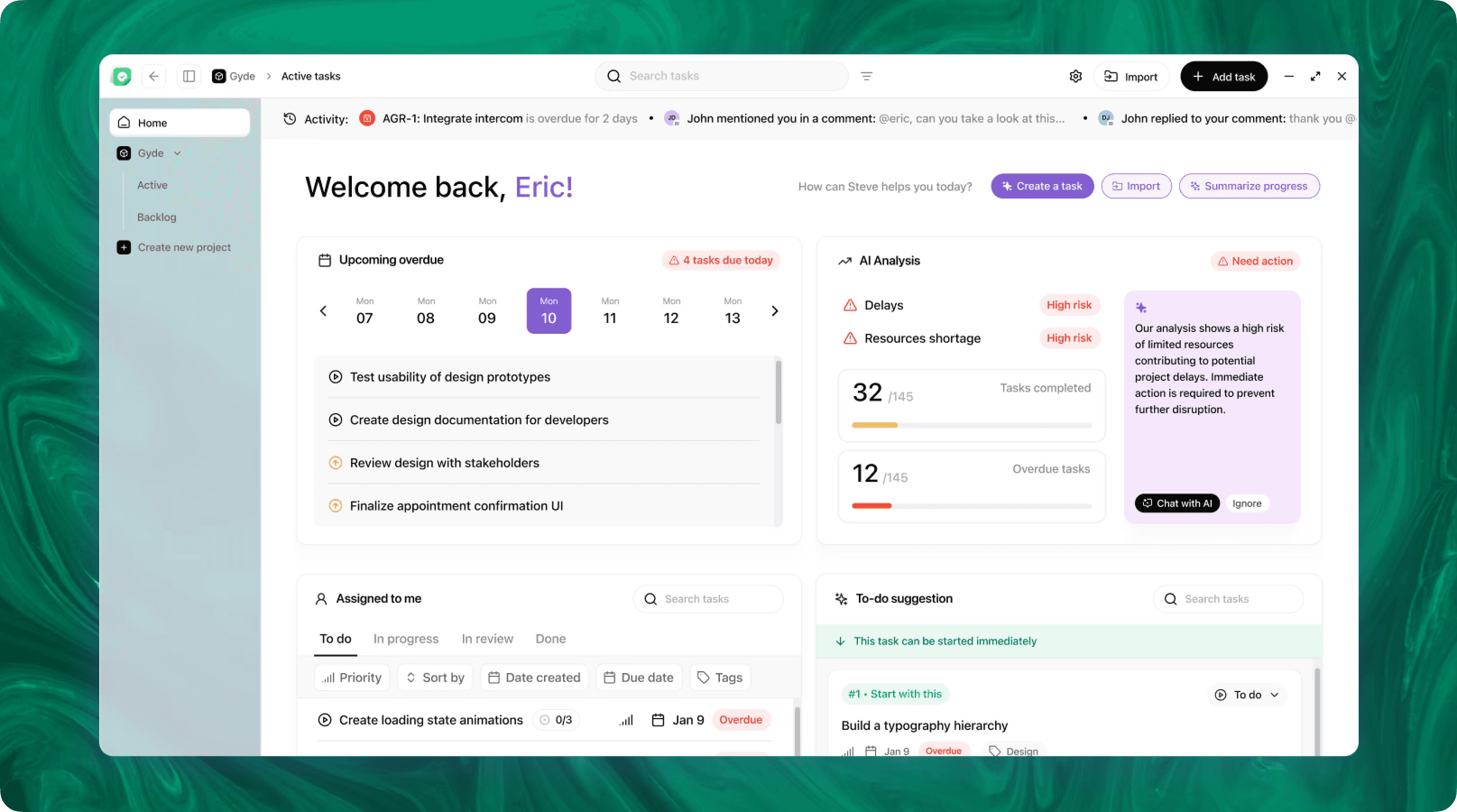
Steve’s AI-powered product management boards keep work visible and actionable without manual status reporting. The system imports tasks, proposes sprints, and suggests priorities based on context; it tracks execution progress so teams and managers see where attention is required. That makes planning an activity of refinement rather than command-and-control: leaders set objectives, Steve proposes a concrete plan, and teams own execution.
For example, a PM asks Steve to prepare next week’s sprint from a backlog and stakeholder priorities. Steve groups related issues, recommends owners, and highlights dependencies that might block work. Team members review and adjust assignments in the board—autonomy with guardrails—while Steve continuously surfaces risk signals and missed deadlines. Managers shift from eliciting updates to resolving escalations identified by the system.
Reducing Status Overhead With Conversational Coordination
Steve Chat converts routine coordination into short, contextual conversations that integrate with calendars, email, documents, and issue trackers. Because Steve understands files and links and connects to sources like Google Drive and GitHub, a quick chat can replace multi-message threads and ad-hoc meetings. Conversations automatically reference the right artifacts and preserve the thread in memory for later retrieval.
In a common scenario, an engineer asks Steve Chat for the latest design spec and test plan; Steve returns the correct files, summarizes recent changes, and schedules a short alignment slot if needed. That keeps asynchronous collaboration fluid: teammates get what they need without a manager mediating priorities or chasing attachments, and decisions become discoverable rather than buried in private messages.
Closing The Loop Through Smart Email Summaries
Steve’s AI Email reduces cognitive load by tagging, summarizing, and prioritizing inbox threads so leaders and contributors spend less time triaging and more time executing. Long, multi-party threads often hide decisions and action items; Steve extracts the core commitments and surfaces them as tasks or calendar items. The platform’s context-aware suggestions also draft replies aligned with ongoing work, speeding resolution while preserving tone and intent.
Consider an executive who receives a stakeholder thread about a product trade-off: Steve summarizes the trade-offs, identifies the stakeholders, extracts any deadlines, and creates a suggested reply and follow-up task—no micromanaged prompts required. That keeps leadership informed without requiring constant manual synthesis.
Steve
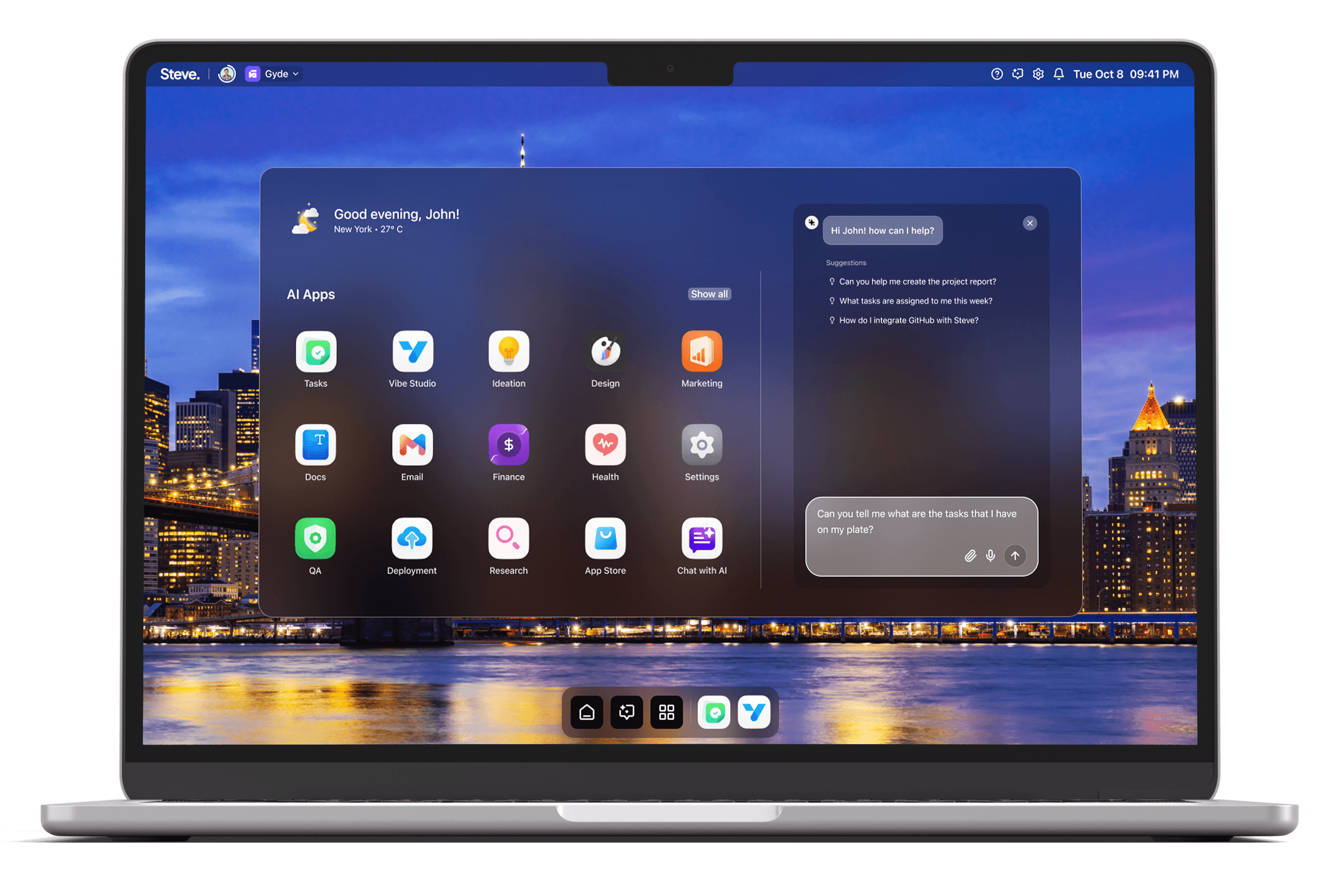
Steve is an AI-native operating system designed to streamline business operations through intelligent automation. Leveraging advanced AI agents, Steve enables users to manage tasks, generate content, and optimize workflows using natural language commands. Its proactive approach anticipates user needs, facilitating seamless collaboration across various domains, including app development, content creation, and social media management.
Conclusion
Steve, as an AI OS, reduces micromanagement by making context persistent, workflows proactive, coordination conversational, and communication concise. Teams gain autonomy because Steve preserves decisions and progress, proposes structured plans, and surfaces only the exceptions that need human judgment. Used as an AI Operating System, Steve turns oversight into signal-driven governance: managers focus on strategy and impediments while teams move faster and with clearer alignment.