How AI OS Enhances Vertical-Specific Workflow Automation
Jan 21, 2026

Shared Memory Enables Context-Rich Handoffs: A persistent memory store preserves domain specifics across agents, reducing re-capture and improving traceability.
Conversational Integrations Accelerate Domain Tasks: Steve Chat’s file-aware integrations let teams assemble documents and data through conversation instead of manual aggregation.
AI-Powered Task Boards Orchestrate Execution: Task Management converts conversational intent into tracked work, proposes sprints, and links decisions to execution.
Smart Inbox And Conversational Email Reduce Approval Latency: AI Email summarizes threads, tags priorities, and drafts context-aware replies to speed sign-offs.
Workflow Benefit: Combining memory, integrations, task orchestration, and inbox automation shortens handoffs, enforces domain rules, and creates auditable end-to-end processes.
Introduction
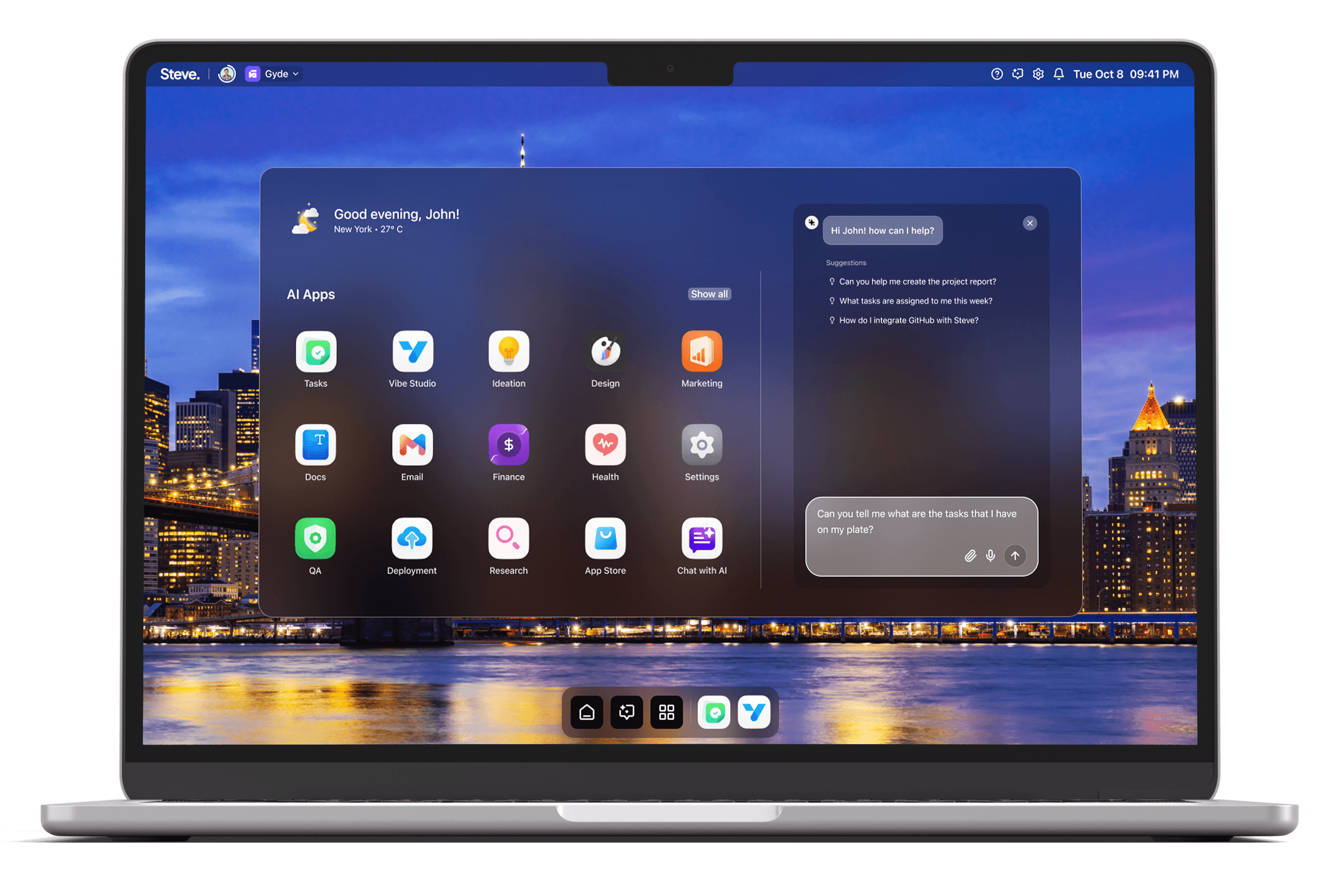
Vertical-specific workflows—healthcare intake, legal review, field-service dispatch, or retail replenishment—depend on domain context, multi-step handoffs, and strict auditability. An AI Operating System that combines conversational agents, persistent context, integrated tools, and task orchestration can automate those workflows without brittle point integrations. Steve, as an AI OS, organizes and automates vertical workflows by preserving contextual memory across agents, connecting to core systems, coordinating execution through intelligent boards, and managing communications inside a single conversational surface.
Shared Memory Enables Context-Rich Handoffs
Vertical workflows often fail at handoffs: the intake clerk captures an initial brief, a specialist adds nuance, and a developer or field technician must act on fragmented notes. Steve’s shared memory system lets AI agents read and write a common, persistent context so each step retains domain specifics—patient allergies, contract clauses, SKU batch numbers, or equipment serials. Because agents collaborate on the same memory store, the system avoids repetitive re-capture and keeps decisions traceable.
Practical scenario: in a healthcare clinic, a nurse logs a patient intake during triage; the shared memory records medication history and symptom onset. When the clinician’s agent generates a care plan, it reads that same memory to pre-populate decision logic and follow-up tasks. The result is fewer manual clarifications, less data loss, and a smoother automated workflow from intake to billing that preserves domain constraints.
Conversational Integrations Accelerate Domain Tasks
Steve Chat’s deep integrations with Google Calendar, Gmail, Drive, Sheets, Notion, GitHub and 40+ services, plus file-aware uploads and real-time web searches, let teams run vertical processes through conversation instead of switching tabs. Agents can locate contracts in Drive, pull compliance checklists from Notion, verify calendar availability, and attach supporting PDFs—then surface that assembled context back into the workflow.
Practical scenario: a legal team preparing an M&A diligence package can ask Steve to “assemble recent NDAs, summarize risk clauses, and find related financial models.” The chat agent searches Drive, ingests PDFs, generates concise summaries, and pins those summaries to the workflow memory. Because the chat interface understands files and external services, domain experts remain focused on judgment rather than aggregation.
AI-Powered Task Boards Orchestrate Execution
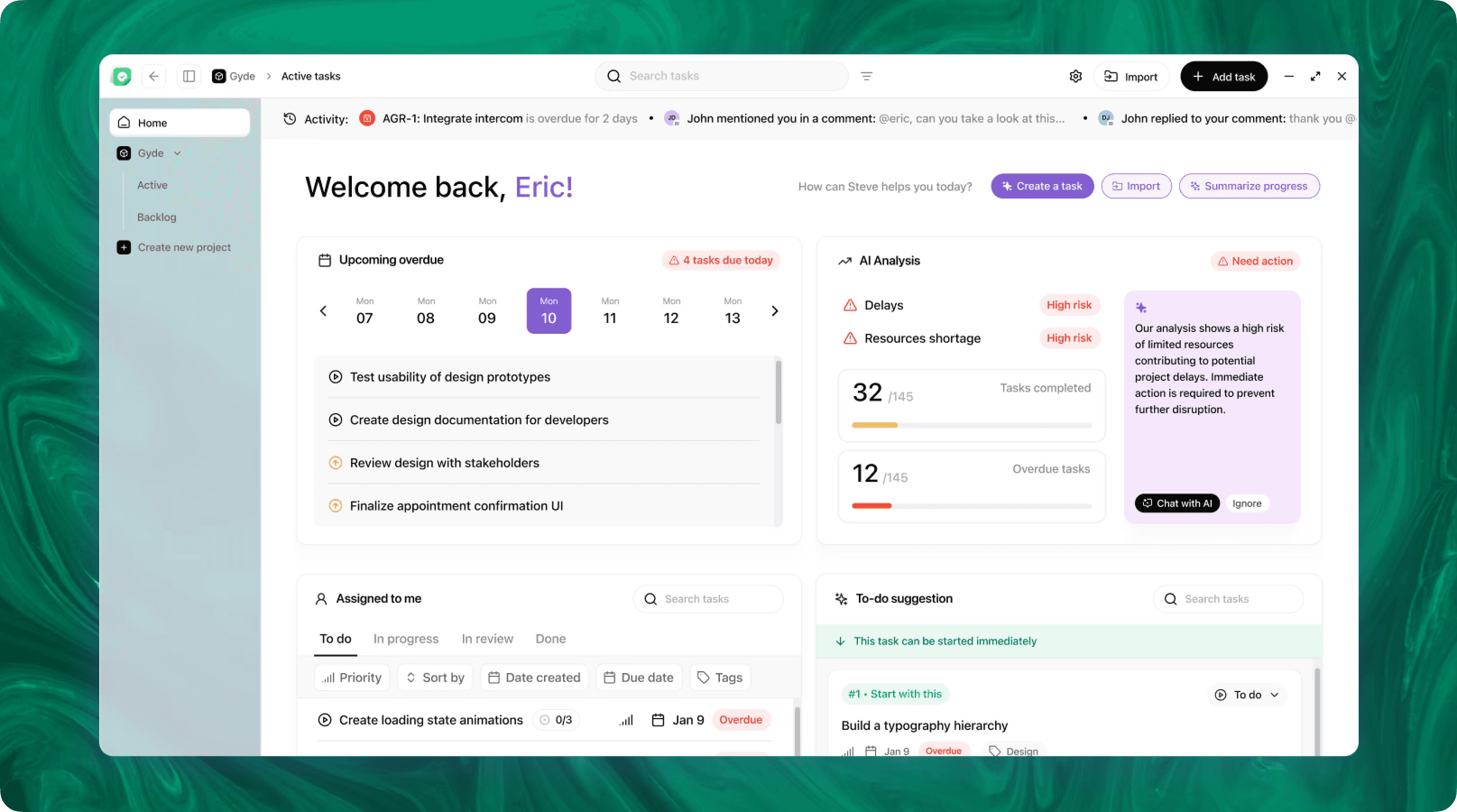
Steve’s Task Management boards provide an AI-powered product and project surface that translates conversation into organized execution. Boards import tasks from tools like Linear, propose sprints, and track progress with context-aware automation. For vertical workflows, that means regulatory checklists become tracked tasks with owners, deadlines, and AI-suggested next actions rather than ad hoc email threads.
Practical scenario: a fintech firm onboarding enterprise customers can turn a conversational checklist—KYC, compliance review, contract signature—into a sprint. Steve proposes a schedule, assigns responsibilities, and updates task status as agents validate each requirement. Teams gain consistent audit trails and fewer manual follow-ups because the AI OS links decisions (from shared memory and chat) to concrete tasks and execution workflows.
Smart Inbox And Conversational Email Reduce Approval Latency
Approvals and stakeholder sign-offs are frequent bottlenecks in vertical processes. Steve’s AI Email integrates a real-time synced inbox with AI tags, thread summaries, and context-aware reply suggestions, plus the ability to chat directly inside the inbox. This collapses long email threads into actionable prompts and short responses that can trigger downstream automation.
Practical scenario: in construction project management, a supplier email contains revised material specs. Steve’s AI Email tags the thread as priority, summarizes changes, and drafts a concise approval request that includes links to the task board and relevant memory entries. Stakeholders can approve via a suggested reply or ask the chat agent a clarifying question; once approved, the task board updates automatically. The vertical workflow gains speed and preserves the communication trail for audits.
Steve
Steve is an AI-native operating system designed to streamline business operations through intelligent automation. Leveraging advanced AI agents, Steve enables users to manage tasks, generate content, and optimize workflows using natural language commands. Its proactive approach anticipates user needs, facilitating seamless collaboration across various domains, including app development, content creation, and social media management.
Conclusion
Vertical-specific workflow automation demands contextual continuity, tight tool integrations, coordinated execution, and streamlined communications. As an AI OS, Steve delivers those capabilities through a shared memory that preserves domain context across agents, conversational integrations that connect to existing systems and files, AI-driven task boards that convert intent into tracked work, and a smart inbox that shortens approval loops. Together, these components let organizations automate end-to-end vertical processes with fewer handoffs, clearer auditability, and faster outcomes.