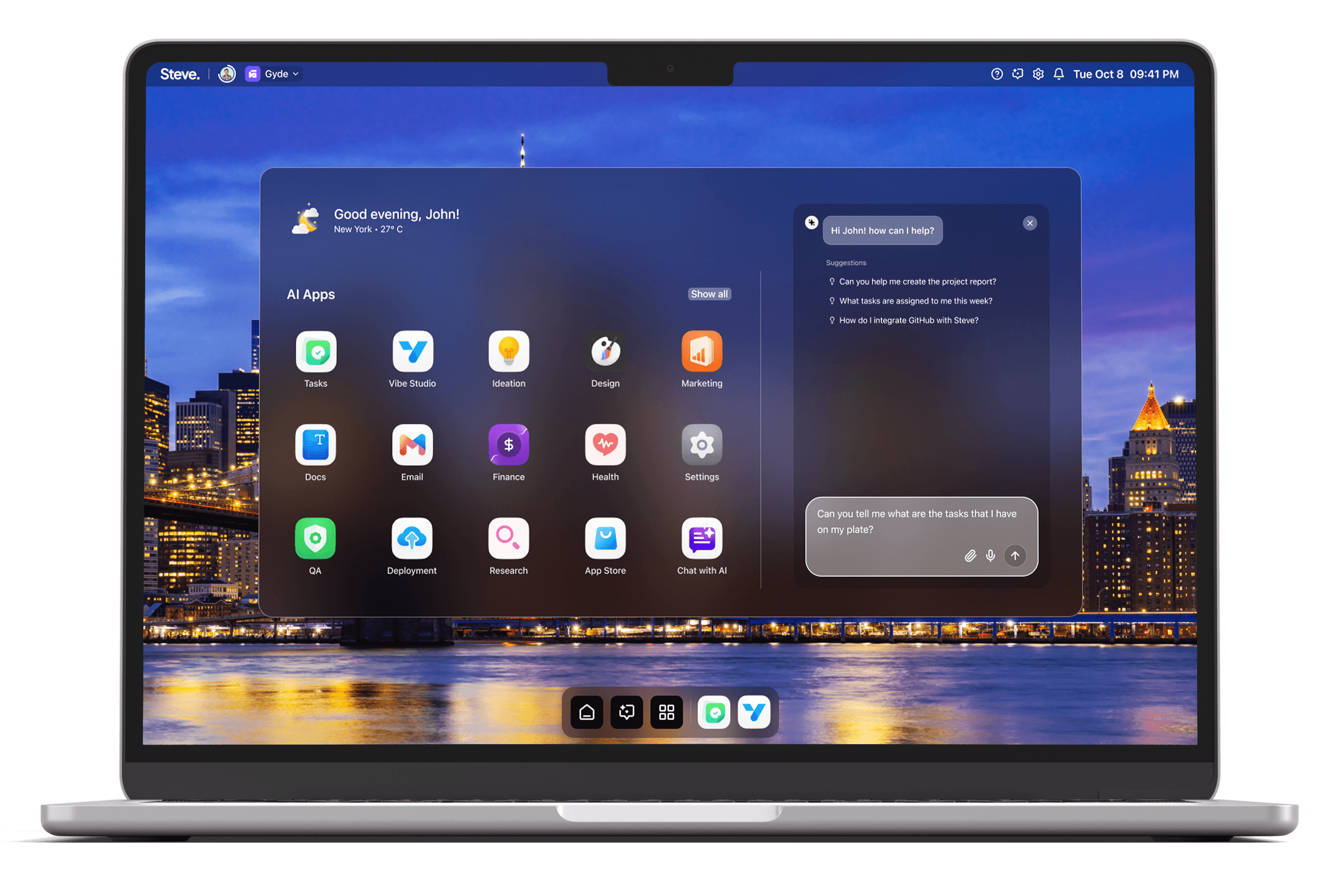
How AI OS Enhances Operational Transparency
Dec 1, 2025

Shared Memory And Agent Collaboration: Centralized memory ensures agents use the same facts, preventing information drift and enabling reproducible decisions.
Conversational Audit Trails With Steve Chat: Chat memory, integrations, and LangFuse logging create verifiable sequences that link prompts, data, and actions.
Email Summaries, Tags, And Contextual Drafting: AI Email turns long threads into objective snapshots and machine‑readable tags, reducing ambiguity about commitments.
Task Boards And Traceable Execution: AI‑powered boards connect discoveries to tasks with evidence attachments, producing auditable workflows.
Operational Benefit: Combining shared context, conversational logs, email evidence, and tracked tasks makes organizational decisions discoverable and defensible.
Introduction
Operational transparency is the discipline of making decisions, processes, and evidence visible and understandable across an organization. An AI Operating System that embeds collaboration, context, and persistent records can convert opaque handoffs into explainable workflows. Steve, as an AI OS, combines shared agent memory, conversational interfaces with memory, smart inbox capabilities, and integrated task boards to surface rationale, preserve context, and link actions to outcomes. The result is clearer accountability, faster root-cause analysis, and fewer surprises for stakeholders.
Shared Memory and Agent Collaboration
A shared memory system lets AI agents store, surface, and reconcile contextual facts so downstream decisions use the same source of truth. In practice, when multiple agents handle sales forecasting, support triage, and release notes, shared memory prevents each agent from regenerating inconsistent assumptions; the system preserves product status, recent incidents, and priority customer requests centrally. That continuity reduces information drift: auditors and managers can trace which facts informed a recommendation and when those facts changed. For teams, this means status updates and automated summaries are reproducible and grounded in a common context rather than fragmented agent outputs.
Conversational Audit Trails With Steve Chat
Steve Chat provides conversational memory, integrations, and detailed chat logging, creating an interactive audit trail that links prompts, data sources, and responses. Because chats can reference Gmail, Drive, Sheets, and external services, conversations become verifiable sequences: a scheduling request, the documents consulted, and the resulting calendar update are all visible within the same conversational flow. LangFuse integration captures chat logs for analysis, enabling post‑hoc review of agent behavior and iterative tuning. A typical scenario: a product decision arrived at in chat can be replayed later to show which documents and arguments led to the final action, simplifying compliance checks and cross‑team reviews.
Email Summaries, Tags, and Contextual Drafting
Operational opacity often begins in the inbox. Steve’s AI Email consolidates threads with AI tags, prioritization, and instant summaries so stakeholders no longer rely on memory or scattered quotes to understand status. Summaries of long threads provide objective, time‑stamped snapshots of commitments and outstanding items; AI tags mark urgency and topic so teams route follow-ups without manual triage. Because the email assistant drafts context‑aware replies that align with ongoing work, responses carry consistent language and intent across contributors. In practice, program managers use these summaries to extract action items into task boards and to attach email evidence to decision logs, reducing ambiguity about who committed to what and when.
Task Boards And Traceable Execution
Steve’s AI‑powered task management boards centralize planning, execution, and updates, integrating with tools like Linear to maintain traceable workflows. The board’s AI proposes sprints, assigns tasks based on context, and records status changes alongside the rationale derived from shared memory and conversation logs. For example, when an AI imports a high‑priority bug from a support thread, it can create a tracked task with the original email summary and the chat conversation that triaged the issue attached as evidence. That linkage turns task updates into auditable events: reviewers can see the chain from discovery to assignment to resolution without manually stitching artifacts together.
Steve
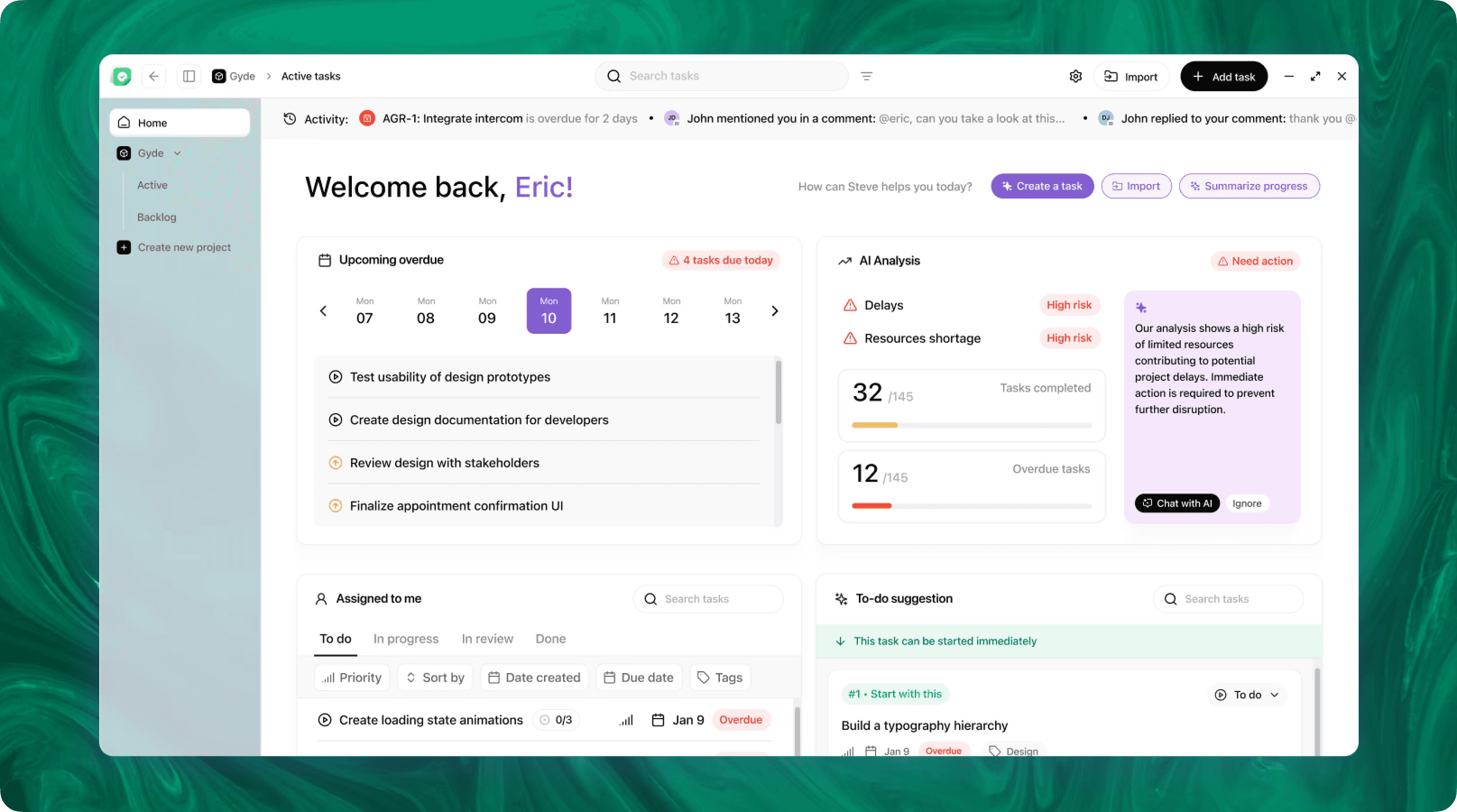
Steve is an AI-native operating system designed to streamline business operations through intelligent automation. Leveraging advanced AI agents, Steve enables users to manage tasks, generate content, and optimize workflows using natural language commands. Its proactive approach anticipates user needs, facilitating seamless collaboration across various domains, including app development, content creation, and social media management.
Conclusion
Operational transparency requires consistent context, persistent records, and easy access to the evidence behind decisions. As an AI OS, Steve aligns those elements: shared memory keeps agents consistent; Steve Chat captures interactive, integrable conversations with logging; AI Email distills and tags inbound evidence; and AI task boards translate decisions into traceable execution. Together these capabilities reduce interpretive gaps, accelerate audits and post‑mortems, and make organizational knowledge discoverable and defensible. For teams that must explain choices to customers, partners, or regulators, Steve turns fragmented operational noise into a coherent, reviewable story.