Generating Firestore-Ready Schemas in Vibe Studio
Oct 31, 2025

Translating Natural Prompts Into Schemas With OpenAI-Powered LLMs: LLMs convert product language into concrete Firestore collection/document shapes and type suggestions for rapid schema prototyping.
Out-of-the-Box Firestore Support in Vibe Studio: Built-in Firebase integration wires generated schemas to real read/write hooks and authentication, letting teams validate behavior early.
Refinement And Customization In Developer Mode: The embedded secure VS Code editor enables targeted schema and model edits with hot reload and live previews to confirm changes.
Deployment Workflow With GitHub Integration: Pushing generated code and schema artifacts to GitHub preserves provenance and streamlines code review and CI/CD handoffs.
Workflow Benefit: Combining LLM-driven generation, Firebase wiring, in-app editing, and repo integration reduces iteration time and clarifies schema decisions for production readiness.
Introduction
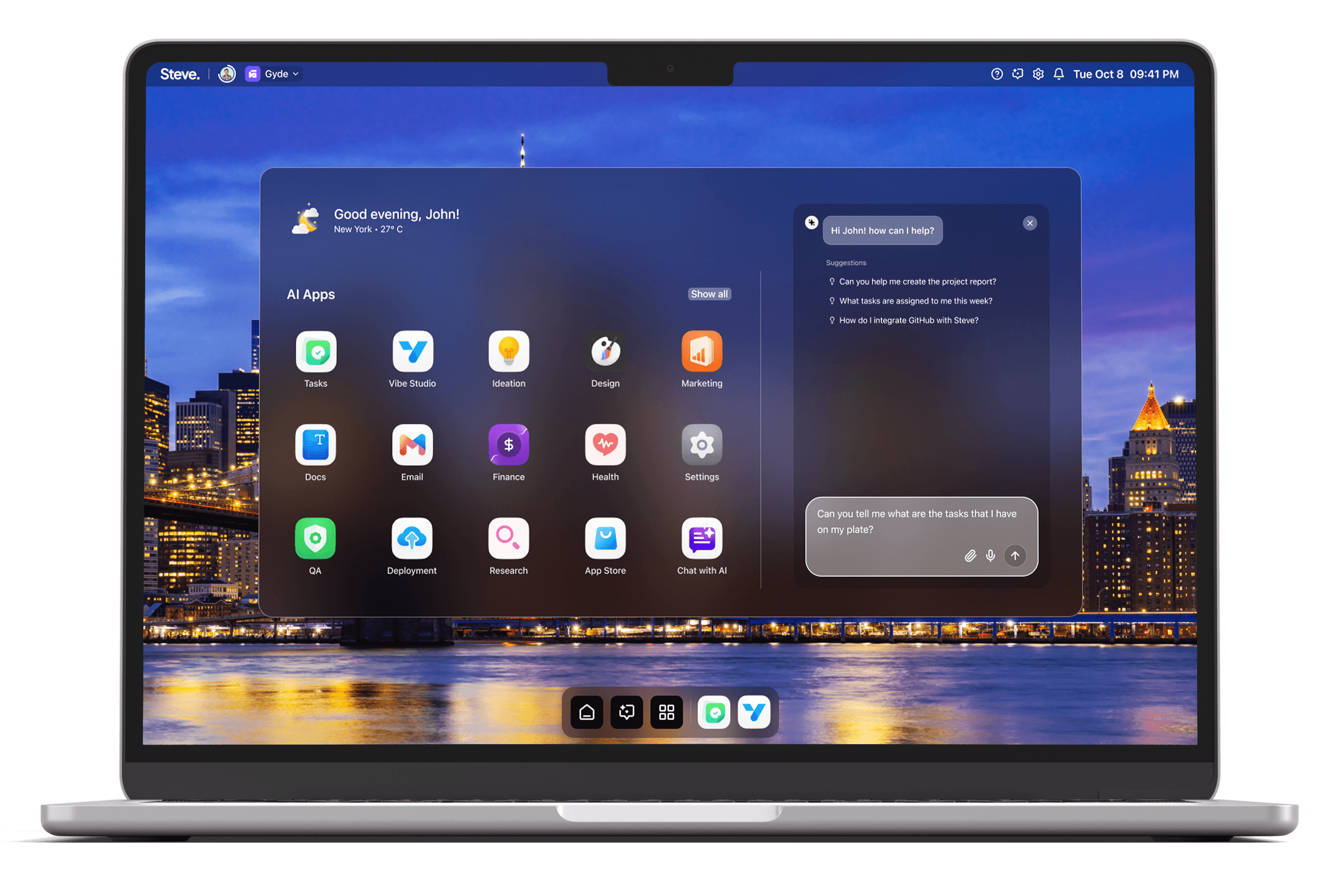
Generating Firestore-ready schemas is a common bottleneck when moving from product intent to backed app features. Vibe Studio, as part of Steve, an AI Operating System, reduces that friction by combining prompt-driven code generation with built-in Firebase support and development tools. This article explains how Steve’s OpenAI-powered LLMs, Vibe Studio’s Firestore integration, Developer Mode’s embedded VS Code, and GitHub integration form a practical path from intent to deployable schema and client code.
Translating Natural Prompts Into Schemas With OpenAI-Powered LLMs
Steve uses OpenAI-powered LLMs in Vibe Studio to interpret context-rich prompts and produce structured outputs that map to Firestore collections and documents. Ask for "a task list with projects, tasks, due dates, assignees, and comments," and the LLM generates a suggested Firestore shape: top-level collections (projects, users, tasks), document fields with types (timestamp, string, reference), and common denormalization patterns (task summary in project documents). This approach accelerates early modeling by converting product language into concrete schema candidates you can inspect, iterate, and reject or accept.
Practical scenario: a product manager defines roles and permissions in plain text. Vibe Studio’s LLMs return a starter schema that includes a users collection with role fields, a roles collection for permission sets, and security-rule-friendly references. That output provides a direct checklist for developers and security reviewers instead of a vague spec.
Out-of-the-Box Firestore Support in Vibe Studio
Vibe Studio’s Firebase integration supports authentication and Firestore functions out-of-the-box, so schema candidates produced by the LLM can be wired into real client flows without manual plumbing. Generated Flutter scaffolds include Firestore read/write hooks and common query patterns aligned with the inferred schema, enabling immediate validation of relationships, indexing needs, and performance trade-offs in a running preview.
Practical scenario: after the LLM suggests a tasks collection with subcollections for comments, Vibe Studio generates the corresponding Firestore read and write functions and authentication checks. You can run the prototype to observe query latencies and detect where an index or denormalization would improve performance, turning an abstract schema into observable behavior fast.
Refinement And Customization In Developer Mode
When starter schemas need refinement, Developer Mode provides an embedded, secure VS Code editor so engineers can edit schema logic, client-side models, and Firestore function hooks without leaving Vibe Studio. Edit generated Dart models, adjust field types, add indexes, or write explicit Firestore security rules; then use hot reload and live edits to confirm the app’s behavior against the revised schema.
Practical scenario: the LLM creates a comments subcollection but your auditors prefer top-level comments for easier moderation. Open Developer Mode, refactor the client models and Firestore accessors, and re-run previews to validate the new structure. Because edits occur inside the same environment that generated the scaffold, intent and implementation stay linked.
Deployment Workflow With GitHub Integration
Once schemas and client bindings are validated, Vibe Studio’s GitHub integration lets teams push generated frontend code and schema-related artifacts directly to a repository for collaboration and CI/CD. This preserves the provenance of LLM-generated decisions and makes peer review straightforward: pull requests contain the scaffold, the developer refinements, and notes from the prompt that produced them.
Practical scenario: after iterating on a schema in Vibe Studio, a developer pushes the refined repo to GitHub where reviewers inspect the Dart models, Firestore rules, and generated Firestore usage. That handoff keeps the generated schema visible in version control and connects prompt-driven design to standard review workflows.
Steve
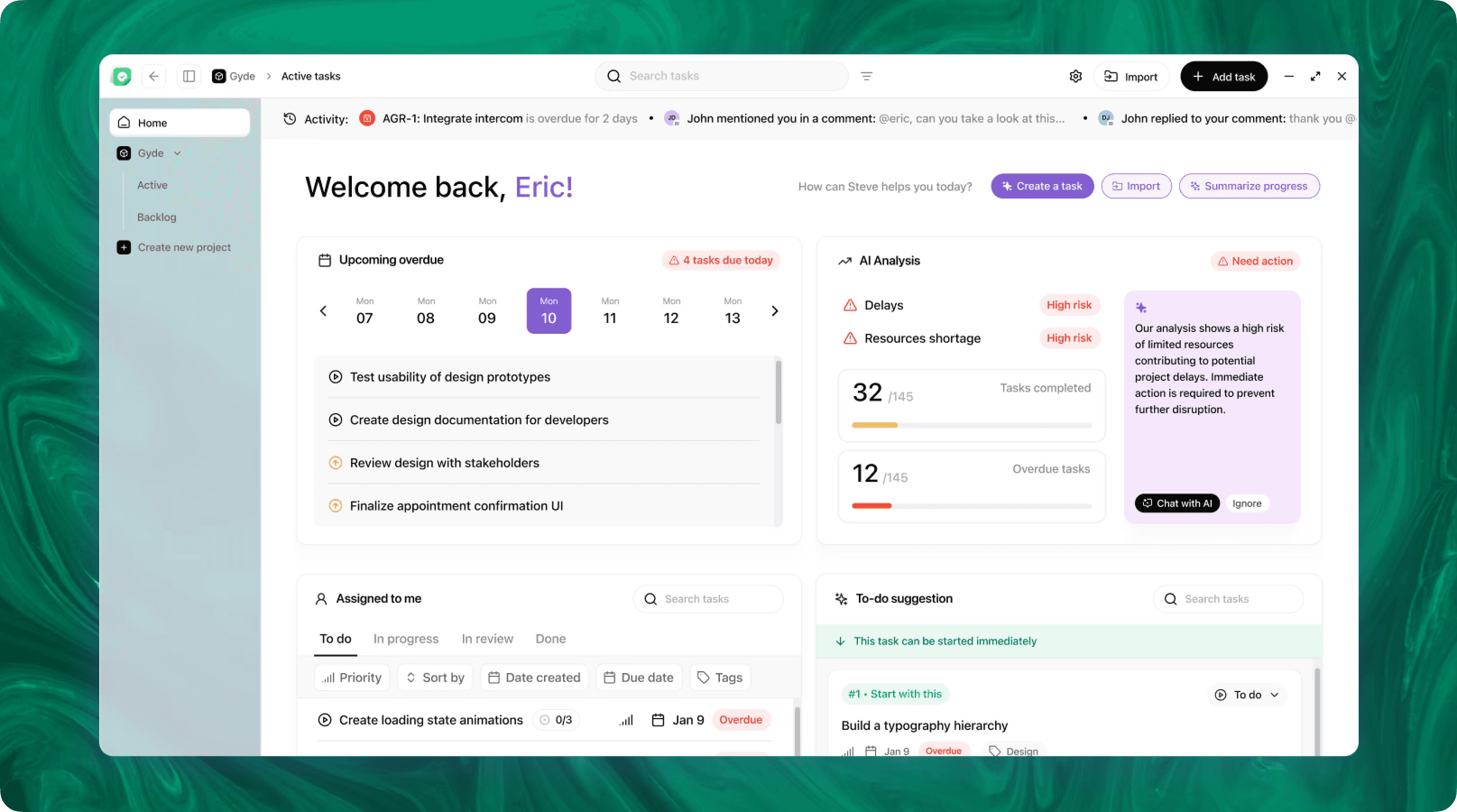
Steve is an AI-native operating system designed to streamline business operations through intelligent automation. Leveraging advanced AI agents, Steve enables users to manage tasks, generate content, and optimize workflows using natural language commands. Its proactive approach anticipates user needs, facilitating seamless collaboration across various domains, including app development, content creation, and social media management.
Conclusion
Generating Firestore-ready schemas in Vibe Studio becomes practical when prompt-to-code LLM outputs are coupled with built-in Firebase support, an embedded editor for refinement, and seamless repository integration. Steve, as an AI OS, shortens the path from product intent to observable, testable schema by producing starter Firestore models, wiring client access, enabling edits in Developer Mode, and making changes reviewable through GitHub. The result is faster iteration, clearer provenance for schema decisions, and fewer surprises when moving to production.