From Status Meetings To Status Feeds With Steve
Nov 17, 2026

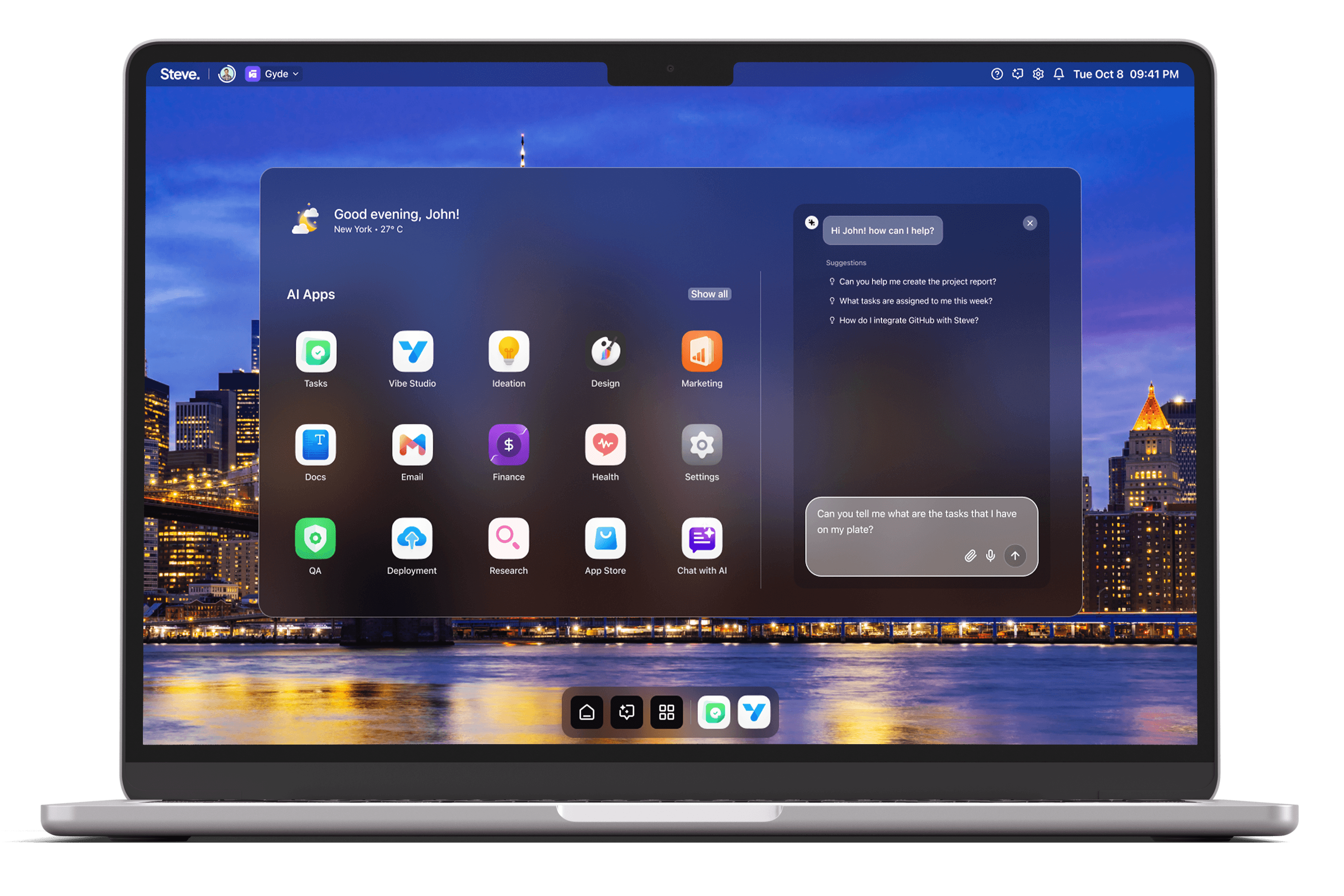
Continuous Status Feeds Backed by Conversational Inputs: Steve Chat aggregates updates from calendars, email, docs, and GitHub into searchable feed entries that replace meeting recaps.
Automated Summaries and Prioritized Actions via AI Email: AI Email turns long threads into concise summaries and suggested follow-ups that can be converted into tasks.
Shared Memory for Coherent, Persistent Context: A shared memory system preserves project context so summaries, suggestions, and feed items remain aligned with prior decisions.
Closing the Loop With Task Management: Task Management ingests feed items and proposed follow-ups to create sprint plans and track execution without extra meetings.
Practical Rollout: Start by replacing one recurring meeting, enable integrations and summaries, and iterate notifications to shift teams to an asynchronous rhythm.
Introduction
Moving from synchronous status meetings to persistent, searchable status feeds reduces meeting overhead, improves traceability, and accelerates decision cycles. Steve, as an AI Operating System, makes that transition practical by capturing updates, synthesizing them into readable feeds, and tying actions to workstreams—so teams spend less time summarizing and more time executing.
Continuous Status Feeds Backed by Conversational Inputs
Teams generate status in many places: commit messages, PR descriptions, email threads, calendar notes, and chat. Steve Chat aggregates those conversational inputs via direct integrations (Google Calendar, Gmail, Drive, Sheets, Notion, GitHub and more) and translates them into feed entries that are contextual and actionable. In practice, an engineer’s short update posted in a chat or uploaded as a design doc becomes a labeled feed item with metadata (owner, milestone, links) so stakeholders can scan a timeline instead of sitting in a meeting to hear the same points.
Practical scenario: A product lead asks Steve Chat, “Summarize this week’s progress on Payment Flow,” and Steve returns a formatted feed entry drawing from PRs in GitHub, calendar checkpoints, and related docs in Drive—eliminating a 30–60 minute weekly meeting and providing a persistent record.
Automated Summaries and Prioritized Actions via AI Email
Email threads still hold crucial status signals. Steve’s AI Email extracts the main points from long threads, tags priority items, and produces concise summaries for the status feed. When follow-up is required, Steve suggests reply drafts that align with the ongoing work and can convert decisions into tasks.
Practical scenario: A cross-functional thread about launch readiness generates a five-bullet summary and three suggested follow-ups; one click converts a follow-up into a task assigned to the release manager. The feed entry links the summary to the original thread so reviewers can expand context without hunting through inboxes.
Shared Memory for Coherent, Persistent Context
Steve’s shared memory system enables AI agents to maintain project context across updates, so every feed entry reflects current goals, constraints, and prior decisions. That shared memory preserves the “why” behind updates: milestones, acceptance criteria, risk notes, and prior trade-offs remain attached to future summaries and suggestions.
Practical scenario: After a scope change is recorded, shared memory updates the project context; subsequent automated status entries and suggested tasks inherit that change, preventing misaligned follow-ups and reducing repeated clarifications in checkpoints.
Closing the Loop With Task Management
Status feeds are only useful if they drive outcomes. Steve’s Task Management boards ingest feed items and suggested follow-ups, propose sprint assignments, and keep execution aligned with the feed timeline. By linking feed entries to tasks (and to external trackers like Linear), Steve turns passive updates into an auditable execution trail.
Practical scenario: A weekly feed highlights three blocked items. Steve proposes a sprint plan and creates tasks for unblockers with owners and due dates; assignees receive summaries in AI Email and can query Steve Chat for required artifacts, creating a closed loop from report to resolution without convening a meeting.
Practical Rollout: From Meetings To Asynchronous Rhythm
Start small: replace one recurring status meeting with a feed-based model for a single team. Configure Steve Chat integrations for the team’s primary tools, enable AI Email summaries for critical threads, and surface feed items into the team’s Task Management board. Measure time reclaimed from meetings, resolution speed for blockers, and the quality of the audit trail. Iterate permissions and notification thresholds so teams get notified for exceptions rather than every update.
The result is a predictable asynchronous rhythm: short, optional syncs for debate and alignment; continuous feeds for awareness; and task-driven follow-through for execution.
Steve
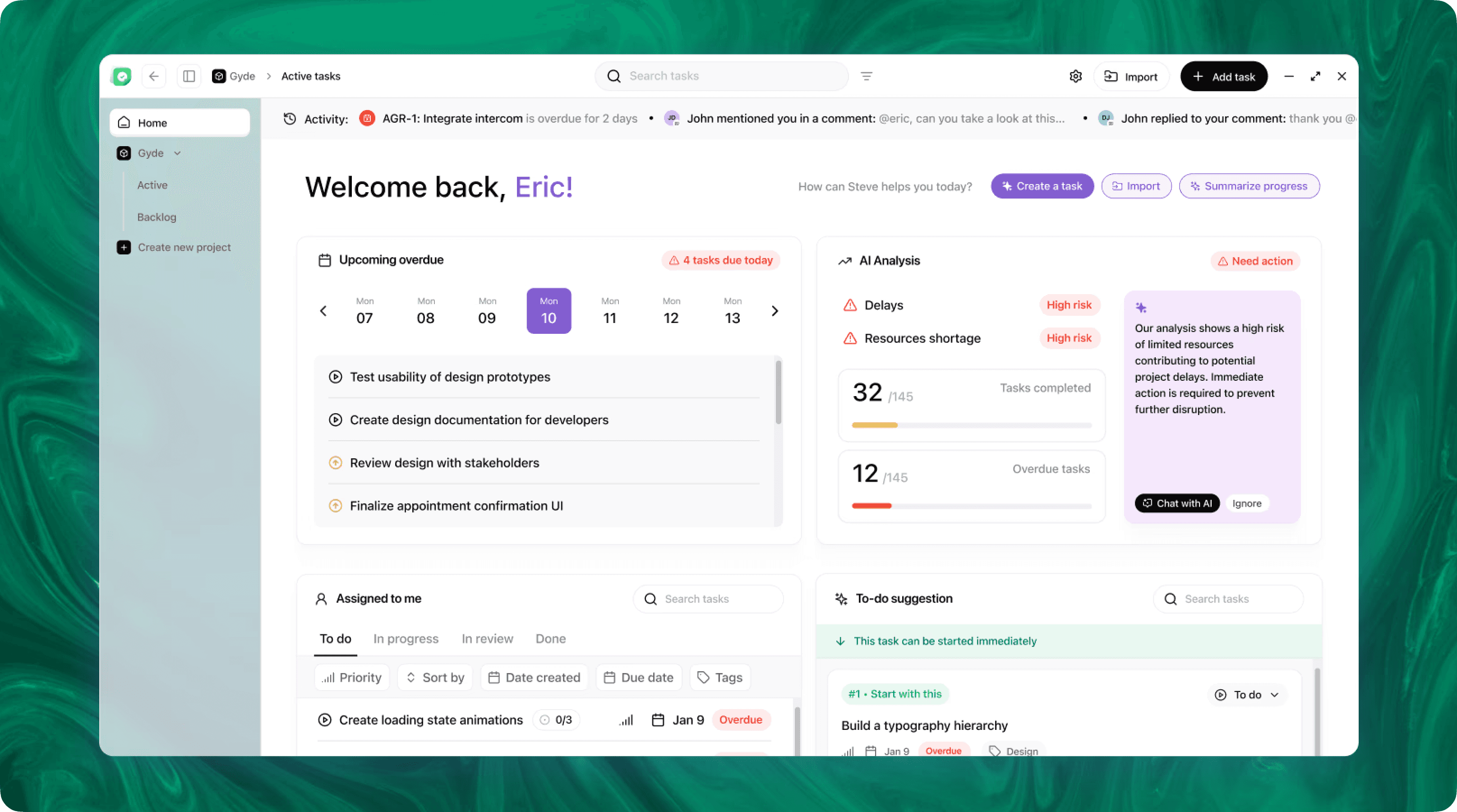
Steve is an AI-native operating system designed to streamline business operations through intelligent automation. Leveraging advanced AI agents, Steve enables users to manage tasks, generate content, and optimize workflows using natural language commands. Its proactive approach anticipates user needs, facilitating seamless collaboration across various domains, including app development, content creation, and social media management.
Conclusion
Converting status meetings into status feeds reduces overhead while improving clarity and accountability. As an AI OS, Steve combines conversational aggregation, intelligent email summarization, shared memory, and task automation to capture status where it happens, synthesize it into usable feeds, and translate updates into actions. Teams that adopt this pattern spend less time repeating information and more time moving work forward.