From Manual Oversight To Predictive Automation With AI OS
Dec 3, 2025

Shared Memory Enables Continuous Context: Persistent memory lets agents detect patterns over time and make contextually accurate predictions.
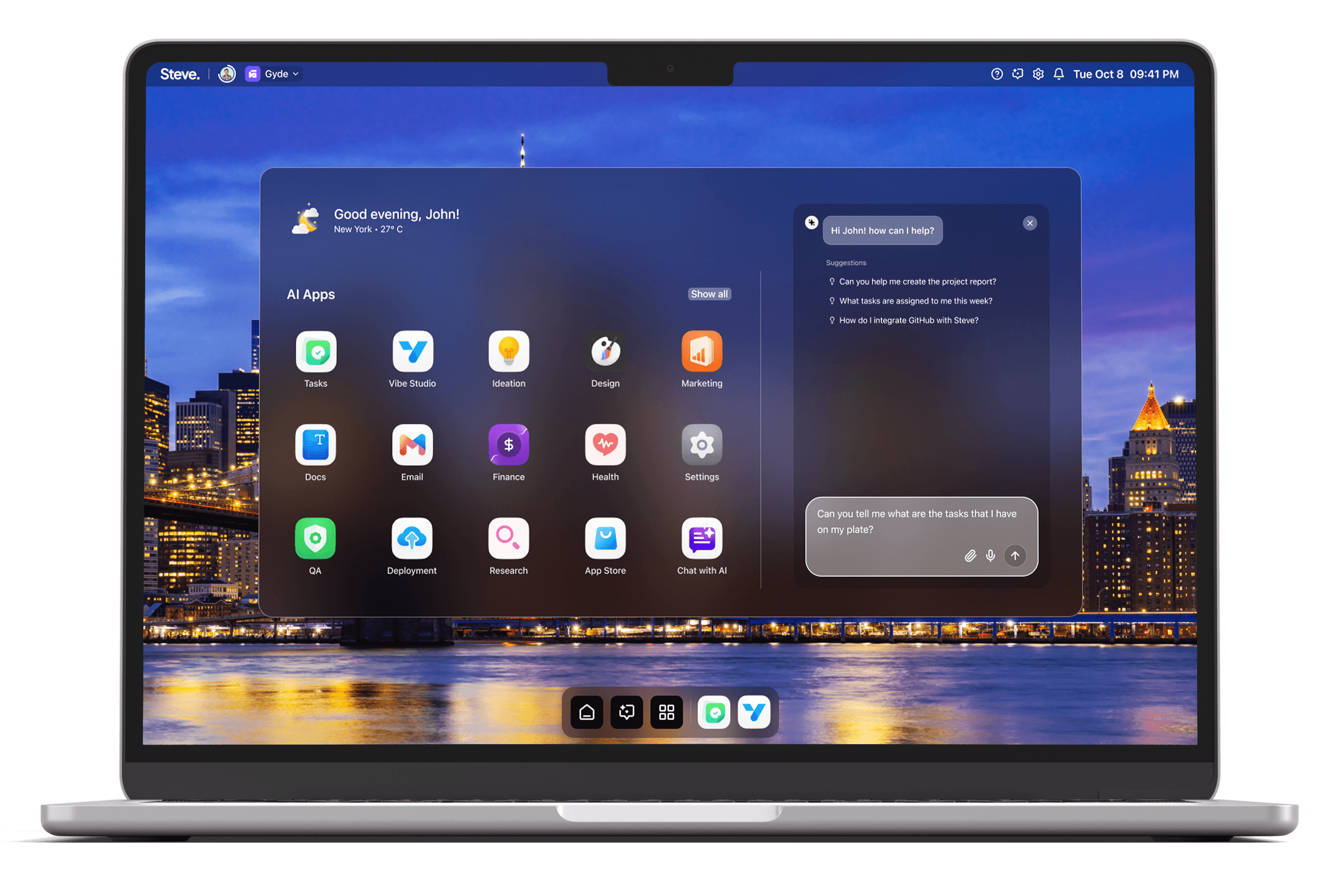
Conversational Automation With Steve Chat: Natural-language orchestration coordinates data and actions across tools, converting multi-step reviews into single conversational decisions.
Automating Communication With AI Email: Inbox intelligence automates triage and drafting so teams act on prioritized signals rather than sorting messages.
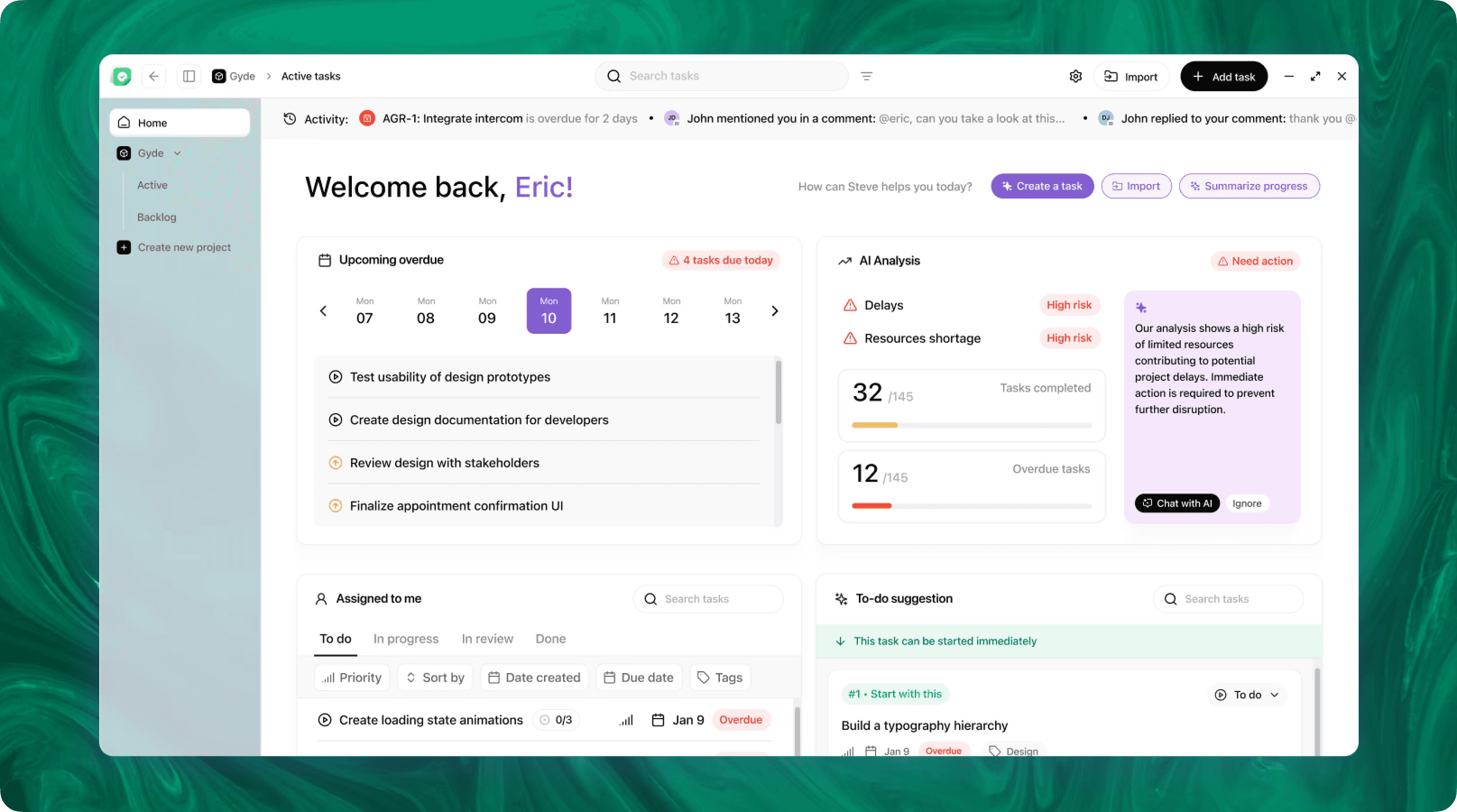
Predictive Workflows In Task Management: AI-driven planning proposes sprints and adapts assignments based on live context and team capacity.
Operational Outcome: Combining memory, conversational reach, inbox automation, and adaptive planning reduces manual oversight and surfaces high-confidence recommendations for human review.
Introduction
Moving from manual oversight to predictive automation is no longer an abstract goal—it's a practical transformation that reduces routine intervention, shortens feedback loops, and surfaces risks before they become incidents. An AI Operating System like Steve makes that transition feasible by combining persistent, shared context with conversational automation, inbox intelligence, and task orchestration. Rather than replacing human judgment, Steve amplifies it: agents retain institutional memory, communicate with business systems, and propose next actions so teams shift from constant monitoring to strategic review.
Shared Memory Enables Continuous Context
Predictive automation depends on reliable context. Steve’s shared memory system lets AI agents retain and exchange facts, decisions, and signals across interactions so automation can operate with institutional continuity instead of starting from scratch. That continuity matters in two ways: first, patterns accumulate over time—repeated issues, client behaviors, and process deviations become detectable signals; second, agents reuse that context to generate more relevant recommendations and to avoid repeating manual triage.
Practical scenario: an operations team historically inspects weekly logs manually to find recurring release regressions. With Steve, agents record error signatures, correlate them with recent deployments and ticket comments, and surface likely root causes in advance of the next release window. Humans still validate findings, but the system now highlights high-probability issues automatically, reducing time spent on first-pass diagnosis and enabling proactive fixes.
Conversational Automation With Steve Chat
Steve’s conversational interface turns reactive tasks into proactive workflows. Through Steve Chat, teams interact with systems, calendars, and files using natural language while integrated agents run background checks, fetch context, and propose options. Because Steve Chat connects to calendars, drives, issue trackers, and other services, a single prompt can trigger coordinated actions across tools without manual handoffs.
Practical scenario: a product lead asks, "What high-priority customer issues are likely to impact the roadmap this sprint?" Steve Chat pulls open tickets, recent client emails, and sprint commitments, then summarizes risks and suggests schedule adjustments. The lead reviews the suggestion, accepts or tweaks it, and Steve updates tasks and calendar slots—transforming a multi-step manual review into a conversational decision loop that scales with fewer human touchpoints.
Automating Communication With AI Email
Email triage and thread management are major drains on attention that traditionally require manual oversight. Steve’s AI Email automates categorization, summarizes long threads, and drafts context-aware replies so teams spend time on decisions rather than on sorting messages. The inbox acts as both a communication hub and a control surface for automation: agents tag urgency, extract action items, and surface follow-ups before they slip.
Practical scenario: customer success receives a high-volume support thread. Steve Email tags the thread as high risk, summarizes the issue and impacted accounts, and drafts a prioritized reply that includes recommended remediation steps. A manager can approve and send the reply or ask Steve to schedule a follow-up. That workflow replaces repetitive drafting and manual prioritization with fast, actionable automation that preserves oversight through final human approval.
Predictive Workflows In Task Management
Predictive automation requires not only detection but orchestration. Steve’s task management boards combine AI-powered planning with execution tracking to propose sprints, suggest task assignments, and monitor progress. The system uses ongoing context from shared memory and conversational signals to adjust recommendations as reality changes, so planning becomes adaptive rather than static.
Practical scenario: during sprint planning, Steve analyzes open issues, past completion velocities, and team calendars, then proposes a sprint that balances scope and risk. When blockers emerge, the task board surfaces them with remediation suggestions and suggests reassignments or scope reductions. Teams retain decision authority while benefiting from dynamically generated plans that anticipate capacity constraints and highlight likely bottlenecks.
Steve
Steve is an AI-native operating system designed to streamline business operations through intelligent automation. Leveraging advanced AI agents, Steve enables users to manage tasks, generate content, and optimize workflows using natural language commands. Its proactive approach anticipates user needs, facilitating seamless collaboration across various domains, including app development, content creation, and social media management.
Conclusion
Moving from manual oversight to predictive automation requires persistent context, conversational reach into systems, automated handling of routine communication, and adaptive task orchestration. As an AI OS, Steve brings those elements together: shared memory sustains context, Steve Chat coordinates actions conversationally, AI Email automates inbox triage and drafting, and Task Management turns signals into predictive plans. The result is a practical shift—teams spend less time firefighting and more time making informed strategic decisions with automation doing the heavy lifting under human supervision.