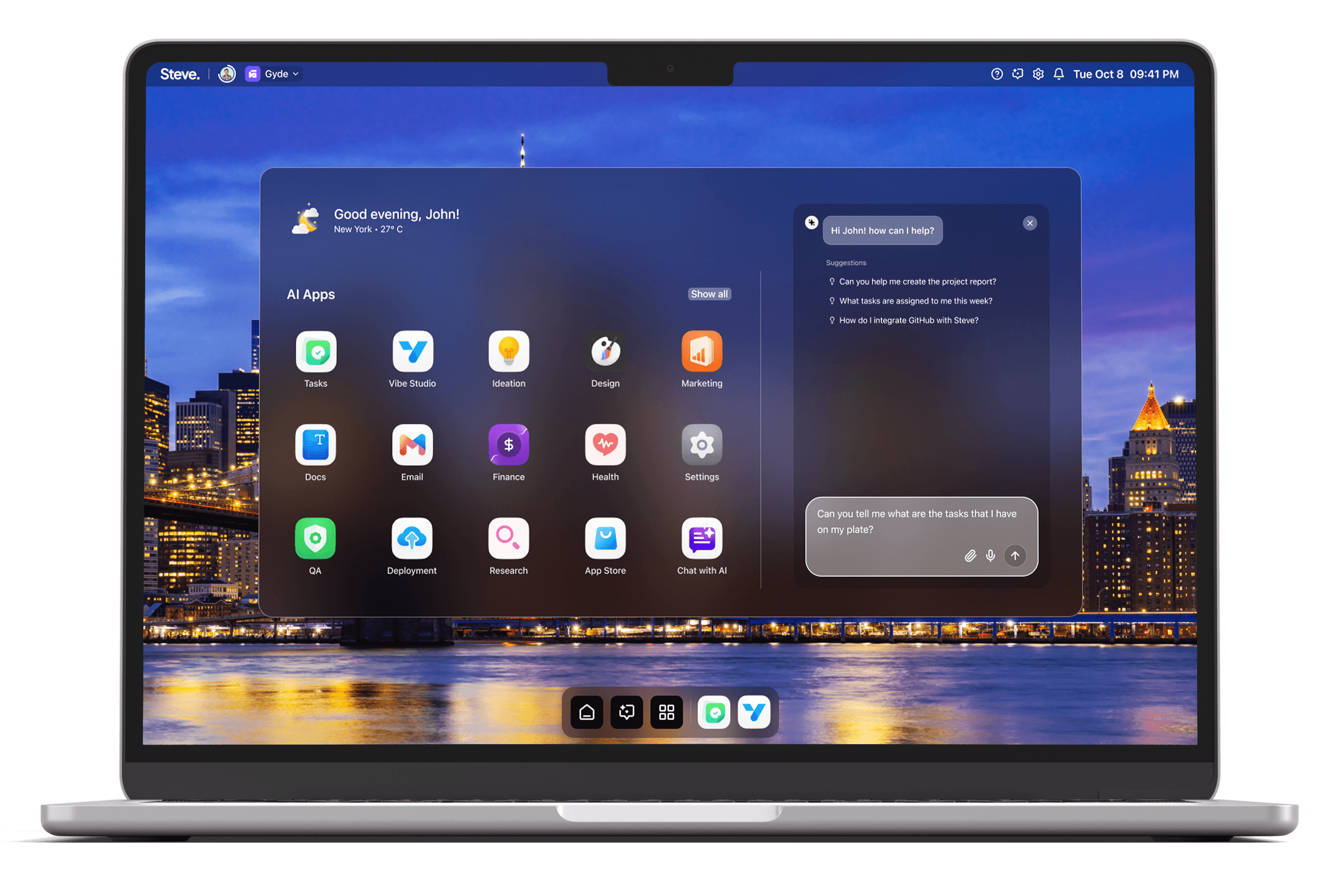
From Manual Coordination To Intelligent Orchestration
Oct 3, 2026

Conversational Orchestration: Chat-driven commands in Steve convert natural requests into multi-step actions across calendar, files, and trackers.
Shared Memory Enables Contextual Continuity: Persistent memory preserves decisions and project context so agents act consistently across interactions.
AI Inbox as a Command Center: AI Email tags, summarizes, and drafts context-aware replies that convert threads into coordinated work.
AI-Powered Task Orchestration: Integrated task boards propose sprints, sync with trackers, and automate updates to keep execution aligned.
Introduction
Moving from manual coordination to intelligent orchestration reshapes how teams deliver work: less firefighting, more aligned execution. As an AI Operating System, Steve transforms dispersed signals—emails, calendar events, documents, and task boards—into coordinated actions through conversational agents, shared memory, a smart inbox, and AI task management. This article explains how those capabilities reduce handoffs, preserve context, and automate routine decisions so teams can focus on outcomes.
Conversational Orchestration: Turn Requests Into Actions
Conversational interfaces turn ad hoc instructions into repeatable workflows. With Steve's chat-driven interface, stakeholders issue natural-language requests—schedule a review, find the latest spec, or escalate a blocker—and receive concrete next steps or automated changes. Because Steve integrates with calendars, email, Drive, and issue trackers, a single conversation can trigger scheduling, surface documents, and update tasks without manual switching.
Practical scenario: a product lead asks Steve to "schedule a feature review with engineering and include the latest QA report." Steve locates relevant files, proposes available slots from calendars, drafts a concise invite, and flags related tickets for review. The operation completes in one conversational loop instead of multiple emails and meetings, shortening the path from intent to execution.
Shared Memory Enables Contextual Continuity
Orchestration depends on context that survives beyond a single interaction. Steve's shared memory system stores and surfaces project context so agents act consistently across conversations and tools. That memory contains decisions, priorities, and document links that subsequent agents can read and use, reducing repetitive status updates and information gaps.
Practical scenario: after a design review, designers and engineers update the same shared memory entry with the chosen layout and open questions. Later, when a PM asks for a release readiness checklist, Steve references that memory to populate outstanding items, assign owners, and summarize unresolved risks. The team no longer repeats background briefings; Steve preserves continuity and accelerates decision cycles.
AI Inbox as a Command Center
Email is often the bottleneck of coordination. Steve's AI Email converts the inbox into an active command center by tagging, summarizing, and generating context-aware reply drafts. Instead of manually triaging threads, teams get prioritized lists, short summaries of long threads, and reply suggestions that incorporate project context from shared memory and chat history.
Practical scenario: a customer escalates via a long thread. Steve tags the message as urgent, summarizes key points, identifies relevant PRs and tickets, and proposes a reply that acknowledges the problem and outlines next steps. A single approval transforms a stalled email into coordinated work: tickets update, stakeholders receive notifications, and the response posts to the thread—reducing lag and aligning actions across teams.
AI-Powered Task Orchestration
Effective orchestration requires converting decisions into tracked work. Steve's AI task management boards ingest prompts and issues, propose sprints, and keep execution visible. The system integrates with external trackers to import or create tasks, suggest priorities based on context and deadlines, and automate routine updates so teams spend less time maintaining boards and more time delivering.
Practical scenario: before a release, Steve analyzes outstanding items across repositories and documents, proposes a focused sprint plan with owners and timelines, and syncs that plan to the team's issue tracker. As work progresses, Steve updates statuses and surfaces blockers proactively, ensuring operational clarity without manual meeting overhead.
Steve
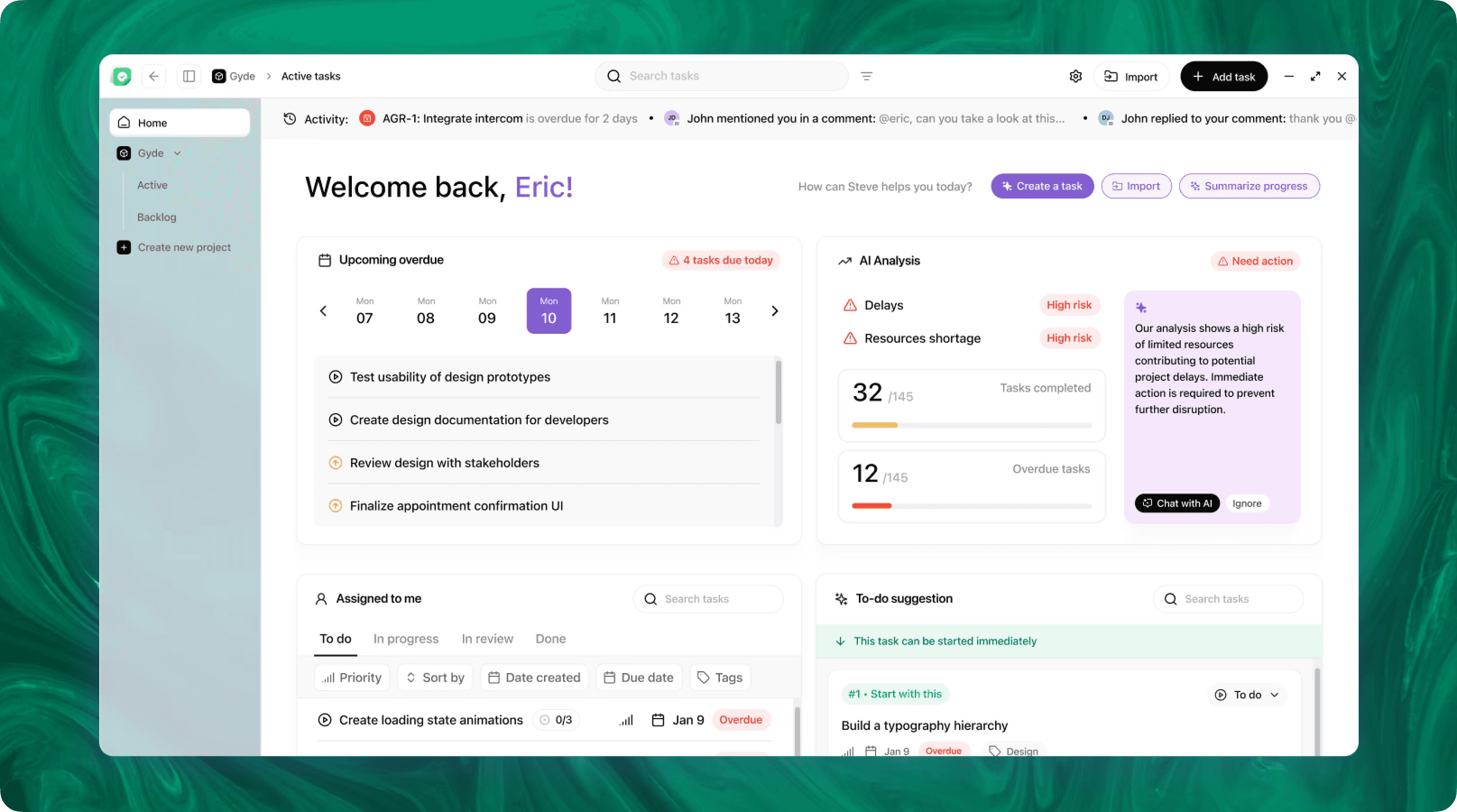
Steve is an AI-native operating system designed to streamline business operations through intelligent automation. Leveraging advanced AI agents, Steve enables users to manage tasks, generate content, and optimize workflows using natural language commands. Its proactive approach anticipates user needs, facilitating seamless collaboration across various domains, including app development, content creation, and social media management.
Conclusion
Moving from manual coordination to intelligent orchestration requires three things: a conversational layer that accepts intent, a shared memory that preserves context, an inbox that converts messages into actions, and task automation that translates plans into tracked work. Steve combines those elements as an AI OS to reduce handoffs, preserve institutional knowledge, and automate routine decisions. The outcome is faster alignment, fewer repetitive meetings, and repeatable operational rhythms that let teams focus on impact.