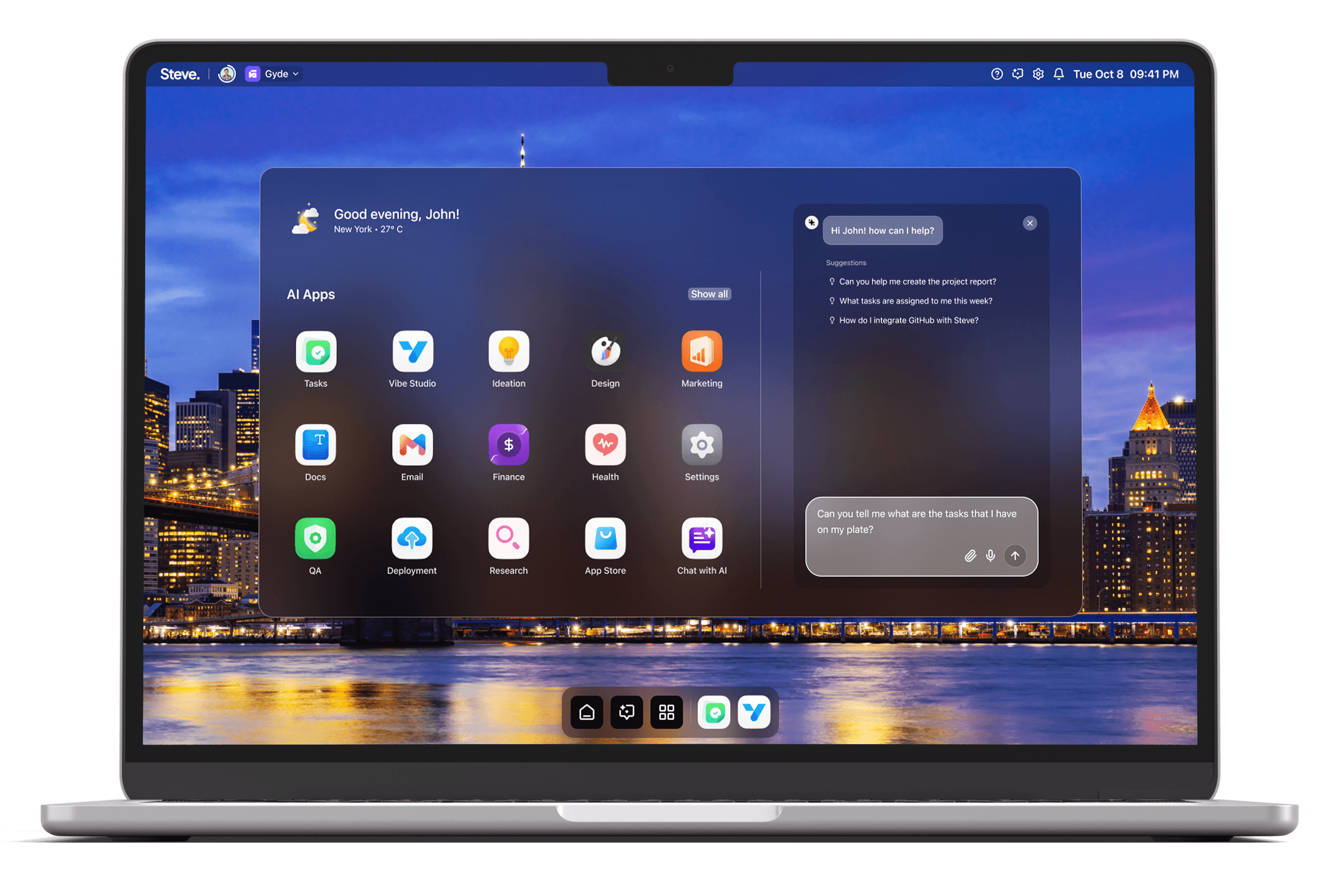
Designing Smart Notification Systems In Steve
Dec 3, 2025

Conversational Agents For Intent-Driven Notifications: Natural-language agents let teams specify alert rules, tone, and escalation paths interactively without code.
Shared Memory For Contextual Relevance: Persistent memory ensures notifications reference prior context and user preferences, reducing redundant follow-ups.
Integrations And Trigger Sources: Built-in connections to calendars, email, Drive, GitHub, and more provide reliable signals for precise, multi-source triggers.
Inbox-Aware Delivery And Prioritization: The AI Email module categorizes, summarizes, and batches alerts so high-priority messages surface while low-priority items are digested.
Design Pattern: Combine conversational specification, contextual memory, multi-source triggers, and prioritized delivery to create notifications that drive action, not noise.
Introduction
Designing smart notification systems requires more than rule-based alerts; it demands context, prioritization, and conversational intent so messages land at the right time with the right content. As an AI Operating System, Steve combines conversational agents, a shared memory for contextual continuity, deep integrations, and an inbox-aware email module to make notifications adaptive, personalized, and actionable. This article shows practical patterns for building notification systems inside Steve that reduce noise and accelerate response.
Conversational Agents For Intent-Driven Notifications
Start by modeling notification logic as an extension of conversation. Steve’s conversational interface and AI agents can interpret natural-language intents — for example, distinguishing an urgent production incident from a routine status update — and translate them into notification strategies. Designers can prototype triggers by chatting with agents: describe a business rule, then ask the agent to enumerate recipients, channels (email or chat), and escalation paths. Using this approach, a product manager can iterate quickly on tone, cadence, and fallback messaging without writing policies in code.
A practical scenario: a customer success lead tells Steve to "alert me when a VIP account ticket is updated twice in 24 hours," and the agents synthesize an alert plan that includes immediate push to Slack, a digest to email if unresolved after four hours, and a recommended escalation to a senior manager. Because agents reason conversationally, the team can refine the plan through follow-up prompts and capture the final specification as structured instructions for automated delivery.
Shared Memory For Contextual Relevance
Notifications are useful only when they respect context; Steve’s shared memory lets agents retain and surface relevant state across interactions. The shared memory holds conversation history, user preferences, and recent document context so notifications reference what the recipient already knows. Instead of repeating information, alerts can point to the latest summary or attach a one-line update derived from prior chat memory.
In practice, this means a notification about a delayed milestone can include the current sprint summary and the immediate blocker that led to delay, because agents access memory that recorded earlier planning discussions. That contextual continuity reduces follow-up questions and improves the recipient’s ability to act on the notification immediately.
Integrations And Trigger Sources
A smart notification system needs reliable signals. Steve Chat’s direct integrations with Google Calendar, Gmail, Google Drive, Sheets, Notion, GitHub, and 40+ services provide a broad set of trigger sources without switching tools. Use calendar events to suppress notifications during meetings, monitor GitHub for failed CI runs to trigger urgent alerts, or watch a shared spreadsheet for changing KPIs that produce daily digests.
For example, an engineering manager can configure a rule that watches GitHub issue labels and uses calendar integration to avoid notifying owners during deep-focus blocks; Steve’s integrated agents will respect calendar-bound “do not disturb” windows recorded in connected accounts. These integrations let designers combine multiple signals when defining notification conditions and maintain a single conversational surface for adjustment.
Inbox-Aware Delivery And Prioritization
Delivering a notification is as important as generating it. Steve’s AI Email module provides an inbox-aware layer that categorizes and summarizes messages, enabling priority-aware delivery. Notifications sent via Steve can leverage the same tagging and summarization logic so recipients receive concise summaries for low-priority alerts and expanded threads for critical issues.
A concrete flow: high-priority alerts bypass digest batching and trigger a short, context-rich email with an AI-generated summary and suggested reply templates; lower-priority updates are grouped into a single daily digest with a summarized action list. Because the inbox module can draft context-aware replies, recipients can respond immediately with minimal friction, closing the loop faster.
Steve
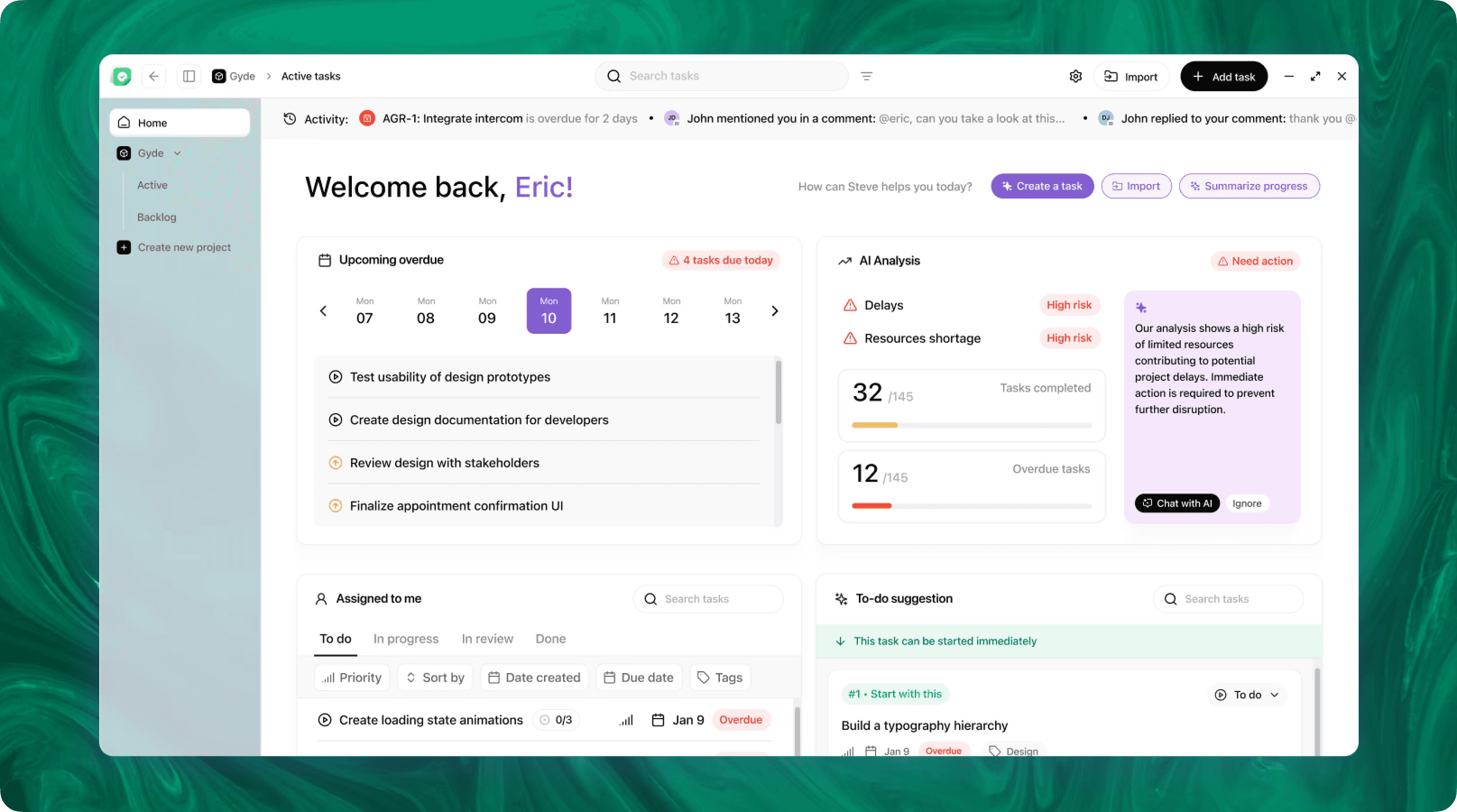
Steve is an AI-native operating system designed to streamline business operations through intelligent automation. Leveraging advanced AI agents, Steve enables users to manage tasks, generate content, and optimize workflows using natural language commands. Its proactive approach anticipates user needs, facilitating seamless collaboration across various domains, including app development, content creation, and social media management.
Conclusion
Designing smart notification systems in Steve combines conversational intent, shared memory for contextual relevance, rich integrations for reliable triggers, and inbox-aware delivery to reduce noise and increase actionability. As an AI OS, Steve lets teams iterate notification policies conversationally, preserve context across interactions, and deliver prioritized, digestible messages tied to real signals. The result is a notification system that informs behavior rather than interrupts it.