Designing Conversational Access Layers for Company Data
Jan 27, 2026

Connecting Data Sources Through Conversation: Direct integrations and file-aware inputs let a single conversational turn retrieve and synthesize information from email, docs, spreadsheets, and tools.
Context, Memory, And Multi-Agent Collaboration: Shared memory preserves project state and enables multiple AI agents to collaborate, producing coherent follow-ups without repeated clarification.
Auditing, Summaries, And Conversational Workflows: Automated thread summaries and in-inbox chat convert long conversations into prioritized, actionable artifacts the assistant can act on.
Observability And Optimization: Logged conversational traces (LangFuse) enable measurement of retrieval accuracy and prompt effectiveness, guiding iterative improvements.
Design Patterns And UX: Always show provenance, ask clarifying questions, and expose memory controls; tie conversational entry points to where decisions are made to minimize friction.
Introduction
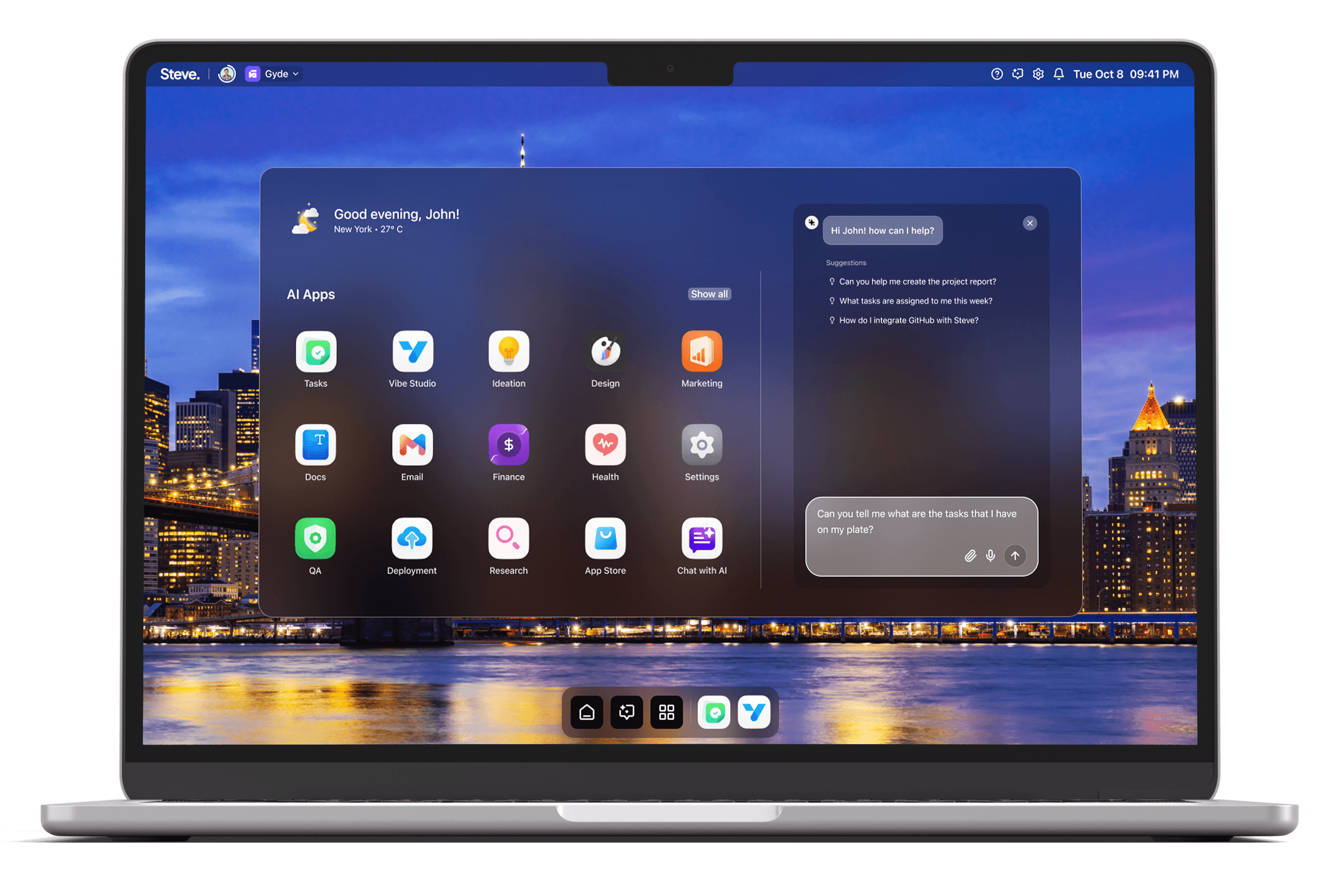
Designing conversational access layers for company data means building interfaces that let employees query, act on, and reconcile information across systems using natural language. These layers reduce context switching, accelerate decision cycles, and surface actionable answers from scattered documents and tools. As an AI Operating System, Steve combines persistent conversational memory, broad service integrations, file-aware inputs, and observability hooks to make those access layers practical, auditable, and fast to adopt.
Connecting Data Sources Through Conversation
A reliable access layer starts with connectors that map user intent to concrete data sources. Steve Chat’s direct integrations with Google Calendar, Gmail, Google Drive, Sheets, Notion, GitHub, and 40+ services let a single conversational turn reference calendars, email threads, documents, and spreadsheets without manual switching. File-aware capabilities let users upload PDFs, spreadsheets, and images into the same conversational session so the assistant can ground answers in attachments.
Practical scenario: a product manager asks, “What risks did engineering flag for the Q2 rollout?” Steve pulls the latest design doc from Drive, the sprint notes from Sheets, and relevant issue comments from GitHub, then synthesizes a short risk summary. Because the system can point back to the specific documents used, teams can verify sources and follow up immediately. This connector-first pattern turns ambiguous requests into concrete retrieval and synthesis steps inside a single conversational flow.
Context, Memory, And Multi-Agent Collaboration
Maintaining context across turns and users is the core of a usable conversational layer. Steve’s shared memory system enables agents and sessions to retain relevant state — project timelines, previous clarifications, or validated definitions — so follow-up questions remain coherent and avoid repetitive clarification. That persistent contextual layer also enables multi-agent collaboration: different AI agents can contribute expertise (for example, extracting metrics, summarizing threads, or drafting next steps) and write their outputs to shared memory for downstream use.
Practical scenario: during a cross-functional review, a sales lead asks about renewal risk for a key account. The assistant recalls prior conversations (pricing concessions noted two weeks earlier), retrieves the latest usage metrics, and runs a brief sentiment synthesis across recent emails. The result is a concise risk assessment that reflects prior decisions and the latest data — without the user re-explaining the account history.
Auditing, Summaries, And Conversational Workflows
Conversational access layers must be auditable and produce concise artifacts. Steve’s AI Email features — automated tags, thread summaries, and in-inbox chat — transform long conversations into prioritized, actionable items that a conversational layer can reference and act upon. When a user asks “Summarize the onboarding thread and list outstanding tasks,” the system can return a short summary plus categorized tasks derived from the thread.
Operational observability matters for reliability and continuous improvement. Steve’s integration with logging and analytics (LangFuse) captures conversational traces and outcomes, enabling teams to measure retrieval accuracy, prompt effectiveness, and frequent failure modes. That telemetry supports iterative improvements: tune prompts, adjust memory retention, or refine source selection rules based on real usage patterns rather than guesswork.
Practical scenario: compliance teams periodically review how customer data appears in conversational outputs. Logged chat traces let auditors verify which documents and snippets were used for each answer and confirm that summaries match source content. Product teams use the same logs to reduce hallucinations by identifying common prompt patterns that produce mismatches and updating retrieval or grounding logic.
Design Patterns And UX Considerations
Design conversational layers to confirm provenance, ask clarifying questions, and surface source links or snippets alongside summaries. Use memory conservatively: retain only project-level context that accelerates workflows and expose controls for forgetting or updating key facts. Present summaries with explicit attributions (document name, timestamp, and location) so users can jump directly from a conversational assertion to the source.
Implement feedback loops: let users flag incorrect extracts or mark high-value summaries; feed those flags into analytic pipelines so LangFuse-backed telemetry informs training data and prompt tuning. Finally, place conversational entry points where decisions happen — inside email threads, within dashboards, or in chat — to minimize friction and keep the interaction modal consistent with the user’s task.
Steve
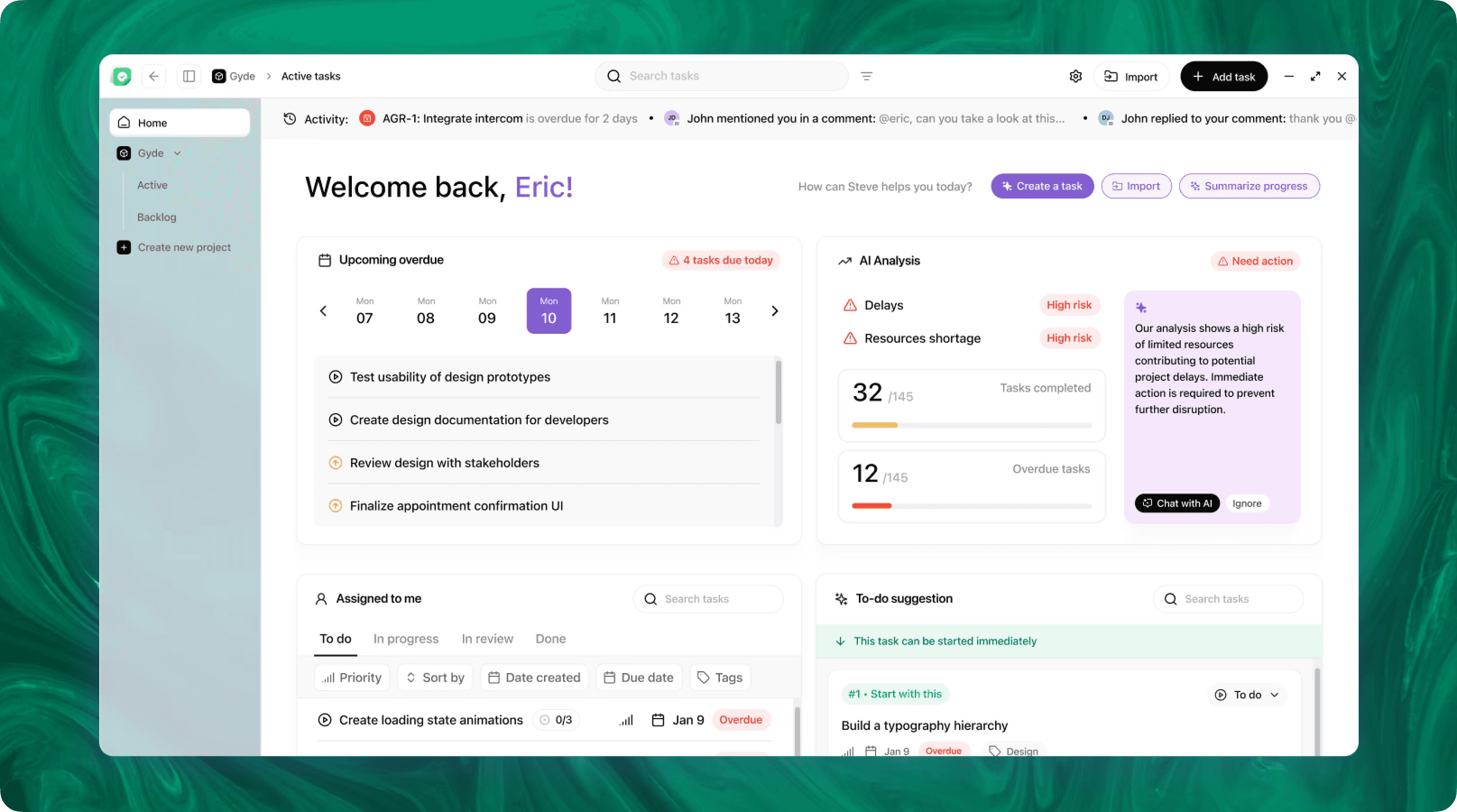
Steve is an AI-native operating system designed to streamline business operations through intelligent automation. Leveraging advanced AI agents, Steve enables users to manage tasks, generate content, and optimize workflows using natural language commands. Its proactive approach anticipates user needs, facilitating seamless collaboration across various domains, including app development, content creation, and social media management.
Conclusion
Conversational access layers turn disparate company data into actionable dialogue when connectors, memory, and observability work together. Steve, as an AI OS, pairs broad integrations and file-aware chat with shared memory and logging to deliver grounded, traceable conversational interactions. The result is faster decision making, more reliable synthesis of documents and threads, and a practical path to scale conversational workflows across teams.