Designing Company-Wide Automation Strategies With Steve
Jan 28, 2026

Shared Memory Enables Cross-Team Automation: A common memory gives agents a single source of truth, preventing duplication and enabling reliable, organization-wide automations.
Conversational Orchestration With Steve Chat: Chat provides a control plane that designs, validates, and triggers cross-system automations using existing integrations and file-aware context.
Automating Communication Workflows With AI Email: Smart inbox features convert recurring email patterns into triage and templated-response automations while preserving human oversight.
Task Management Ties Strategy To Execution: AI-powered boards and Linear integration turn discovered automation opportunities into prioritized sprints and measurable outcomes.
Operational Feedback Loop: Combining shared memory, conversational orchestration, email automation, and task tracking creates a closed loop for discovery, rollout, and continuous improvement.
Introduction
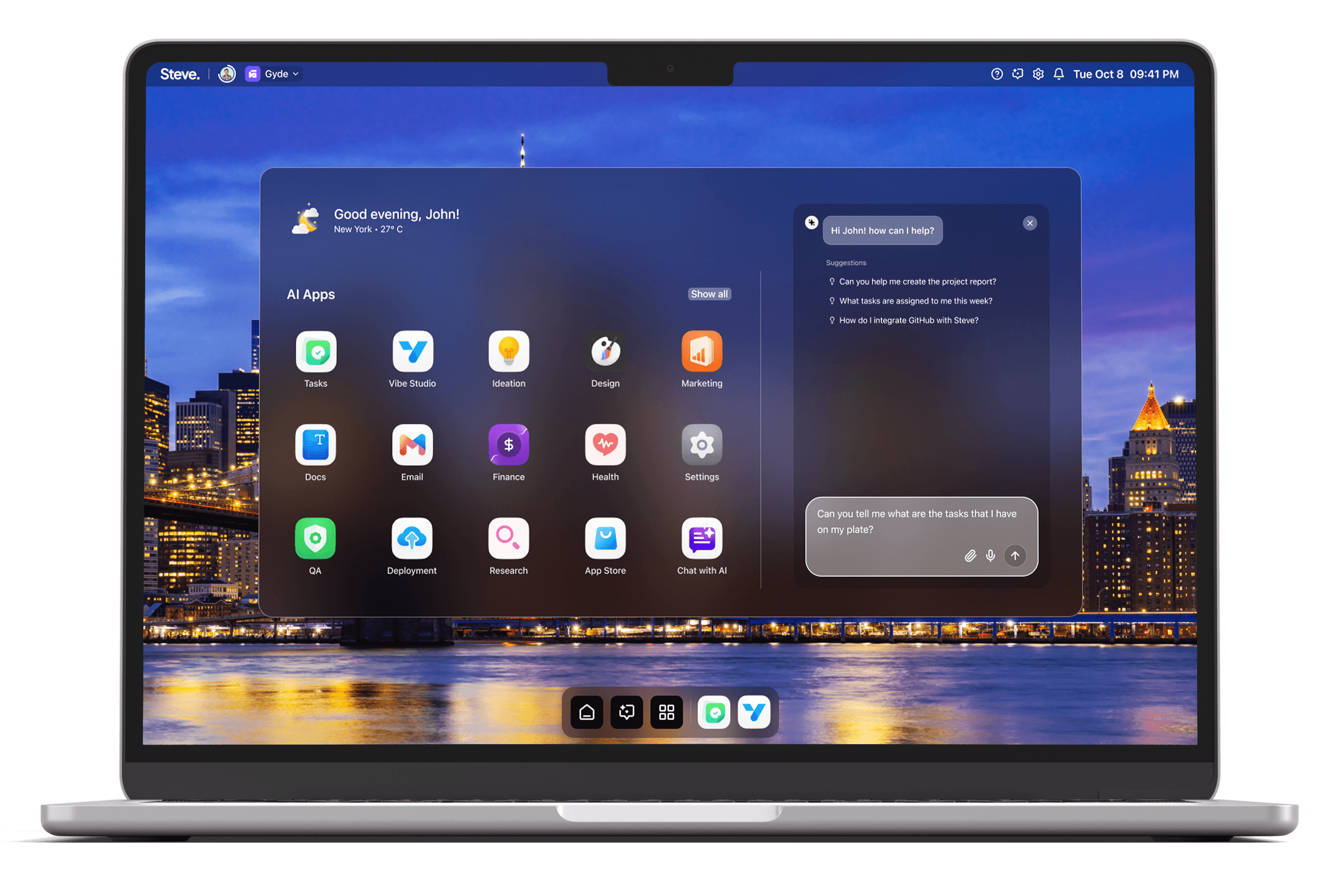
Designing Company-Wide Automation Strategies With Steve makes automation a coordinated, measurable program rather than a collection of point solutions. Companies struggle to scale automation because teams work in silos, rules drift, and ownership is unclear; Steve positions itself as an AI Operating System that centralizes context, orchestration, and execution so automation can scale reliably. This article shows practical patterns for using Steve’s shared memory, conversational orchestration, AI Email, and Task Management to design and run an enterprise automation strategy.
Shared Memory Enables Cross-Team Automation
A durable shared memory for AI agents creates a single source of truth for automation intent, status, and exceptions. When collections of agents reference the same memory, workflows inherit organizational context — policies, approval matrices, and previous runs — which prevents duplicate automations and reduces fragile point-to-point scripts. Practically, a company onboarding automation can use shared memory to store employee role profiles, provisioning steps, and SLA commitments; HR, IT, and facilities agents consult that memory so that provisioning runs once and reports back consistently. Over time, that memory accumulates runbooks, decision patterns, and edge-case notes, enabling the AI OS to propose safer, broader automations based on historical evidence.
Conversational Orchestration With Steve Chat
Steve Chat acts as a conversational control plane that links humans, agents, and external services through natural language. With integrations across calendars, email, drives, sheets, Notion, and GitHub, the chat surface becomes the place to design, validate, and trigger automations without jumping between tools. For example, a product operations lead can tell Steve Chat to “schedule a release checklist, notify QA, update the changelog in Drive, and create a Linear sprint,” and Steve routes actions to integrated systems while logging decisions in shared memory. Because chat is file-aware and supports step-by-step reasoning, teams can prototype complex automations conversationally, iterate on triggers and fallbacks, and capture intent immediately in the system that will execute at scale.
Automating Communication Workflows With AI Email
AI Email converts routine communication into automations by tagging, summarizing, and drafting context-aware replies inside the same environment where agents operate. Customer support triage, vendor onboarding, and executive escalations all become candidates for automated flows: AI Email categorizes incoming messages, summarizes threads for stakeholders, and can propose templated responses or escalate to a live human when criteria demand it. A practical scenario: inbound sales leads enter via email; AI Email classifies lead priority, summarizes background, drafts a personalized reply, and creates a task in the automation backlog — keeping both human and machine workflows synchronized under the AI OS.
Task Management Ties Strategy To Execution
Steve’s AI-powered Task Management boards align automation strategy to deliverables, sprint cycles, and outcomes. Integration with Linear lets teams import existing tasks or seed new ones from chat and email insights, while the system proposes sprints and tracks execution progress automatically. Use this surface to convert discovered automation opportunities into prioritized work: tag tasks with expected ROI, assign owners, and let the AI suggest sprint boundaries and resource estimates. As agents act, task status updates and post-run summaries feed back into shared memory, closing the loop between strategy, implementation, and continuous improvement.
Steve
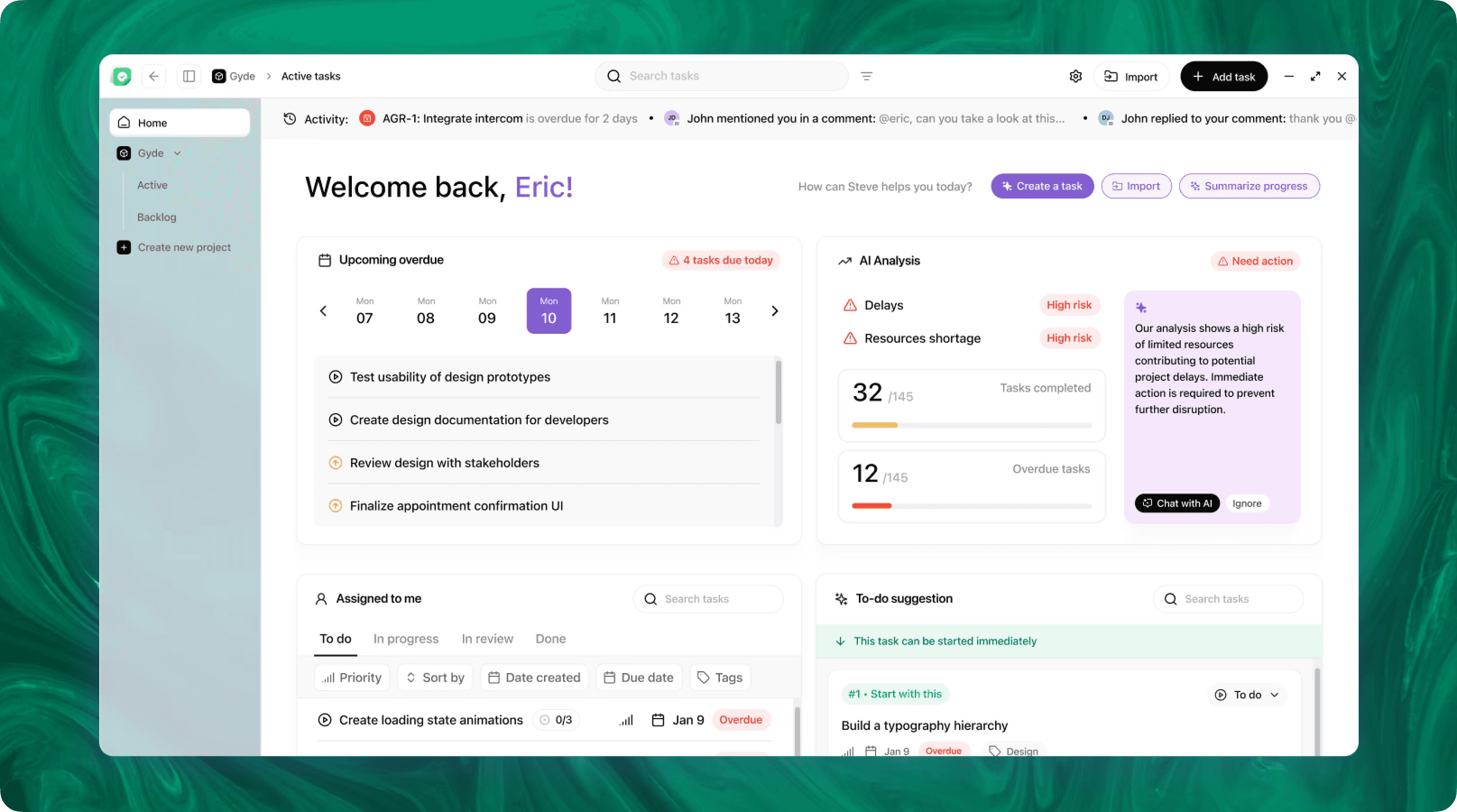
Steve is an AI-native operating system designed to streamline business operations through intelligent automation. Leveraging advanced AI agents, Steve enables users to manage tasks, generate content, and optimize workflows using natural language commands. Its proactive approach anticipates user needs, facilitating seamless collaboration across various domains, including app development, content creation, and social media management.
Conclusion
Designing Company-Wide Automation Strategies With Steve shifts automation from isolated projects to an organizational capability. As an AI OS, Steve centralizes context with shared memory, lets teams orchestrate actions conversationally via Steve Chat, automates communication through AI Email, and ties execution to measurable work in Task Management. The result: faster discovery of high-impact automations, consistent execution across teams, and a repeatable feedback loop that drives safer scaling of automation across the company.