Designing Business Systems That Learn Over Time
Oct 7, 2026

Shared Memory As Adaptive Context: Persistent memory lets agents reuse institutional knowledge and apply past corrections to new decisions, reducing repetitive work.
Conversational Interfaces That Drive Continuous Learning: A file-aware, integrated chat layer turns informal feedback into operational updates and learning signals.
Logging And Analytics For Iterative Improvement: Detailed chat logs and analytics make agent behavior measurable, enabling targeted tuning and empirical improvement.
Task Boards As Operational Signals: AI-powered boards that create and track tasks translate decisions into measurable outcomes, closing the feedback loop.
System Benefit: Combining context persistence, conversational input, logging, and task signals produces an accountable, evolving AI OS that improves with use.
Introduction
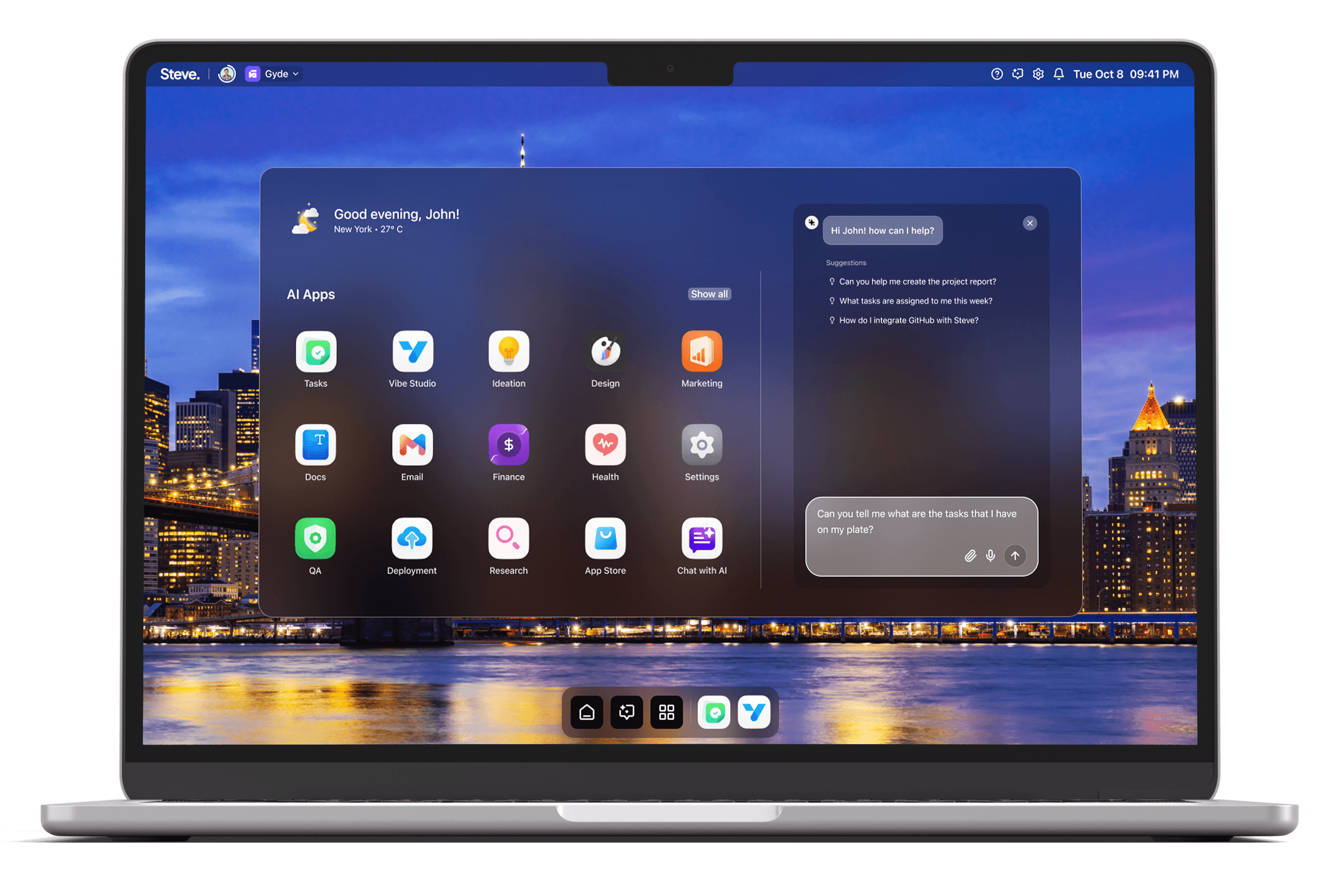
Designing business systems that learn over time is no longer an academic exercise; it is essential to maintain operational resilience, reduce manual friction, and surface actionable institutional knowledge. Steve, an AI Operating System (AI OS), provides the primitives businesses need to build adaptive systems: persistent shared memory for agents, a conversational interface that connects to your tools and files, detailed chat logging for measurement, and AI-powered task boards that convert decisions into trackable signals. This article explains how those capabilities turn one-off automations into continuously improving systems.
Shared Memory As Adaptive Context
Learning requires state. Steve’s shared memory system lets AI agents persist context across interactions so the system can act on history rather than isolated prompts. That memory stores facts about projects, preferences, and prior outputs, enabling agents to reconcile new inputs with what the organization already knows. In practice, a sales workflow can retain negotiation outcomes and preferred contract clauses; subsequent contract drafts incorporate those conventions automatically, reducing repetitive edits.
A practical scenario: an operations lead corrects a recurring expense categorization. Because the correction is written into shared memory, downstream agents adjust future categorizations, reducing manual triage. Shared memory also preserves provenance: teams can trace why an agent made a recommendation, which keeps automated changes auditable while the system refines behavior over time.
Conversational Interfaces That Drive Continuous Learning
Steve’s conversational layer surfaces system intelligence through natural language, making learning part of everyday work. The chat interface connects to calendars, email, Drive, Sheets, Notion, GitHub, and more, and is file-aware, so agents learn from documents, spreadsheets, and attachments rather than only from explicit prompts. Real-time web search capabilities let agents supplement local knowledge quickly, so answers evolve as external information changes.
Operationally, this reduces the friction of feedback loops: a product manager can tell Steve to “prioritize bugs that block signups,” and the agents use integrations and stored context to translate that instruction into updated priorities and notifications. As the team confirms or overrides those updates, the conversational agents integrate corrective signals into future recommendations, producing a practical, conversational reinforcement loop.
Logging And Analytics For Iterative Improvement
Learning without measurement is guesswork. Steve integrates detailed chat logging and analytics to make agent behavior measurable and improvable. Logs capture conversational traces, decisions, and context so teams can analyze where agents succeed or drift. This empirical feedback supports targeted tuning: update prompts, adjust memory policies, or change routing rules based on observed outcomes.
For example, if analytics show recurring overruns when an agent schedules meetings, teams can inspect logs to identify misunderstood constraints (time zones, attendee limits) and then refine how the agent interprets that class of requests. The combination of conversational logs and persistent memory enables A/B-style iteration on dialogue patterns and decision rules, turning anecdotal fixes into repeatable improvements.
Task Boards As Operational Signals
Task management is the day-to-day substrate where decisions and priorities are expressed. Steve’s AI-powered product management boards ingest inputs and propose sprints, translate chat decisions into tasks, and integrate with Linear to maintain sync with engineering workflows. By converting conversational outcomes into structured tasks and tracking execution, the system generates high-quality signals about what worked and what didn’t.
A concrete scenario: an AI agent suggests a sprint reallocation to address customer-reported reliability issues; tasks created from that suggestion carry metadata—rationale, dependencies, and expected metrics—into the board. As tasks complete and metrics update, those results feed back into shared memory and the agent’s models, enabling more accurate future proposals and aligning planning with observed impact.
Steve
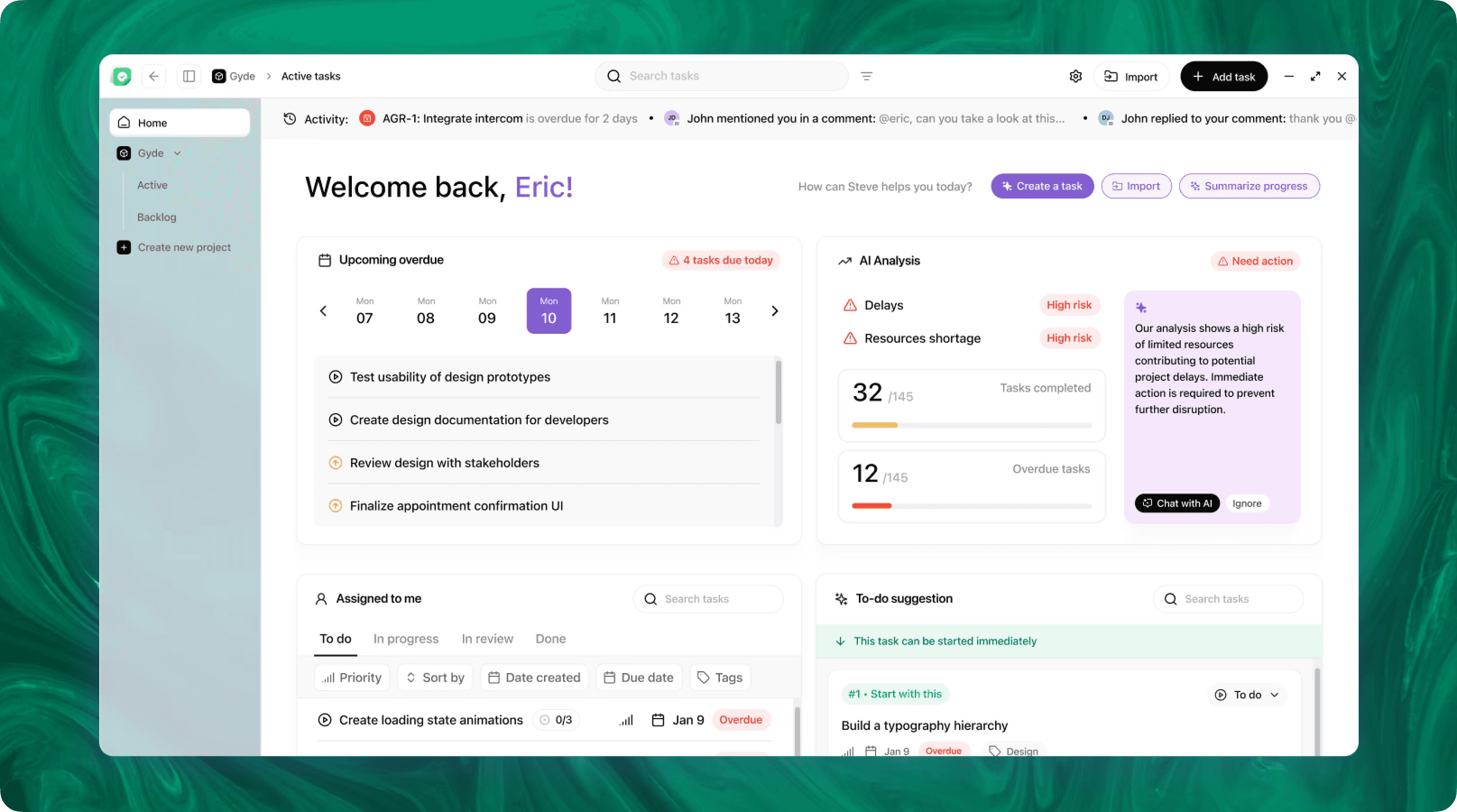
Steve is an AI-native operating system designed to streamline business operations through intelligent automation. Leveraging advanced AI agents, Steve enables users to manage tasks, generate content, and optimize workflows using natural language commands. Its proactive approach anticipates user needs, facilitating seamless collaboration across various domains, including app development, content creation, and social media management.
Conclusion
Designing business systems that learn over time demands persistent context, human-friendly interfaces, measurable feedback, and structured operational signals. As an AI Operating System, Steve combines shared memory, a conversational, integrated chat layer, detailed logging for analytics, and AI-driven task boards to make learning iterative and accountable. The result is not a one-off automation but an evolving system that reduces repetitive work, improves decision quality, and preserves institutional knowledge as it adapts.