Converting Data Exports Into Live AI Dashboards
Dec 4, 2025

Ingest And Contextualize Data Exports: File-aware Steve Chat extracts schema and creates a reusable spec from spreadsheets and CSVs so exports become structured inputs, not one-off files.
Maintain Live State With Shared Memory: Persistent agent memory stores ingestion rules and refresh policies, enabling consistent transformations and automated delta processing when new exports arrive.
Rapid Dashboard Prototyping With Vibe Studio: Prompt-to-code generation produces production-ready Flutter scaffolds and device-specific previews, accelerating iteration on real data-driven dashboards.
Productionize And Iterate With Developer Mode & GitHub Integration: Embedded VS Code and direct GitHub pushes preserve traceability from prompt to repo and simplify deployment, with Firebase available as a backend option.
Workflow Benefit: Combining conversational ingestion, shared memory, prompt-driven UI generation, and integrated developer tooling minimizes handoffs and shortens time from export to deployed dashboard.
Introduction
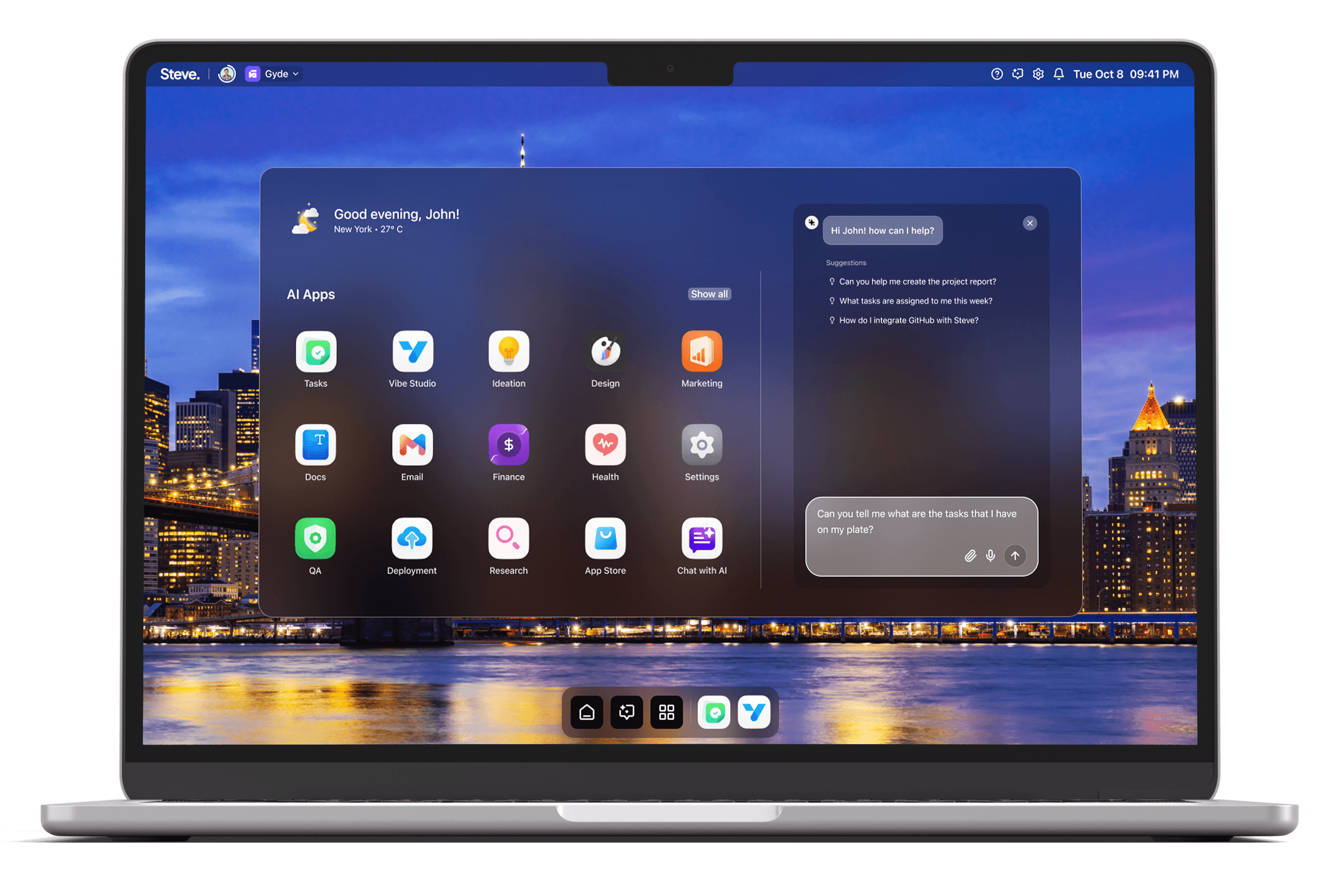
Converting periodic data exports into live, interactive dashboards speeds insight and reduces manual handoffs. As an AI Operating System, Steve connects conversational intelligence with production-ready app tooling so teams can move from CSVs and Sheets to deployed dashboards faster and with less friction. This article explains how Steve’s file-aware conversational layer, shared memory for AI agents, Vibe Studio prompt-to-app tooling, and Developer Mode with GitHub integration combine to turn exports into continuously useful dashboard experiences.
Ingest And Contextualize Data Exports
Start by treating exports as structured inputs rather than one-off files. Steve’s conversational interface accepts uploaded spreadsheets and CSVs and connects to common document sources like Google Sheets and Drive, making those exports immediately queryable inside chat workflows. In practice, an analyst uploads a monthly sales CSV into Steve Chat, asks for a validation pass, and the assistant identifies missing metrics, inconsistent date formats, and suggested normalization steps.
Because Steve is file-aware, the same chat can extract schema, infer column types, and generate a concise summary you can use to define dashboard requirements. That conversational extraction creates a reproducible spec—what KPIs matter, how to slice time windows, and which joins are necessary—without switching tools or writing boilerplate parsing code.
Maintain Live State With Shared Memory
Turning exports into “live” dashboards requires state: incremental changes, update schedules, and user context. Steve’s shared memory system lets multiple AI agents and the conversational layer keep persistent, contextual state about datasets and user intent. Use memory to record ingestion rules (e.g., date parsing, currency normalization), refresh cadence, and alert thresholds so subsequent prompts and automations reuse the same decisions.
A practical scenario: after an initial upload and cleanup, an agent stores the canonical schema and a refresh policy in shared memory. When a new export is added or a Google Sheet updates, another agent references that memory to apply the same transformations automatically and surface only the deltas to the dashboard front end. This reduces manual rework and preserves lineage between exports and dashboard visuals.
Rapid Dashboard Prototyping With Vibe Studio
Once data is parsed and a spec exists, Vibe Studio converts that spec into a production-ready front end from natural prompts. Describe the layout—“top-line revenue trend, product breakdown by category, and a table with drilldown”—and Vibe Studio generates clean Flutter scaffolding and UI logic informed by OpenAI-powered LLMs. The generated app includes device-specific previews so stakeholders can inspect the dashboard on mobile, tablet, or desktop layouts before committing engineering time.
Hot reload and real-time build progress let you iterate quickly: bind parsed data endpoints (CSV-derived JSON or a small Firebase collection) to widgets, tweak visualizations conversationally, and see UI updates immediately. The result is a working dashboard prototype that reflects the actual data model and interaction patterns defined during ingestion, rather than a static mock.
Productionize And Iterate With Developer Mode & GitHub Integration
When the prototype is ready for production, Developer Mode provides an embedded, secure VS Code editor so engineers can refine UI behaviors, add authentication, or integrate richer data pipelines without leaving the platform. Vibe Studio’s GitHub integration lets teams push the generated repository directly to source control for CI/CD workflows, and Firebase integration (available in Vibe Studio) supplies a straightforward backend option for storing processed exports and serving near-real-time reads.
A concrete workflow: push the dashboard repo to GitHub, add a Firebase function to ingest automated CSV drops, and use Steve’s shared memory to keep ingestion rules synchronized with the front end. Engineers can then commit feature changes from the embedded editor, trigger builds, and maintain a traceable link from conversational spec to deployed dashboard.
Steve
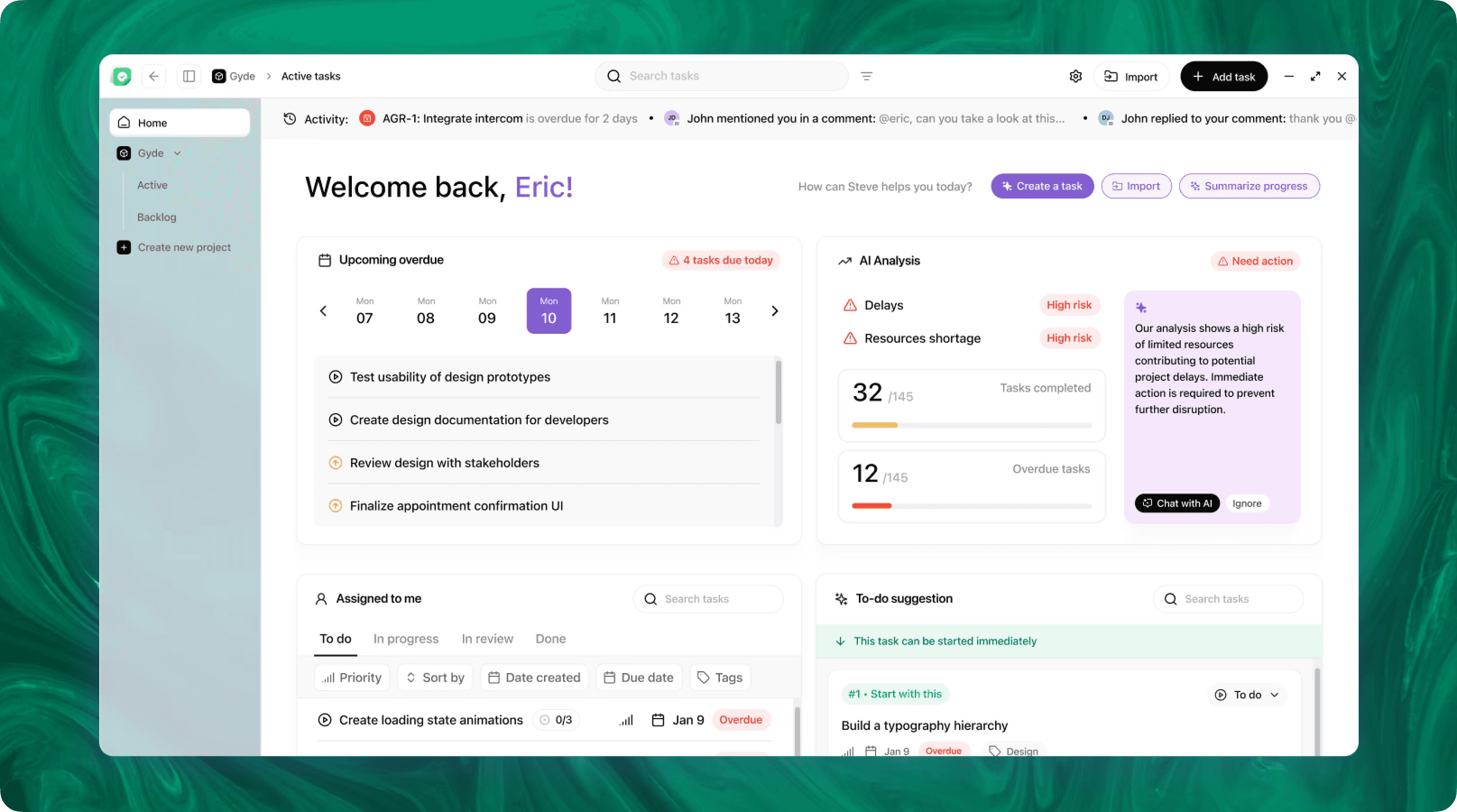
Steve is an AI-native operating system designed to streamline business operations through intelligent automation. Leveraging advanced AI agents, Steve enables users to manage tasks, generate content, and optimize workflows using natural language commands. Its proactive approach anticipates user needs, facilitating seamless collaboration across various domains, including app development, content creation, and social media management.
Conclusion
Converting data exports into live AI dashboards is less about a single connector and more about an integrated workflow: ingest and contextualize exports conversationally, preserve transformation intent in shared memory, prototype interfaces rapidly with Vibe Studio, and productionize with Developer Mode and GitHub. As an AI OS, Steve brings those pieces together—file-aware chat, persistent agent memory, prompt-driven app generation, and embedded engineering tools—so teams can go from export to deployed dashboard with clarity, repeatability, and minimal friction.