Building Workflow Simulations Through Conversational Prompts
Jan 20, 2026

Conversational Modeling With Steve Chat: Natural-language dialogs capture process rules and edge cases while integrating documents and context to produce realistic simulation traces.
Shared Memory And Multi-Agent Collaboration: Persistent shared state lets multiple agents coordinate, keeping simulations coherent across long-running or parallel scenarios.
From Prompts To Interactive Prototypes With Vibe Studio: Prompt-driven prototypes expose UI-dependent behavior and let teams validate flows across device views without full engineering effort.
Orchestrating Execution With Task Management: Simulation findings become actionable through generated task boards, sprint proposals, and issue-tracker integration.
Workflow Benefit: Combining conversational modeling, shared memory, prototype generation, and task orchestration shortens feedback loops and preserves intent from prompt to production.
Introduction
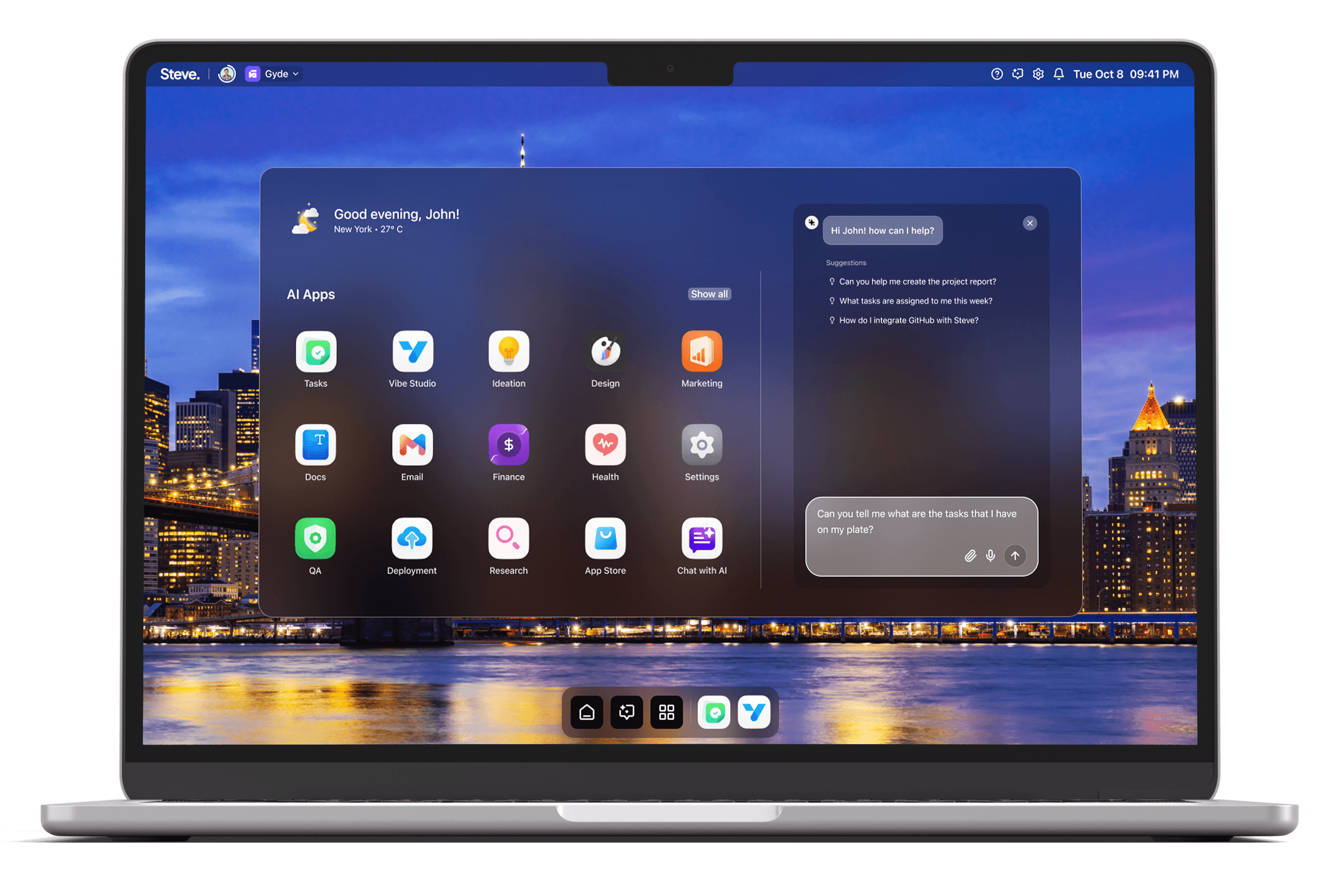
Building workflow simulations through conversational prompts turns tacit processes into testable models without heavy engineering overhead. Teams can prototype decision paths, handoffs, and UI flows by talking through scenarios; an AI Operating System makes those conversations actionable. Steve combines a conversational interface, a shared memory for collaborating agents, prompt-to-app generation, and task orchestration to convert dialog-driven intent into repeatable, inspectable workflow simulations.
Conversational Modeling With Steve Chat
Steve Chat provides the conversational surface to capture process intent, constraints, and edge cases in natural language. Its file-aware interface and integrations let you feed real documents, spreadsheets, and calendar context into the conversation so the simulation reflects operational reality rather than an abstract sketch. Use-case: a product manager walks Steve through a new onboarding policy, iteratively refining branching rules (e.g., payment methods, eligibility checks). Steve Chat preserves context across turns, surfaces relevant documents on request, and can simulate user responses and system checks step-by-step so stakeholders see where decisions diverge.
Practical scenario: simulate a customer-support escalation. Prompt Steve to enact a typical ticket: include the incoming message, attach the relevant SLA, and ask the chat to route, escalate, and draft replies. The conversation produces a traceable interaction log that exposes timing, decision criteria, and potential failure points—allowing the team to adjust rules before they reach production.
Shared Memory And Multi-Agent Collaboration
A shared memory system gives long-running simulations coherence by storing facts, variables, and decisions that multiple agents can reference. Rather than re-specifying context with every prompt, teams maintain a canonical simulation state: user profiles, feature flags, open tasks, or regulatory constraints. This persistence enables parallel agent workflows—one agent simulates customer behavior while another validates compliance—so outputs remain synchronized and auditable.
Practical scenario: model an interdepartmental handoff from sales to implementation. Sales details captured in shared memory propagate automatically to the implementation agent, which generates a rollout checklist and risk assessment. If the simulation uncovers missing approvals, the shared state highlights the gap and lets the team iterate on the prompt or the process rules until the handoff succeeds consistently.
From Prompts To Interactive Prototypes With Vibe Studio
When workflow simulations benefit from clickable interfaces, Vibe Studio turns conversational descriptions into interactive prototypes and lightweight apps. Describe screens, navigation, and conditional steps in natural language and Vibe Studio generates production-ready Flutter scaffolds you can preview across device types. That makes it simple to validate user flows that depend on UI states—form validation, gating screens, or multi-step dialogs—without building full back-end logic first.
Practical scenario: a product designer asks Steve to build a simulated onboarding flow that branches on account type and verification status. Vibe Studio produces a working prototype that product, engineering, and compliance teams can click through. The team uses those previews to refine copy, timing, and error states in conversation, then iterates quickly because the prototype maps directly to code artifacts.
Orchestrating Execution With Task Management
Once a simulation achieves the desired fidelity, Steve’s Task Management features turn simulated outcomes into execution plans. The system can propose tasks, suggest sprint boundaries, and integrate with issue trackers to create actionable items from decision points uncovered during simulation. This closes the loop: simulated edge cases become tickets, owners, and timelines rather than lost recommendations in a chat log.
Practical scenario: after validating a simulated billing workflow, Steve generates a task board that lists fixes, responsible engineers, and proposed timelines. The team reviews the board and converts the highest-risk items into sprint work, ensuring that simulation insights translate to measurable delivery.
Steve
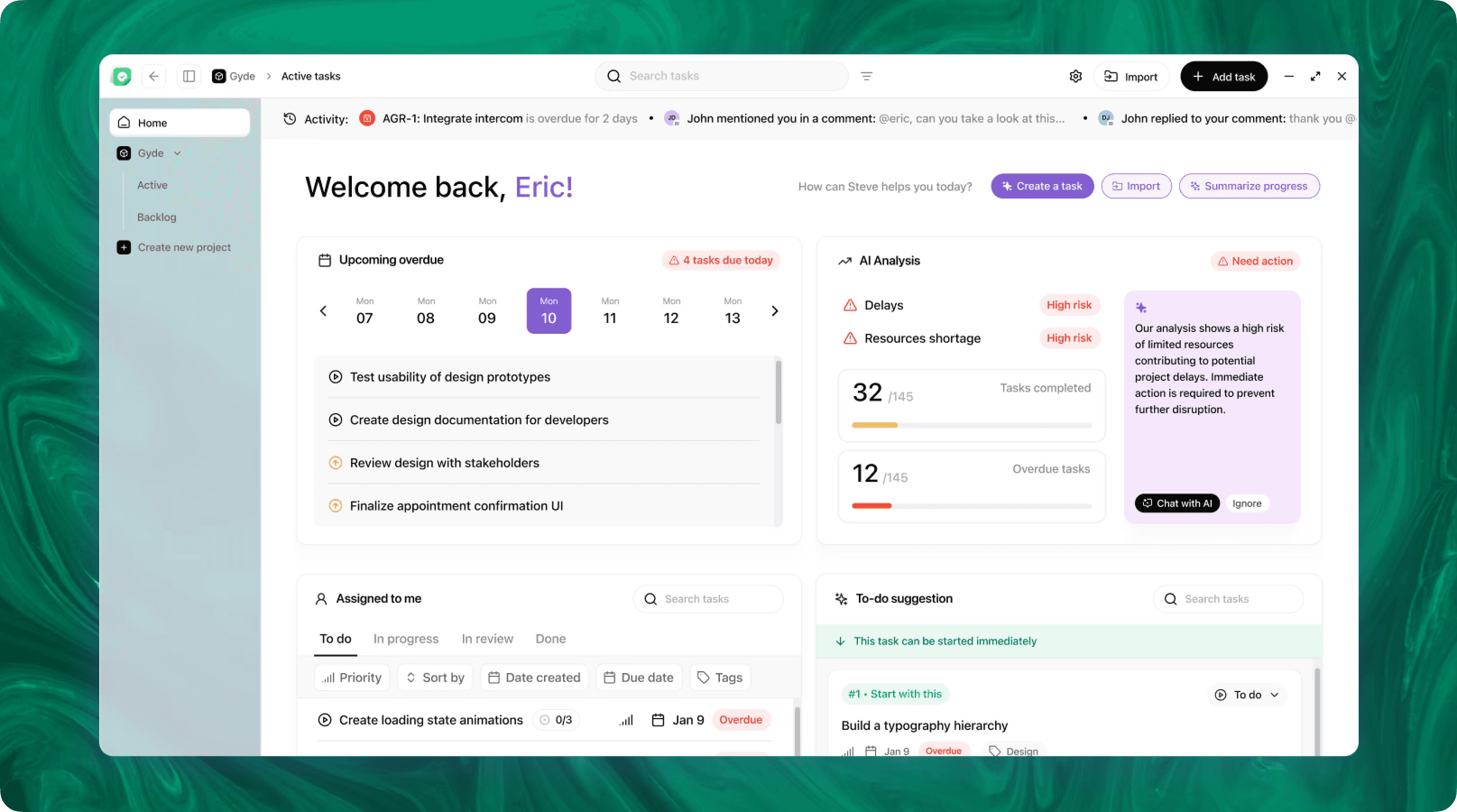
Steve is an AI-native operating system designed to streamline business operations through intelligent automation. Leveraging advanced AI agents, Steve enables users to manage tasks, generate content, and optimize workflows using natural language commands. Its proactive approach anticipates user needs, facilitating seamless collaboration across various domains, including app development, content creation, and social media management.
Conclusion
Building workflow simulations through conversational prompts reduces ambiguity, accelerates iteration, and preserves design intent in both artifacts and action items. As an AI OS, Steve links natural-language modeling, shared memory, prompt-to-prototype generation, and task orchestration into a single loop: simulate with conversation, validate with interactive previews, and operationalize with task boards. Teams that use Steve move faster from hypothesis to production-ready process because each conversational turn produces inspectable, actionable outputs.