Building Resilient Operations With Ai Os Infrastructure
Oct 3, 2026

Shared Memory for Persistent Operational Context: Persistent agent memory preserves runbooks, remediation steps, and historical rationale so responses remain consistent across teams and shifts.
Conversational Operations With Steve Chat: A file-aware conversational surface with broad integrations lets operators run checks, fetch artifacts, and trigger playbook actions from natural language.
AI Email for Situational Awareness and Rapid Triage: Smart inbox summaries and context-aware drafting reduce noise, clarify impact, and speed stakeholder communication during incidents.
Task Management To Orchestrate Recovery And Continuous Improvement: AI-powered boards convert incident findings into prioritized tasks and sprints, closing the loop between remediation and prevention.
Operational Resilience At Scale: Combining shared context, conversational control, inbox intelligence, and task orchestration shortens MTTR and institutionalizes learning.
Introduction
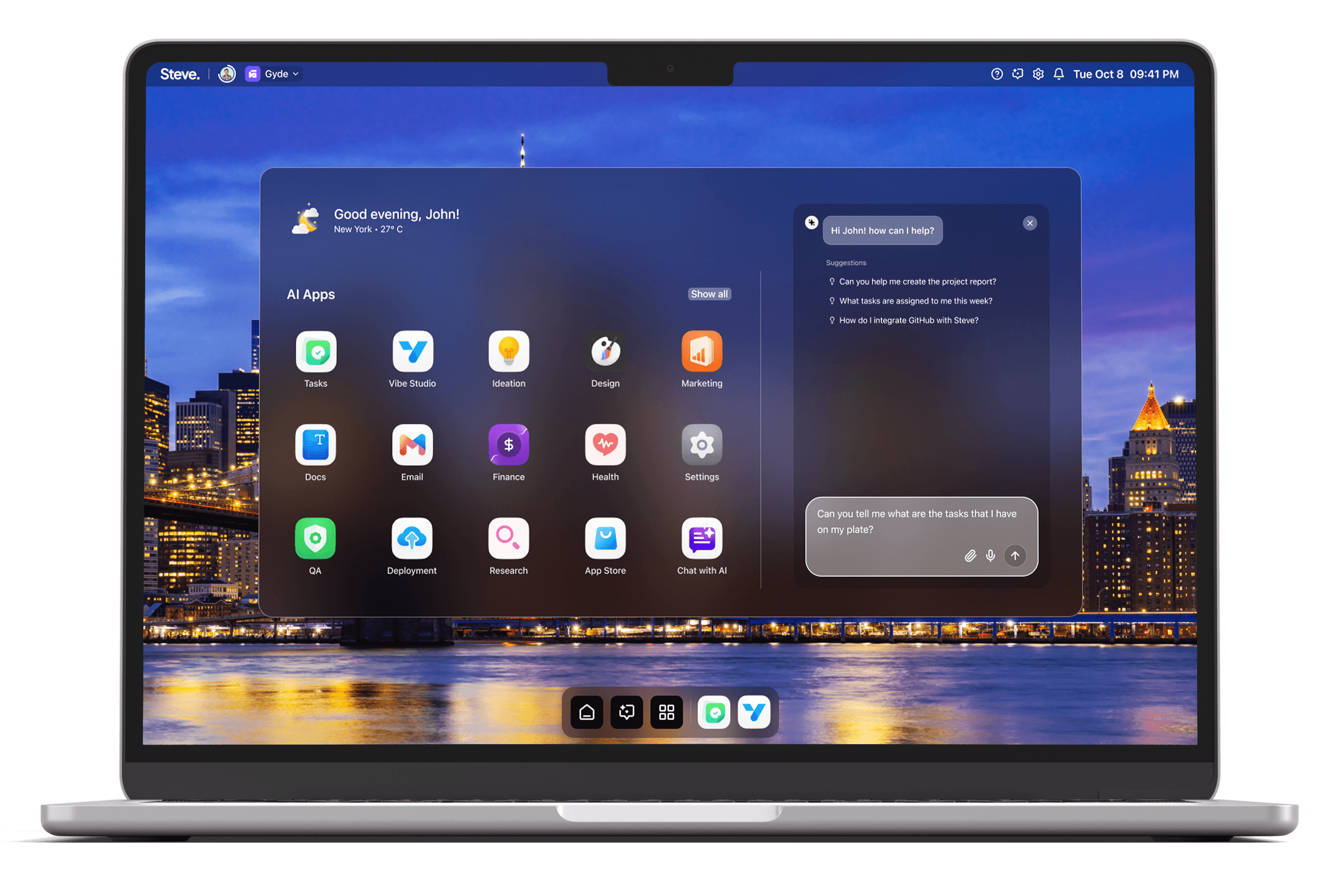
Building resilient operations requires infrastructure that preserves context, automates routine recovery, and accelerates coordinated human and machine responses. An AI Operating System can deliver those capabilities by making operational knowledge portable, conversational, and actionable. Steve is an AI OS that combines a shared memory for agents, a conversational operational surface, an AI-enhanced inbox, and integrated task orchestration to reduce mean time to resolution and harden day-to-day processes.
Shared Memory for Persistent Operational Context
Resilience depends on minimizing knowledge loss across shifts, teams, and tools. Steve’s shared memory system lets its AI agents store, retrieve, and reuse operational context so that the rationale behind decisions, past remediation steps, and relevant artifacts travel with the workflow. In practice, that means postmortem notes, troubleshooting scripts, and configuration snippets persist in a form agents can reference during future incidents. A service desk agent or on-call engineer interacting with Steve immediately benefits from historical context: previous root causes, successful rollback steps, and the team’s preferred mitigations are available without manual search. The net effect is faster, more consistent responses and less reliance on tribal knowledge.
Conversational Operations With Steve Chat
When an incident demands rapid coordination, typing a single natural-language request is faster than navigating dashboards. Steve Chat provides a conversational interface backed by advanced AI agents and broad integrations, enabling operators to run checks, schedule failovers, locate runbooks, and synchronize calendars — all via dialogue. Because Steve Chat is file-aware and connected to common services, troubleshooting is anchored to real artifacts: upload a log, ask for anomaly highlights, and receive a focused analysis that references the exact file. For practical resilience, teams use Steve Chat to trigger routine playbook steps, confirm status across tools, and surface relevant documentation in real time, turning fragmented operational signals into a single, actionable narrative.
AI Email for Situational Awareness and Rapid Triage
Alert storms and long email threads are common sources of confusion during outages. Steve’s AI Email consolidates inboxes with real-time sync, auto-tags and categorization, and instant thread summaries so teams can grasp the critical facts immediately. Instead of wading through repetitive notifications, operators get condensed summaries that highlight impacted services, timestamps, and suggested next steps. Context-aware reply drafting speeds communication with stakeholders — the system proposes precise, aligned messages that capture the operational state and planned actions. For resilient operations, this reduces miscommunication during escalations and keeps external updates consistent with internal remediation efforts.
Task Management To Orchestrate Recovery And Continuous Improvement
Operational resilience is a process: detect, contain, remediate, and learn. Steve’s AI-powered task management boards centralize that cycle by converting incident insights into concrete work items, proposing sprints, and tracking execution. Integration with established issue trackers allows Steve to import open tasks, create remediation tickets from chat or email, and keep assignees aligned on priorities. During an outage, the AI can propose an immediate triage checklist, spawn tasks for follow-up validations, and recommend a post-incident sprint to close systemic gaps. Over time this enforces a feedback loop where runbooks evolve, recurrent failures are scoped into deliverables, and organizational knowledge becomes part of the operational fabric rather than an afterthought.
Steve
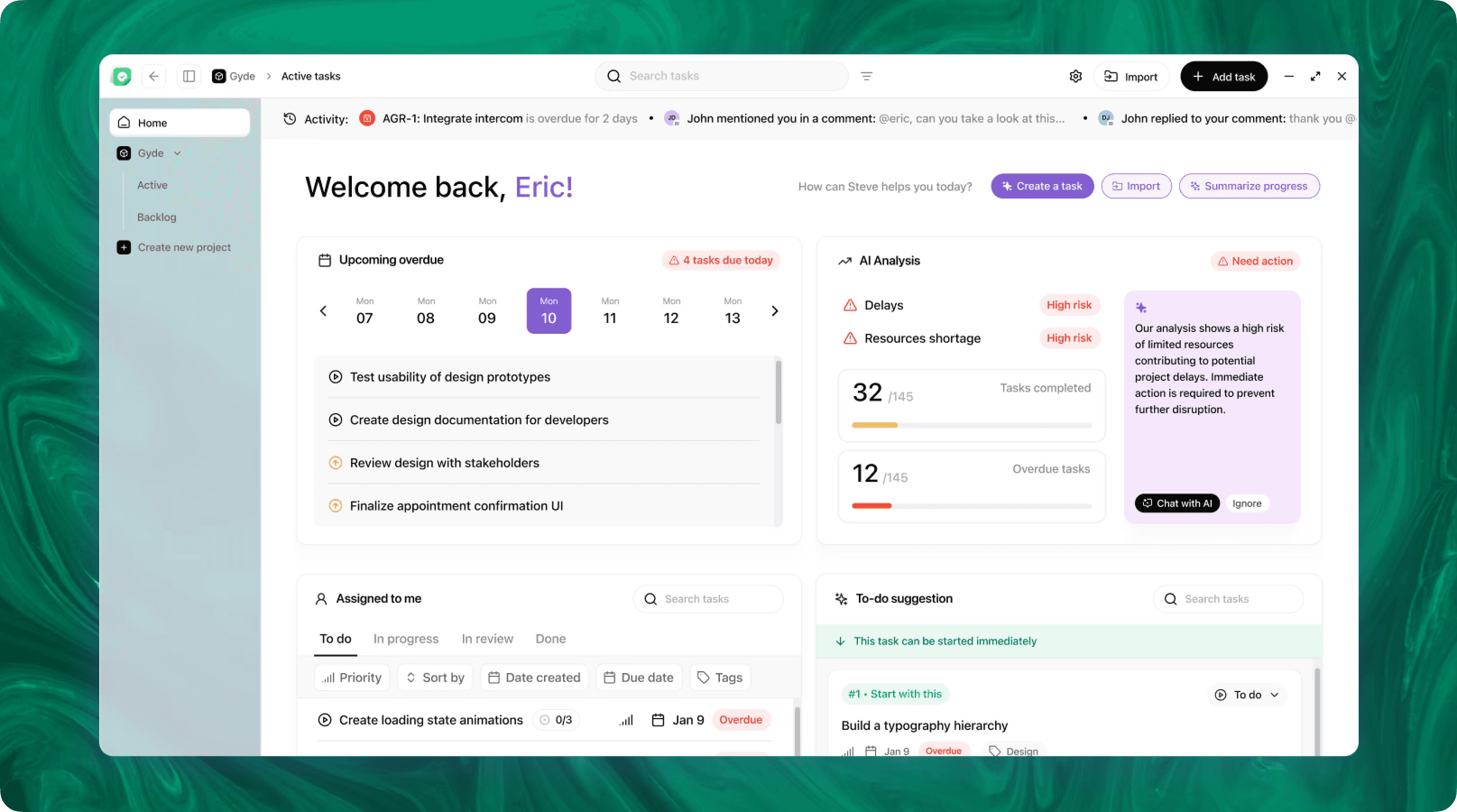
Steve is an AI-native operating system designed to streamline business operations through intelligent automation. Leveraging advanced AI agents, Steve enables users to manage tasks, generate content, and optimize workflows using natural language commands. Its proactive approach anticipates user needs, facilitating seamless collaboration across various domains, including app development, content creation, and social media management.
Conclusion
Resilient operations require continuity of context, clear communication, rapid orchestration, and the ability to convert incidents into lasting improvements. Steve, as an AI Operating System, brings these elements together: a shared memory preserves institutional knowledge, Steve Chat offers a conversational command center with deep integrations, AI Email accelerates situational awareness and stakeholder communication, and task management turns remediation into tracked work. Combined, these capabilities shorten recovery times, reduce error-prone handoffs, and make operational learning systematic — delivering a practical path to more resilient infrastructure and teams.