Building End-To-End Business Workflows Using Steve Ai
Jan 28, 2026

Orchestration And Context With Steve Chat: A file-aware conversational hub reduces tool switching and keeps decisions grounded in live context.
Persistent Memory And Collaborative Agents: Shared memory ensures consistency and enables multiple AI agents to collaborate on a single project state.
Integrated Communication: AI Email: An embedded smart inbox turns messages into summarized context and actionable drafts linked to ongoing work.
Task Management And Automated Execution: AI-powered boards convert prompts and email threads into assigned, trackable tasks and sprint proposals.
Workflow Benefit: Combining chat, memory, email, and task automation produces faster, more auditable end-to-end processes while preserving human oversight.
Introduction
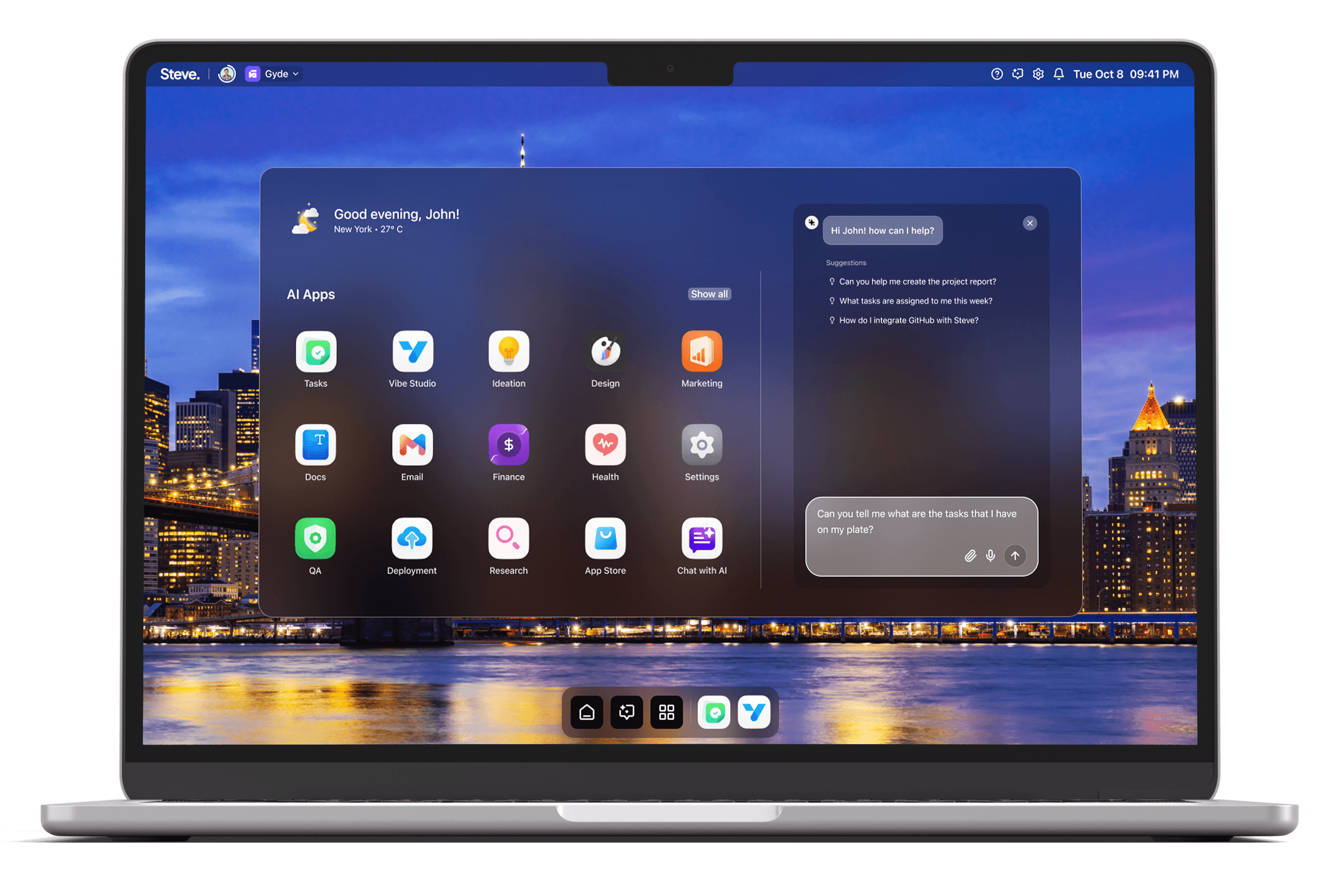
Building end-to-end business workflows means connecting communication, context, coordination, and execution into a single, repeatable path. Steve, an AI Operating System, consolidates those elements by combining conversational orchestration, persistent memory, integrated email, and AI-driven task management into a unified surface. This article shows how Steve enables practical workflow automation across common business scenarios while keeping human oversight central.
Orchestration And Context With Steve Chat
Steve Chat acts as a conversational hub that connects calendars, email, cloud files, project trackers, and third-party services through one interface. Teams use natural language to route work: ask Steve to find a contract in Drive, summarize it, schedule a review, and create action items — all without switching tools. Because the chat is file-aware and supports real-time web searches, it supplies the contextual detail necessary to make decisions in a single thread. A product manager, for example, can upload a brief, ask Steve to generate a stakeholder agenda, and have those agenda items auto-scheduled into appropriate calendars, turning fragmented planning into a linear, auditable sequence.
Persistent Memory And Collaborative Agents
Steve’s shared memory system lets AI agents retain and reference project context over time so actions remain consistent across interactions. That persistence reduces повторative briefings: agents remember previous decisions, constraints, and preferences and use them to inform future suggestions. In practice, a sales team can maintain a running account profile in memory; when a rep asks Steve to draft a proposal, the AI uses stored contract history and pricing rules to produce a consistent, compliant draft. Shared memory also enables multi-agent collaboration where one agent synthesizes legal constraints, another evaluates pricing, and a third formats deliverables — all anchored to the same project state.
Integrated Communication: AI Email
Steve’s AI Email merges a smart inbox with context-aware drafting so communications become part of the workflow rather than an external chore. The system tags and categorizes messages, summarizes lengthy threads, and offers response drafts that reflect current project status stored in memory. For example, when a customer escalates a feature request, Steve surfaces the relevant roadmap note from memory, summarizes the conversation, and suggests an owner and timeline in a reply draft. Because email and chat share context, decisions made in conversational threads appear in drafts and task proposals, closing the loop between messaging and execution.
Task Management And Automated Execution
Steve’s AI-powered task boards transform conversational outputs into tracked work without manual handoffs. From a chat or an email, users can convert proposals into tasks, assign owners, and import or sync issues with Linear so engineering receives structured tickets rather than freeform notes. The system proposes sprints, suggests priorities based on urgency and dependencies stored in memory, and keeps updates in a single workspace. In a launch scenario, marketing, engineering, and support can collaborate in Steve: the launch checklist generated in chat becomes a sprint proposal, assignees receive tasks with due dates, and progress updates flow back into the shared conversation for transparent accountability.
Steve
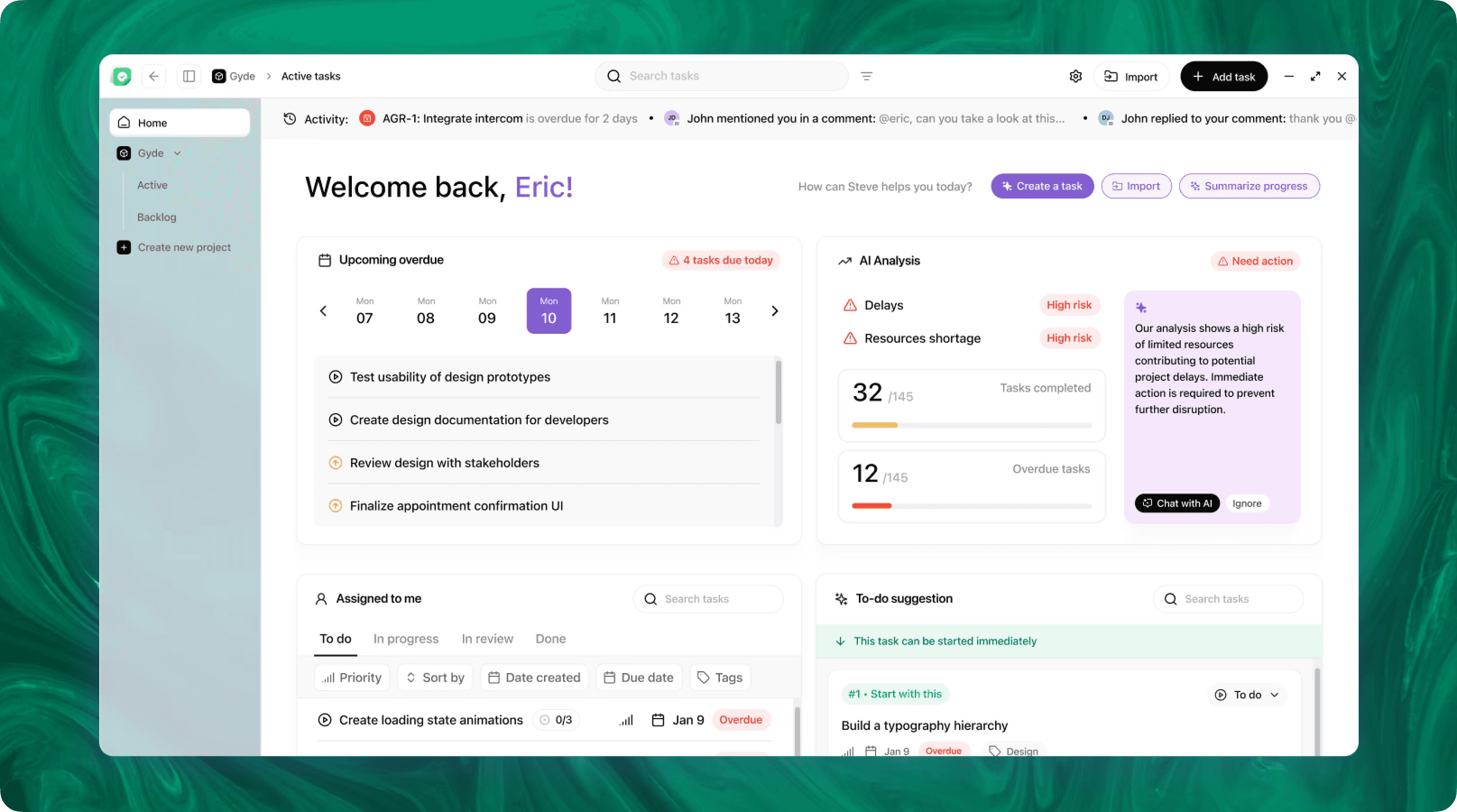
Steve is an AI-native operating system designed to streamline business operations through intelligent automation. Leveraging advanced AI agents, Steve enables users to manage tasks, generate content, and optimize workflows using natural language commands. Its proactive approach anticipates user needs, facilitating seamless collaboration across various domains, including app development, content creation, and social media management.
Conclusion
By combining Steve Chat’s integrations and file awareness, a persistent shared memory for agents, an integrated AI Email inbox, and AI-driven task management, Steve functions as an AI OS that turns scattered work into coordinated, repeatable workflows. Teams gain speed because context follows the conversation, reduce friction because communications convert to tracked tasks, and preserve institutional knowledge through memory and agent collaboration. As an AI Operating System, Steve helps businesses move from fragmented activities to coherent end-to-end processes while keeping humans in the loop for decisions and exceptions.