Building Company Taxonomies Through Shared AI Memory
Jan 14, 2026

Ingest and Normalize Through Conversational Interfaces: Steve Chat’s file-aware ingestion and integrations let teams extract candidate terms and contexts without tool switching.
Capture and Consensus in Shared Memory: The shared memory system preserves agreed definitions and relationships so agents and users reuse a single source of truth.
Signal Enrichment From Email Tagging and Summaries: AI Email captures ephemeral terminology from threads and folds those signals into the taxonomy.
Audit, Iterate, and Measure With Chat Logging: LangFuse-powered logs make taxonomy edits and agent usage auditable and measurable for targeted refinement.
Operational Benefit: Combining ingestion, persistent memory, email signals, and logs yields living taxonomies that reduce ambiguity and speed knowledge retrieval.
Introduction
Building company taxonomies is a foundational step for knowledge discovery, governance, and consistent decision making. Taxonomies must reflect terminology across teams, map documents and conversations to shared concepts, and evolve as the business changes. Steve, an AI Operating System with a shared memory for agents, conversational file-aware interfaces, email tagging, and detailed chat logging, provides the primitives to construct, maintain, and operationalize company taxonomies with less manual overhead and clearer auditability.
Ingest and Normalize Through Conversational Interfaces
A taxonomy starts with accurate extraction of terms and relations from existing sources. Steve Chat ingests documents, spreadsheets, and images via its file-aware interface and connectors (Google Drive, Sheets, Notion, etc.), allowing teams to surface candidate entities without switching tools. Conversational prompts let subject-matter experts question the corpus—"show recurring product names and synonyms in last year’s release notes"—and receive distilled lists and contextual examples. Because Steve supports real-time web searches, the system can also reconcile internal terms with external standards or market terminology, helping normalize labels and avoid duplicate concepts.
Practical scenario: a product manager uploads release notes and asks Steve to list features, aliases, and related stakeholder owners. The response surfaces candidate taxonomy nodes and example usages from source documents, giving the team an immediate set of normalized terms to validate.
Capture and Consensus in Shared Memory
Normalization and consensus happen inside Steve’s shared memory, where AI agents and users collaborate on a persistent knowledge graph of terms, synonyms, and relationships. Shared memory preserves context: when one agent tags a document concept as a "billing metric," that association becomes queryable and usable by other agents and future conversations. This persistence prevents repeated manual reconciliation across teams and keeps definitions connected to representative evidence.
In practice, legal can append a compliance definition to a node while sales links customer-facing aliases; both edits persist in shared memory so downstream queries and agents inherit the consensus. Teams can iterate via chat, refining node definitions and relationships until they reach organizational agreement—reducing fragmentation and speeding onboarding for new hires.
Signal Enrichment From Email Tagging and Summaries
Email is a rich source of emergent terminology and contextual signals. Steve’s AI Email tags and categorizes messages and generates concise summaries of long threads, surfacing colloquial names, decision outcomes, and ad hoc synonyms that formal documentation often misses. Those tags and summaries feed back into shared memory, elevating ephemeral language—such as campaign code names or shorthand feature references—into tracked taxonomy entries.
Example: a cross-functional thread coins an internal shorthand for a pilot program. Steve Email’s tagging captures that shorthand and the associated summary, allowing the taxonomy to link the shorthand to the formal program name and to example message snippets that justify the association. This reduces looking up context and accelerates consistent tagging across systems.
Audit, Iterate, and Measure With Chat Logging
Building a living taxonomy requires visibility into how definitions change and how agents use those definitions. LangFuse integration provides detailed chat logging and analytics for Steve Chat conversations, creating an auditable trail of suggestions, edits, and retrievals. Teams can trace when a node was created, which documents supported it, who endorsed it in conversation, and how agents applied it in workflows.
Operationally, logs let knowledge managers measure taxonomy adoption—how often agents tag items with a given node, where mismatches occur, and which definitions generate frequent clarifying queries. That data drives targeted refinement: high-mismatch nodes can be rephrased, split, or enriched with more examples in shared memory.
Steve
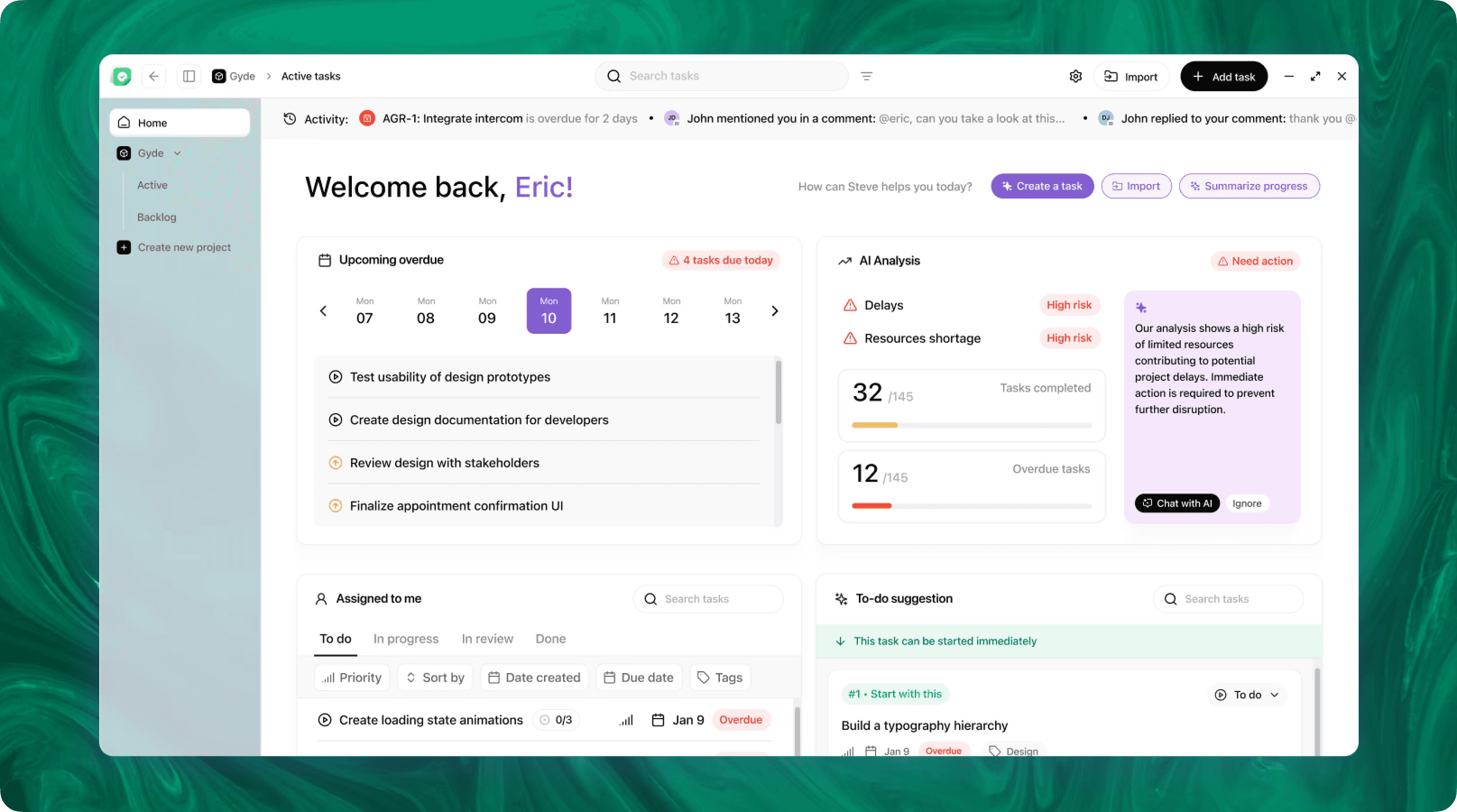
Steve is an AI-native operating system designed to streamline business operations through intelligent automation. Leveraging advanced AI agents, Steve enables users to manage tasks, generate content, and optimize workflows using natural language commands. Its proactive approach anticipates user needs, facilitating seamless collaboration across various domains, including app development, content creation, and social media management.
Conclusion
A pragmatic company taxonomy is not a static spreadsheet but a living layer of shared context that connects documents, conversations, and workflows. Steve, as an AI OS, combines conversational, file-aware ingestion (Steve Chat), persistent shared memory, email tagging and summarization (AI Email), and detailed chat analytics (LangFuse) to make taxonomy construction collaborative, evidence-driven, and auditable. Teams gain faster onboarding, fewer definition disputes, and more reliable knowledge retrieval because taxonomy nodes live where work already happens and evolve with it.