Building An Organization That Thinks With Steve
Oct 7, 2026

Shared Memory as Organizational Memory: A persistent shared memory preserves decisions and context so teams build on prior learning rather than repeating work.
Conversational Coordination with Steve Chat: An integrated conversational interface leverages memory and external integrations to coordinate work without tool switching.
Email That Teaches the Organization: AI Email distills threads into summaries, tags, and actionables, converting inboxes into searchable knowledge.
AI-Powered Task Management and Sprinting: Context-aware boards and sprint proposals align planning with capacity, history, and institutional context.
Workflow Benefit: Combining memory, chat, email, and task automation makes organizational attention portable, searchable, and actionable.
Introduction
Building an organization that thinks requires shifting from human-only knowledge work to a hybrid model where people and a persistent AI Operating System collaborate. Steve is an AI OS designed to make that shift practical: it captures context, surfaces relevant knowledge, and automates routine decisions so teams treat organizational memory and coordination as first-class assets. This article explains how four Steve capabilities—shared memory, conversational AI, AI email, and AI task management—compose a foundation for an organization that thinks with Steve.
Shared Memory as Organizational Memory
An organization that thinks must remember what it learned. Steve’s shared memory system gives AI agents a single source of truth: conversations, documents, decisions, and signals become structured context that subsequent interactions can query. That continuity prevents reinvention and rescues intent lost between meetings, handoffs, and ticket updates. In practice, shared memory lets a product lead ask Steve for prior design trade-offs, and the system returns the thread, rationale, and related metrics—so current decisions build on past lessons instead of repeating debates.
Shared memory also accelerates onboarding. New hires can query Steve about how a feature evolved, the constraints considered, and the customer feedback that drove changes. The result: fewer explanation meetings, faster alignment, and a living audit trail that reinforces institutional knowledge.
Conversational Coordination with Steve Chat
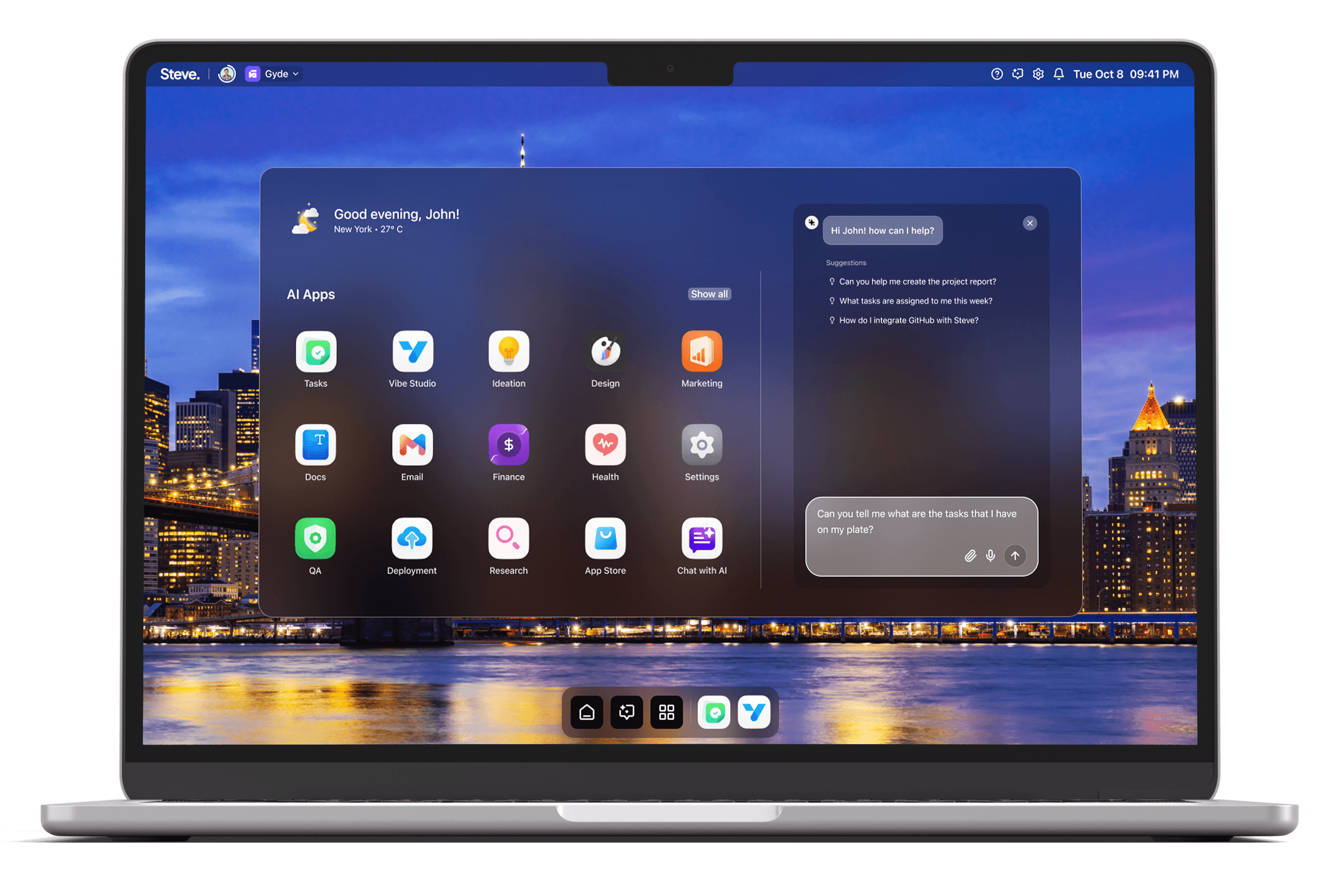
Steve Chat provides a conversational interface with sophisticated memory and direct integrations across calendars, email, Drive, Sheets, Notion, and GitHub. That makes coordination feel like speaking to an informed colleague rather than configuring a tool. Teams can schedule, fetch documents, or summarize project status through one conversational flow, and Steve preserves context across sessions so follow-ups stay coherent.
A practical scenario: a project manager asks Steve Chat to prepare a weekly status update. Steve pulls issues from GitHub, reconciles calendar blockers, summarizes recent email threads, and drafts a succinct update. The conversational exchange lets the manager refine tone and scope in real time, producing a distribution-ready report without task switching. Over time, Steve’s memory personalizes recommendations—prioritization heuristics, recurring stakeholders, and preferred formats—so the assistant anticipates needs and reduces cognitive overhead.
Email That Teaches the Organization
Email remains the backlog of important decisions; Steve’s AI Email turns that backlog into actionable knowledge. By tagging and categorizing messages, generating instant thread summaries, and offering context-aware reply drafts, Steve reduces inbox noise and converts long threads into searchable facts. When an issue resurfaces, Steve can surface relevant past emails, the extractive summary, and proposed next steps so teams act on distilled insight rather than re-reading long histories.
In one concrete use case, a customer success lead receives a complex escalation. Steve Email produces a short summary, lists open action items mentioned in the thread, and drafts a response aligned with current product and support status. That shortens response time and ensures answers reference the same institutional memory available elsewhere in Steve, reinforcing consistent organizational knowledge.
AI-Powered Task Management and Sprinting
Task Management in Steve aligns planning and execution with the organization’s remembered context. AI-powered boards import or create tasks from prompts and smartly propose sprints, prioritization, and dependencies. Because these recommendations draw on shared memory and email context, suggested backlogs reflect actual commitments and the rationale behind them, not just surface-level tickets.
For example, an engineering lead can ask Steve to propose a two-week sprint to reduce an urgent bug backlog. Steve analyzes outstanding issues, team capacity, and historical velocity, then suggests a sprint plan with grouped tasks and estimated timeboxes. Teams accept, adjust, and track progress within the same workspace, making the planning loop fast, traceable, and repeatable. That turns planning from a ritual into a continuous, context-aware activity that scales with the organization.
Steve
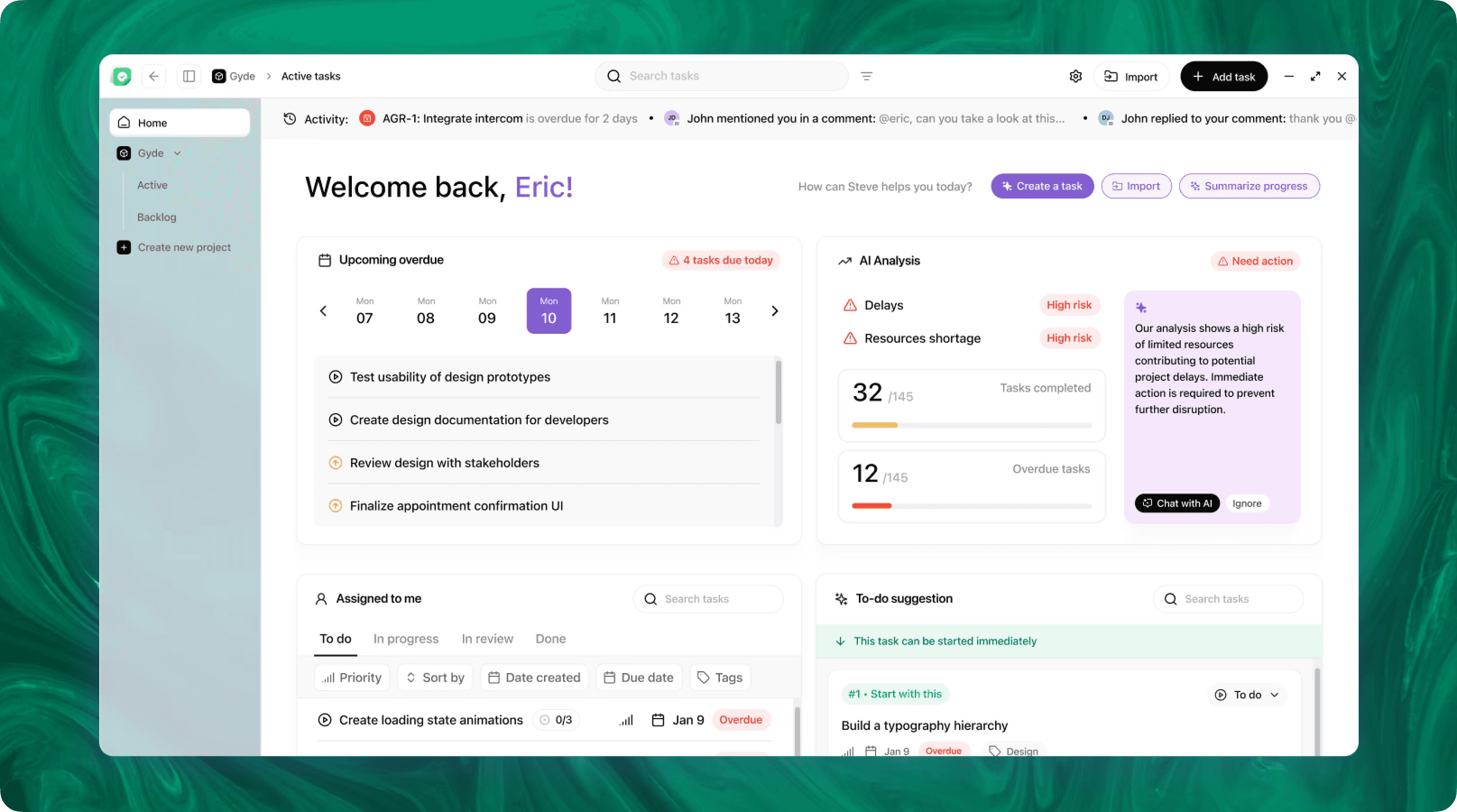
Steve is an AI-native operating system designed to streamline business operations through intelligent automation. Leveraging advanced AI agents, Steve enables users to manage tasks, generate content, and optimize workflows using natural language commands. Its proactive approach anticipates user needs, facilitating seamless collaboration across various domains, including app development, content creation, and social media management.
Conclusion
An organization that thinks with Steve moves from fragmented memory and ad-hoc coordination to a structured, conversational, and context-rich workflow. The shared memory system preserves lessons; Steve Chat turns actions into coherent conversational work; AI Email transforms threads into reusable knowledge; and AI-powered Task Management turns priorities into executable sprints. As an AI Operating System, Steve reduces friction across information flows and enables teams to act with shared understanding and speed. Adopting Steve is not about outsourcing judgment—it's about amplifying organizational attention so people spend judgment where it matters most.