Building A Single Source Of Truth For Projects With Steve
Nov 17, 2026

Unified Context With Shared Memory: A shared memory system stores decisions and constraints so every agent and user reads the same project context.
Centralized Project Hub With Conversational Integrations: File-aware chat and integrations make documents and events discoverable within the project conversation, reducing tool switching.
AI-Powered Task Management And Execution: AI boards import and create tasks, propose sprints, and keep execution aligned with stored project context.
Persistent Projects And Artifact Traceability: Persistent project state plus GitHub integration ties intent to commits, preserving an audit trail from decision to implementation.
Operational Benefit: Combining memory, chat integrations, task automation, and persistent artifacts produces a single authoritative workspace that reduces ambiguity and accelerates delivery.
Introduction
Building a single source of truth for projects reduces friction, preserves context, and speeds decision-making. Steve, an AI Operating System, is designed to centralize project signals so teams stop hunting for answers and start executing. This article shows how shared memory, conversational context, AI-driven task management, and persistent project artifacts combine in Steve to create one authoritative project record that stays current and action-ready.
Unified Context With Shared Memory
At the heart of a reliable single source of truth is a consistent context layer. Steve’s shared memory system lets AI agents read and write the same contextual state, which means decisions, clarifications, and documented decisions become machine-accessible. Rather than scattering notes across chat threads, documents, and ticket comments, teams can surface the same memory entries from any interface in Steve. In practice, a requirement clarified in chat becomes a stored memory object that informs subsequent planning, status checks, and automated actions — reducing duplicate work and preventing contradictory updates.
A practical scenario: during a scope negotiation, a product lead confirms the target platforms and success metrics in a Steve conversation. That confirmation is stored in shared memory; when the product manager later requests a sprint plan, the AI OS reads those exact parameters and aligns the backlog with the recorded constraints. The result is fewer misunderstandings and a single contextual truth that drives downstream outputs.
Centralized Project Hub With Conversational Integrations
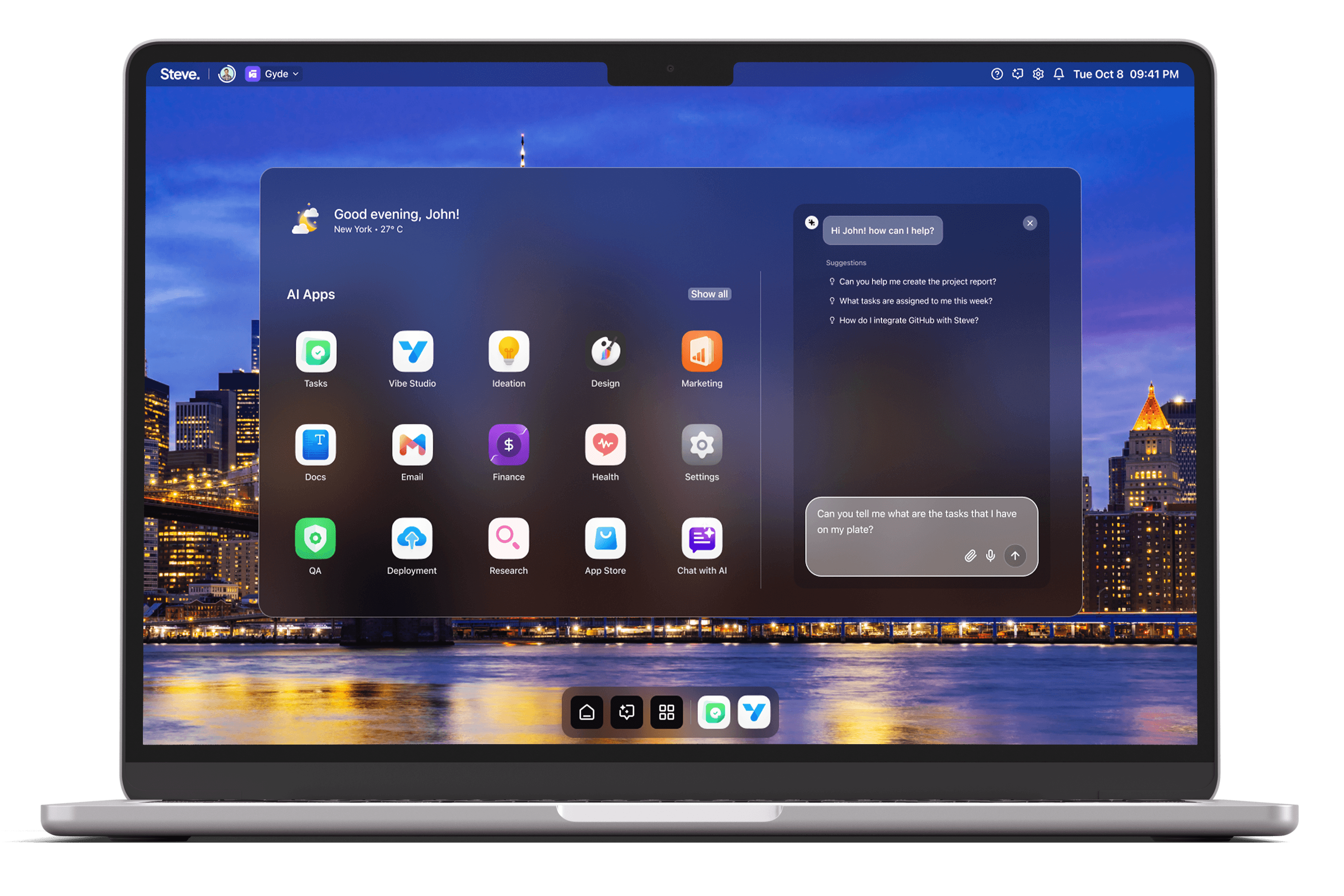
Steve’s conversational interface and integrations create a central hub where people access schedules, files, and decisions without switching tools. The chat interface maintains sophisticated memory and connects to calendars, drives, and other services so that documents and events referenced in conversation become part of the project narrative. File-aware chat means uploaded requirements, spreadsheets, and PDFs are discoverable from the same conversation that generated the action items.
For teams, this changes how evidence and intent are stored: instead of attaching files across multiple threads, a product owner can upload a spec into Steve Chat, discuss edits, and the chat will reference the exact file when generating follow-ups. Because the AI OS preserves conversational context and links it to the shared memory, stakeholders get the right document and rationale instantly — keeping the project hub coherent and searchable.
AI-Powered Task Management And Execution
A single source of truth must be actionable. Steve’s AI-powered task management boards consolidate planning, execution, and tracking in one workspace and integrate with existing trackers like Linear. That integration lets teams import current issues or create new tasks directly from natural prompts while the AI proposes sprints and tracks execution progress against the shared context.
Consider a release planning session: the team summarizes priorities in Steve chat, and the AI OS creates a sprint with tasks mapped to the stored constraints and imported issues. As work progresses, the board reflects real-time updates, and because it is part of the same platform that stores decisions and files, status reports are consistent and immediately traceable back to their originating conversations or documents. The outcome is fewer status mismatches and a single, authoritative backlog for stakeholders.
Persistent Projects And Artifact Traceability
Project artifacts must be persistent and traceable to serve as a single source of truth. Steve’s persistent projects remain active even when minimized, preserving project state and context across sessions. When code or frontend artifacts are part of the deliverable, Steve’s GitHub integration allows teams to push artifacts directly from the platform so the project record includes both decisions and the resulting code changes.
In practice, this means a design decision captured in shared memory can be tied to a commit pushed to GitHub via Steve, preserving an audit trail from intent to implementation. Persistent projects ensure that the platform retains the project’s live configuration, so new contributors can reopen a project and immediately see the contextual history, current tasks, and linked code — all aligned under the same truth.
Steve
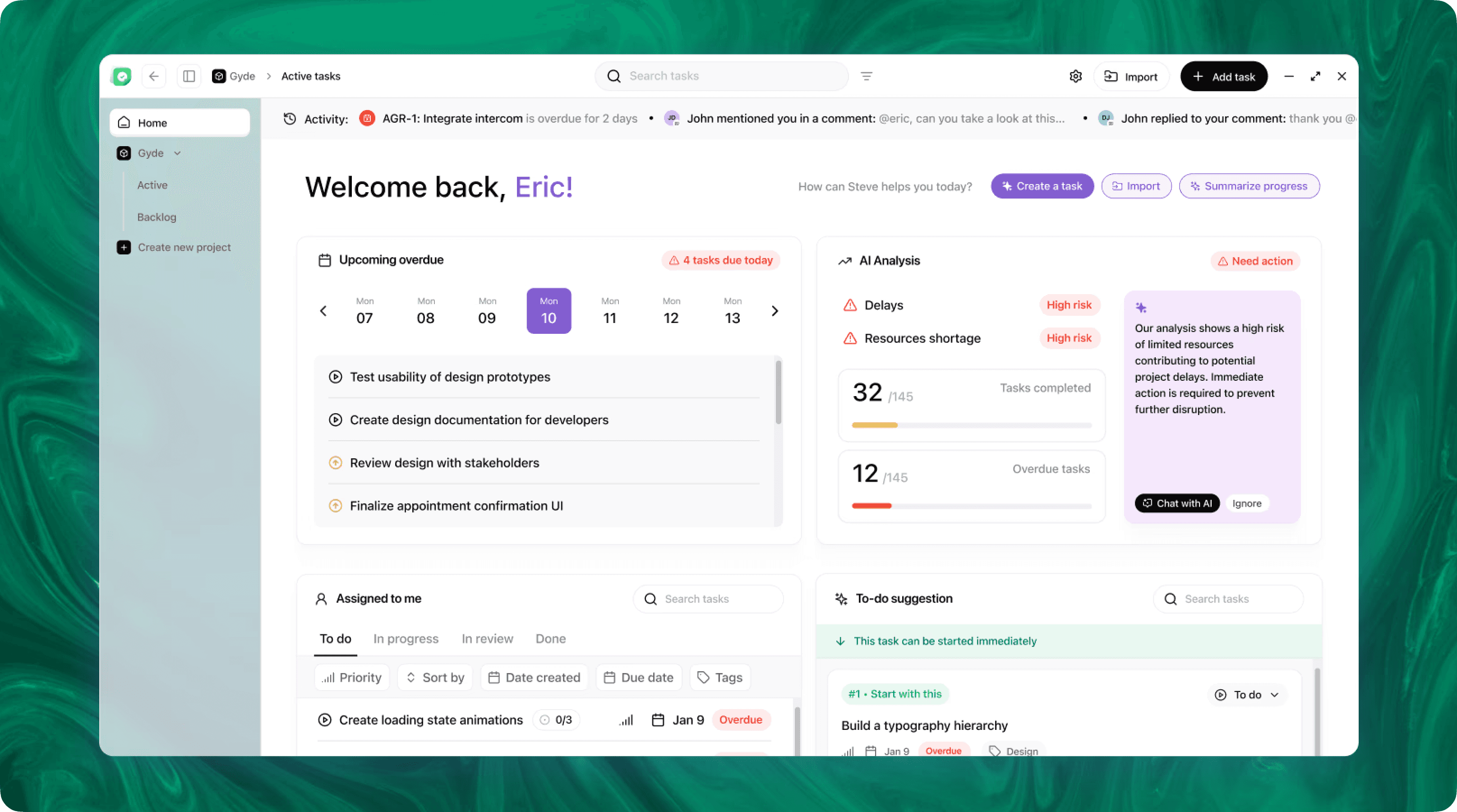
Steve is an AI-native operating system designed to streamline business operations through intelligent automation. Leveraging advanced AI agents, Steve enables users to manage tasks, generate content, and optimize workflows using natural language commands. Its proactive approach anticipates user needs, facilitating seamless collaboration across various domains, including app development, content creation, and social media management.
Conclusion
A single source of truth is more than a repository; it’s a living, actionable system that combines context, conversation, tasks, and artifacts. As an AI OS, Steve unifies those layers: shared memory keeps context consistent, conversational integrations make documents and events accessible, AI-driven task boards turn decisions into tracked work, and persistent projects plus GitHub integration tie intent to implementation. The result is a project environment where the answer to “What changed and why?” is always available, trusted, and ready to act upon.