Automating RFP Response Documents With Steve
Dec 8, 2025

Centralized Context With Shared Memory: Persist approved facts and boilerplate so every section draws from a single source of truth, reducing contradictions and late edits.
File-Aware Parsing And Conversational Extraction: Upload RFP PDFs and spreadsheets and use Steve Chat to extract requirements and map them to internal controls for faster triage.
Tailored Drafting Inside the Inbox: AI Email drafts executive summaries and clause-level responses using approved language while prioritizing critical clarification requests.
Orchestrating Reviews And Deliverables: Task boards convert questions into assigned review items with deadlines and update memory after approvals to maintain consistency.
Workflow Benefit: End-to-end automation—from parsing to final submission—keeps provenance intact, shortens cycles, and raises proposal quality.
Introduction
Automating RFP Response Documents With Steve reduces turnaround time, improves accuracy, and preserves institutional knowledge across proposals. As an AI Operating System, Steve combines conversational AI, shared memory, file-aware tooling, and task orchestration to turn scattered inputs—RFP PDFs, internal specs, and reviewer feedback—into cohesive, auditable responses. This article shows practical ways teams use Steve and why treating RFP response as an automated workflow raises win rates and reduces risk.
Centralized Context With Shared Memory
A common failure in RFP workflows is fractured context: different authors reuse inconsistent corporate facts, outdated metrics, or contradictory legal language. Steve’s shared memory lets AI agents persist verified answers, approved boilerplate, and company facts so every generated section draws from the same source of truth. In practice, you load canonical product descriptions, security attestations, pricing tiers, and prior answers into the memory layer; when the AI drafts a compliance section or a capabilities statement, it references those stored facts rather than inventing or repeating inconsistent phrasing. The result is faster cohesion across sections and fewer late-stage edits from legal or sales.
File-Aware Parsing And Conversational Extraction
RFPs arrive as long PDFs, spreadsheets, and amendment threads. Steve Chat’s file-aware capabilities let teams upload those documents and interrogate them conversationally: extract mandatory requirements, highlight pass/fail criteria, and summarize question clusters. Rather than manually copy-pasting, you ask Steve to "list all security-related requirements and map them to our SOC 2 controls," and the system returns structured items with source pointers. Because Steve integrates with Google Drive, Sheets, and other repositories, the AI can pull relevant artifacts into the conversation for immediate cross-referencing, reducing the chance that a buried clause goes unanswered or misinterpreted.
Tailored Drafting Inside the Inbox
Drafting polished answers and executive summaries becomes repeatable when you combine Steve’s AI Email features with its conversational assistant. Steve generates concise executive summaries of long RFPs, drafts clause-level responses that use approved language from shared memory, and proposes alternative phrasings for tone or compliance trade-offs. AI tags prioritize incoming clarification requests and surfaces the most time-sensitive Q&A items in your inbox, so proposal leads focus on high-impact edits. You can also chat with Steve inside the inbox to iterate on a response in place, export final text to the RFP template, and keep a versioned trail of changes for audit.
Orchestrating Reviews And Deliverables
Automating RFP responses requires more than good prose; it needs coordinated reviews and clear handoffs. Steve’s task management boards let you convert extracted questions into work items, assign subject-matter reviewers, and set deadlines tied to the RFP’s submission date. Integration with linear task systems and traceable AI logs ensures that security, legal, and sales tasks feed back into the same document context. For example, once Steve drafts a data-privacy answer, it creates a reviewer task for legal; when legal approves, the shared memory updates so the approved text is reused in subsequent responses. This closes the loop from draft to sign-off while keeping responsibilities and timelines explicit.
Practical Scenario: From Upload To Submission
A proposal manager uploads a complex RFP, asks Steve to extract compliance sections, and receives a prioritized list of questions mapped to internal owners. Steve drafts initial answers using approved language from memory, generates an executive summary for the cover letter, and drops items into a review board with deadlines. Reviewers make targeted edits in the conversation thread; approved text updates memory and populates the final submission template. The manager exports the completed document and uses the AI Email tool to send the response with a short, context-aware covering note—all without switching tools or losing provenance.
Steve
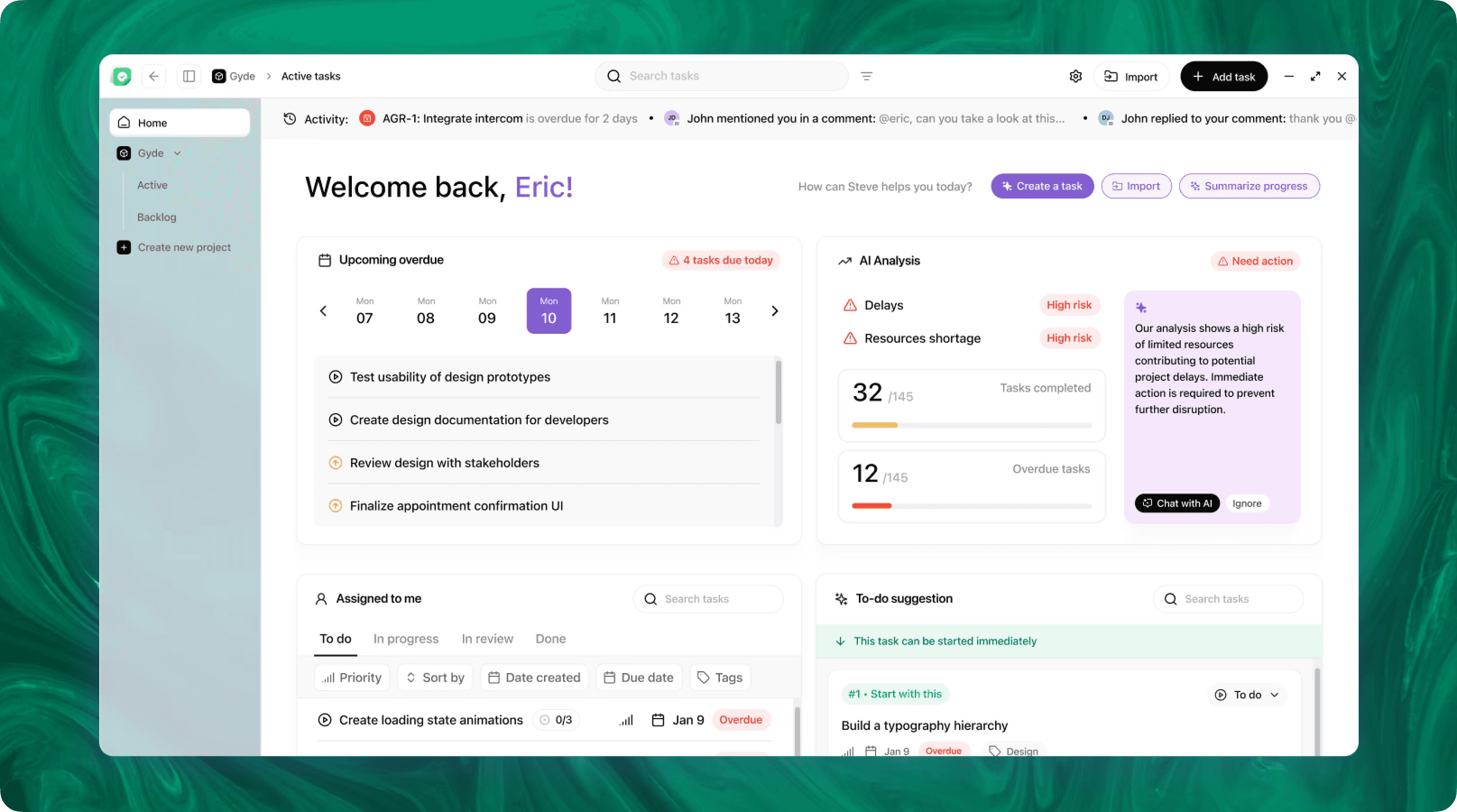
Steve is an AI-native operating system designed to streamline business operations through intelligent automation. Leveraging advanced AI agents, Steve enables users to manage tasks, generate content, and optimize workflows using natural language commands. Its proactive approach anticipates user needs, facilitating seamless collaboration across various domains, including app development, content creation, and social media management.
Conclusion
Automating RFP Response Documents With Steve compresses time-to-submission, reduces rework, and raises consistency by uniting shared memory, file-aware conversational parsing, inbox drafting, and task orchestration. As an AI OS, Steve turns scattered inputs into auditable outputs and embeds review workflows so teams submit accurate, defensible proposals faster. For organizations that treat proposals as repeatable workflows, Steve becomes a force multiplier—reducing manual overhead while preserving control and compliance.