Automating OKR Tracking Through AI Conversations
Nov 24, 2025

Conversational OKR Capture And Updates: Steve Chat converts plain-language updates into timestamped, evidence-linked OKR entries and answers follow-up queries in context.
Persistent Context And Shared Memory For Continuous Alignment: Shared memory preserves rationale and historical data so agents and new team members can reconstruct OKR evolution without extra work.
Task Boards And Automated Progress Rollups: Task Management converts conversational inputs into tasks, links work to key results, and computes objective progress automatically.
AI Email For Stakeholder Communication And Summaries: AI Email distills threads and notes into concise, approvable OKR reports and flags action items tied to objectives.
Operational Benefit: Combining chat capture, memory, task automation, and email summarization reduces manual consolidation, speeds decisions, and keeps OKRs auditable.
Introduction
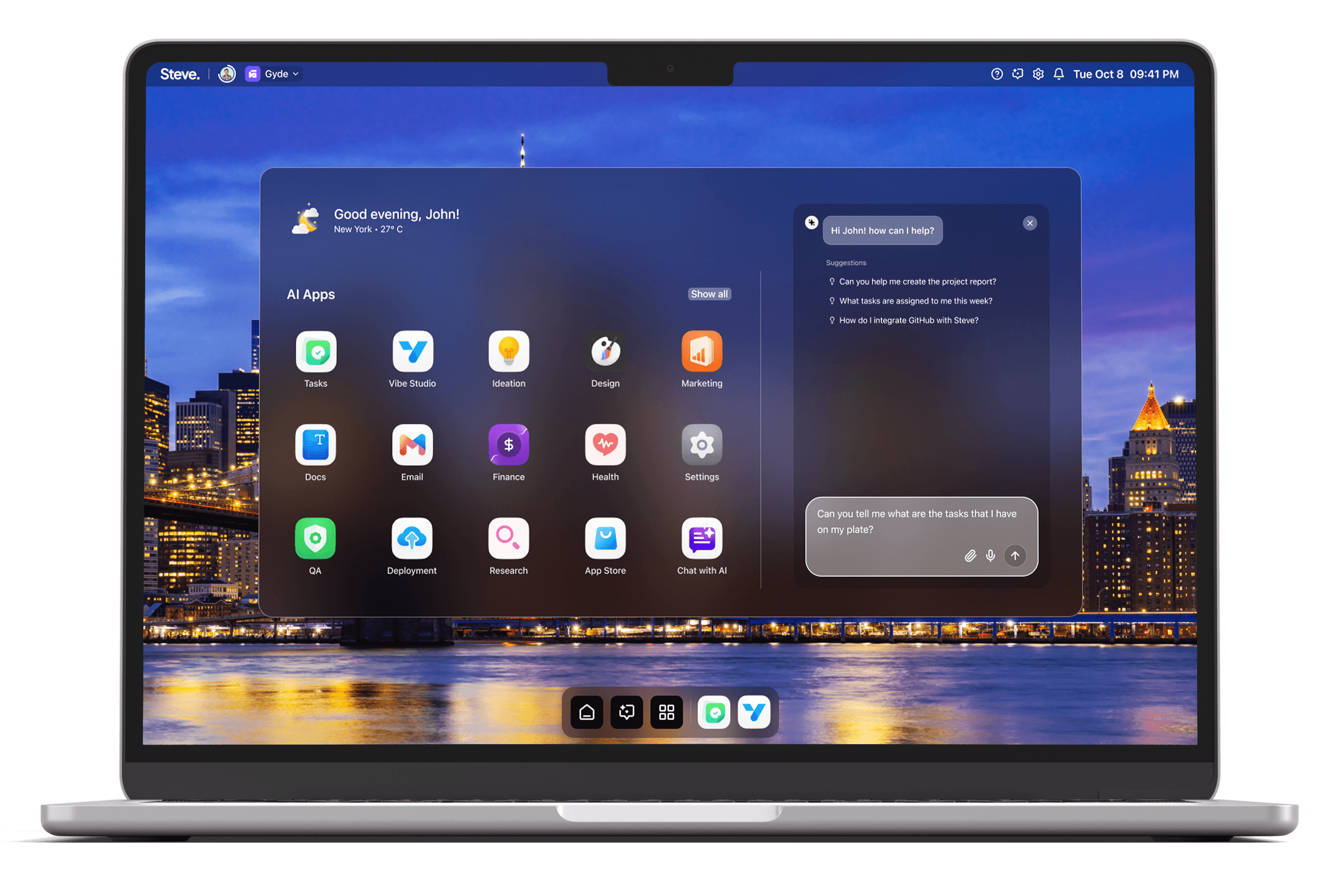
Automating OKR tracking through AI conversations transforms status updates from manual reporting into contextual, real-time dialogue. Teams get faster alignment, fewer meetings, and clearer decision history when progress is captured conversationally and rolled up automatically. As an AI Operating System, Steve combines conversational intelligence, persistent memory, task boards, and an integrated smart inbox to make OKRs live in the flow of work rather than in a separate spreadsheet.
Conversational OKR Capture And Updates
Steve Chat lets teams create, update, and query OKRs through plain-language conversation. A product lead can tell Steve, “Record that Q3 Objective A progress moved to 60% after the sprint,” and the system logs the update, links it to the objective’s key results, and timestamps the entry. Because Steve Chat connects to calendars, Sheets, and Notion, updates can reference meeting notes or spreadsheet metrics automatically — removing copy-paste errors and preserving source context. Teams can also ask follow-ups conversationally, for example: “Which key results are slipping this month?” — and receive prioritized, evidence-backed answers.
Practical scenario: a distributed squad conducts asynchronous standups. Instead of a long thread, each member tells Steve their outcome and blockers; Steve aggregates those conversational inputs into a unified progress snapshot tied to the team’s OKRs.
Persistent Context And Shared Memory For Continuous Alignment
Steve’s shared memory system keeps conversations and agent outputs connected to the right objectives and decisions. Every OKR-related message becomes context that AI agents can reference later, so historical assumptions, past estimates, and rationale stay attached to the current state. That continuity reduces repeated clarifications and ensures that automated progress rollups account for prior notes and evidence.
Practical scenario: when a new manager joins, Steve can reconstruct the OKR history — the original targets, major pivots, and past remediation steps — enabling rapid onboarding and consistent follow-up without hunting through disparate docs.
Task Boards And Automated Progress Rollups
Steve’s Task Management tools translate conversational inputs into actionable work items and then roll progress up into OKR metrics. When engineers or PMs describe milestones in chat, Steve can create tasks, link them to key results, and import or sync tasks from Linear. The system’s automation aggregates completion rates and effort estimates to compute objective progress automatically, surfacing variance between planned and actual outcomes.
Practical scenario: sprint retrospectives often reveal incomplete work. Steve proposes a sprint plan aligned with OKRs, converts accepted proposals into board tasks, and then runs scheduled rollups that publish progress summaries to stakeholders — freeing teams from manual consolidation and improving forecast accuracy.
AI Email For Stakeholder Communication And Summaries
Steve’s AI Email closes the loop for external and executive stakeholders by turning long threads and meeting notes into concise OKR-focused summaries. The smart inbox tags relevant messages, extracts action items tied to objectives, and drafts status updates that stakeholders can approve or refine conversationally. Because email summaries are context-aware, they include the evidence and links needed for auditability, not just high-level claims.
Practical scenario: a weekly executive report is generated by Steve from recent chat updates, task rollups, and flagged emails; the VP reviews the drafted update in the inbox, asks a clarification question inline, and publishes the approved summary — all without exporting data to a separate reporting tool.
Steve
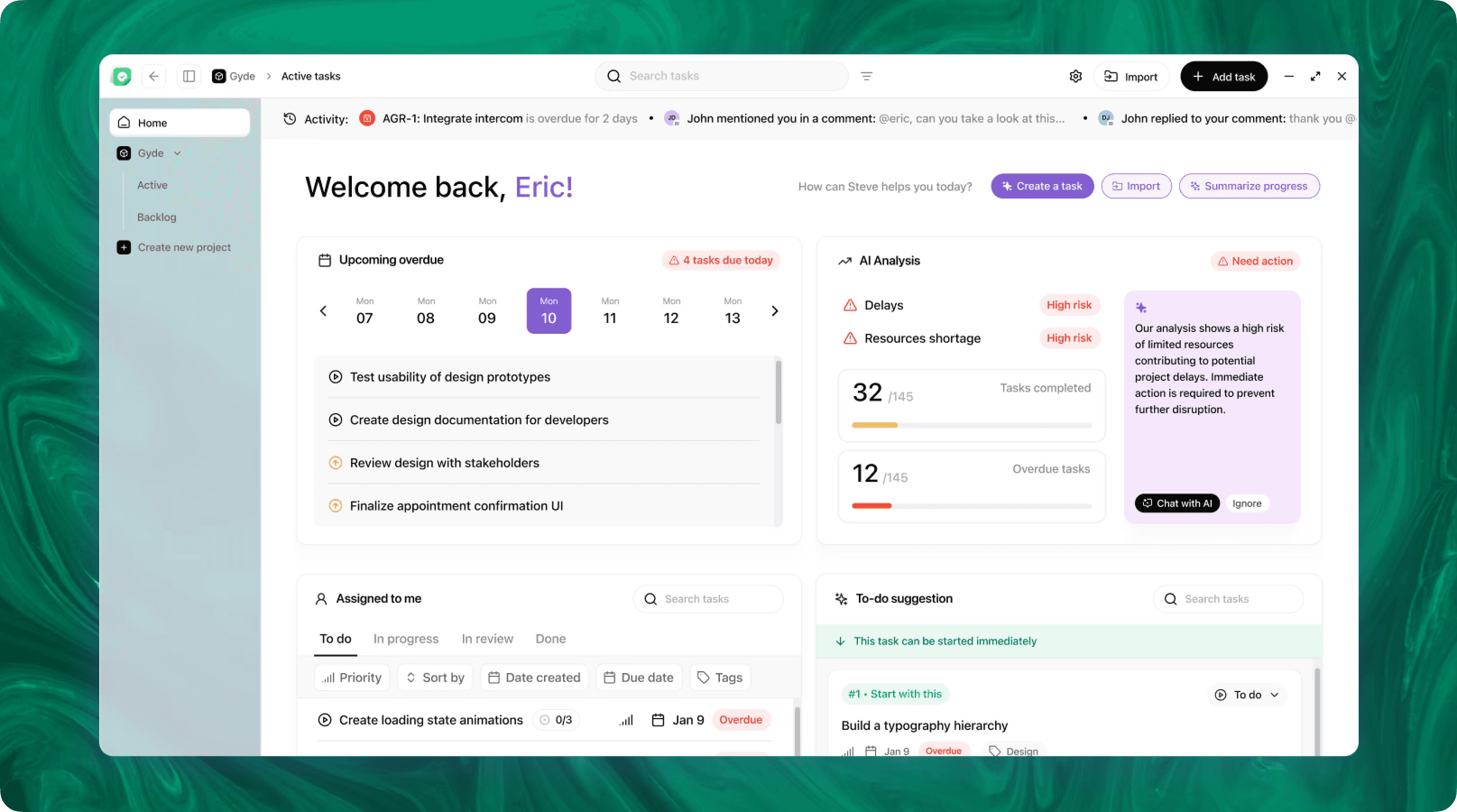
Steve is an AI-native operating system designed to streamline business operations through intelligent automation. Leveraging advanced AI agents, Steve enables users to manage tasks, generate content, and optimize workflows using natural language commands. Its proactive approach anticipates user needs, facilitating seamless collaboration across various domains, including app development, content creation, and social media management.
Conclusion
Automating OKR tracking through AI conversations turns goal management into an integrated, low-friction habit rather than an administrative burden. Steve, as an AI OS, combines conversational capture, shared memory, task automation, and email summarization to keep objectives current, evidence-linked, and stakeholder-ready. The result is faster alignment, fewer manual handoffs, and clearer decision trails — so teams spend less time reporting and more time delivering against measurable outcomes.