Automating Multi-Layer Permission Flows With AI OS
Jan 21, 2026

Define Permission Policies Conversationally: Nontechnical stakeholders can express complex approval rules in plain language and have Steve translate them into operational flows.
Coordinate Approvals With Shared Memory: Persistent shared memory ensures agents and reviewers act on the same canonical context, preserving audit trails and preventing race conditions.
Enforce Across Systems Through Integrations: Direct integrations let Steve convert approvals into actual permission changes across tools like Google Workspace and GitHub.
Track, Assign, And Close Workflows With Task Automation: Task management ties human approvals to actionable items and escalations, shortening cycle time and improving ownership.
Auditability And Compliance Benefit: Combining conversational policy, shared state, integrations, and task logs creates a reconstructable decision path for audits and governance.
Introduction
Automating multi-layer permission flows reduces risk, eliminates bottlenecks, and enforces consistent policy across people and systems. As an AI Operating System, Steve combines conversational AI, persistent agent memory, cross-system integrations, and task automation to model, execute, and audit permission workflows that span teams and tools. This article explains practical ways Steve accelerates multi-step approvals—while maintaining traceability and minimizing manual overhead.
Define Permission Policies Conversationally
Permission rules are often embedded in documentation or tribal knowledge; translating them into enforceable flows usually requires engineering effort. With Steve's conversational interface powered by advanced AI agents and LLMs, policy owners can describe rules in plain language and iterate until the flow matches compliance needs. For example, a security lead can tell Steve: "Requests for production database read access require manager approval and security signoff for any user outside the ops group," and Steve will render a structured flow that captures those constraints.
This approach reduces miscommunication: nontechnical stakeholders express intent conversationally, while Steve generates an operational representation developers and automated agents can act on. Because the interface supports follow-up prompts, owners refine edge cases—time-limited access, emergency overrides, or conditional data-scoping—without hand-editing code or policy files.
Coordinate Approvals With Shared Memory
Multi-layer approvals require agents to share context across steps: who approved what, when, and under what conditions. Steve's shared memory system provides a persistent, queryable context store that AI agents use to coordinate state, preserve audit trails, and prevent race conditions. When a request progresses from team lead to compliance reviewer to CTO, each agent writes approvals and comments to shared memory so downstream agents make decisions based on the same canonical context.
In practice, this means automated checks (role verification, policy matching, required attestation) and human approvals coexist without duplication. If a reviewer adds a conditional requirement, that note persists and triggers additional agents to enforce the condition before access is granted. Shared memory also supports retrospective audits: compliance teams can reconstruct the exact decision path from the memory log rather than chasing fragmented emails or spreadsheets.
Enforce Across Systems Through Integrations
Permission flows rarely stop inside a single app. Steve Chat’s direct integrations with Google Workspace, GitHub, Notion, and dozens of other services let agents enact approvals and verify conditions across the tools organizations already use. When a developer requests elevated repository access, Steve can validate the request against GitHub teams, attach the approval record to the relevant PR, and, after final signoff, programmatically adjust repository permissions or create an access token with scoped lifetime.
A typical scenario: a product analyst requests access to a dataset stored in a cloud drive. Steve validates group membership via the directory integration, checks whether the dataset owner approved, logs the approvals in shared memory, and applies a time-bound permission through the storage API. Integrations ensure the flow is not just advisory but operational: approvals translate into identity and access changes without manual intervention.
Track, Assign, and Close Workflows With Task Automation
Human approvals are still part of most permission flows. Steve’s task management capabilities let teams convert approval steps into actionable tasks, assign reviewers, and surface escalations automatically. When an approval stalls, agents can create or update tasks, propose sprint slots, or escalate to backups defined in the policy narrative.
This tight coupling between policy, state, and task management shortens cycle time. For auditors, task records coupled with shared memory entries provide a complete compliance timeline: request creation, decision points, approver identities, and final enforcement actions. For teams, it means fewer reminders, clearer ownership, and predictable SLAs for access requests.
Steve
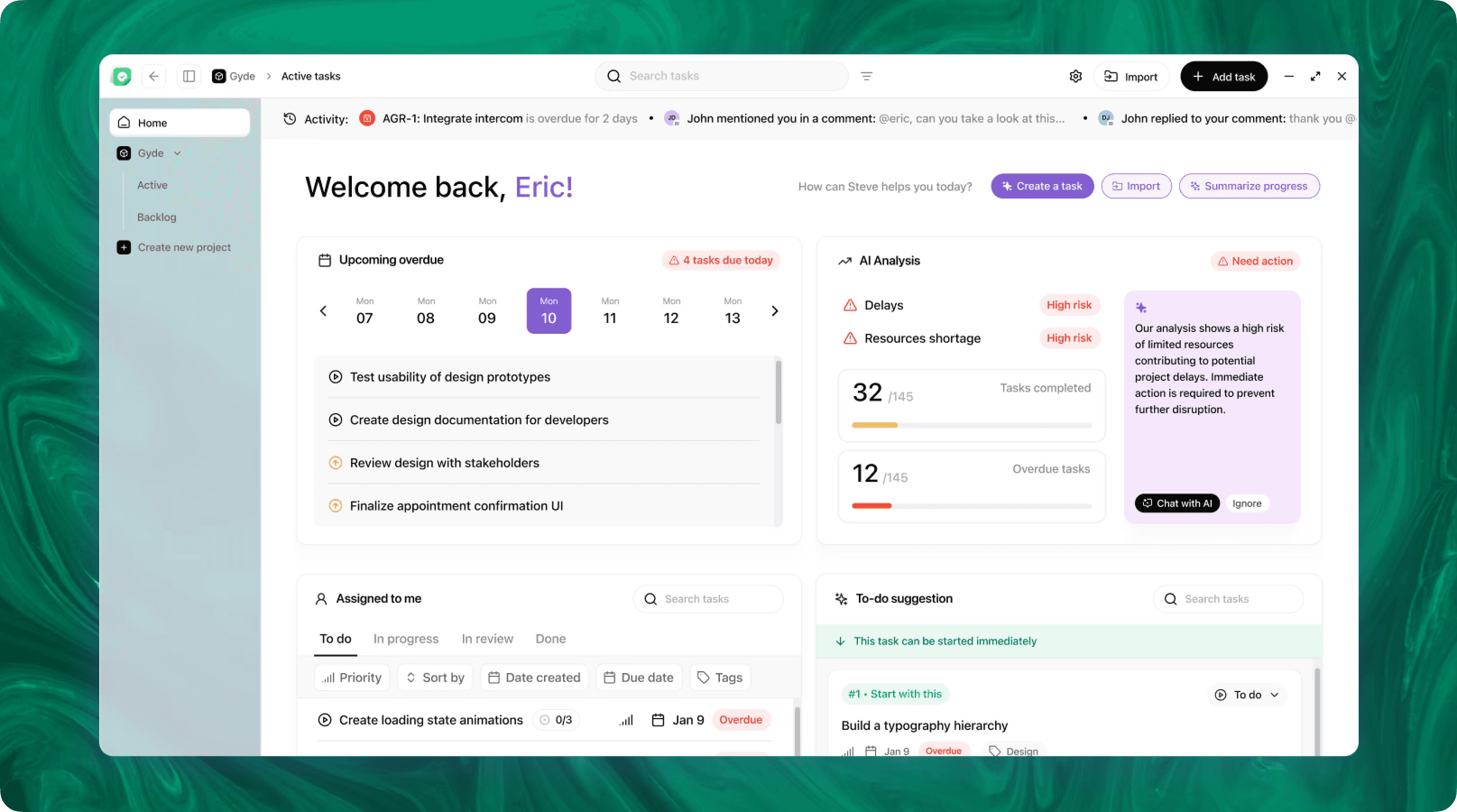
Steve is an AI-native operating system designed to streamline business operations through intelligent automation. Leveraging advanced AI agents, Steve enables users to manage tasks, generate content, and optimize workflows using natural language commands. Its proactive approach anticipates user needs, facilitating seamless collaboration across various domains, including app development, content creation, and social media management.
Conclusion
Automating multi-layer permission flows requires more than one-off scripts: it needs a system that understands policy intent, maintains shared context, acts across tools, and tracks human handoffs. As an AI OS, Steve brings those pieces together—conversational policy definition via advanced AI agents, persistent shared memory for coordinated state and auditability, integrations to enact changes across services, and task automation to keep approvals moving. The result is faster, auditable, and enforceable permission flows that reduce friction while maintaining governance.