Automating Employee Feedback Cycles With AI OS
Dec 10, 2025

Maintain Continuous Context With Shared Memory: Persistent memory links past feedback, goals, and notes so reviews reflect longitudinal performance rather than isolated events.
Capture And Summarize Feedback With AI Email: Smart inbox features tag, categorize, and summarize threads, enabling rapid extraction of actionable points and clean stakeholder outreach.
Run Conversational Reviews And Schedule Follow-Ups With Steve Chat: Conversational prep, integrated scheduling, and file-aware notes streamline 1:1s and ensure follow-ups are recorded.
Convert Feedback Into Action With Task Management: Feedback items become assigned, trackable tasks with Linear integration and AI-suggested sprints to guarantee completion.
Close The Loop Through Integrated Automation: Combining memory, email, chat, and task boards automates collection, synthesis, assignment, and follow-up, improving coaching outcomes.
Introduction
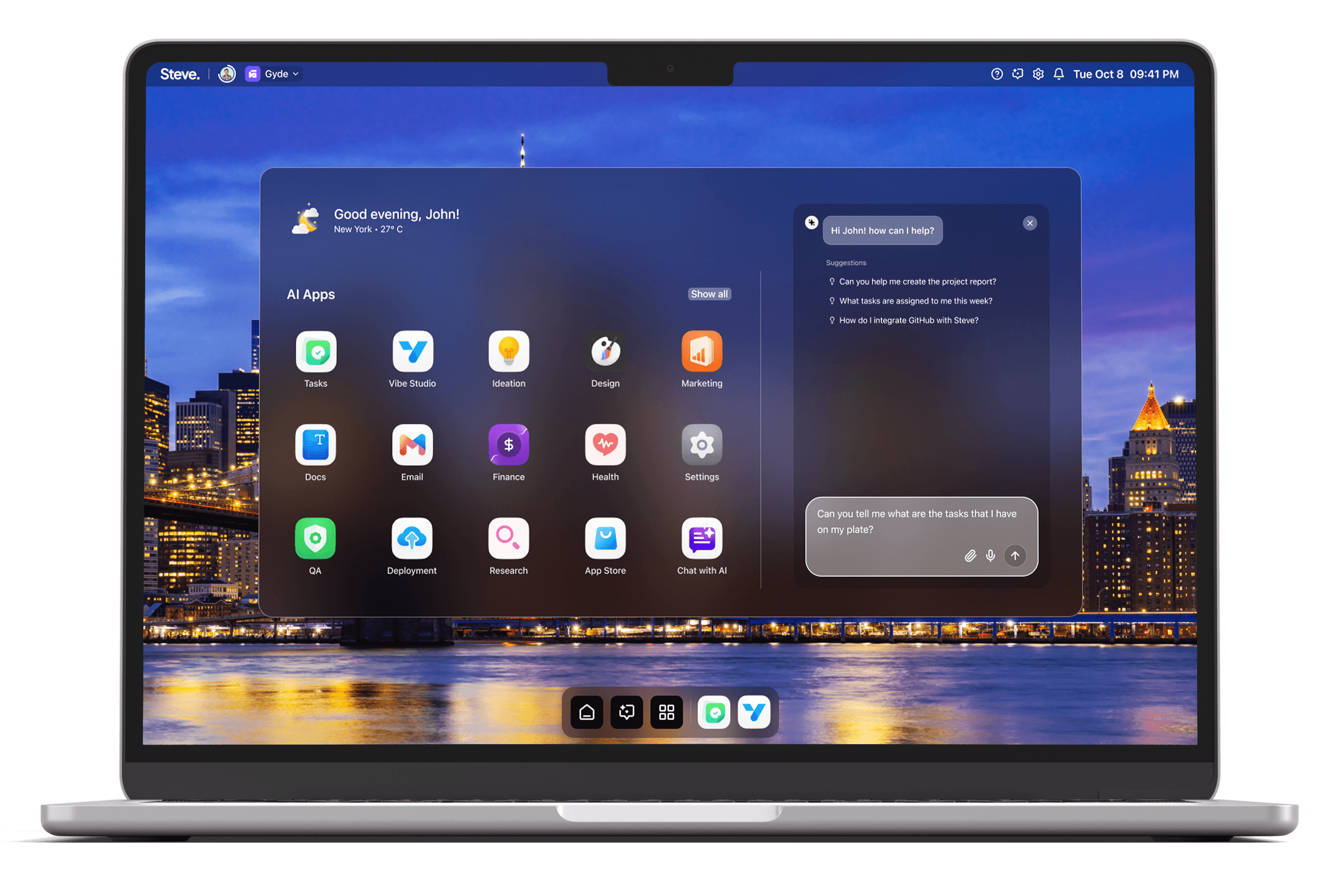
Automating employee feedback cycles shortens the path from observation to improvement: faster coaching, clearer follow-ups, and measurable behavior change. As an AI Operating System, Steve centralizes conversation, context, and action so managers and HR teams can collect, synthesize, and act on feedback without manual admin overhead. This article shows pragmatic ways Steve — an AI OS built for intelligent automation — reduces friction across capture, synthesis, scheduling, and tasking in everyday feedback workflows.
Maintain Continuous Context With Shared Memory
A persistent shared memory across Steve’s agents keeps prior feedback, goals, and one-on-one notes linked to people and projects. Instead of recreating context each quarter, managers query Steve for a consolidated history: past objectives, prior feedback themes, and relevant files. In practice, a manager preparing a mid-year review asks Steve Chat for highlights and recurring gaps from the previous six months; the reply draws on shared memory to surface trends and specific examples. That continuity prevents contradictory coaching, preserves nuance across reviewers, and enables more personalized development plans.
Capture And Summarize Feedback Efficiently With AI Email
Collecting feedback often starts with email and shared threads. Steve’s AI Email streamlines that intake: it tags and categorizes incoming feedback, generates instant summaries of long threads, and drafts context-aware outreach to stakeholders. HR can route performance-related threads into a review folder where Steve summarizes sentiment, extracts concrete examples, and flags unresolved issues for action. Because the inbox supports conversational editing, a manager can refine a feedback request or response in-chat and send it without switching tools, preserving momentum and reducing inbox friction.
Run Conversational Reviews And Schedule Follow-Ups With Steve Chat
Steve Chat brings natural conversation to feedback workflows while maintaining institutional memory and calendar integration. Managers can roleplay difficult conversations, ask Steve for concise talking points tailored to an employee’s history, and attach files or evidence for reference — all within the chat. When a follow-up is needed, Steve schedules the one-on-one via its Google Calendar integration and syncs the meeting notes back into shared memory. This loop — prepare, execute, and archive — keeps feedback grounded in evidence and ensures the next conversation builds on prior commitments.
Convert Feedback Into Action With Task Management
Feedback without follow-through fails. Steve’s Task Management transforms observations into tracked work: create action items from chat or email summaries, import or export tasks to Linear, and let the AI propose sprintable work aligned to team capacity. For example, a recurring skill gap highlighted across reviews can become a training sprint item with owner, deadline, and measurable objectives suggested by Steve. The platform then tracks completion and re-surfaces outcomes in subsequent reviews, closing the loop between feedback and measurable change.
Steve
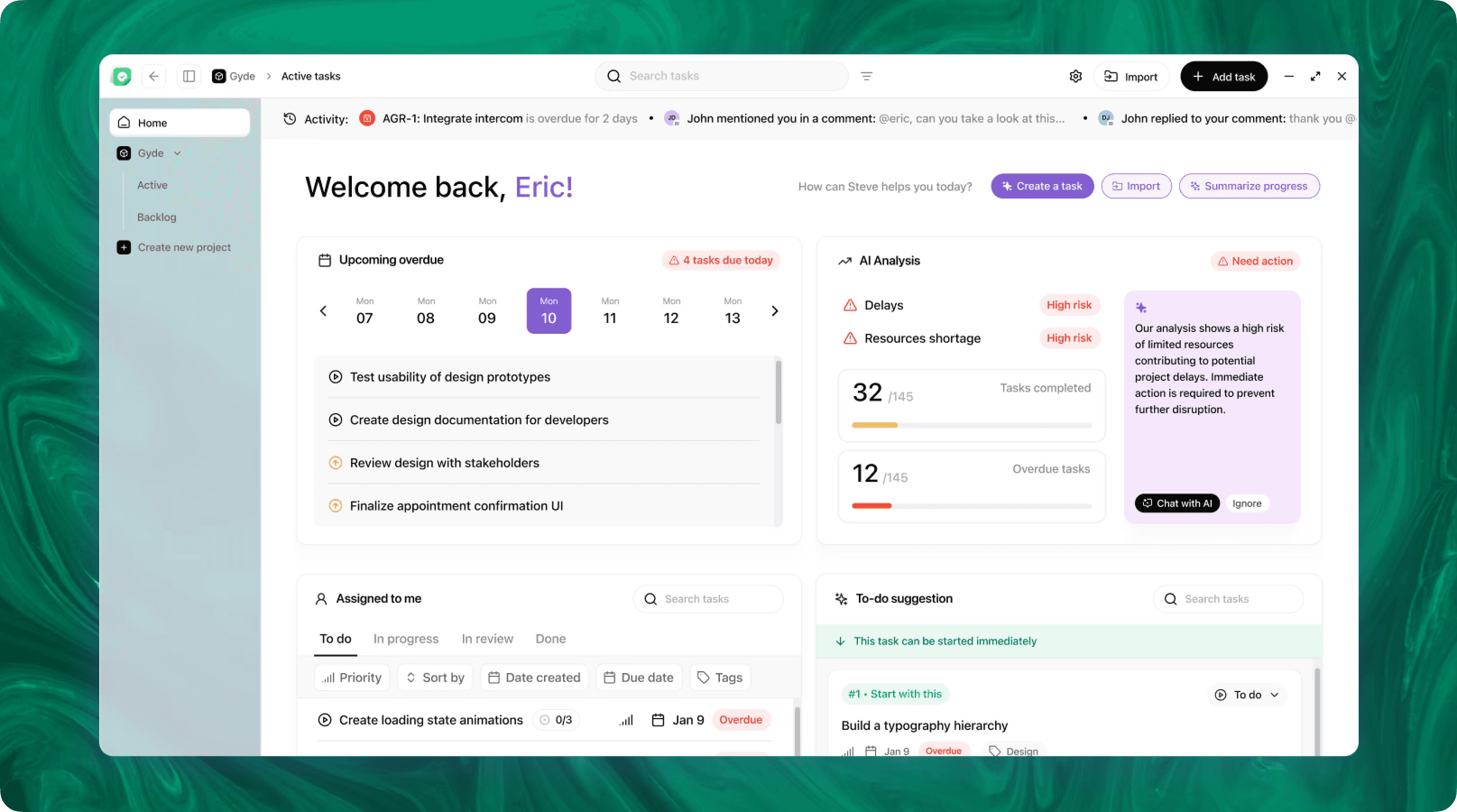
Steve is an AI-native operating system designed to streamline business operations through intelligent automation. Leveraging advanced AI agents, Steve enables users to manage tasks, generate content, and optimize workflows using natural language commands. Its proactive approach anticipates user needs, facilitating seamless collaboration across various domains, including app development, content creation, and social media management.
Conclusion
Automating employee feedback cycles requires continuity, low-friction capture, reliable scheduling, and disciplined follow-through. Steve, as an AI Operating System, ties those capabilities together: shared memory preserves context across interactions; AI Email captures and distills conversations; Steve Chat facilitates preparation, dialog, and scheduling; and Task Management converts insights into tracked work. The result is faster, fairer, and more actionable feedback that scales with organizational needs while keeping human judgment at the center.