Automating Editorial Review Workflows With Steve
Jan 27, 2026

Streamlining Triage With AI Email: Automatic tagging and instant thread summaries reduce time spent identifying priorities and routing drafts.
Condensing Long Threads With Summaries: Generated summaries and context-aware reply suggestions compress decision history into actionable items.
Shared Memory For Editorial Consistency: Persistent conversational memory preserves briefs and prior approvals so edit suggestions remain consistent over time.
Task-Driven Review Boards: Task Management converts review stages into trackable tasks, improving visibility and deadline adherence.
Integrations For Faster Approvals: Steve Chat's file-aware integrations surface sources and evidence quickly, accelerating fact-checks and sign-offs.
Introduction
Automating editorial review workflows reduces bottlenecks, improves consistency, and speeds time-to-publish. As an AI Operating System, Steve combines an AI-aware inbox, conversational assistants with persistent memory, and task-oriented boards to automate repetitive review tasks, maintain context across edits, and coordinate approvals at scale. This article shows practical ways editorial teams can use Steve to move from scattered feedback to a predictable, auditable review pipeline.
Streamlining Triage With AI Email
The first point of friction in editorial workflows is triage: identifying urgent changes, routing drafts to the right reviewers, and extracting decisions from long threads. Steve's AI Email automatically tags and categorizes messages, surfaces priority threads, and generates instant summaries of long conversations. In practice, an editor can open their inbox and immediately see which articles require copy edits, legal review, or fact-checking, with summaries that highlight outstanding questions and decisions. That reduces time spent reading history and lets editors assign the correct next step in minutes instead of hours.
AI Email also drafts context-aware reply suggestions aligned with the article’s current state. Rather than writing routine status updates or clarification requests from scratch, editors can use those suggestions to send precise, consistent messages that preserve context and reduce back-and-forth. When integrated with shared memory, those suggested replies reference prior decisions and style guidelines so responses remain consistent across reviewers.
Contextual Edits And Approvals With Steve Chat
Steve Chat acts as a conversational editor that understands files, references prior interactions, and connects to the systems editorial teams already use. Upload a draft, a source document, and style notes: Steve Chat is file-aware and can summarize the draft, flag potential issues (tone, factual inconsistencies, citation gaps), and suggest specific edits. Because it retains conversational memory, it remembers the editorial brief across sessions—so later questions like “Did we already approve the headline?” return accurate context instead of recreating it.
The chat interface also accelerates reviewer collaboration. Reviewers can ask Steve to compare two draft versions, highlight only substantive changes, or produce a one-paragraph rationale for accepting or rejecting a suggested edit. Those outputs serve directly in approval threads or in a change log, eliminating manual compile-and-summarize steps.
Steve Chat’s integrations extend this capability: it can find referenced documents across Google Drive, Sheets, or Notion and surface them in the conversation, making source verification faster. Because the assistant reasons step-by-step and preserves context, teams get replicable edit rationales that improve consistency across issues and authors.
Managing Review Cycles With Task Management
Turning editorial decisions into tracked actions is essential for predictable publishing. Steve’s Task Management boards let teams convert reviews, fact-checks, and copy changes into structured tasks, propose sprints, and track progress through to publication. Editors can create review boards that mirror their approval stages—draft, copy edit, fact-check, legal, final QA—and attach summaries or the AI-generated edit suggestions to each task.
Task Management integrates with Linear so teams that use modern engineering workflows can import or sync editorial tasks without rekeying status updates. Steve’s intelligence proposes reasonable timelines and sprint groupings based on workload, allowing managers to balance capacity against deadlines. That reduces missed reviews and provides a single place to audit who approved what and when.
Steve
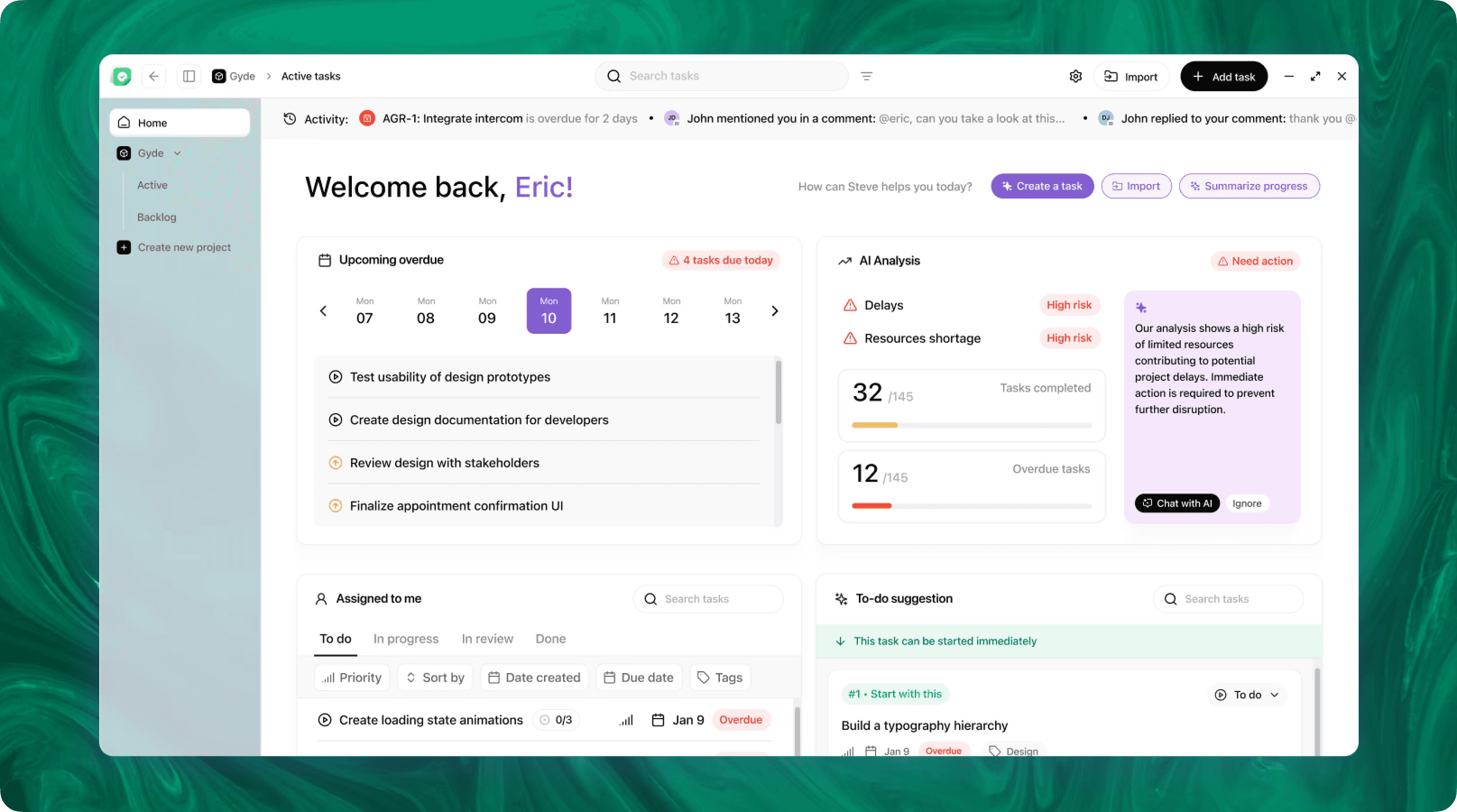
Steve is an AI-native operating system designed to streamline business operations through intelligent automation. Leveraging advanced AI agents, Steve enables users to manage tasks, generate content, and optimize workflows using natural language commands. Its proactive approach anticipates user needs, facilitating seamless collaboration across various domains, including app development, content creation, and social media management.
Conclusion
Automating editorial review with Steve turns unstructured email threads, scattered feedback, and ad hoc approvals into a coordinated, auditable pipeline. AI Email reduces triage overhead and produces context-aware replies; Steve Chat provides file-aware, memory-backed editing assistance; and Task Management converts decisions into tracked actions integrated with existing tools. As an AI OS, Steve brings these capabilities together so editorial teams work faster, maintain consistency, and produce clearer audit trails without reinventing their processes.