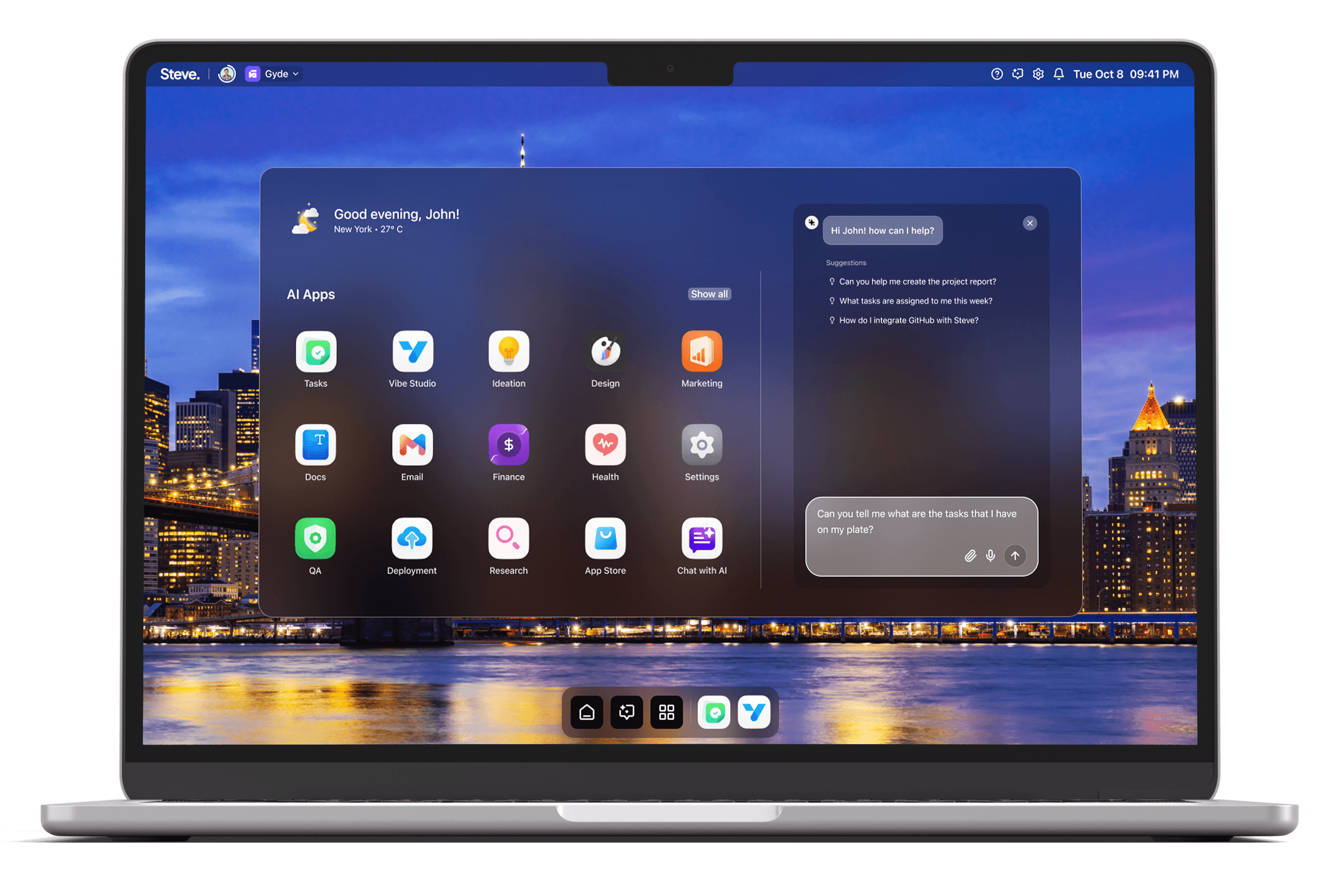
Automating Department-Wide Status Reports With AI
Jan 13, 2026

Centralize Inputs With Conversational Data Aggregation: Steve Chat pulls documents, sheets, and notes from integrated services and consolidates them into structured inputs for reporting.
Automate Synthesis And Drafting Inside The Inbox: AI Email generates summaries, tags priorities, and drafts stakeholder-ready reports for quick review and distribution.
Route Tasks And Track Follow-Through With Task Management: Integrated boards and Linear connectivity convert report items into assigned tasks and sprint proposals to ensure action.
Maintain Context Over Time With Shared Memory: A persistent memory preserves templates, KPI definitions, and change history so reports remain consistent and auditable.
Operational Benefit: Combining aggregation, synthesis, and tasking in one AI OS reduces manual work, shortens decision cycles, and improves reporting reliability.
Introduction
Automating department-wide status reports turns repetitive aggregation into reliable, timely insight. Steve, an AI Operating System, reduces manual toil by centralizing inputs, synthesizing updates, and pushing actionable outcomes into existing workflows. This article shows practical patterns for using Steve to gather evidence, draft concise reports, distribute them, and close the execution loop without breaking team context.
Centralize Inputs With Conversational Data Aggregation
Start by making Steve the single conversational gateway for updates. Steve Chat connects to Google Drive, Sheets, Notion, Gmail, Calendar, GitHub, and other services so agents can pull the freshest artifacts and metrics without context switching. Teams can upload spreadsheets, project briefs, or screenshots directly into chat or reference persistent documents; Steve’s file-aware AI reads those files and surfaces the fields that matter for a status report.
Practical scenario: a product manager asks Steve, “Collect this week’s feature metrics, open GitHub PRs, and the latest QA notes in Notion,” and the AI returns a consolidated dataset keyed by feature and owner. Because Steve maintains shared memory across agents, it retains report templates, KPIs, and prior-week context so comparisons and trendlines are computed consistently rather than reconstructed each cycle.
Automate Synthesis and Drafting Inside the Inbox
Use Steve’s AI Email to convert aggregated inputs into polished reports and to manage distribution. The inbox synchronizes in real time and generates instant summaries of long threads, so report drafts reflect the latest conversations and decisions. Steve tags and categorizes incoming notes to identify blockers and highlights automatically, then drafts a concise status report that emphasizes priorities, risks, and next steps.
Practical scenario: after aggregation, Steve produces a two-paragraph executive summary, a bulleted list of completed milestones, and an issues table with owners and ETA. You review within the integrated inbox, ask the AI to rephrase a paragraph for a stakeholder tone, and send the draft as a Gmail thread or schedule it via Calendar reminders. Steve’s context-aware suggestions keep language consistent with prior reports and reduce editing time.
Route Tasks and Track Follow-Through With Task Management
A report is only useful if it drives action. Steve’s Task Management boards integrate with Linear and other trackers to convert report findings into tasks, assign owners, and propose execution sprints. The AI suggests priorities based on severity, past velocity, and stakeholder impact, then creates or updates tasks so the status report becomes the source of truth for next steps.
Practical scenario: Steve flags a critical bug in the report, creates a Linear issue with the error logs attached, assigns it to the on-call engineer, and sets a high-priority sprint suggestion. Engineering and product teams see the task appear in their board automatically, and Steve’s memory links the ticket to the originating report for future retrospectives.
Maintain Context Over Time With Shared Memory
Consistency across weekly or monthly reports requires institutional memory. Steve’s shared memory system preserves templates, KPI definitions, and decision rationales so each report uses the same lenses. Agents collaborate over that memory to resolve ambiguous inputs—matching JIRA/Linear IDs to feature names, or normalizing metric definitions—reducing the back-and-forth clarifications that usually delay distribution.
Practical scenario: when a metric’s calculation changes, Steve records the change note and applies the new formula to subsequent reports while annotating historical comparisons. Stakeholders get transparent lineage for numbers, and reviewers spend time on interpretation rather than reconciliation.
Steve
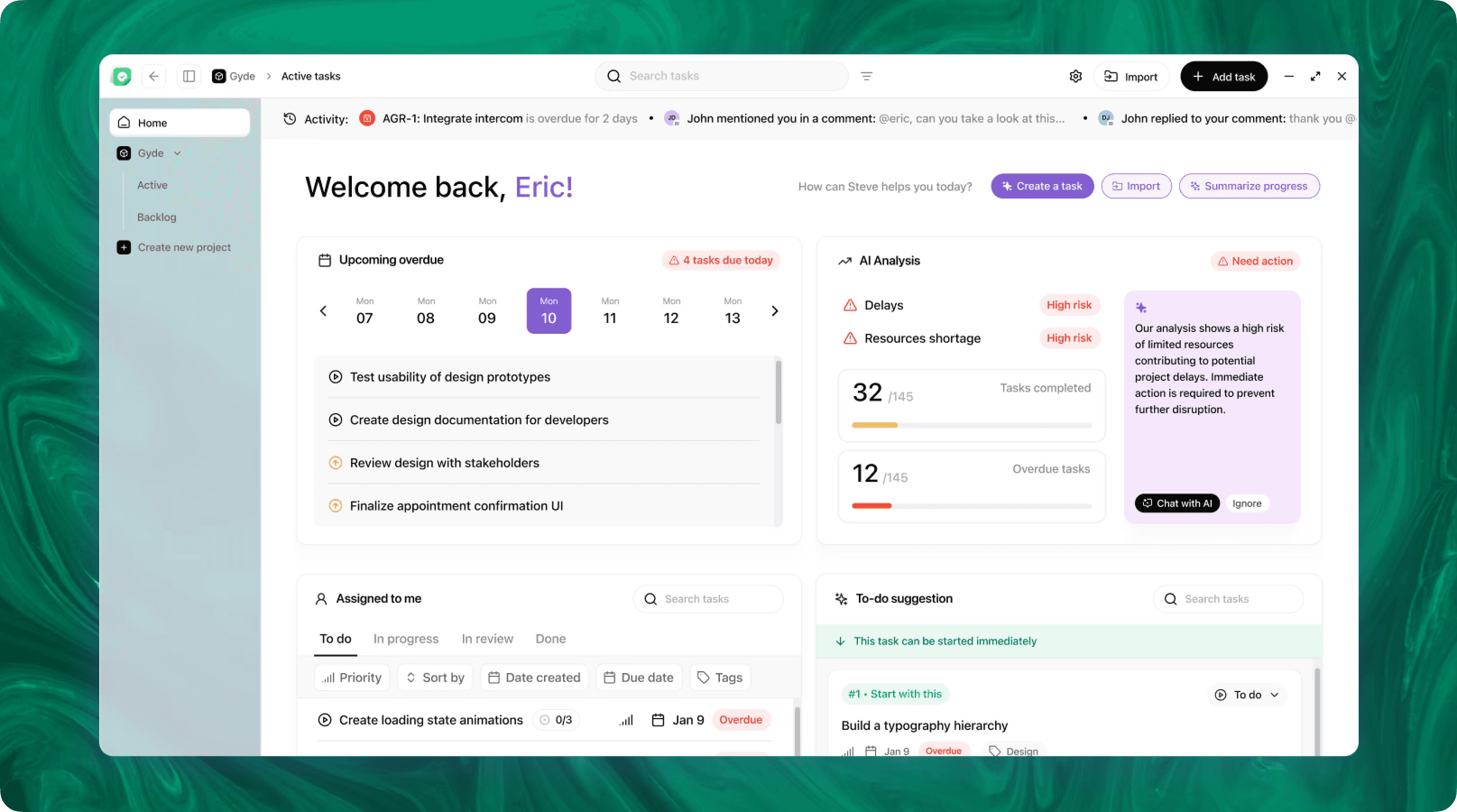
Steve is an AI-native operating system designed to streamline business operations through intelligent automation. Leveraging advanced AI agents, Steve enables users to manage tasks, generate content, and optimize workflows using natural language commands. Its proactive approach anticipates user needs, facilitating seamless collaboration across various domains, including app development, content creation, and social media management.
Conclusion
Automating department-wide status reports with Steve cuts hours of manual aggregation, improves narrative consistency, and ties reporting directly to execution. As an AI Operating System, Steve centralizes heterogeneous inputs through Steve Chat, synthesizes and drafts inside AI Email, drives action with Task Management, and preserves context via shared memory. Treat Steve as the operational layer that turns status reports from administrative chores into concise decision tools—an AI OS that coordinates evidence, narrative, and follow-through so teams move faster with less friction.