Automating Customer Value Analysis Through AI OS
Jan 19, 2026

Streamlined Data Ingestion And Signal Extraction: Centralizes emails, files, and Sheets so qualitative and quantitative signals feed analysis with minimal manual ETL.
Collaborative Multi-Agent Analysis With Shared Memory: Agents share context to produce reproducible, multi-step analyses without repeated data re-ingestion.
Automated Scoring And Segmentation: Conversational prompts drive LLM-assisted cohort scoring with explainable signal attributions and exportable outputs.
Closed-Loop Insights To Execution: Integrated task creation, email drafting, and calendar links turn insights into accountable actions and measurable interventions.
Workflow Advantage: Combining ingestion, shared memory, conversational analysis, and task automation shortens insight cycles and improves decision traceability.
Introduction
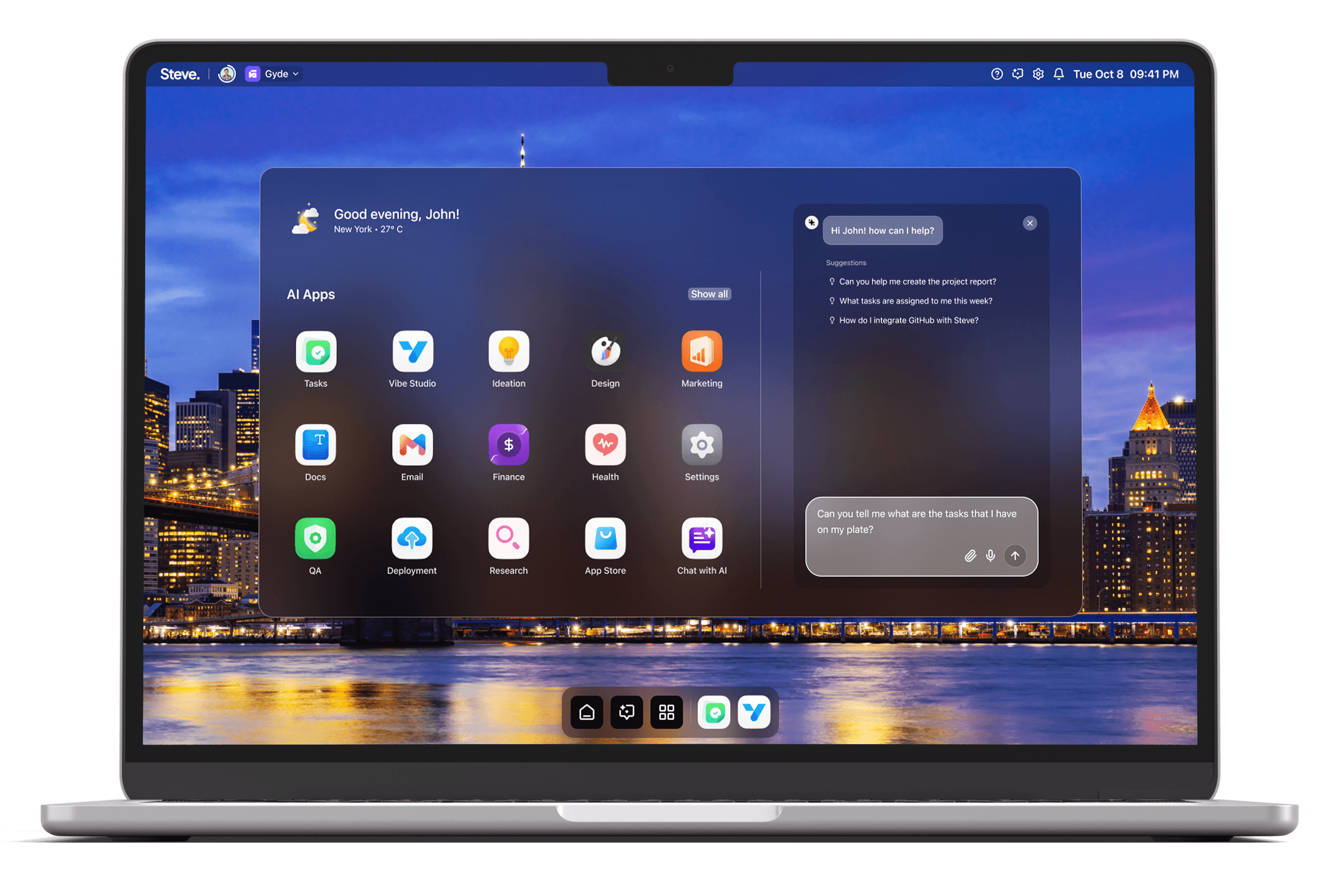
Automating customer value analysis unlocks faster, more objective decisions about product prioritization, retention, and revenue allocation. As an AI Operating System, Steve combines conversational AI, integrations, shared memory, and task automation to turn raw signals—emails, documents, spreadsheets, and operational telemetry—into repeatable customer-value workflows. This article shows how Steve streamlines ingestion, agent-led analysis, automated scoring, and actioning so teams close the loop from insight to impact.
Streamlined Data Ingestion And Signal Extraction
Accurate value analysis starts with a complete signal set. Steve ingests customer-facing inputs through its conversational interface and built-in integrations: upload PDFs, attach spreadsheets, or connect Google Sheets and Gmail so contextual sources flow into one workspace. AI Email automatically tags and summarizes long threads, surfacing complaint volume, feature requests, and renewal intent without manual triage. Meanwhile, Steve Chat reads attached files and runs targeted queries so analysts and product managers can ask for aggregated metrics or verbatim themes in plain language. The result: high-fidelity source data lands in the AI OS with minimal ETL overhead, preserving nuance from qualitative channels and structure from transactional sources.
Collaborative Multi-Agent Analysis With Shared Memory
Steve’s shared memory system enables AI agents to collaborate on multi-step analysis while preserving context across interactions. You can run parallel agent workflows—one extracting churn signals from support threads, another calculating revenue exposure from billing sheets—and the shared memory stitches their outputs into a single analytical narrative. Because agents reference the same contextual store, follow-up prompts remain efficient: you ask for segment-level LTV drivers and agents reuse parsed data rather than re-ingesting files. This collaborative architecture turns ad hoc exploration into reproducible pipelines, reducing analyst time spent on context handoffs and ensuring consistency in customer-value estimates.
Automated Scoring And Segmentation
With consolidated inputs and agent collaboration, Steve automates routine scoring and segmentation tasks that typically consume analysts’ cycles. Analysts instruct Steve Chat in natural language—"score customers by renewal likelihood, ARR, and recent NPS signals"—and the AI OS uses its LLM-powered reasoning and access to Sheets and uploaded data to compute segment scores and highlight outliers. Outputs include scored cohorts, confidence notes explaining which signals drove a score, and exportable tables for downstream systems. Because Steve retains conversational memory, teams iterate on scoring rules by refining prompts, track changes over time, and reproduce historical scoring logic for audits or model validation.
Closed-Loop Insights To Execution
Insights matter only when they drive prioritized work. Steve closes the loop by converting analysis into execution-ready artifacts. From a chat summary or a scored cohort, you can create tasks on product boards or sprint plans using the AI-powered Task Management module; Steve suggests owners, timelines, and impact hypotheses based on the analysis. AI Email crafts concise outreach drafts to high-value churn-risk customers, and Steve Chat schedules follow-ups by integrating with calendar and Gmail. This integration keeps decision, communication, and delivery traces inside the AI OS so teams can measure the downstream effects of interventions and iterate quickly.
Steve
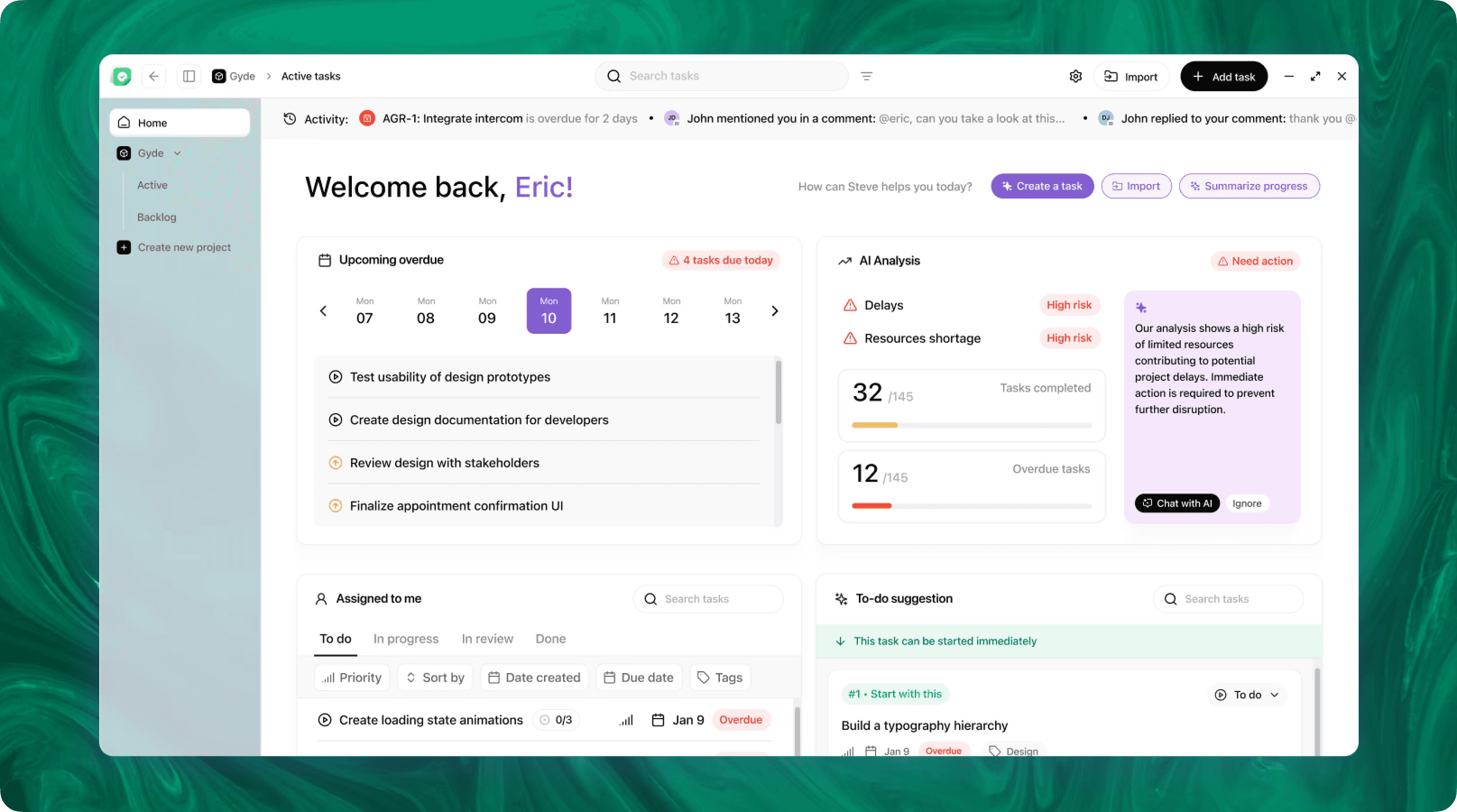
Steve is an AI-native operating system designed to streamline business operations through intelligent automation. Leveraging advanced AI agents, Steve enables users to manage tasks, generate content, and optimize workflows using natural language commands. Its proactive approach anticipates user needs, facilitating seamless collaboration across various domains, including app development, content creation, and social media management.
Conclusion
Automating customer value analysis requires more than models: it needs unified data intake, reproducible multi-agent reasoning, transparent scoring, and fast pathways to action. As an AI OS, Steve brings these layers together—ingesting signals through integrations and AI Email, coordinating analysis via shared memory and Steve Chat, and turning insights into tasks and outreach through Task Management—so organizations convert customer signals into prioritized, measurable decisions. The outcome is faster insight cycles, clearer accountability, and scalable decision-making grounded in contextual evidence.