Automating Customer Onboarding Sequences With AI
Dec 4, 2025

Persistent Context With Shared Memory: A centralized memory ensures all agents and channels reference the same customer state, preventing redundant interactions.
Conversational Orchestration With Steve Chat: Chat-driven workflows schedule calls, fetch documents, and personalize guidance using long-term memory and integrations.
Scalable Touchpoints Using AI Email: AI Email drafts context-aware messages, summarizes threads, and triggers follow-ups to keep customers progressing.
Operational Control Through Task Management: Tasks and sprint suggestions convert conversational outcomes into owned, trackable work across teams.
Cross-Channel Consistency: Combining shared memory, chat, email, and task boards preserves accuracy and speeds resolution across the entire onboarding path.
Introduction
Automating customer onboarding sequences reduces time-to-value, cuts churn, and scales personalized experiences without hiring more staff. As an AI Operating System, Steve centralizes conversational automation, persistent context, and operational controls so teams can design, run, and iterate onboarding flows that feel human at scale. This article shows pragmatic patterns—using Steve’s shared memory, Steve Chat, AI Email, and Task Management—to automate welcome flows, qualification, activation nudges, and cross-team handoffs.
Persistent Context With Shared Memory
A reliable onboarding sequence depends on consistent context: customer attributes, interaction history, and workflow state. Steve’s shared memory system lets AI agents read and write the same contextual record so every step—chat, email, or task—reflects the current status. Practically, when a prospect completes a product tour, that event is recorded in memory and immediately surfaces to the chat agent and email composer, preventing repeated questions and delivering next-step guidance.
Scenario: a new customer signs up and uploads a CSV. Shared memory stores the upload event and schema summary. The chat agent references that memory to propose the right import template; AI Email drafts a follow-up with import tips and an invitation to a setup call. Because memory persists, subsequent agents inherit the state and avoid redundant verification across channels.
Conversational Orchestration With Steve Chat
Steve Chat provides a conversational interface that routes onboarding interactions into action while retaining personalization over time. Its advanced memory personalizes responses; its integrations with calendars, drives, and ticketing systems let agents schedule training, fetch documents, and create support issues directly from conversation. Teams use Steve Chat to qualify leads, run guided tours, and convert questions into activation tasks without manual context-switching.
Scenario: a customer asks about configuring single sign-on. Through Steve Chat, an AI agent summarizes the tenant's current settings (from shared memory), offers a stepwise setup checklist, and proposes three available slots pulled from the calendar integration. When the customer accepts a slot, Steve creates the calendar event and logs the decision to memory so follow-ups and escalation agents see the outcome.
Scalable Touchpoints Using AI Email
Onboarding sequences require timely, contextual email touchpoints: welcome messages, verification nudges, feature highlights, and re-engagement prompts. Steve’s AI Email combines real-time sync, thread summarization, AI tagging, and in-context reply drafting so teams automate high-quality email flows without hand-crafting each message. Because AI Email can chat inside the inbox, product and support owners refine copy collaboratively in the same interface where messages are sent.
Scenario: trigger rules detect a user who hasn’t completed a key activation step after three days. Steve generates a concise, personalized reminder using data pulled from shared memory—including the customer’s plan and recent activity—and offers one-click actions (scheduling a walkthrough or opening a help ticket). The outbound message includes a short summary of the user’s current state so recipients can act without scanning past threads.
Operational Control Through Task Management
Automation needs governance: clear ownership, measurable milestones, and escalation paths. Steve’s Task Management boards translate conversational intents and email triggers into actionable tasks, propose sprints, and track execution. Integrations with ticket systems like Linear let teams import or export issues, while AI-suggested sprints and priorities keep onboarding projects aligned to business goals.
Scenario: an enterprise onboarding requires IT, security, and customer success actions. Steve automatically creates cross-team tasks when a compliance field fails validation, assigns owners, and suggests a sprint cadence to close required items. Progress updates posted to the shared memory keep chat agents and email templates current, ensuring messages to the customer reflect real status rather than stale estimates.
Steve
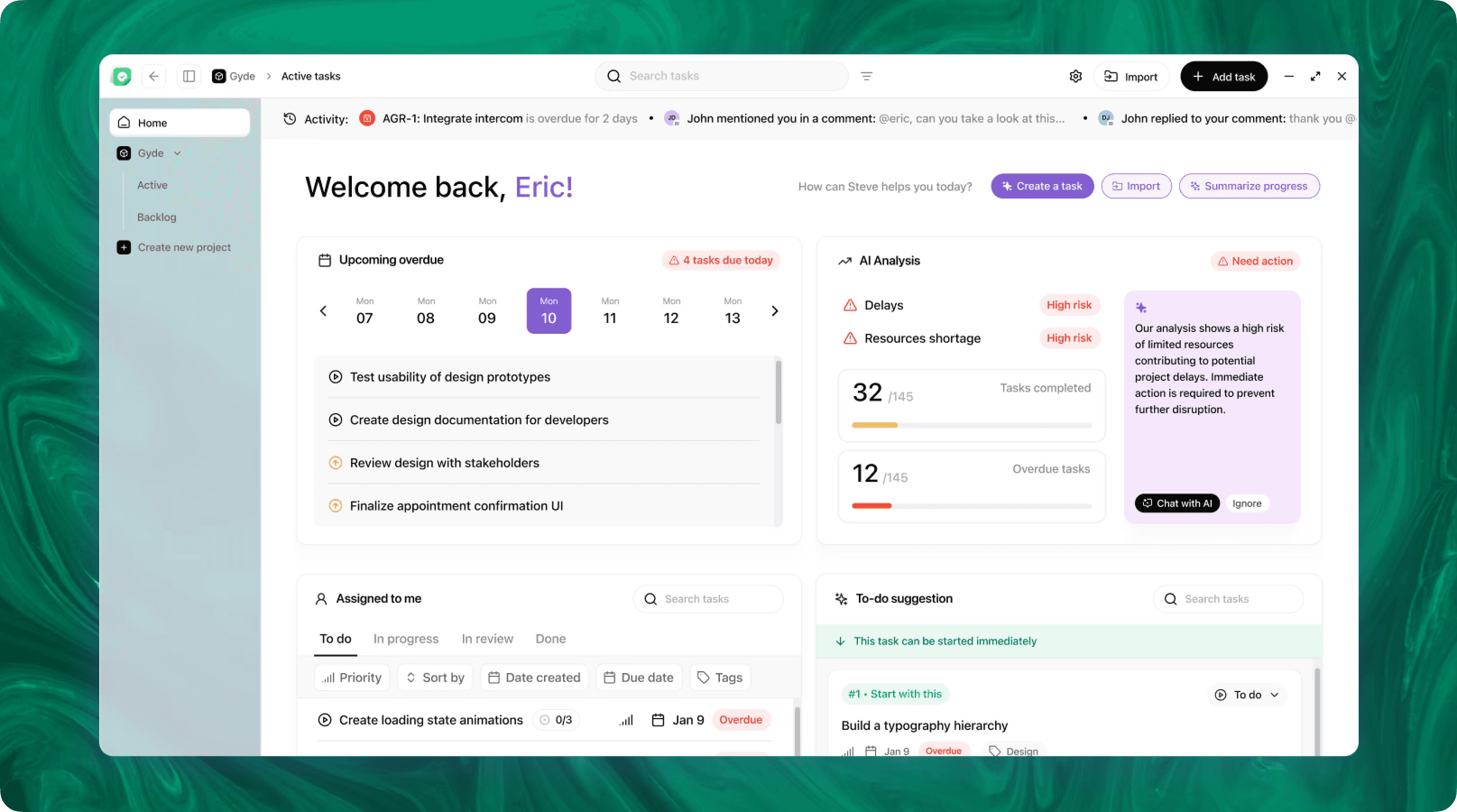
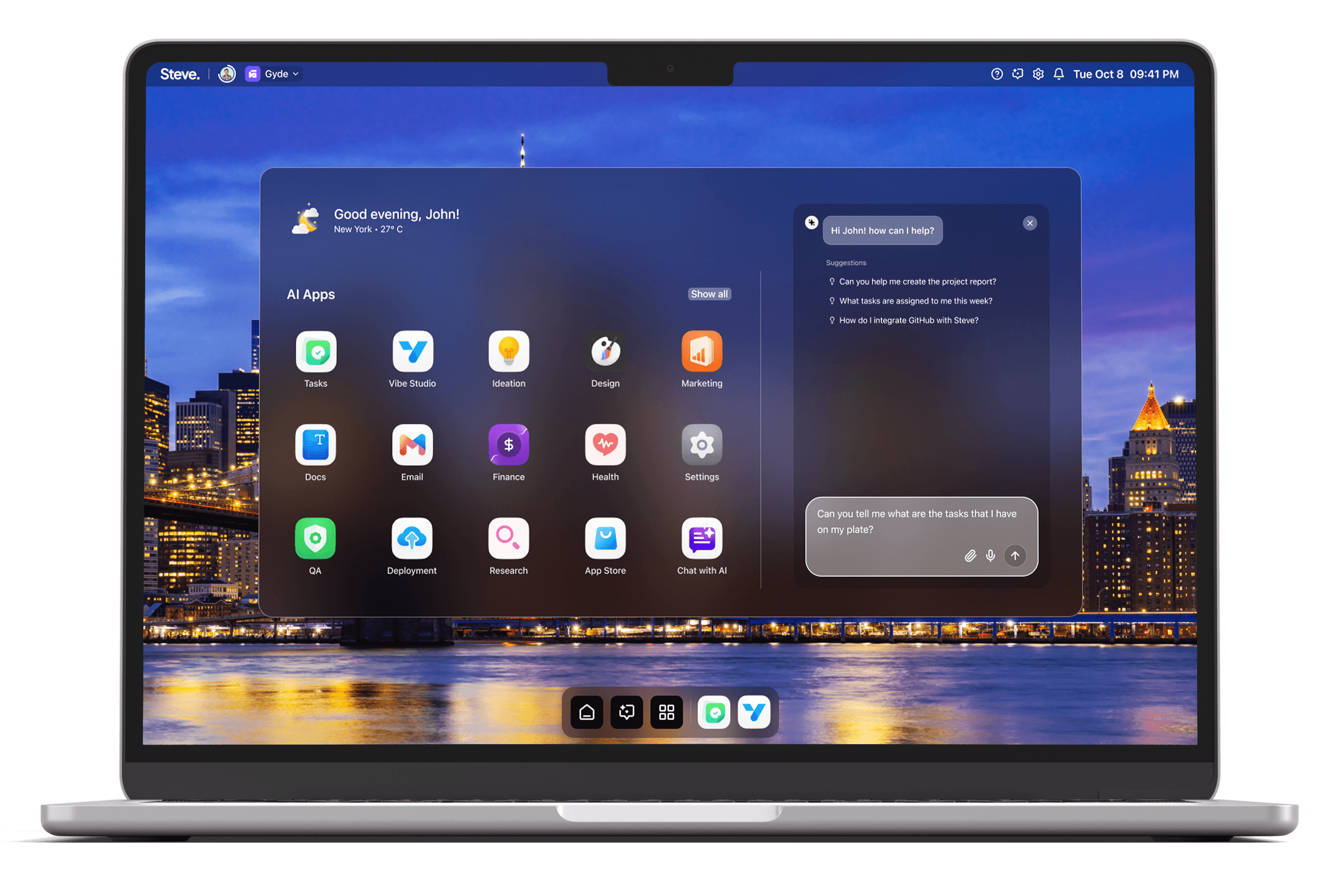
Steve is an AI-native operating system designed to streamline business operations through intelligent automation. Leveraging advanced AI agents, Steve enables users to manage tasks, generate content, and optimize workflows using natural language commands. Its proactive approach anticipates user needs, facilitating seamless collaboration across various domains, including app development, content creation, and social media management.
Conclusion
Automating customer onboarding sequences with an AI OS requires persistent context, conversational orchestration, intelligent touchpoints, and operational governance. Steve combines a shared memory system, Steve Chat, AI Email, and Task Management to deliver those capabilities: it keeps context synchronized across channels, runs personalized conversational paths, automates timely and relevant emails, and converts outcomes into tracked work. The result is faster activation, fewer manual handoffs, and onboarding that scales while staying personal.