Automating Cross-Border Team Handovers With AI
Dec 5, 2025

Shared Memory For Persistent Context: Persistent agent memory captures decisions, files, and rationale so incoming teams resume work without reconstructing context.
AI Email To Summarize And Prioritize Threads: Automated tagging and concise summaries convert long email threads into actionable handover packets.
Steve Chat For Documents, Schedules, And File-Aware Transfers: Integrations and file-aware chat let teams attach specs, surface calendar windows, and extract handover-ready extracts.
Task Management For Continuity And Execution: AI boards integrate with trackers to create handover tasks with acceptance criteria, ownership, and linked artifacts.
Combined Automation Reduces Delays And Errors: Coordinating memory, email, chat, and tasks shortens recovery time and lowers the risk of dropped information between shifts.
Introduction
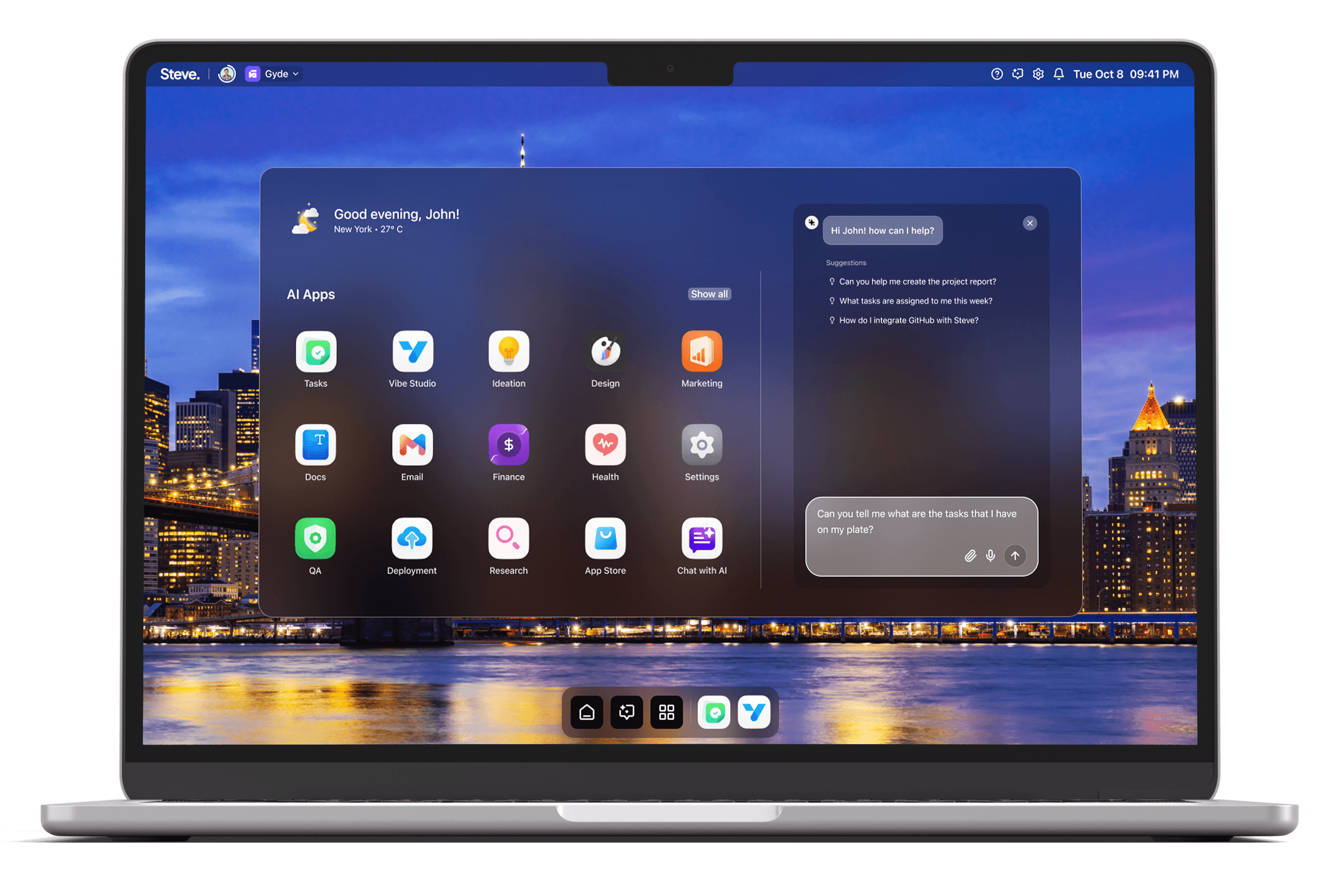
Automating cross-border team handovers reduces costly delays, preserves institutional knowledge, and keeps multi-timezone work moving without friction. Steve, an AI Operating System, centralizes context, communication, and task continuity so teams hand off work asynchronously with fewer questions and fewer errors. This article shows practical ways an AI OS like Steve turns scattered status updates into reliable, automated handovers.
Shared Memory For Persistent Context
Cross-border handovers fail when context evaporates between shifts; Steve’s shared memory system stores conversation-level and document-level context so incoming teams pick up exactly where others left off. Instead of reconstructing decisions from meeting notes, a receiving engineer or product manager accesses a persistent summary, recent files, and agent annotations that capture rationale and outstanding risks. In practice, a morning team can review the previous night’s deployment log, the CI artifacts referenced in chat, and an agent-generated list of follow-ups preserved in memory—reducing rework and the need for synchronous handoffs.
AI Email To Summarize And Prioritize Threads
Email threads remain the primary handoff channel for many organizations; Steve’s AI Email automates triage and synthesis so long threads become actionable packets. The system tags and categorizes messages, surfaces critical items, and produces concise summaries that highlight decisions, blockers, and required approvals. A project lead waking up in a new timezone can scan an AI-generated brief that flags the single action they must take today, the documents to review, and meetings to reschedule. That level of compression saves time and focuses attention on real dependencies instead of email noise.
Steve Chat For Documents, Schedules, And File-Aware Transfers
Effective handovers require tight alignment of calendar, files, and task lists; Steve Chat integrates with Google Calendar, Drive, Sheets, Gmail, Notion, and other services to keep those artifacts synchronized. Because the chat is file-aware, teams can upload a design spec, spreadsheet, or PDF and ask for a handover-ready extract: recent changes, pending approvals, and open questions. Steve Chat can also surface relevant calendar windows and suggest follow-up meeting slots tailored to the recipient’s timezone. This reduces friction: the incoming team receives not only the what but the where and when needed to act.
Task Management For Continuity And Execution
Handovers are only reliable when tasks move with clear ownership and state; Steve’s AI-powered task boards maintain execution continuity by automating status updates and integrating with Linear and other trackers. The AI proposes sprint slices for newly arrived issues, reassigns tasks based on local working hours or capacity, and generates handover cards that include context, acceptance criteria, and links to source files. A practical scenario: an engineering lead exports an overnight incident into the task board; Steve tags the priority, attaches the incident transcript and CI artifacts from memory, and assigns the follow-up to the appropriate daytime owner—so no detail is lost during the timezone transition.
Practical Scenarios And Best Practices
Scenario 1: A product manager in APAC closes a feature brief and asks Steve to create a handover packet; the AI collects the spec from Drive, extracts acceptance criteria in chat, tags the release email thread, and creates a task with a deadline aligned to the EMEA engineering sprint. Scenario 2: During a global incident, a night-shift engineer uploads logs and requests an AI Email summary; Steve generates a prioritized action list and creates follow-up tasks with attachments so the morning team can resume remediation immediately. In both cases, the combination of shared memory, file-aware chat, automated email summaries, and task boards preserves intent and expedites execution.
Steve
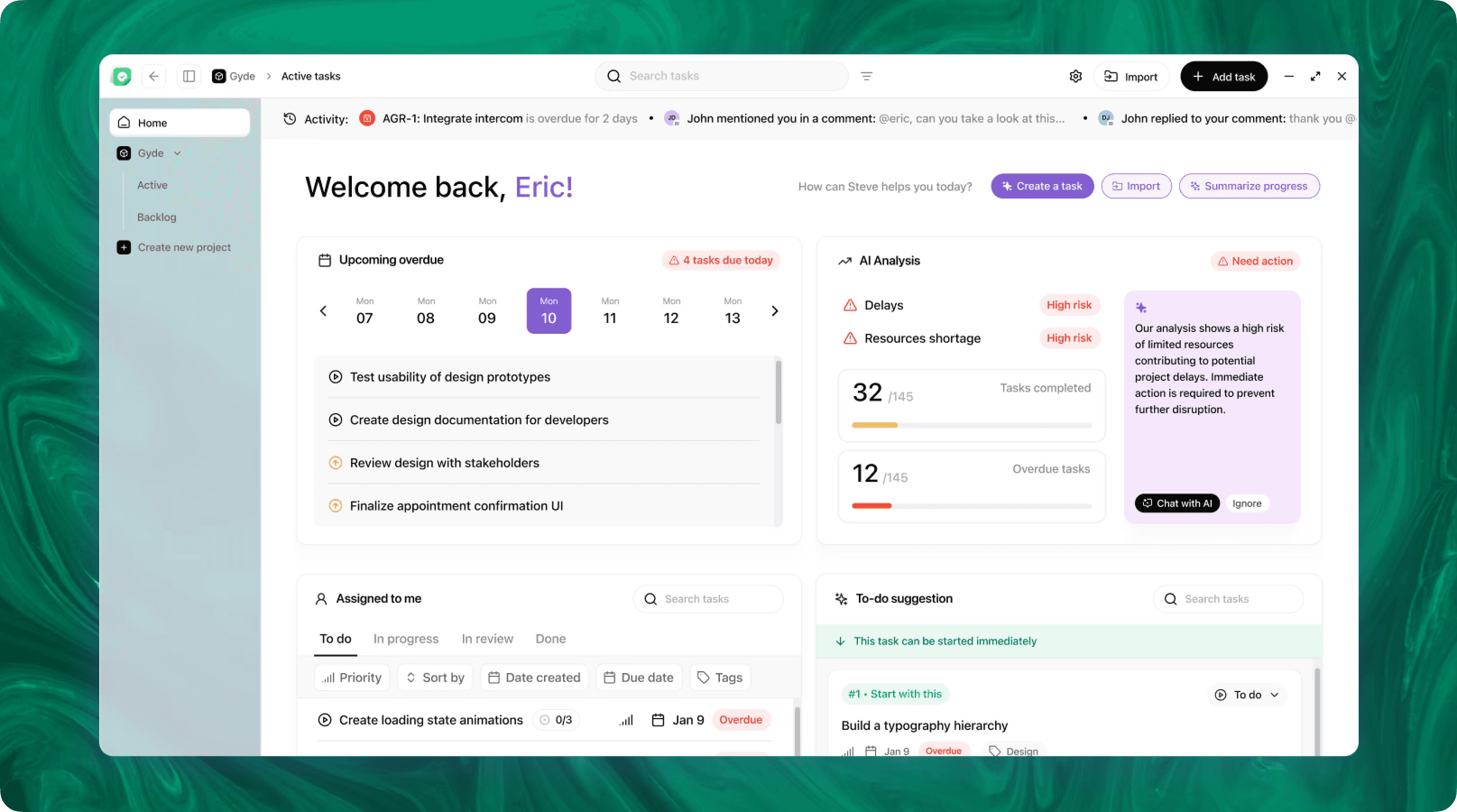
Steve is an AI-native operating system designed to streamline business operations through intelligent automation. Leveraging advanced AI agents, Steve enables users to manage tasks, generate content, and optimize workflows using natural language commands. Its proactive approach anticipates user needs, facilitating seamless collaboration across various domains, including app development, content creation, and social media management.
Conclusion
Automating cross-border handovers demands persistent context, concise synthesis, integrated artifacts, and task continuity—capabilities Steve provides as an AI OS. By combining shared memory, AI Email summaries, Steve Chat integrations, and AI-driven task management, teams reduce latency, protect tribal knowledge, and keep global workflows predictable. For organizations operating across timezones, an AI Operating System like Steve turns handovers from a risky ritual into a reliable, automated process.