Automating Compliance Evidence Collection Through AI OS
Jan 14, 2026

Unified Context With Shared Memory: A persistent memory lets agents link artifacts, avoid duplication, and maintain provenance across long-running evidence tasks.
Conversational Evidence Gathering With Steve Chat: File-aware, integrated connectors let users ask for artifacts in natural language and receive sourced documents and summaries for evidence packs.
Email Triage And Summarization With AI Email: Automated tagging and concise summaries convert long threads into verifiable evidence entries with links to original messages.
Auditability Through Chat Logging And Traceable Outputs: LangFuse-powered logs record agent actions and queries, enabling exportable audit trails that explain how each evidence item was found and validated.
Introduction
Automating compliance evidence collection is critical for reducing risk, shrinking audit windows, and keeping control over ever-growing documentation. As an AI Operating System, Steve centralizes context, interacts with connected services, and converts conversations into traceable outputs so teams can collect, collate, and export compliance evidence faster and with less manual overhead. This article shows practical ways Steve accelerates evidence workflows while preserving provenance and auditability.
Unified Context With Shared Memory
Steve’s shared memory system gives multiple AI agents a single contextual workspace to record findings, link artifacts, and maintain state across long-running evidence-gathering tasks. Instead of siloed notes or ad hoc threads, agents write and read from the same memory, which preserves associations such as which document supported a control, who validated a finding, and when a change occurred. In practice, compliance teams can instruct Steve to assemble “access-control evidence for payroll systems,” and agents will persist references to policies, snapshots of relevant documents, and timestamps so the assembled record remains coherent as new items arrive.
This persistent context also reduces redundant work: agents detect previously collected items in memory and avoid re-querying the same sources, which speeds collection and keeps the evidence set consistent across reviewers.
Conversational Evidence Gathering With Steve Chat
Steve Chat connects directly to Google Drive, Gmail, Google Sheets, Notion, GitHub, and 40+ services, and it accepts uploaded PDFs, spreadsheets, and images to provide file-aware responses. Using natural language, auditors and operators can ask Steve to locate contract versions, extract table data, or pull specific email threads and have the system return the exact artifacts and citations needed for evidence packages. Because it supports real-time web search and integrated storage connectors, Steve can reconcile external references with internal documents in a single conversational flow.
A practical scenario: a compliance lead asks Steve to “compile last six months of change approvals for the billing service.” Steve Chat finds approval emails, linked change requests in integrated trackers, configuration spreadsheets, and any uploaded artifacts; it then summarizes each item and links to the original files so reviewers can verify sources without digging through multiple systems.
Email Triage And Summarization With AI Email
AI Email tags, categorizes, and summarizes long threads into concise records that are immediately usable as evidence. Instead of exporting raw threads, compliance staff can use AI Email to generate an executive summary, list involved parties, extract key dates and decisions, and surface attachments that matter for a specific control. Chatting with the inbox lets users iterate on summaries (for example, narrowing to approval-related exchanges) and then persist the refined summary back into Steve’s shared memory as an evidence artifact.
In audits where timelines matter, AI Email speeds creation of evidence timelines by turning a tangled mailbox into structured entries that reference original messages, preserving both context and provenance.
Auditability Through Chat Logging And Traceable Outputs
LangFuse integration records detailed chat logs and agent interactions so every decision, query, and retrieval is traceable. When combined with shared memory and the file-aware outputs from Steve Chat and AI Email, these logs form an exportable audit trail: which agent queried which system, what results were returned, who approved a synthesized summary, and when the evidence was archived. That traceability is essential for responding to auditor questions and for internal reviews of evidence completeness.
Practically, teams can export a package that includes summarized evidence, links to primary documents, and the interaction logs that explain how each piece of evidence was found and validated — reducing friction during formal audits and internal compliance checks.
Steve
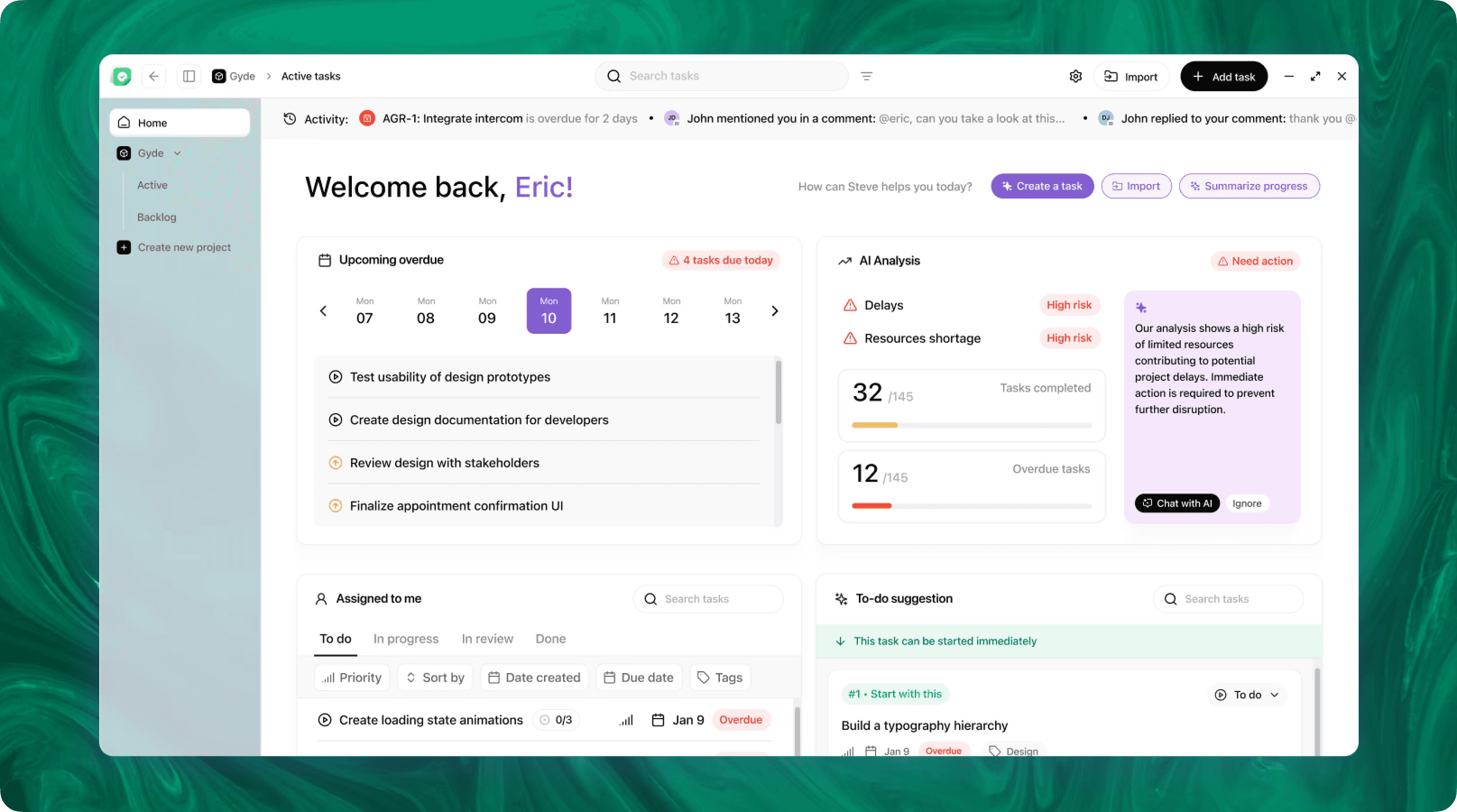
Steve is an AI-native operating system designed to streamline business operations through intelligent automation. Leveraging advanced AI agents, Steve enables users to manage tasks, generate content, and optimize workflows using natural language commands. Its proactive approach anticipates user needs, facilitating seamless collaboration across various domains, including app development, content creation, and social media management.
Conclusion
Automating compliance evidence collection with an AI OS shortens audit cycles, reduces manual assembly errors, and preserves the provenance auditors require. Steve combines a shared memory for contextual continuity, Steve Chat for conversational, file-aware retrieval across integrated services, AI Email for concise, verifiable summaries of correspondence, and LangFuse logging for full traceability. Together these capabilities let teams assemble defensible evidence packages faster while keeping a clear, auditable trail of how each item was discovered and validated. For compliance teams, Steve is a pragmatic AI OS that transforms scattered inputs into organized, exportable evidence with minimal overhead.