Automating Client Handoffs Using Shared AI Context
Dec 2, 2025

Consistent Client Context With Shared Memory: A persistent shared memory keeps decisions, constraints, and action history attached to the client record so incoming teams don’t have to reconstruct context.
Faster Documented Handoffs Via AI Email: AI Email auto-summarizes threads, tags priorities, and drafts confirmation messages that become concise, reusable handoff artifacts.
Actionable Next Steps With Task Management: Task Management converts handoff context into assignable, traceable work and syncs with external issue trackers to maintain execution continuity.
Seamless Coordination Through Steve Chat Integrations: Steve Chat searches files and calendar data conversationally, resolves questions, and records results back into shared memory to keep handoffs current.
Operational Benefit: Tying summaries, tasks, and conversational lookups to shared memory reduces rework, shortens ramp time, and improves handoff auditability.
Introduction
Automating client handoffs is a frequent source of delay and error for service teams. When context lives in fragmented notes, email threads, and siloed tools, a simple transfer from sales to delivery or from account management to operations becomes a project of reconstruction. As an AI Operating System, Steve centralizes and preserves client context so teams can execute handoffs with speed, accuracy, and auditability. This article shows practical ways Steve reduces friction using its shared memory system, AI Email, Task Management, and Steve Chat integrations.
Consistent Client Context With Shared Memory
The core problem in handoffs is context loss: decisions, preferences, constraints, and open risks that never make it into a deliverable plan. Steve’s shared memory system keeps a persistent, structured record of client context that AI agents can read and update. Instead of recreating background each time a handoff occurs, teams reference a single source that captures conversation summaries, uploaded documents, action history, and prioritized client requirements.
Practical scenario: during a sales-to-implementation handoff, the sales lead flags three technical constraints and the preferred timeline. Those items are written into shared memory and tagged to the client record; when the delivery lead opens the account, Steve surfaces those constraints and the underpinning rationale, reducing discovery meetings and keeping commitments intact.
Faster Documented Handoffs Via AI Email
Client email threads are often the canonical record, but they grow long and noisy. Steve’s AI Email reduces that noise by auto-summarizing threads, tagging critical items, and generating context-aware draft replies that align with ongoing work. Summaries and tags turn sprawling conversations into concise handoff artifacts that travel with the client record.
Practical scenario: after a kickoff call where a client negotiates scope changes across multiple messages, Steve generates a one-paragraph summary of agreed changes, flags action items, and drafts a confirmation email for the project manager. That draft, combined with the summary stored in shared memory, becomes the documented handoff that both internal teams and the client can reference.
Actionable Next Steps With Task Management
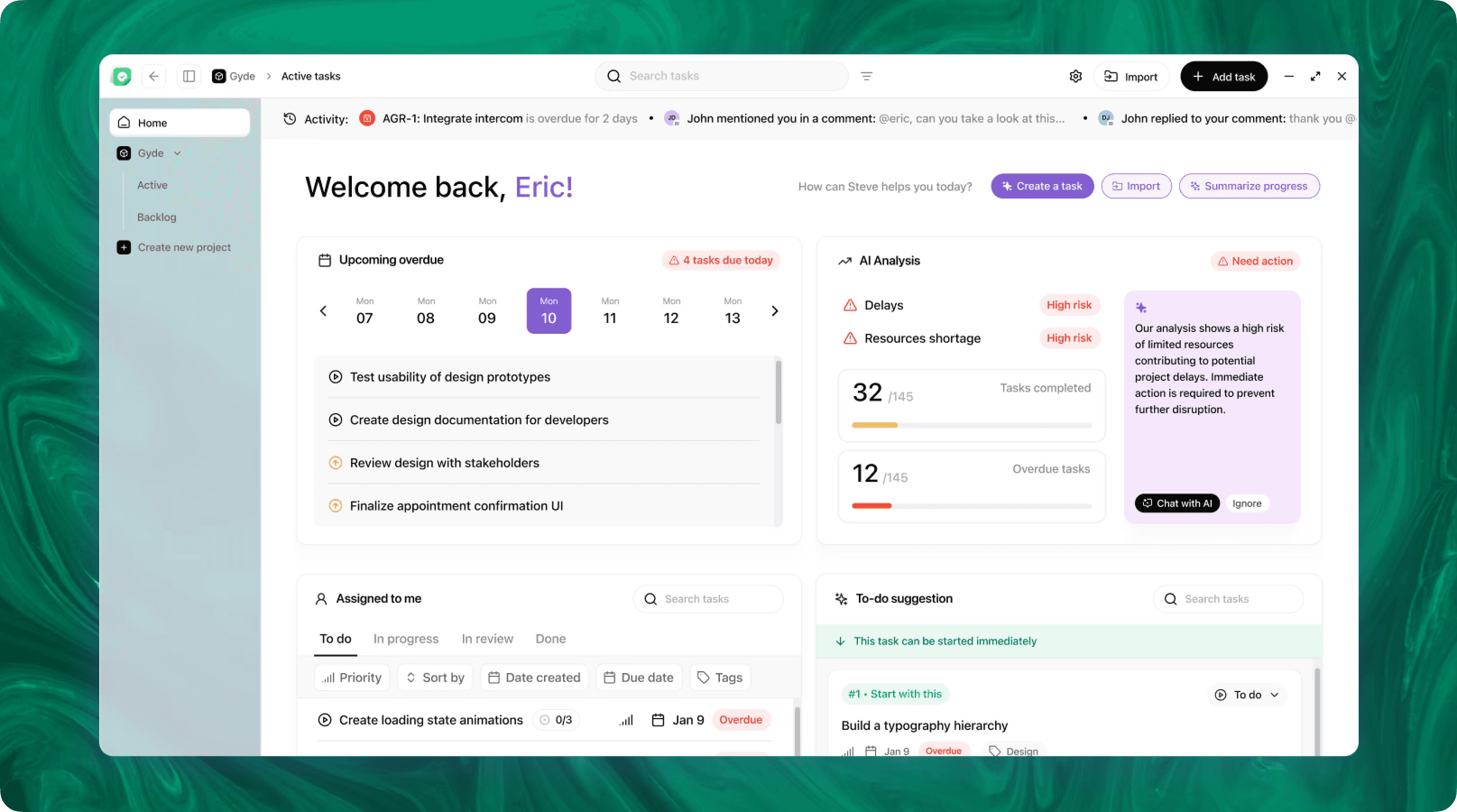
A handoff is only successful when the incoming team has clear, assigned work. Steve’s Task Management boards translate handoff context into actionable tasks, import or sync existing tickets, and propose execution plans. The system creates traceable tasks tied to the client’s shared memory, preserving why work was started and who owns next steps.
Practical scenario: a handoff generates five implementation tasks (integration, data export, QA, client training, and go-live checklist). Steve creates a board with those tasks, assigns owners, and links each task to the exact snippet of shared memory and the email summary that defined its scope. If the team uses Linear, Steve can import or export tickets to keep external trackers synchronized.
Seamless Coordination Through Steve Chat Integrations
Operational handoffs require scheduling, document lookup, and quick clarifications. Steve Chat’s conversational interface and integrations (calendar, email, drive, and other services) let teams resolve open questions without leaving the workflow. The chat is file-aware and can surface relevant documents from the client’s record; it also records decisions back into shared memory so handoffs remain current.
Practical scenario: a delivery lead asks Steve Chat to confirm whether a client provided API credentials. The chat searches uploaded files, email summaries, and shared memory, returns the credential status, and—if missing—creates a task and drafts a request email. The exchange and resulting artifacts are appended to shared memory, maintaining auditability.
Steve
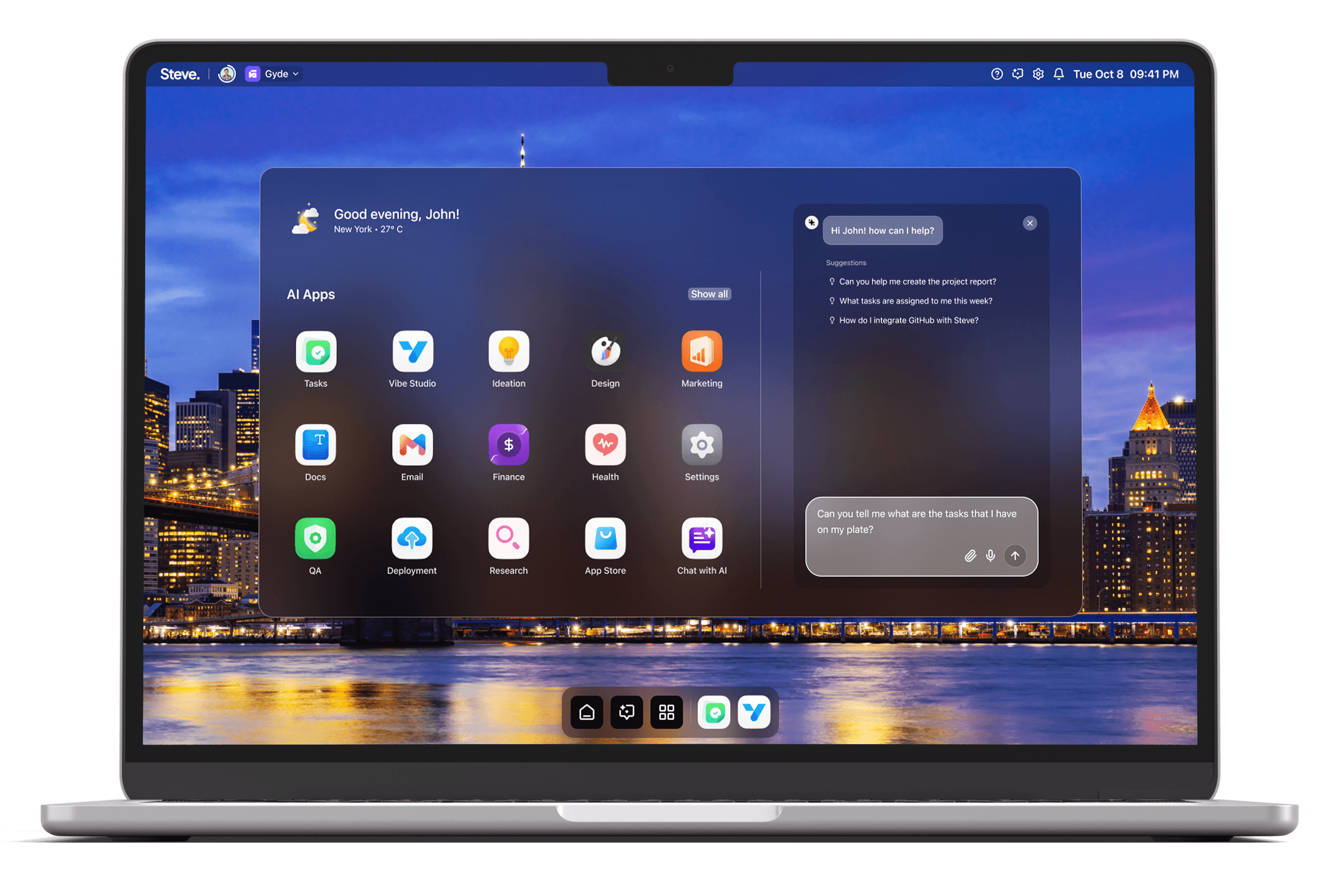
Steve is an AI-native operating system designed to streamline business operations through intelligent automation. Leveraging advanced AI agents, Steve enables users to manage tasks, generate content, and optimize workflows using natural language commands. Its proactive approach anticipates user needs, facilitating seamless collaboration across various domains, including app development, content creation, and social media management.
Conclusion
Handoffs succeed when context is preserved, actions are explicit, and handover artifacts are discoverable. By combining a shared memory system with AI Email that summarizes and drafts, Task Management that creates traceable work, and Steve Chat that links documents and calendars, Steve reduces the manual labor of handoffs and cuts costly misunderstandings. As an AI OS, Steve keeps client context alive across organizational boundaries so teams spend less time rebuilding history and more time delivering results.