AI-Powered Process Mapping For Business Analysts
Dec 1, 2025

Conversational Process Discovery With Steve Chat: Analysts can extract structured process elements directly from dialogue and uploaded artifacts, shortening discovery cycles.
Persistent Context Through Shared Memory: Shared memory preserves terminology and past decisions so iterative mapping sessions build on a single source of truth.
Turning Maps Into Work: Task Management And Action Items: AI-powered boards convert process gaps into prioritized tasks and suggested sprints, syncing execution with issue trackers.
Capturing Stakeholder Input And Maintaining Traceability With AI Email: Integrated email summaries and context-aware drafts link communications to map changes and create an auditable decision trail.
Operational Benefit: Combining conversational capture, memory, tasking, and email reduces ambiguity and accelerates the path from process insight to measurable outcomes.
Introduction
AI-powered process mapping turns discovery, modeling, and operationalization of business processes into fast, repeatable exchanges rather than long manual exercises. For business analysts, the value is clear: faster alignment with stakeholders, fewer lost requirements, and actionable process artifacts. As an AI Operating System, Steve combines a conversational interface, persistent shared memory for agents, intelligent task management, and integrated AI email features to accelerate mapping from interview to execution.
Conversational Process Discovery With Steve Chat
Steve's conversational interface lets analysts lead process discovery as a guided dialogue instead of a series of disconnected documents. Analysts can walk through a process step-by-step in chat, prompt the system to extract actors, inputs, decisions, and outputs, and iterate until the map reflects stakeholder language. Because Steve Chat is file-aware and supports uploads (PDFs, spreadsheets, images), analysts can feed existing SOPs, screenshots, or recordings to enrich the conversation and ground the map in primary artifacts.
Practical scenario: during a requirements workshop, an analyst uploads a legacy SOP and a series of screenshots; Steve Chat ingests those files, summarizes key steps, and surfaces ambiguous handoffs for live clarification. This reduces rework by turning diffuse input into a structured draft that stakeholders can validate in real time.
Persistent Context Through Shared Memory
Process mapping is iterative; each conversation should build on prior decisions. Steve's shared memory system preserves context across agent interactions so discoveries, terminology, and constraints remain available to subsequent prompts and agents. That continuity prevents reinvention between sessions and keeps a single source of truth for process definitions, exception rules, and performance metrics.
Practical scenario: an analyst begins a morning session refining exception handling for an order-to-cash flow. Steve remembers prior definitions of "expedited order" and the approved SLA thresholds, allowing the analyst to focus on edge cases rather than reestablishing basic terms. The memory also supports branching analyses—agents can simulate alternate flows while preserving the canonical map.
Turning Maps Into Work: Task Management And Action Items
A process map is valuable only if it drives change. Steve's AI-powered task management boards convert mapped steps and identified gaps into prioritized work items, propose sprints, and integrate with tools like Linear so teams can pick up execution without duplicating manual handoffs. The system can suggest owners for tasks based on role definitions captured during discovery and recommend dependencies and timelines aligned with organizational priorities.
Practical scenario: after modeling an approval flow, Steve generates a backlog of automation tasks, compliance checks, and documentation updates, groups them into a suggested sprint, and syncs them to the team's issue tracker. Analysts move from modeling to delivery planning in a single workflow, shortening the path from insight to implementation.
Capturing Stakeholder Input And Maintaining Traceability With AI Email
Stakeholder alignment often happens across email threads. Steve's integrated AI Email summarizes long threads, tags critical items, and produces context-aware reply drafts that reference the current process map. Those summaries provide concise inputs for map revisions and create an auditable trail linking decisions back to communications.
Practical scenario: when a finance lead disputes an approval threshold in a lengthy thread, Steve produces a short summary that highlights the disputed items and attaches the relevant segment of the process map. The analyst uses that summary to update the map and to create a task for policy review, preserving traceability between conversation, map, and action.
Steve
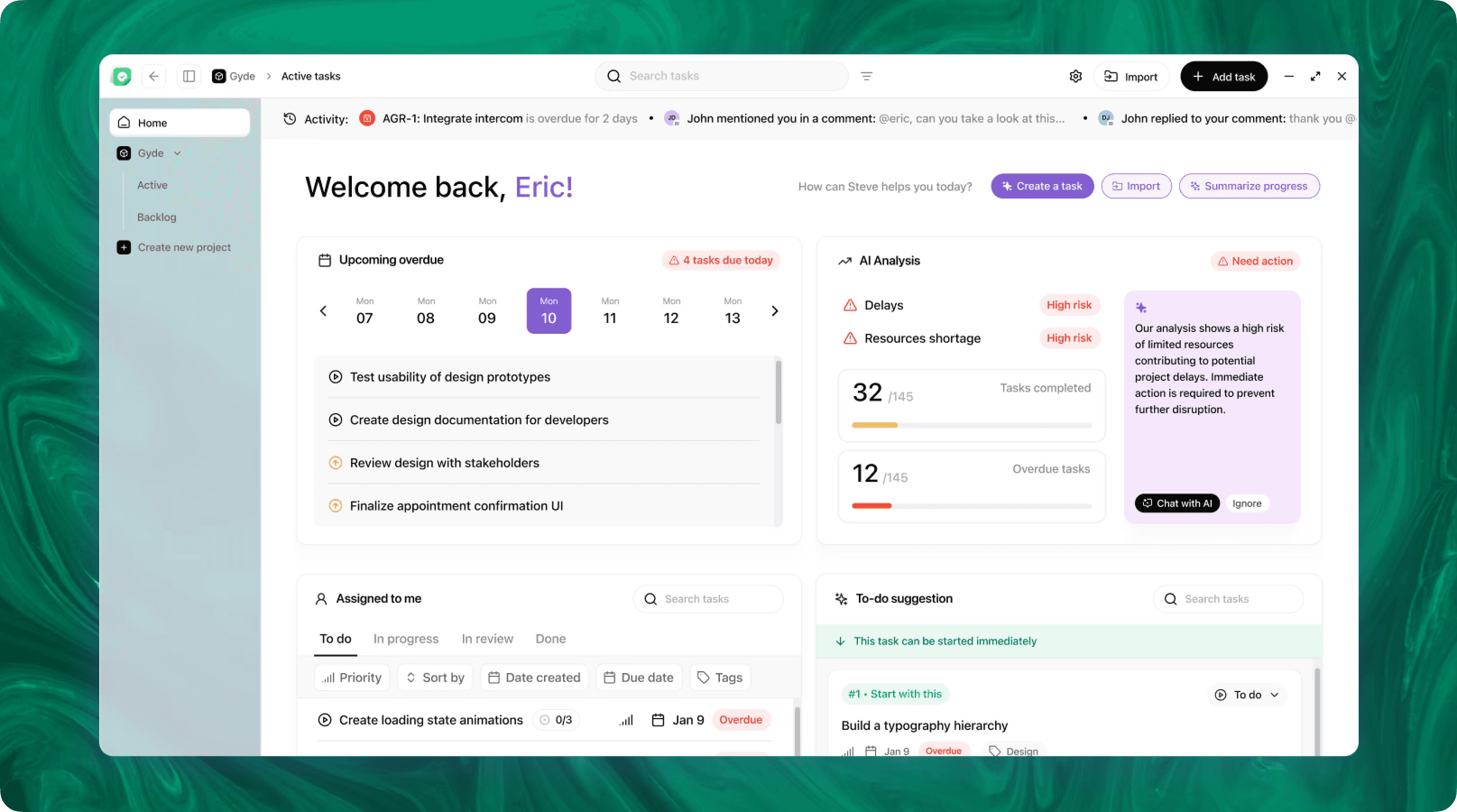
Steve is an AI-native operating system designed to streamline business operations through intelligent automation. Leveraging advanced AI agents, Steve enables users to manage tasks, generate content, and optimize workflows using natural language commands. Its proactive approach anticipates user needs, facilitating seamless collaboration across various domains, including app development, content creation, and social media management.
Conclusion
For business analysts, effective process mapping requires rapid discovery, shared context, operational follow-through, and clear auditability. Steve—as an AI OS—aligns those needs: Steve Chat facilitates conversational discovery and file-aware ingestion; shared memory preserves context across iterations; AI-powered task management operationalizes maps into sprints and issues; and AI Email keeps stakeholder input concise and traceable. Together these capabilities compress the map-to-execution lifecycle, reduce ambiguity, and help organizations move from process insight to measurable outcomes faster.