AI OS for Creative Teams: Brief Interpretation and Output Management
Jan 19, 2026

Shared Memory Enables Persistent Context: A durable memory layer keeps brand rules, past assets, and approval history available to AI agents so brief interpretation stays consistent.
Conversation-Driven Brief Interpretation: A chat interface guided by memory and file awareness expands terse directives into structured, actionable briefs.
Streamlined Output Management With Smart Inbox: AI Email tags, summarizes, and drafts context-aware replies to keep review cycles short and traceable.
AI-Assisted Task Orchestration: Task boards automatically translate interpreted briefs into prioritized tickets and sprint plans, integrating with existing trackers.
Workflow Benefit: Combining memory, conversational clarification, smart email, and task automation reduces revisions, speeds delivery, and preserves decision trails.
Introduction
Creative teams live on briefs and deliverables: clear interpretation of a short brief and disciplined output management determine whether an idea becomes a polished asset or a missed deadline. An AI Operating System that centralizes context, conversations, and task orchestration shortens that path. Steve combines conversational intelligence, persistent shared memory, smart email handling, and AI-driven task boards to help creative teams interpret briefs accurately and keep outputs organized, reviewable, and actionable.
Shared Memory Enables Persistent Context
Briefs are compact by design, but their meaning depends on history: past revisions, brand rules, stakeholder comments, and file references. Steve’s shared memory system gives AI agents a durable store of that context so interpretations stay consistent across time and contributors. When a designer uploads a mood board or a marketing lead references prior campaign language, the memory layer preserves those signals and supplies them to subsequent agent interactions. The practical result: when a new brief arrives, the AI OS can surface relevant style notes, prior assets, or unresolved feedback automatically, preventing repeated clarifications and reducing scope creep.
A real-world scenario: a creative director issues a two-sentence brief for social assets. Rather than starting cold, Steve pulls the brand palette, last quarter’s top-performing captions, and the campaign’s approval history from memory, then synthesizes a short interpretation that aligns with the established tone. The team receives a brief that already embeds precedent, so their first drafts require fewer rounds of revision.
Conversation-Driven Brief Interpretation
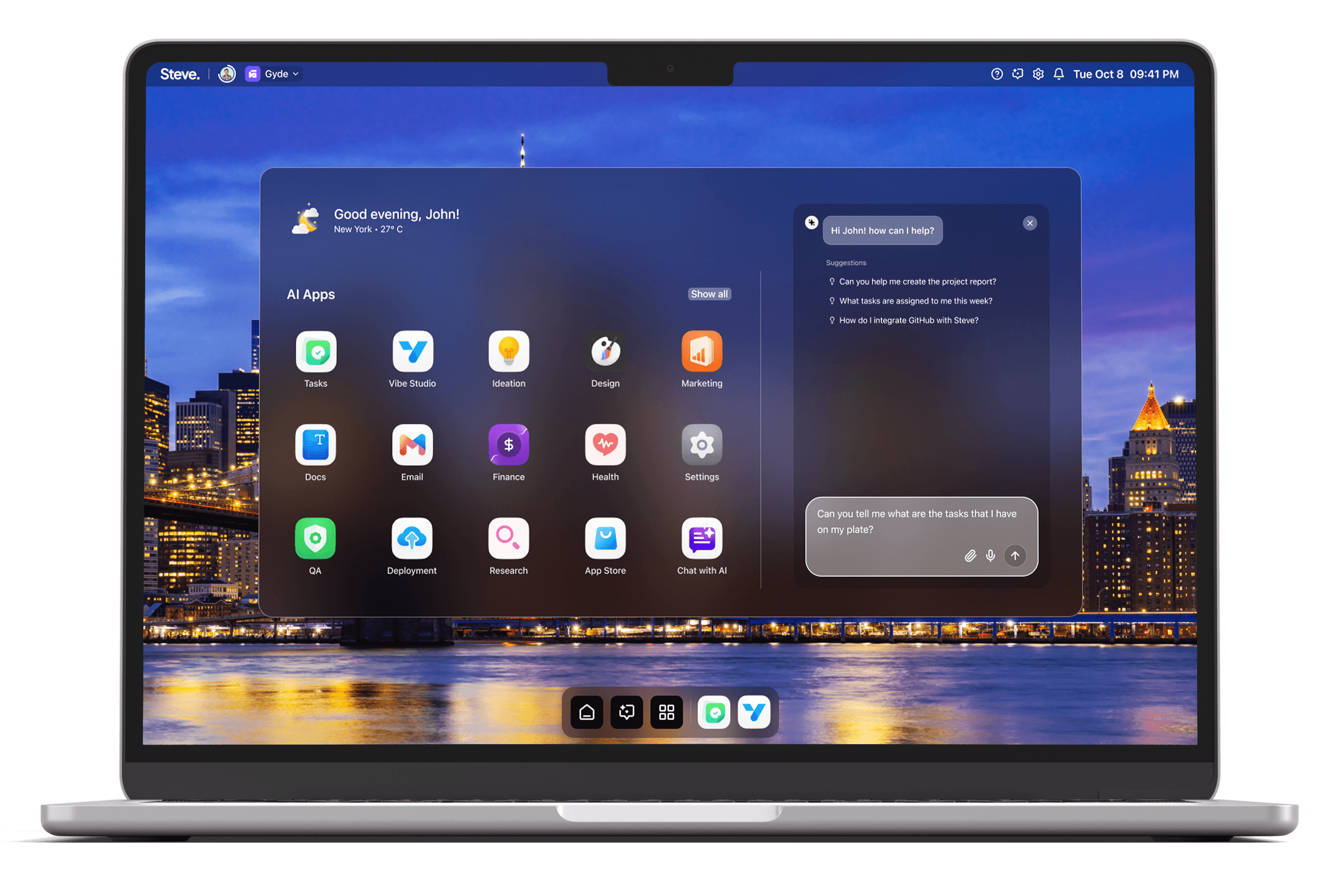
Creative briefs often hide constraints that only emerge through dialogue. Steve’s conversational interface — a chat-driven front end backed by memory-aware agents — turns terse directives into structured briefs through rapid, guided questioning. Teams can iterate in natural language: asking the AI to clarify target demographics, output formats, or legal constraints yields an expanded brief the whole team can act on. Because Steve is file-aware and integrates with drives and project repositories, the chat can reference concrete assets during interpretation rather than abstract descriptors.
In practice, a product marketer can paste a one-line brief and ask Steve to “expand this into a 60-second social script, three image concepts, and CTA variants.” The AI OS probes missing assumptions, retrieves brand assets, and outputs a concise, prioritized brief that lists deliverables, success metrics, and suggested timelines. This reduces ambiguity and accelerates handoffs between concept and production.
Streamlined Output Management With Smart Inbox
Production delivers a stream of intermediate artifacts: drafts, approvals, feedback threads, and final files. Steve’s AI Email capability turns that stream into a manageable workflow by tagging, summarizing, and suggesting context-aware replies. Instead of hunting through long threads to find the latest decision, teams see summary bullets, action items, and file links inline. The AI OS generates short, consistent status updates that project owners can send or adapt, keeping stakeholders aligned without manual synthesis.
Consider a campaign that requires multiple stakeholder approvals. Steve tags approval requests, summarizes each thread, and surfaces overdue items so producers can nudge reviewers with one-click templated replies. This keeps assets moving through review stages while preserving the audit trail of decisions and edits.
AI-Assisted Task Orchestration
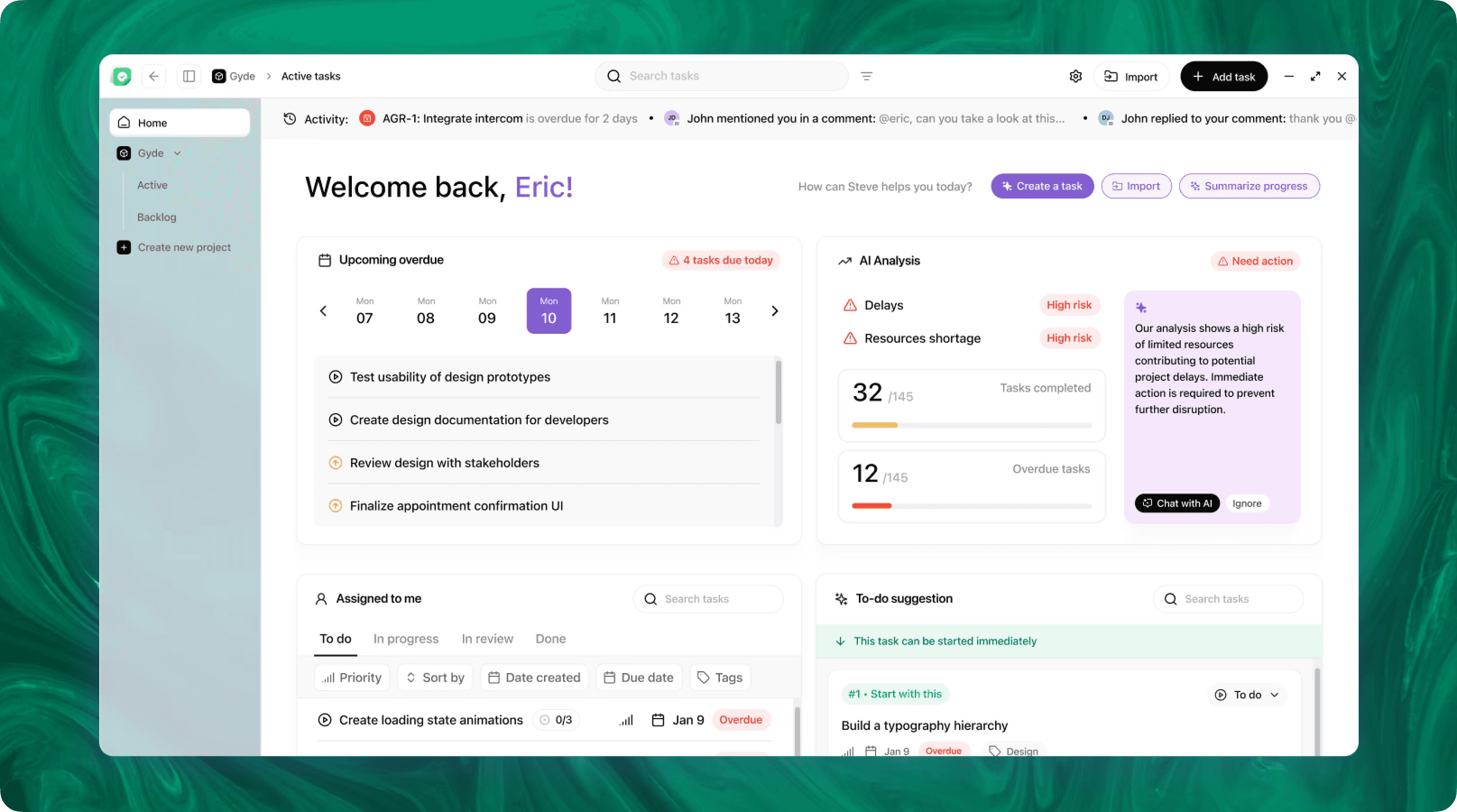
Interpretation is only useful if outputs are tracked and executed. Steve’s AI-powered task management boards translate interpreted briefs into prioritized tasks, propose sprint plans, and integrate with existing tools like Linear to create issues automatically. The AI OS suggests task breakdowns that map directly to the brief’s deliverables — for example, separating copy variants, asset sizing, localization, and QA — and assigns tentative owners and timelines based on team roles and workload.
A practical example: after expanding a brief in chat, Steve generates a task board with subtasks for draft visuals, copy rounds, UAT, and asset export. The system recommends a two-week sprint and populates tickets that sync to the team’s tracker. This reduces administrative overhead and keeps execution aligned to the interpreted brief.
Steve
Steve is an AI-native operating system designed to streamline business operations through intelligent automation. Leveraging advanced AI agents, Steve enables users to manage tasks, generate content, and optimize workflows using natural language commands. Its proactive approach anticipates user needs, facilitating seamless collaboration across various domains, including app development, content creation, and social media management.
Conclusion
Brief interpretation and output management are core friction points for creative teams; removing those frictions requires persistent context, conversational clarification, streamlined communication, and operational follow-through. As an AI OS, Steve brings those capabilities together: shared memory preserves institutional knowledge, the conversational interface builds precise briefs, AI Email turns threads into action, and task orchestration converts interpretation into tracked work. The result is fewer misreads, faster reviews, and a clearer path from idea to finished asset.