AI-Driven Team Load Balancing and Work Allocation
Jan 23, 2026

Predictive Load Analysis: Task Management compiles task metadata and progress signals to highlight overloads and propose capacity-based adjustments.
Conversational Allocation And Approvals: Steve Chat enables managers to request reassignments in natural language that link to calendars and task boards for rapid approval.
Shared Memory For Contextual Handoffs: Persistent shared memory carries rationale and artifacts with tasks, reducing friction after ownership changes.
Integrations And Sprint-Level Orchestration: Linear and calendar integrations let Steve draft balanced sprints that respect availability and dependencies.
Operational Visibility And Tracking: Accepted recommendations convert into tracked changes on boards so teams maintain an auditable execution trail.
Introduction
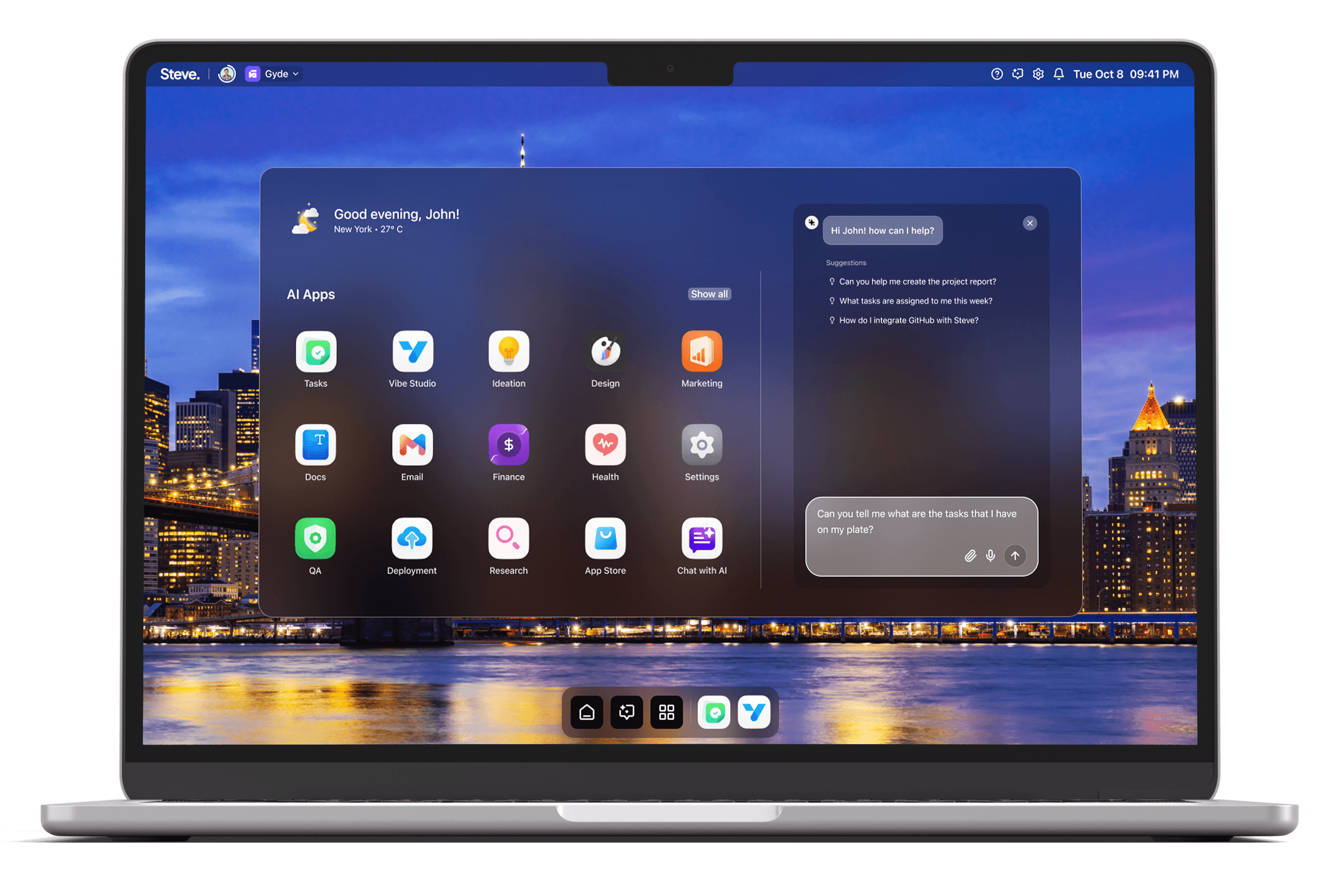
AI-driven team load balancing and work allocation matter because uneven workloads slow delivery, create burnout, and obscure priorities. As an AI Operating System, Steve combines an AI-aware Task Management module, a shared memory system for agent collaboration, and a conversational Steve Chat interface to surface bottlenecks, recommend allocations, and make adjustments with contextual awareness. This article outlines practical ways Steve helps managers and teams balance load, allocate work, and keep execution aligned to goals.
Predictive Load Analysis
Steve’s Task Management module collects task metadata and execution signals to build a real-time view of work distribution across teams. The system ingests estimates, priorities, dependencies, and progress markers, then uses that context to highlight overloaded owners and underutilized capacity. In practice, a product lead can open a project board and see which engineers show task backlogs, which features are blocked, and which sprint lanes risk slippage.
Because Steve proposes sprints and helps track execution progress, it can translate that visibility into actionable guidance: recommend moving a set of nonblocking bugs to a sprint buffer, suggest pairing a junior engineer with a senior reviewer, or flag tasks that should be deprioritized to protect a milestone. Those recommendations remain proposals until a manager approves them, keeping human oversight where it matters.
Conversational Allocation and Approvals
Managers and team members interact with Steve through Steve Chat, a conversational interface that connects to calendars, email, issue trackers, and documents. Instead of switching tools to reassign work, a manager asks Steve in plain language to rebalance a team: "Identify high-priority backend tasks and propose reassignments to available backend engineers this week." Steve replies with a short plan, estimated effort shifts, and suggested calendar-aware scheduling slots.
This conversational loop accelerates reallocations by bundling data, rationale, and approval. A suggested reassignment links directly to the task card on the Task Management board and to the assignee’s calendar availability, so approvals update both the board and the team schedule. Because Steve supports integrations with GitHub, Google Calendar, and other systems, those conversational changes reflect across tools rather than sitting in isolated suggestions.
Shared Memory for Contextual Handoffs
Steve’s shared memory system enables agents and tools to preserve context across interactions, reducing friction during handoffs. When an agent proposes reassignments, the shared memory stores not just the decision but the rationale: blocked dependencies, required skills, recent velocity, and the last status update. That persistent context travels with the task when ownership changes, so the new assignee inherits relevant notes, links to design documents, and the recent discussion history.
In a concrete example, a QA engineer is assigned a test suite after a developer reassigns a bug through Steve Chat. The shared memory attaches the developer’s reproduction steps, test data, and a link to the failing pipeline. The QA engineer receives that context inside the task card, avoiding redundant back-and-forth and accelerating verification. That continuity preserves decision rationale and shortens remediation cycles.
Integrations and Sprint-Level Orchestration
Steve’s Task Management capabilities include native integration with tools such as Linear and support for proposed sprint plans. By importing tasks or creating new ones from prompts, Steve can assemble sprint proposals that balance capacity across roles and surface capacity shortfalls before work starts. A scrum master can ask Steve to create a two-week sprint that respects vacation windows, current priorities, and estimated effort; Steve returns a draft sprint with suggested owners and risk notes.
Those drafts are living artifacts: when teams accept a sprint plan, Steve tracks execution progress and updates the board as work moves. If a critical dependency stalls, Steve surfaces the impact on sprint scope and suggests mitigations—reassignments, scope swaps, or de-scoped items—so teams keep momentum without manual triage.
Steve
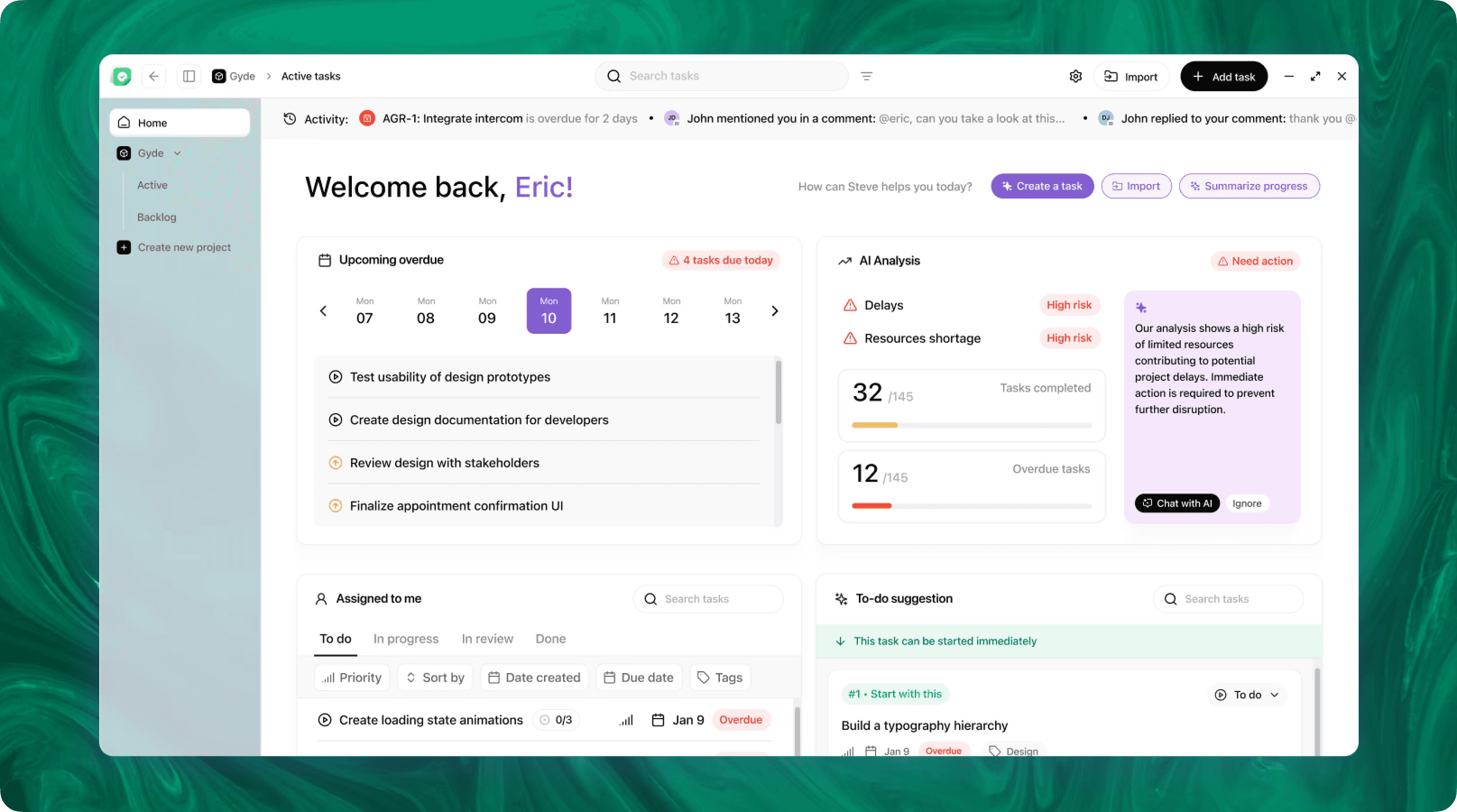
Steve is an AI-native operating system designed to streamline business operations through intelligent automation. Leveraging advanced AI agents, Steve enables users to manage tasks, generate content, and optimize workflows using natural language commands. Its proactive approach anticipates user needs, facilitating seamless collaboration across various domains, including app development, content creation, and social media management.
Conclusion
Balanced teams deliver more predictably. Steve, an AI OS, brings together task-aware planning, conversational allocation, and a shared memory that preserves context across handoffs to make load balancing practical and auditable. By proposing sprint plans, surfacing capacity gaps, and enabling conversational approvals tied to calendar and issue data, Steve reduces decision friction and keeps teams focused on delivery.