AI-Assisted Requirements Gathering for Product Teams
Dec 10, 2025

Conversational Discovery With Steve Chat: Natural-language interviews and file-aware chat extract personas, acceptance criteria, and clarifying questions directly from research artifacts.
Persistent Context With Shared Memory: A shared memory preserves decisions and constraints across sessions so intent remains visible and conflicts are flagged early.
Inbox Intelligence For Decision-Grade Inputs: AI Email summarizes threads, extracts action items, and drafts clarifying replies so email becomes structured input for product decisions.
Turning Requirements Into Execution With Task Management: AI-driven boards convert validated requirements into user stories, acceptance tests, and sprint proposals that sync to Linear.
Workflow Benefit: Combining chat, memory, inbox synthesis, and task orchestration creates traceable requirements that reduce handoff friction and accelerate delivery.
Introduction
Requirements gathering defines whether a product ships on time and meets user needs, yet teams still lose clarity in handoffs, long email threads, and fragmented notes. As an AI Operating System, Steve brings conversational intelligence, persistent context, inbox summarization, and AI-driven task orchestration to the discovery phase—turning scattered inputs into decision-grade requirements and an actionable backlog. This article explains how product teams can use Steve and its AI OS capabilities to shorten feedback loops, reduce ambiguity, and preserve intent across delivery.
Conversational Discovery With Steve Chat
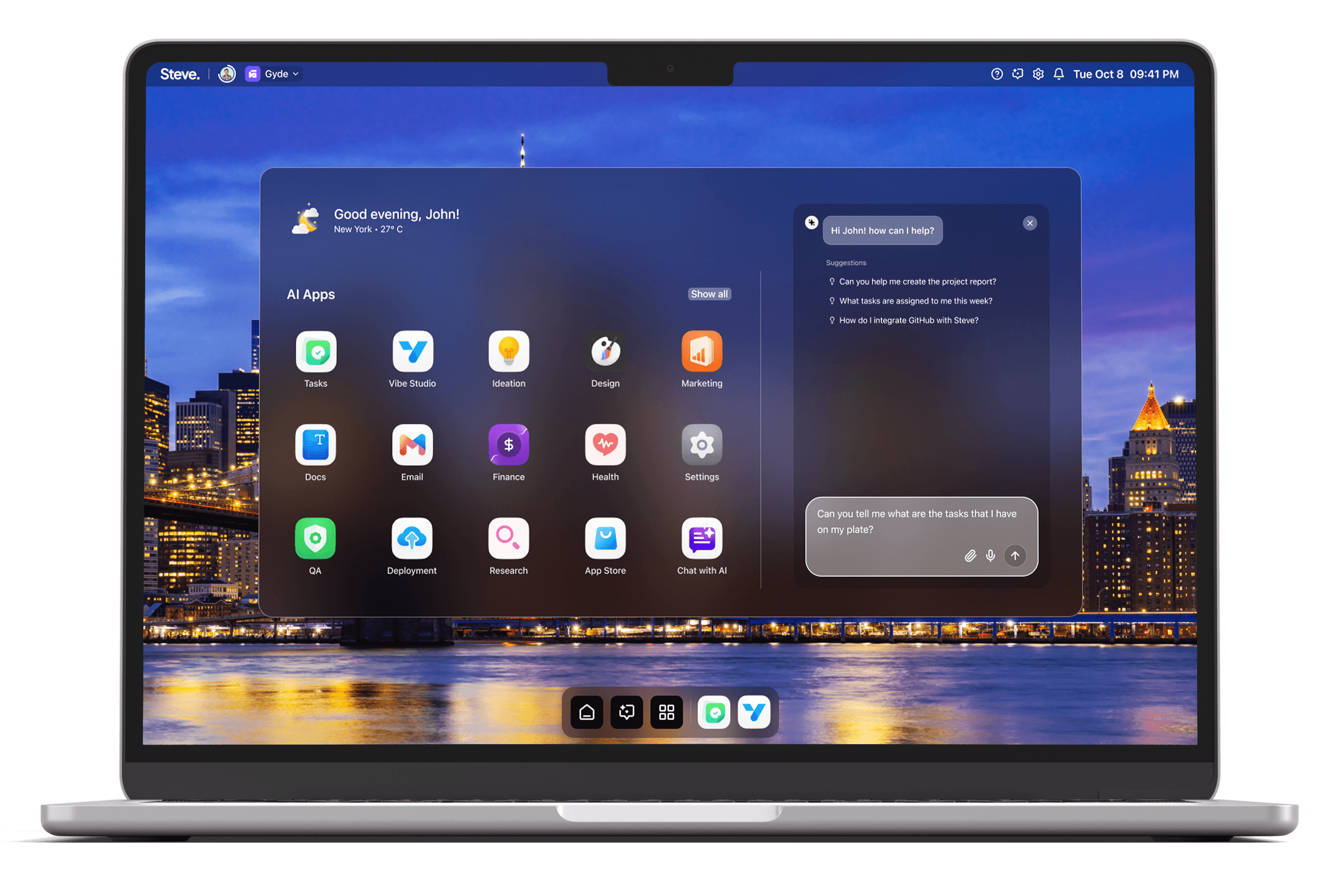
Steve Chat offers a natural-language interface that guides stakeholders through structured elicitation without formal templates. Product managers can interview customers, paste interview transcripts, or upload user research artifacts (PDFs, spreadsheets, screenshots) directly into the chat; Steve ingests those files and produces concise requirement candidates, risks, and edge cases. Because Steve Chat connects to calendars, email, and document stores, it can pull meeting notes, previous decisions, and related tickets into the conversation so requirements surface with their source context.
Practical scenario: during a stakeholder workshop, a PM converses with Steve to refine a feature brief. Steve extracts personas, acceptance criteria, and constraints from the uploaded research and proposes clarifying questions to ask engineering and design. The team leaves the session with a prioritized list of user stories and a clear list of unknowns to validate, rather than a loose set of bullet points.
Persistent Context With Shared Memory
Steve’s shared memory system preserves decisions, assumptions, and domain context across agents and sessions so product intent stays visible as teams iterate. Instead of re-stating constraints every meeting, teams rely on Steve’s memory to recall prior trade-offs—performance budgets, compliance rules, or integration limits—and to surface conflicting requirements when they arise.
Practical scenario: over several sprints, product, design, and QA touch the same feature brief. Steve’s memory keeps the original acceptance criteria and the rationale for key decisions. When a new request would violate an earlier constraint, Steve flags the conflict and suggests remediation paths, preventing scope creep and reducing rework.
Inbox Intelligence For Decision-Grade Inputs
Long email threads and customer-support transcripts are rich requirement sources but costly to parse. Steve’s AI Email converts those threads into prioritized insights: it tags, summarizes, and extracts action items and proposed requirements so product teams can treat incoming signals as structured input rather than noise. Context-aware reply suggestions let PMs ask targeted clarifying questions that close information gaps quickly.
Practical scenario: a product lead receives a vendor negotiation thread with feature asks scattered across replies. Steve Email summarizes the conversation, highlights the asks that map to product goals, and drafts a reply that requests implementation timelines and clarifies acceptance criteria—saving hours of manual synthesis.
Turning Requirements Into Execution With Task Management
Steve’s AI-powered task management bridges the gap between requirements and execution by translating validated requirements into organized work items, acceptance criteria, and sprint plans. Integrated workflows can create user stories, propose priorities and sprint scopes, and sync tasks to existing tools like Linear. This preserves traceability: each backlog item links back to the originating conversation, memory entry, or email thread.
Practical scenario: after a discovery cycle, Steve compiles approved requirements into an initial sprint plan, auto-generates user stories with suggested estimates and acceptance tests, and pushes them to Linear. Engineers receive work items with embedded context and source links, reducing clarification cycles during implementation.
Steve
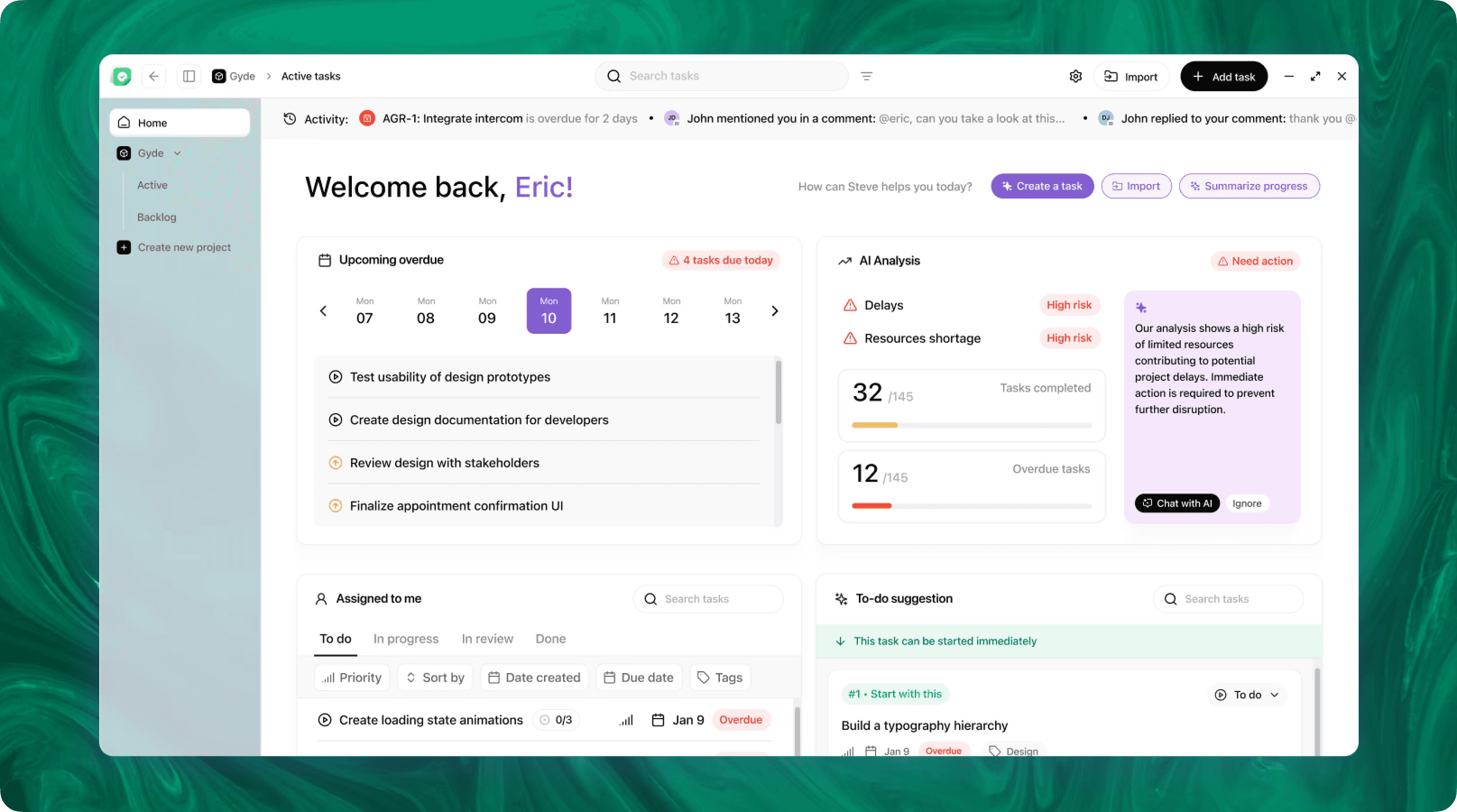
Steve is an AI-native operating system designed to streamline business operations through intelligent automation. Leveraging advanced AI agents, Steve enables users to manage tasks, generate content, and optimize workflows using natural language commands. Its proactive approach anticipates user needs, facilitating seamless collaboration across various domains, including app development, content creation, and social media management.
Conclusion
AI-assisted requirements gathering reduces ambiguity by centralizing discovery artifacts, preserving intent, and converting insights into executable work. As an AI OS, Steve combines conversational discovery, a shared memory system, inbox intelligence, and AI-driven task management to make requirements explicit, traceable, and ready for delivery. Product teams that use Steve shorten feedback loops, improve cross-functional alignment, and move from fragmentary inputs to decision-grade requirements faster.